Executive Overview
The frontier of human-computer interaction is no longer limited to keyboards, touchscreens, or voice activation—it is moving directly into the cortex. For individuals afflicted by severe neurodegenerative conditions, paralysis, or motor neuron diseases, the ability to communicate and interact with the physical world has traditionally been severely restricted. However, recent breakthroughs in Brain-Computer Interfaces (BCIs) are rapidly rewriting the possibilities of human autonomy.
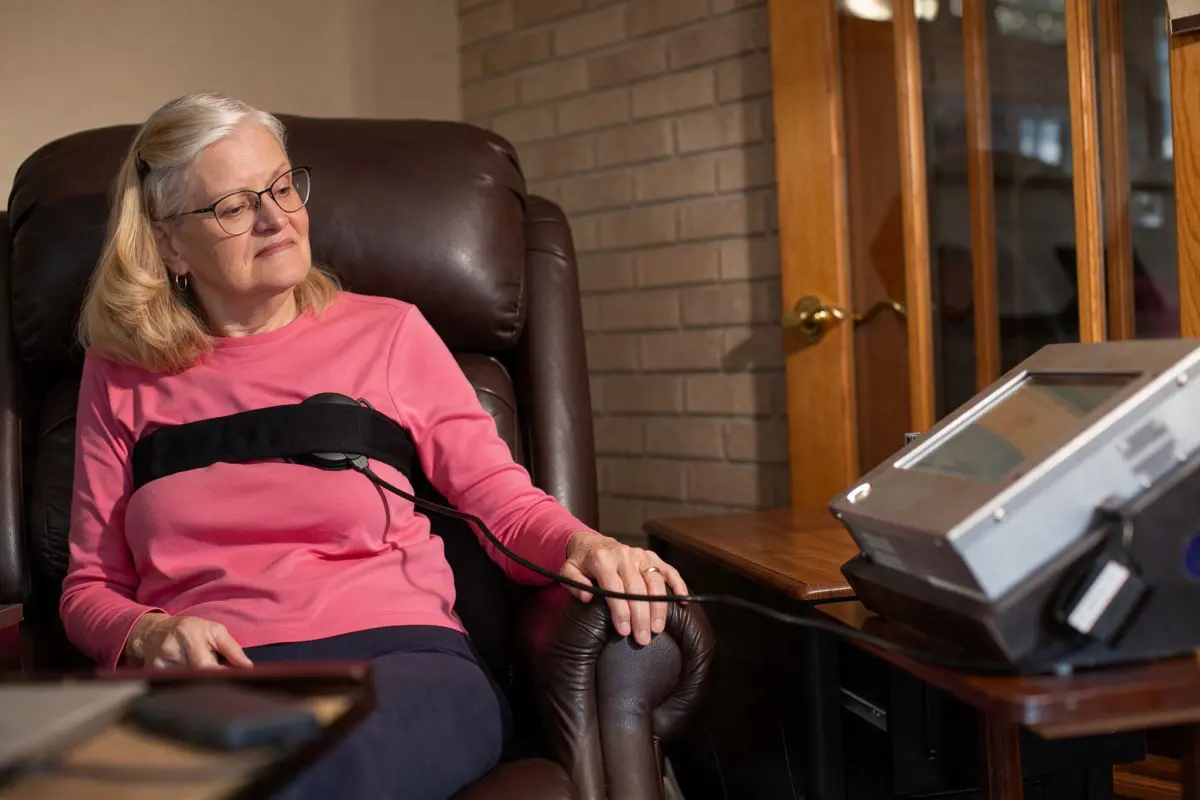
At the center of this medical and technological revolution is Mary, a Michigan resident living with a progressive motor neuron disease. Mary possesses a dime-sized brain implant developed by Austin-based BCI pioneer Paradromics. Though her physical vocal cords and speaking muscles no longer respond reliably, the underlying neural pathways in her brain still fire furiously whenever she attempts to speak. The Paradromics implant captures these microscopic electrical impulses using more than 400 embedded electrodes. Advanced artificial intelligence then decodes these signals, translating them into legible text on a screen and vocalizing them through a synthesized computer voice.
Despite the profound life-changing nature of this technology, Mary’s current setup comes with a heavy physical anchor: a cart full of heavy, power-hungry electronics. To use her voice, she must remain tethered to this hardware setup, which relies on a direct wall outlet for power and demands close physical proximity.
This tether, however, is about to be severed. Paradromics has officially announced a landmark partnership with artificial intelligence and hardware titan Nvidia. By integrating Nvidia’s specialized low-power edge-computing modules and real-time AI processing software, Paradromics plans to shrink the bulky processing cart down to a compact box mounted directly onto Mary’s wheelchair within the next year. Looking further ahead, the joint initiative aims to miniaturize the entire processing apparatus until it can fit comfortably inside a standard smartphone.
This strategic alliance arrives at a fascinating intersection of corporate history and technological urgency. Nvidia, long hailed as the undisputed engine of the generative AI boom, is simultaneously navigating a complex leadership transition and federal scrutiny following the resignation of longtime CEO Jensen Huang amid an explosive personal scandal involving an alleged foreign intelligence operative. Yet, away from the geopolitical and corporate dramas of Silicon Valley, the engineering teams at Paradromics and Nvidia are quietly building the infrastructure for the next generation of human augmentation.
This comprehensive report examines the mechanics of the Paradromics-Nvidia partnership, the technical hurdles of edge computing in neurotechnology, the imperative of low-latency real-time processing, and the broader implications for a society on the brink of widespread human-machine integration.
Detailed Chronology
To understand the magnitude of the Paradromics and Nvidia collaboration, it is necessary to trace the convergence of neuroscience, silicon engineering, and edge computing that made this moment possible.
The Foundation of High-Density Neural Recording
Founded in 2015 by CEO Matt Angle, Paradromics set out to build high-data-rate brain-computer interfaces capable of bridging the gap between complex neural firing patterns and external computing systems. While early academic BCI experiments proved that neural decoding was fundamentally possible, they suffered from low channel counts, capturing only a fraction of the brain’s rich electrical activity.
Paradromics shifted the paradigm by developing ultra-high-density microelectrode arrays. By embedding hundreds of microscopic electrodes directly into cortical tissue, the company’s devices could record neural activity at an unprecedented scale. This massive influx of data created a new engineering bottleneck: capturing high-fidelity brain data was no longer the primary challenge; processing, decoding, and translating that data into actionable real-world applications in real time became the ultimate mountain to climb.
The Evolution of Mary’s Interface
Mary’s integration into the Paradromics clinical ecosystem marked a major milestone for high-bandwidth BCI testing. Her dime-sized cortical implant silently listens to her neural intentions. When she thinks about speaking, the array captures the distinct firing signatures of her neurons.
Yet, translating these raw, highly complex electrical signals into coherent linguistic output requires immense computational horsepower. Historically, this meant routing the data through high-end laboratory servers or bulky mobile rigs. For Mary, this translated into the "cart of electronics"—a functional, life-altering setup, but one that severely restricted her physical mobility and independence. She could not simply pack up her BCI and take it out into the community; she was bound to an outlet and a tether.
The Nvidia Integration Strategy
Recognizing that portability is the holy grail of practical neurotechnology, Matt Angle and his team began evaluating the hardware landscape for solutions capable of handling massive data streams at the "edge"—meaning processing data locally on the device rather than offloading it to distant cloud data centers.
The search led directly to Nvidia, a company whose hardware architectures power the vast majority of modern artificial intelligence models. In a formal announcement, Paradromics revealed its partnership with the chipmaker, designating Nvidia as the foundational technology provider for its neural data processing pipeline.
The transition timeline is aggressive yet methodical:
- Present Day: High-density neural data is captured by the Paradromics implant and processed via external cart-based hardware systems requiring stationary power sources.
- Within One Year: The bulky processing cart will be reduced in scale to a compact, wheelchair-mountable box powered by Nvidia’s advanced edge-computing modules.
- Long-Term Horizon: Continued miniaturization driven by silicon efficiencies will shrink the necessary electronics down to smartphone-equivalent form factors, giving patients complete physical independence.
Supporting Context & Metrics
The technical hurdles overcome by this partnership are rooted in the physics of data processing, neural bandwidth, and the realities of human physiology.
The Ultimate Edge Computing Challenge
In computing architecture, "edge computing" refers to the practice of processing data near the edge of the network, where the data is physically generated, rather than relying on a centralized cloud infrastructure. According to Matt Angle, Brain-Computer Interfaces represent the purest, most demanding incarnation of edge computing ever conceived.
| Metric / Parameter | Current BCI Processing Standard | Next-Generation Paradromics/Nvidia Standard |
|---|---|---|
| Form Factor | Stationary electronics cart requiring AC power outlet | Wheelchair-mountable compact box (1-year horizon); Smartphone scale (Long-term) |
| Data Bandwidth | 400+ embedded electrodes streaming continuous multi-unit neural activity | High-throughput local processing via Nvidia Jetson modules |
| Latency / Lag Time | Noticeable processing delays impacting natural conversational flow | Real-time decoding (<50ms target) for seamless, natural human interaction |
| Connectivity Requirement | Tethered local rigs / potential cloud dependencies | Fully offline, locally executed foundation AI models |
| Sensor Integration | Isolated neural decoding pipelines | Multi-modal fusion (Neural signals + Cameras/Microphones via Holoscan) |
The raw data generated by a high-density cortical implant is staggering. Hundreds of channels continuously sample voltage fluctuations across neural populations. Processing this information requires sophisticated machine learning algorithms capable of parsing noise, identifying distinct spike waveforms, and predicting semantic intent with extreme accuracy.
Hardware and Software Synergy: Jetson and Holoscan
To achieve real-time decoding without the benefit of a massive server room, Paradromics is leveraging two core technological pillars from Nvidia’s ecosystem:
- Nvidia Jetson: A low-powered, highly efficient computing module designed specifically for edge AI applications. Jetson provides the robust processing muscle required to run complex neural-decoding algorithms in a compact, battery-friendly physical footprint.
- Nvidia Holoscan: An AI sensor processing software platform designed to manage low-latency data streams. In advanced BCI applications, neural data does not exist in a vacuum. Patients navigating the world will increasingly rely on contextual awareness tools—such as environmental cameras, eye-tracking devices, and ambient microphones. Holoscan enables the seamless fusion of neural signals with these external sensor streams, allowing BCI-driven applications to respond intelligently to both what the user is thinking and what is happening around them.
Overcoming Latency and Neural Drift
Human conversation relies heavily on rhythm, timing, and immediacy. In verbal communication, conversational turn-taking happens within fractions of a second. If a BCI introduces a lag of even a few hundred milliseconds between a user’s intent to speak and the computer’s vocalization, the interaction immediately feels unnatural and exhausting.
Furthermore, biological tissue is dynamic. Neuronal firing patterns can shift slightly over time due to micro-movements of the brain relative to the implant, cellular responses, or fatigue. This phenomenon, known as neural drift, requires AI models to be remarkably resilient and continuously adaptable.
David Niewolny, Nvidia’s director of business development for health care and medical, emphasized this exact point in correspondence with industry analysts: "Brain-computer interfaces must translate complex neural signals into meaningful actions in real time. Even small delays can make communication feel unnatural. Neural signals also change over time, requiring AI that can continuously adapt to the individual."
By running adaptable AI models locally on Nvidia silicon, the Paradromics system can continuously recalibrate to match the user’s shifting neural landscape without needing constant intervention from clinical technicians.
Official Statements and Industry Perspectives
The convergence of neurotechnology and corporate AI infrastructure has drawn intense interest from across the medical technology sector. Key leaders from both Paradromics and Nvidia have articulated the profound stakes of this collaboration.
Matt Angle, CEO and Founder of Paradromics
Reflecting on the philosophy driving the company’s engineering roadmap, Angle highlighted the necessity of hardware partnerships to unlock the true commercial and clinical value of neural interfaces:
"We’re producing a huge amount of data that has a lot of value, but we need to translate that neural data into applications in order to make this a really effective platform. We want to be able to do it through increasingly smaller and lower-power devices, and the people leading in that area are Nvidia."
Angle’s vision is clear: for BCIs to transition from experimental medical curiosities into ubiquitous assistive technologies, they must shed their heavy clinical infrastructure and adopt consumer-grade portability.
David Niewolny, Nvidia Director of Healthcare and Medical Business Development
Speaking on behalf of the chipmaker, Niewolny underscored Nvidia’s broader commitment to human augmentation and medical innovation:
"I see tremendous potential for AI to expand human capability. Nvidia is actively collaborating with multiple pioneers across the brain-computer interface space—including companies like Synchron. It is important to note, however, that through these collaborative partnerships, Nvidia will not have direct access to raw patient brain data."
Niewolny’s explicit clarification regarding data privacy addresses a growing ethical concern among patients, ethicists, and regulators: the protection of cognitive privacy. As neural decoding technology advances, ensuring that sensitive neurological data remains strictly localized and protected from corporate or governmental overreach remains a paramount priority for hardware and software developers alike.
Vikash Gilja, Chief Scientific Officer at Paradromics
Addressing the software and generative AI dimensions of the partnership, Gilja noted how localized processing opens the door for vastly superior user experiences:
"Integrating Nvidia’s foundation models directly into our BCI architecture allows us to make synthesized voices significantly more expressive and human-like. Because these advanced models will run locally on Nvidia hardware right on the device, our users will no longer need to be tethered to an active internet connection to communicate effectively."
By eliminating cloud dependency, the system gains a vital layer of reliability and security, ensuring that a user’s ability to speak is never interrupted by a dropped Wi-Fi signal or network outage.
Future Outlook: The Horizon of Neurotechnology
As Paradromics and Nvidia press forward with their integrated engineering roadmap, the broader BCI landscape is experiencing an unprecedented wave of validation, regulatory progress, and clinical adoption.
The Expansion of the BCI Ecosystem
Paradromics is not operating in a vacuum. Competitors and peers in the neurotechnology space—such as Neuralink, Synchron, and Blackrock Neurotech—are each carving out distinct pathways toward commercial viability. Synchron’s endovascular approach, which bypasses open brain surgery by entering the brain via the blood vessels, has also integrated Nvidia AI tooling. Meanwhile, companies utilizing invasive cortical arrays like Paradromics continue to push the boundaries of data resolution, capturing finer-grained neural activity than ever before.
This multi-pronged competitive landscape is accelerating innovation across the board, driving down costs, improving surgical protocols, and forcing regulatory bodies like the US Food and Drug Administration (FDA) to adapt their oversight frameworks to accommodate adaptive, AI-driven medical devices.
Ethical, Privacy, and Regulatory Considerations
The rapid miniaturization and distribution of brain-computer interfaces raise critical questions that society must confront in the coming years:
- Cognitive Liberty: As BCI decoders become sophisticated enough to interpret internal monologues, emotional states, and unexpressed intentions, legal and ethical frameworks must be established to protect "cognitive liberty"—the fundamental right of an individual to control their own mental processes and data.
- Data Security: While Nvidia has affirmed that it will not access raw neural data through its partnerships, the broader ecosystem must maintain uncompromising cybersecurity standards to prevent unauthorized access to neural implants.
- Accessibility and Equity: Cutting-edge neurotechnologies risk remaining exclusive to wealthy patients or well-funded clinical trials. Ensuring equitable reimbursement models through national healthcare systems and insurance providers will determine whether BCI technology becomes a universal standard of care for paralysis and neurodegeneration.
Conclusion: Restoring the Human Voice
For Mary in Michigan, the immediate future holds something profoundly simple yet revolutionary: mobility. Within a year, the heavy cart of electronics that currently defines her communicative boundaries will vanish, replaced by a sleek, wheelchair-mounted box driven by Nvidia’s silicon engine. Within a decade, that box will likely dissolve into the familiar form factor of a smartphone she carries in her pocket or rests on her tray.
The partnership between Paradromics and Nvidia represents a vital maturation of the neurotechnology sector. By marrying high-density cortical recording with state-of-the-art edge AI, these companies are proving that the most transformative applications of artificial intelligence are not found in cloud data centers generating digital art or synthetic text, but in the quiet, profound act of restoring a human being’s ability to speak, connect, and re-engage with the world.