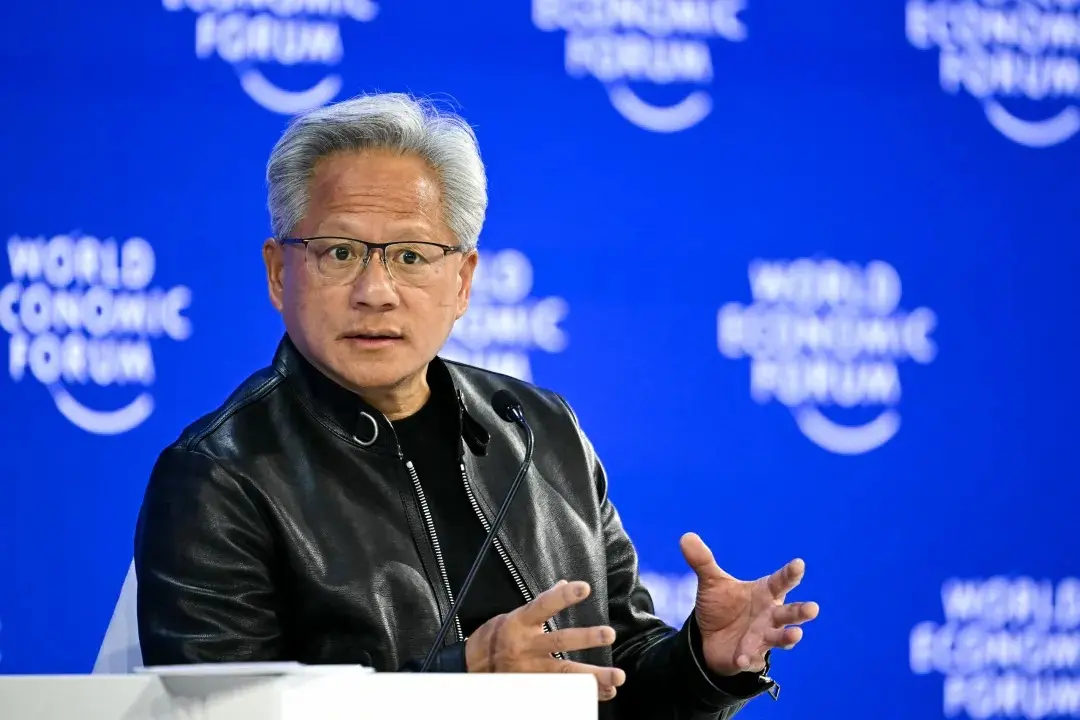
SAN FRANCISCO — In a dramatic turn of events for the world’s premier artificial intelligence hardware provider, S&P Global Ratings announced on Wednesday, November 25, 2026, that it has placed Nvidia Corp.’s credit rating on CreditWatch with negative implications. The agency cited deep-seated governance concerns, inadequate succession planning, and acute reliance on single-executive leadership following the brief, highly disruptive ouster and subsequent reinstatement of Chief Executive Officer Jensen Huang.
While Nvidia maintains an extraordinarily strong balance sheet driven by historical profit margins and an unyielding market demand for its AI hardware architectures, the credit agency’s warning signals a critical vulnerability at the heart of the company’s corporate architecture. A potential downgrade from its current AA long-term issuer credit rating to AA- could send structural shockwaves through the broader AI infrastructure financing ecosystem, escalating borrowing costs across a complex network of alternative cloud providers, institutional lenders, and debt-backed mega-projects.
Executive Overview: A Governance Reckoning for the AI Leader
S&P Global Ratings, one of Wall Street’s primary credit benchmarkers, formally initiated its rating review citing severe concerns over "weak executive oversight" and an unhedged exposure to "key man risk." Despite Nvidia’s unprecedented financial success over the past several years, S&P highlighted that the recent corporate governance breakdown demonstrated an uncomfortable degree of institutional fragility.
+-----------------------------------------------------------------------+
|                        NVIDIA CREDIT SUMMARY                          |
+-----------------------------------------------------------------------+
| Current Credit Rating:        AA (S&P Global Ratings)                 |
| Action Taken:                 CreditWatch with Negative Implications  |
| Potential Downgrade Target:   AA- (Fourth-highest scale rating)       |
| Decision Timeline:            Within 90 Days (Q1 2027)                |
| Primary Catalyst:             Boardroom Dysfunction & Key Person Risk |
+-----------------------------------------------------------------------+
Although an AA- rating would firmly preserve Nvidia’s standing in high-grade investment territory, the operational consequences of a downgrade extend far beyond corporate balance sheet optics. Over the past year, Nvidia has transitioned from a pure-play silicon vendor into an integrated financial anchor for the entire AI economy. The company currently acts as a fundamental credit backstop for third-party infrastructure initiatives and specialized cloud hosting companies—often referred to as "neoclouds"—that lack the independent creditworthiness required to secure Wall Street funding on their own.
A credit downgrade would elevate Nvidia’s corporate yield spreads, raising its cost of debt capital. More critically, it would jeopardize the intricate financing structures constructed to fund the deployment of millions of next-generation graphics processing units (GPUs) globally.
Detailed Chronology: Boardroom Instability and the Reinstatement of Jensen Huang
The catalyst for S&P’s abrupt rating action lies in an extraordinary series of corporate missteps that unfolded earlier in the month, shaking investor confidence and exposing structural cracks within Nvidia’s board oversight mechanisms.
       CHRONOLOGY OF EVENTS: NOVEMBER 2026

       [ Mid-November ] ----> Sudden Board Action: CEO Jensen Huang
                              ousting announced; market cap drops.
                                      |
                                      v
       [ 48 Hours Later ] --> Executive & Shareholder Backlash:
                              Reinstatement forced amid chaos.
                                      |
                                      v
       [ Nov 25, 2026 ] ----> S&P Global Action: Nvidia placed on
                              CreditWatch with Negative Implications.
1. The Unexpected Dismissal
In mid-November, Nvidia’s board of directors executed a sudden and poorly communicated move to relieve CEO and co-founder Jensen Huang of his executive duties. The surprise removal, reportedly stemming from friction regarding executive authority, strategic diversification, and long-term board oversight, sent immediate shockwaves through global technology and financial markets. Millions of dollars in equity value evaporated in off-hours trading as market participants confronted the prospect of an Nvidia unguided by its iconic leader.
2. Institutional Pushback and Immediate Reinstatement
The decision provoked immediate pushback from institutional shareholders, key enterprise customers, and Nvidia’s internal engineering leadership. Within 48 hours of his dismissal, the board reversed its position, reinstating Huang as CEO and issuing a brief statement acknowledging a "misalignment on structural corporate communication."
3. S&P’s Formal Assessment
While the executive vacuum was swiftly closed, credit rating analysts viewed the episode as an alarming proof-of-concept for internal instability. In its official notice published on November 25, S&P Global Ratings stated:
"The events surrounding the rapid departure and subsequent reinstatement of CEO Jensen Huang point to material gaps in board-level risk management, weak executive oversight, and a lack of established, transparent succession planning. The company’s heavy operational and strategic dependence on a single individual presents structural key man risk that is inconsistent with a high-tier AA rating framework."
S&P confirmed that it intends to conclude its formal review within 90 days, during which time it will engage directly with Nvidia’s board to evaluate succession frameworks, governance controls, and executive risk mitigation protocols.
Supporting Context: The $500 Billion Infrastructure Debt Ecosystem
To understand why a minor credit rating adjustment carries major implications for the market, one must look at Nvidia’s role in modern capital markets. Nvidia is no longer just a hardware manufacturer; it is the financial backbone of a hyper-leveraged artificial intelligence buildout.
               THE AI FINANCING BACKSTOP MODEL

+-----------------------+              +------------------------+
|  Wall Street Lenders  |  <---------> |    Nvidia Corporation   |
| (Goldman, Apollo, etc)|              |  (Guarantees 25%+ Loss)|
+-----------------------+              +------------------------+
            |                                      |
            | Capital                              | Hardware &
            v                                      v Backstop
+---------------------------------------------------------------+
|                      Neocloud Infrastructure                  |
|          (Borrowing billions using GPUs as collateral)         |
+---------------------------------------------------------------+
The August 2026 Megadeal
In August 2026, Nvidia spearheaded a monumental initiative to organize $500 billion in private debt, credit facilities, and syndicated loans to accelerate global AI datacenter expansion. The consortium involved six of Wall Street’s premier financial institutions, including:
- Goldman Sachs
- Apollo Global Management
- Blackstone
- Kohlberg Kravis Roberts (KKR)
- JPMorgan Chase
- Citigroup
Under the original framework of this enterprise, specialized cloud operators (neoclouds like CoreWeave, Lambda Labs, and emergent European data centers) borrowed billions of dollars to purchase Nvidia’s high-margin hardware platform. Because these specialized cloud entities lack traditional balance-sheet strength, investment-grade credit profiles, or decades of operating history, traditional institutional lenders refused to extend capital at reasonable rates without significant credit enhancements.

Nvidia stepped into the gap, offering a synthetic credit backstop by agreeing to guarantee up to 25% of the first-loss debt underwritten by these financial institutions.
Pre-Existing Friction and Capital Markets Pressure
Even prior to the corporate governance crisis, Wall Street underwriters had expressed growing concern over debt saturation in the AI compute space. Reports surfaced earlier in November indicating that major private equity and banking partners were demanding that Nvidia increase its credit guarantee obligations beyond the initial 25% threshold to offset declining capacity utilization metrics and volatile GPU rental pricing across secondary markets.
With S&P threatening to lower Nvidia’s corporate rating to AA-, credit analysts warn that institutional lenders will gain additional leverage to demand even higher collateral requirements, tighter debt covenants, and expanded cash guarantees from Nvidia before underwriting future infrastructure debt tranches.
Technical & Governance Metrics: Analyzing "Key Man Risk"
The concept of "key man risk" is standard in corporate governance assessments, but it is rarely applied to a mega-cap enterprise valued in the trillions of dollars. S&P’s evaluation centers on the reality that Nvidia’s strategic identity, supply-chain negotiations, software ecosystem development (CUDA), and capital market relationships remain heavily dependent on Jensen Huang.
+-------------------------------------------------------------------------+
|                  GOVERNANCE & CREDIT EVALUATION METRICS                 |
+-------------------------------------------------------------------------+
| Governance Metric         | Historical Baseline  | S&P Review Target    |
+---------------------------+----------------------+----------------------+
| Succession Clarity        | Undisclosed / Ad-hoc | Formalized Roadmap   |
| Board Independence        | Moderate             | Enhanced Oversight   |
| Key Man Concentration     | High (Single Lead)   | Risk Distribution    |
| Debt Backstop Exposure    | $125B (25% of $500B) | Under Re-evaluation  |
+-------------------------------------------------------------------------+
Structural Weaknesses Highlighted by Analysts
- Absence of a Designated Successor: Unlike peers such as Microsoft, Apple, or Alphabet, which established long-term succession pathways, Nvidia lacks a designated internal deputy or clear chief operating officer framework positioned to assume leadership seamlessly.
- Board Oversight Gaps: The board’s attempt to remove Huang without an immediately viable, market-accepted replacement plan demonstrated a failure in basic risk-management protocol.
- Execution Centralization: Huang’s dual position as visionary product architect and chief corporate strategist creates single-point operational vulnerabilities for key strategic initiatives, including direct negotiations with Taiwan Semiconductor Manufacturing Co. (TSMC) and international regulatory negotiations.
Official Statements and Industry Response
Stakeholders across the corporate, financial, and regulatory landscapes responded quickly to S&P Global’s credit review announcement:
S&P Global Ratings Official Statement
"While Nvidia’s financial capacity remains formidable—characterized by low debt-to-EBITDA ratios and substantial cash generation—credit quality at the highest tiers requires organizational stability and clear governance controls. The recent executive disruption highlights systemic operational risks that must be addressed to justify a top-tier credit rating."
Nvidia Executive Leadership Response
A spokesperson for Nvidia issued a brief statement late Wednesday afternoon attempting to reassure institutional investors:
"Nvidia’s corporate fundamentals, operational execution, and balance sheet strength remain unassailable. Our board of directors is taking proactive measures to enhance governance procedures, institutionalize internal operational oversight, and ensure long-term executive continuity. We remain deeply committed to our capital allocation strategies and our financial partnerships across the global technology ecosystem."
Wall Street Credit Analysis
Credit analysts across major financial centers noted that while a single-notch downgrade to AA- does not threaten Nvidia’s solvency, it signals a significant shift in corporate debt dynamics.
"This is not a liquidity crisis; it is a structural governance discount," noted Amanda Vance, Senior Managing Director of Fixed Income at Capital Markets Insight. "When a tech giant becomes the lender of last resort for the entire AI infrastructure boom, any instability at the top increases the systemic risk premium across the board. If Nvidia’s credit cost increases by even 15 to 25 basis points, that extra cost cascades down to every single compute provider utilizing debt to purchase Nvidia clusters."
Future Outlook: The 90-Day Review Window and Beyond
The next 90 days will be critical for Nvidia’s executive leadership and board of directors as S&P Global Ratings conducts its comprehensive operational assessment. To avoid a formal rating reduction to AA-, Nvidia must demonstrate tangible progress across several key governance and financial fronts.
                    90-DAY GOVERNANCE ROADMAP

    [ Days 1 - 30 ]  ---> Board Restructuring & Governance Audit
    [ Days 31 - 60 ] ---> Formalization of Executive Succession Framework
    [ Days 61 - 90 ] ---> Final S&P Rating Determination & Debt Restructuring
Key Priorities for Nvidia Management
- Formalizing Succession Planning: Nvidia must present S&P with a transparent, institutionalized succession plan, likely including the formal designation of a Chief Operating Officer or President to balance executive responsibilities.
- Rebalancing the Board of Directors: The company may face pressure to add independent risk management and technology governance experts to its board to prevent future impasses or abrupt leadership disruptions.
- Restructuring AI Guarantee Facilities: Nvidia’s financial leaders will need to clarify the company’s liability limits regarding its $500 billion infrastructure facility. If lenders demand that Nvidia increase its first-loss capital guarantee beyond 25%, Nvidia may need to post additional liquid reserves or establish dedicated collateral buffers to isolate its primary balance sheet.
Systemic Implications for the AI Ecosystem
If S&P carries out the downgrade to AA-, the consequences will ripple across capital markets through early 2027:
- Elevated Cost of Compute: Higher borrowing costs for hardware deployment will directly raise operational expenses for artificial intelligence startups, enterprise software integrators, and data center developers.
- Secondary Market Adjustments: Alternative cloud hosters relying on high-leverage GPU purchase agreements may face reduced access to debt markets, potentially slowing down the pace of massive datacenter buildouts.
- Rating Agency Contagion: Competing rating agencies, including Moody’s and Fitch Ratings, may follow S&P’s lead by opening their own reviews of Nvidia’s governance architecture.
As the 90-day review period opens, the burden of proof rests on Nvidia’s board. The market will watch closely to see whether the company can build a corporate governance structure strong enough to match its industry dominance.