Executive Overview
In an era dominated by sprawling open-world titles featuring overbearing waypoint markers and hand-holding tutorial systems, Queen’s Domain arrives as a refreshing, unapologetic anomaly. Developed by the two-person indie outfit Freshly Baked Games—comprising Bradley Boothe and Eric Berger—this $20 first-person search-action title has quietly redefined the boundaries of a genre traditionally tethered to 2D sprites.
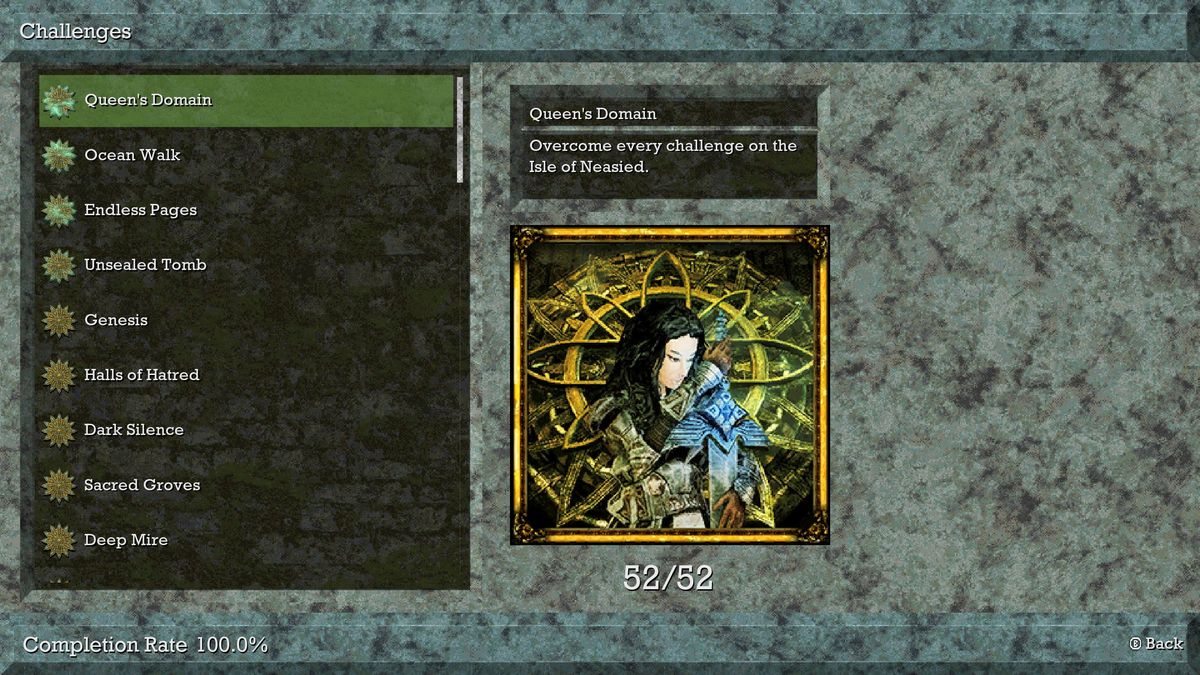
Spanning roughly 50 hours for completionists who unearth its four distinct endings and secure all 52 achievements, Queen’s Domain is an exercise in hostile wonder. It is prickly, deeply mysterious, and purposefully keeps players at arm’s length. Yet, it stands triumphantly alongside all-time greats like Metroid Prime and Castlevania: Symphony of the Night, arguably surpassing them in level design ingenuity and the sheer thrill of spatial mastery. For those willing to weather its formidable opening hour, Queen’s Domain offers a masterclass in environmental storytelling, mechanical progression, and unadulterated adventure.
Detailed Chronology: From Humble Beginnings to Endgame Mastery
The Brutal Threshold: Surviving the First Hour
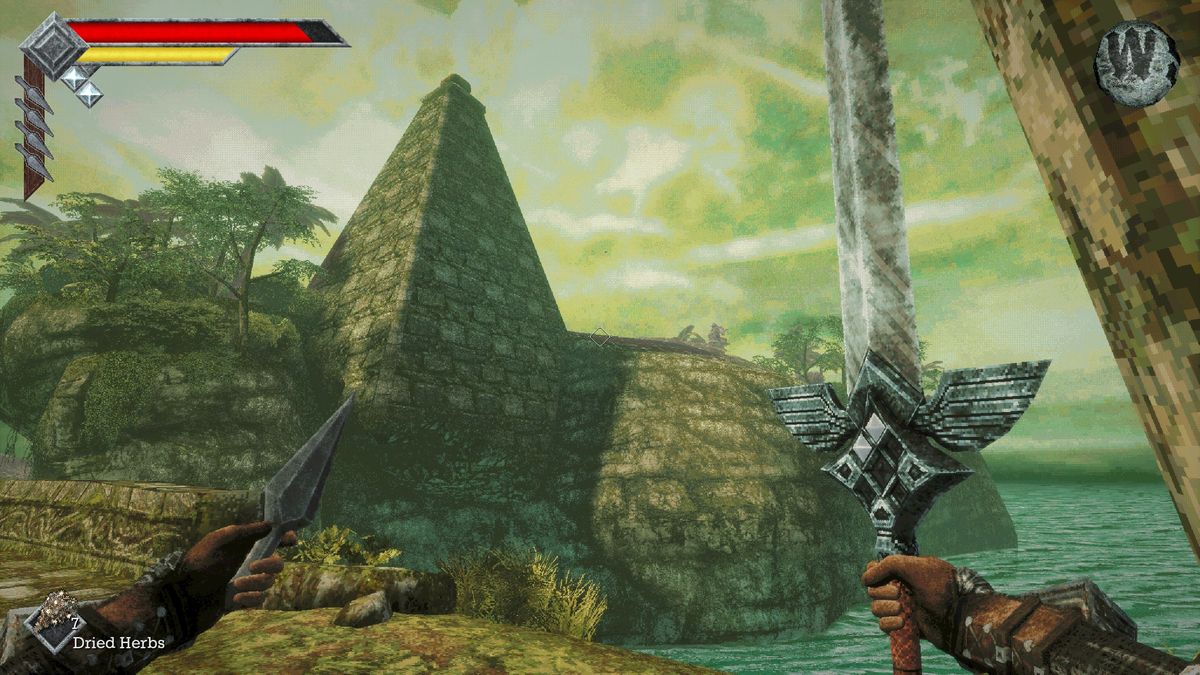
The journey into Queen’s Domain begins on a distant, fog-drenched archipelago known as the Isle of Neasied. Players assume the role of a young prince searching for his father, a monarch who ventured into the uncharted lands to slay an ancient evil. Given the notoriously grim survival rate of fathers in heroic fiction, it quickly becomes clear that the burden of eradicating this primeval threat falls squarely on the player’s shoulders.
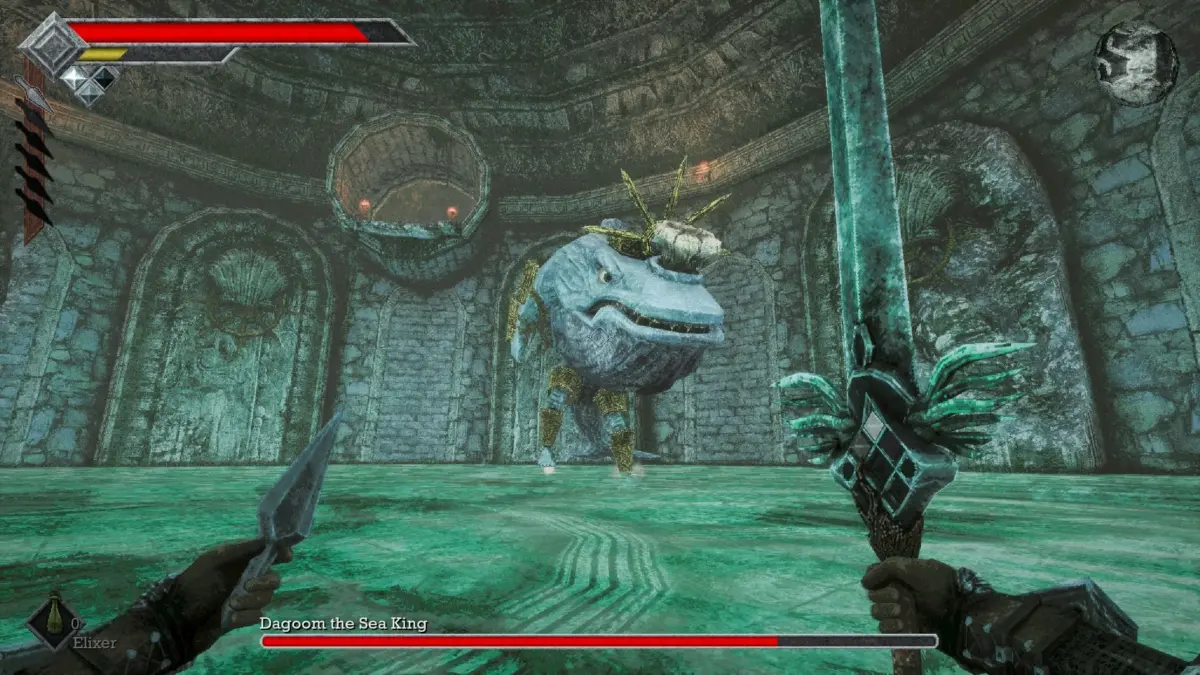
However, the opening 30 to 60 minutes are intentionally polarizing. Lacking the game-defining movement abilities that arrive later, players must rely on a retro-styled first-person melee combat system. This rhythm-based approach—reminiscent of classic immersive sims like King’s Field, Ultima Underworld, and modern indie homages like Lunacid—demands patience: baiting an enemy’s lunge, backstepping to evade, and stepping forward to counter.
This initial friction has acted as a formidable filter for players and reviewers alike. Without navigational guidance, the opening stretches can feel punishing and disorienting. In fact, the developers baked in an infamous tongue-in-cheek workaround: a secret cheat code obtainable early on that equips the player with a semi-automatic Soviet battle rifle, allowing struggling explorers to blast past early hurdles without completely shattering the atmospheric immersion.
Expanding Horizons: The Mechanics of Momentum
Once players push past the initial barrier, Queen’s Domain opens up into a mechanical marvel. The core of this transformation lies in its progressive movement toolkit. Introduced subtly in the opening areas, the foundational airdash mechanic evolves from a sporadic tactical escape into a fluid, acrobatic engine of destruction.
Where early-game zones feel terrifying, vast, and claustrophobic with access to only one or two dashes, the endgame rewards mastery with up to ten airdashes and a deeply satisfying, spoiler-heavy final traversal power. Gliding effortlessly across ceilings in areas that once served as death traps provides an exhilarating contrast. It represents the ultimate realization of the search-action promise, turning what was once a grueling survival test into an empowering playground of kinetic speed.
The Pursuit of Obsession: Collectathons and Multiple Endings
Unlike many modern titles designed for broad accessibility, Queen’s Domain does not care if you see everything it has to offer. Its more obscure endings—specifically the third and fourth conclusions—demand exacting, Nintendo 64-style collectathons tucked away in the most perilous corners of the map.
Despite these punishing requirements, community engagement has been remarkably high. Steam achievement metrics indicate that nearly 10% of players have unlocked the third ending, with close to 8% pushing through to the fourth. For a video game that invites casual users to "noodle around for half an hour," inspiring this level of collective obsession is nothing short of extraordinary. Even for those who stick to the 25-hour critical path to witness the first two endings, the journey remains intensely rewarding.
Supporting Context & Metrics: World-Building and Technical Performance
The Architecture of the Isle of Neasied
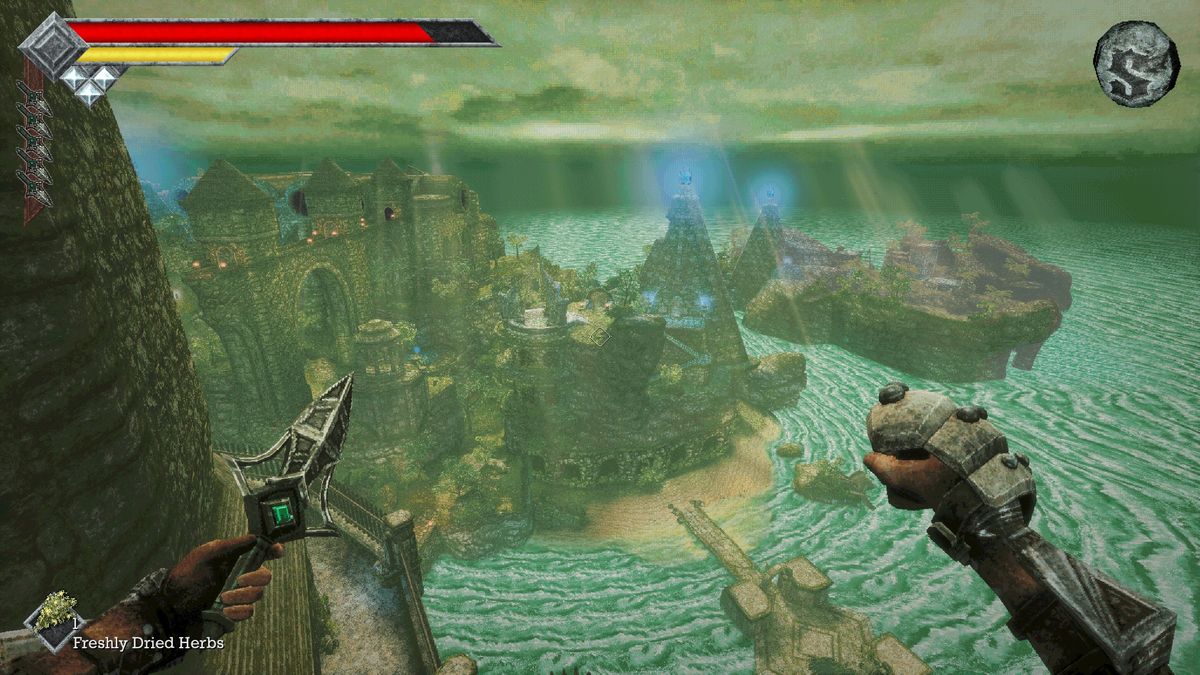
One of the most astonishing technical feats of Queen’s Domain is its interconnected world design. Co-developer Eric Berger revealed in post-launch interviews that the vast, seamless layout of the Isle of Neasied fits together with almost mathematical precision. Across the entire game, there is a single instance where two zones would clip into one another slightly if loaded simultaneously.
This spatial cohesion eliminates the need for modern fast-travel crutches during critical exploration. Instead, the game relies on natural geometry and ingenious shortcuts. Hidden in plain sight within the introductory zones are one-way transit paths that drop careless explorers directly into terrifying, high-level endgame areas—a brilliant structural troll reminiscent of Elden Ring‘s infamous Caelid teleporter chest.
Teleporter Economy and Seamless Backtracking
Backtracking is historically the Achilles’ heel of the Metroidvania genre, often devolving into frustrating busywork as players wander aimlessly searching for missed progression items. Queen’s Domain solves this through a meticulously balanced teleporter and checkpoint economy.
- Checkpoint Crystals: Placed strategically throughout hazardous zones.
- Warp Consumables: Rare and highly valuable early on, allowing players to teleport back to their most recent save crystal.
- Infinite Alternatives: As the game progresses, these consumables become plentiful, eventually culminating in infinitely reusable warp items.
Drawing parallels to Morrowind’s Almsivi and Divine Intervention spells, the transit network lets veterans zoom across the map with effortless efficiency. Combined with the refined movement system, backtracking transforms from a chore into a victory lap.
Combat Variety and Technical Stability
While first-person melee combat can feel inherently dated, Queen’s Domain successfully mitigates this through a robust inventory of throwing weapons and special abilities. Mirroring the "Ashes of War" system from Elden Ring, standard weapons offer reliable baseline utility, while legendary armaments introduce screen-clearing magical properties that inject variety into encounters.
From a performance standpoint, the game is remarkably polished on desktop PCs and the Steam Deck. Reviewers noted minor, non-reproducible crashes linked to photo mode and specific weapon specials, but automated backup saves ensure progress is never lost. On the Steam Deck specifically, the title is a known battery consumer; locking the TDP to 10 watts and capping the framerate at 45fps yields an optimal balance of smooth performance and roughly three hours of untethered playtime.
Official Statements & Developer Insights
The creation of Queen’s Domain stands as a monumental achievement for a core team of just two developers—Bradley Boothe and Eric Berger—supplemented only by external quality assurance and marketing support. Selling for a modest $20 price point, the project subverts modern AAA industry standards, proving that singular vision, tight scoping, and rigorous structural design can eclipse multimillion-dollar budgets.
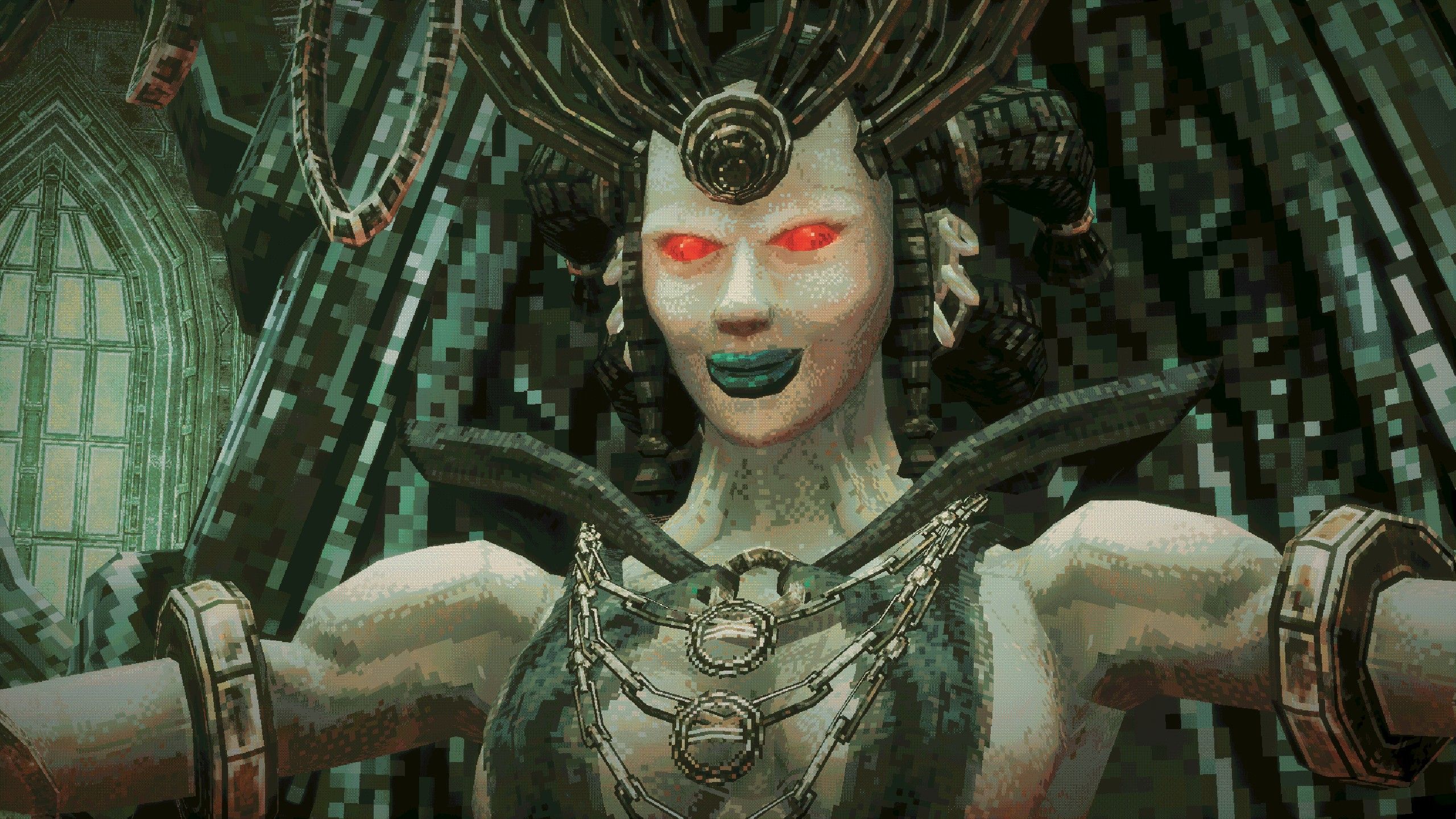
Reflecting on the game’s design philosophy, the development duo deliberately leaned into environmental storytelling over explicit exposition. Lore books and supportive NPC encounters provide light context, but the true narrative weight is carried by the world itself:
- Statues in disparate zones hinting at a forgotten shared history.
- Late-game shortcuts revealing geographical relationships between areas previously thought to be entirely disconnected.
By refusing to hold the player’s hand, Boothe and Berger crafted an experience where player interpretation takes center stage, channeling the atmospheric triumph of foundational classics.
Future Outlook
Queen’s Domain has firmly established itself as a cult masterpiece and an instant genre classic. It serves as a vital reminder of the sense of pure, unadulterated adventure that video games are uniquely positioned to deliver.
As the gaming industry continues to grapple with bloated budgets, recycled formulas, and over-engineered open worlds, Freshly Baked Games has demonstrated the potent impact of focused, creative risk-taking. The community will undoubtedly dissect the mysteries, lore, and spatial layouts of the Isle of Neasied for years to come. More importantly, the industry will be watching closely to see what Bradley Boothe and Eric Berger choose to conquer next. For anyone with even a passing appreciation for intelligent design, deep exploration, and rewarding mastery, Queen’s Domain is an essential, unmissable journey.