Executive Overview
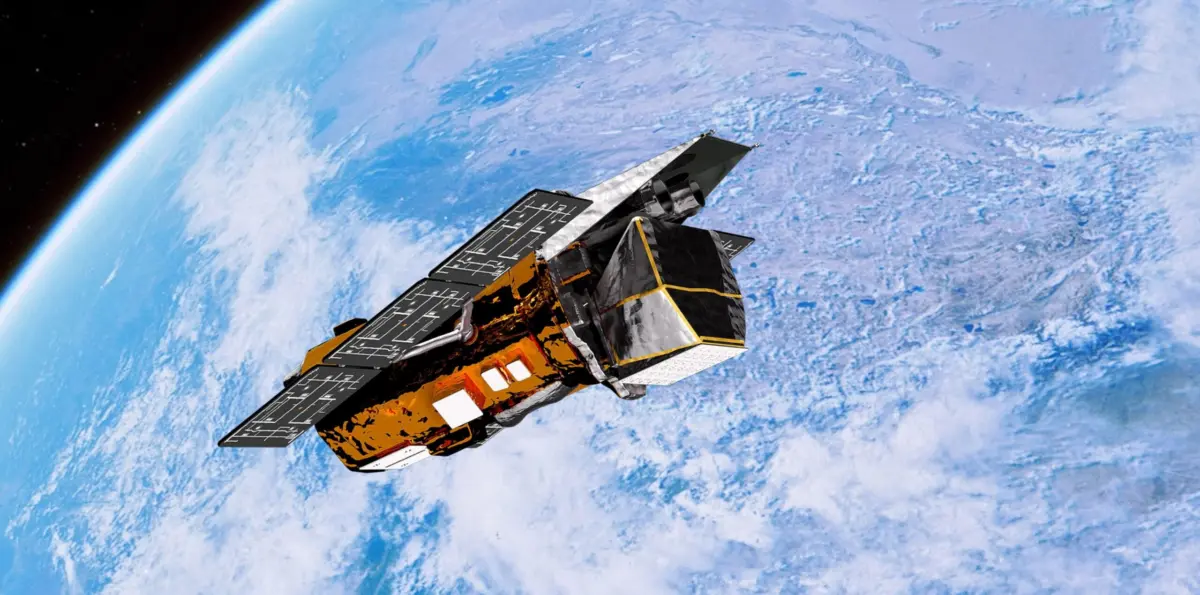
After an illustrious, ground-breaking, and remarkably resilient career spanning nearly 22 years, NASA’s Neil Gehrels Swift Observatory has officially reached the end of its astronomical voyage. The multi-wavelength space telescope, which fundamentally reshaped our understanding of the high-energy universe, succumbed to the inexorable pull of low Earth orbit and reentered Earth’s atmosphere on November 4, safely burning up over North Sumatra, Indonesia.
Originally launched on November 20, 2004, as the Swift Gamma-Ray Burst Explorer, the mission was engineered with a primary operational lifespan of just two years. Instead, it defied expectations, outlasting its initial mandate by a factor of ten. Over more than two decades of dedicated service, Swift served as an indispensable early-warning system for the cosmos. It tracked fleeting, cataclysmic explosions, monitored stellar deaths, captured the violent destruction of stars by supermassive black holes, and laid the observational groundwork for roughly 7,000 peer-reviewed scientific papers.
Yet, the final chapter of Swift’s operational life was defined by more than just its stellar scientific archive. Its demise was preceded by a high-stakes, cutting-edge, and ultimately heartbreaking commercial rescue mission. When intensified solar activity caused Earth’s atmosphere to swell and drag Swift downward faster than anticipated, NASA gambled on a pioneering public-private partnership with space startup Katalyst Space Technologies. The goal was to rendezvous with the uncrewed telescope, dock via robotic arms, boost its orbit, and grant it a new lease on life.
When that ambitious rescue attempt faltered due to an onboard attitude-control anomaly, Swift’s fate was sealed. Following a poignant final operational hurrah that brought its dormant scientific instruments back to life for a few weeks, the spacecraft slipped below its functional stability threshold in late October. The fiery atmospheric reentry of November 4 closed the book on one of the most productive, agile, and transformative astrophysics missions in the history of space exploration.
Detailed Chronology: From Launch to Fiery Reentry
The Birth of a Cosmic Hunter (2004)
The genesis of the Swift mission lay in a deeply frustrating astrophysical bottleneck. For decades, astronomers knew that gamma-ray bursts (GRBs)—the most powerful explosions in the universe, releasing more energy in a few seconds than our Sun will emit over its entire 10-billion-year lifetime—were occurring regularly. However, because these transient flashes erupted unpredictably and faded within seconds or minutes, traditional ground-based and space-borne telescopes could not slew toward them fast enough to capture their afterglows.
To solve this, NASA, in international partnership with the UK Space Agency and the Italian Space Agency, developed Swift. Equipped with a suite of three complementary instruments—a Burst Alert Telescope (BAT) sensitive to gamma rays, an X-Ray Telescope (XRT), and an Ultraviolet/Optical Telescope (UVOT)—Swift was designed not merely to detect these cosmic blasts, but to autonomously calculate their celestial coordinates, beam the data to the ground, and swivel its entire frame to observe the fading afterglows, all within about a minute.
Launched aboard a Delta II rocket from Cape Canaveral Air Force Station on November 20, 2004, the spacecraft commenced formal science operations the following month. In 2018, in a poignant tribute following his passing, NASA officially renamed the mission the Neil Gehrels Swift Observatory, honoring the visionary astrophysicist who served as its first principal investigator and guided its early triumphs.
Revolutionizing Time-Domain Astronomy
Swift’s automated reflex action immediately revolutionized time-domain astronomy. In May 2005, the observatory scored a historic breakthrough when it detected GRB 050509B, a short gamma-ray burst lasting a mere 0.03 seconds. Swift swung its X-ray optics toward the source within seconds, capturing 11 X-ray photons.
This marked the very first time an afterglow had ever been detected for a short gamma-ray burst. The data provided the crucial observational evidence needed to confirm long-standing theoretical models predicting that short gamma-ray bursts are triggered by the catastrophic merger of two neutron stars—dense stellar corpses packed with the mass of our Sun into a sphere the size of a city. Years later, when gravitational-wave detectors like LIGO and Virgo observed neutron star mergers, Swift’s foundational legacy was universally recognized.
Beyond gamma-ray bursts, Swift’s architectural agility made it a premier tool for general astrophysics. Its flexible observation scheduling system allowed ground controllers to program "target-of-opportunity" observations within minutes of a cosmic alert. The observatory could pivot to monitor up to 75 distinct celestial objects per day, spanning durations from brief minutes to months.
The Orbital Decay and the Katalyst Gamble (2025–2026)
Operating in a low Earth orbit without onboard propulsion thrusters, Swift was perpetually subjected to the tenuous atmospheric drag found at the fringes of space. At its 2004 launch, the observatory circled Earth at an altitude of approximately 585 kilometers (364 miles). Over the years, that altitude steadily declined.
By mid-2026, however, the descent turned into a steep plunge. A prolonged period of heightened solar activity heated Earth’s upper atmosphere, causing it to expand upward like a colossal balloon. This atmospheric bloating dramatically increased the drag force acting on Swift. By June 18, 2026, the spacecraft’s altitude had plummeted to roughly 363 kilometers (225 miles).
NASA engineers realized that by the fall of 2026, Swift’s orbit would decay below 300 kilometers—the safety threshold below which servicing vehicles could no longer reliably approach without risking a catastrophic collision or orbital debris cascade. Recognizing that standard procurement timelines were too slow, NASA turned to private industry, tapping space startup Katalyst Space Technologies under a $30 million contract signed in September 2025.
The mission plan was audacious: Katalyst would launch a small servicing spacecraft named LINK. Using three specialized robotic arms, LINK would dock with Swift, grip its structure, and utilize its own ion thrusters to push the aging observatory back up to a safe, stable operational altitude. Facing a brutal one-year deadline, Katalyst manufactured components in-house to bypass supply chain bottlenecks and streamlined its qualification testing. LINK successfully lifted off on July 3, 2026, aboard a Northrop Grumman Pegasus XL rocket.

Mission Pivot and Final Observations
In space, even the best-laid engineering plans are subject to the unforgiving laws of orbital mechanics and hardware reliability. During in-orbit commissioning and approach maneuvers, LINK suffered a critical malfunction within its attitude-control system. It quickly became clear that a physical capture and orbital boost of Swift was no longer feasible.
On August 19, NASA and Katalyst jointly announced that the docking attempt was canceled. Instead, the mission was redefined as an
in-orbit technology demonstration. LINK successfully closed the distance, maneuvering within 12 to 15 kilometers (7 to 9 miles) of Swift while deploying its robotic arms and firing its ion thrusters, proving the baseline proximity-operations capability before backing off. LINK itself reentered Earth’s atmosphere on September 25.
With the rescue mission abandoned, the Swift operations team faced the inevitable reality of the telescope’s remaining lifespan. In an emotional display of scientific dedication, engineers on August 26 reactivated Swift’s UVOT and XRT instruments—which had been powered down to conserve power during the rescue attempt.
The revived observatory immediately went back to work, capturing stunning imagery of Tycho’s supernova remnant, located roughly 13,000 light-years away. However, as the orbital altitude dropped below 275 kilometers in mid-October, atmospheric drag became too severe for the spacecraft’s reaction wheels to maintain a steady lock on targets. Swift recorded its final scientific observation on October 20, bringing its operational era to a close. On November 4, 2026, the observatory reentered the atmosphere over Indonesia, disintegrating harmlessly over the ocean.
Supporting Context & Metrics
To fully appreciate the scope of the Neil Gehrels Swift Observatory’s contribution to science, one must examine the staggering quantitative metrics accumulated over its two-decade career:
- Operational Longevity: Nearly 22 years in space (November 2004 – November 2026), outlasting its original 2-year primary mission by more than tenfold.
- Gamma-Ray Bursts Detected: Over 2,000 unique GRBs cataloged, analyzed, and cross-referenced with ground and space observatories.
- Supernova Discoveries: More than 1,400 supernova explosions observed, tracking the death throes of massive stars in real time.
- Exotic Events: Countless observations of tidal disruption events (where wandering stars are shredded by supermassive black holes), active galactic nuclei, and all-sky X-ray surveys.
- Scientific Literature: Data acquired by Swift contributed directly to approximately 7,000 peer-reviewed scientific papers.
- Public Data Archive: A treasure trove of roughly 12 terabytes of open-access data, including 22 years of continuous brightness measurements and over 1.5 million ultraviolet and visible-light images, completely accessible to the global scientific community.
Official Statements
The end of the Swift mission prompted reflections from leaders across the international scientific community, highlighting both the monumental scientific return and the pioneering nature of the commercial servicing attempt.
"Swift delivered an incredible, lasting return on investment for the nation," said Sean Domagall-Goldman, director of the Astrophysics Division at NASA Headquarters. "It was designed for a two-year primary mission but remained brilliantly productive for more than ten times as long."
S. Bradley Cenko, the mission’s principal investigator at NASA’s Goddard Space Flight Center, reflected on the core problem Swift was built to solve: "Swift was designed as a satellite dedicated to studying gamma-ray bursts—outbursts that came and went so quickly that no one could target them with large telescopes to learn more. By automating the entire detection-to-slewing pipeline, Swift turned transient astrophysics from a game of guesswork into a precision science."
Reflecting on the bold attempt to rescue the spacecraft through a commercial partner, industry analysts noted that while the docking failed, the collaborative framework established between NASA and Katalyst Space Technologies represents a vital paradigm shift for the future of orbital sustainability and debris management.
Future Outlook: Sustaining the Quest for Cosmic Transients
The fiery demise of the Neil Gehrels Swift Observatory leaves a noticeable gap in humanity’s multi-wavelength sentinel network. For over twenty years, Swift was the undisputed gold standard for catching the universe’s most fleeting and violent phenomena in the act.
Yet, NASA’s astrophysics division is already looking toward the horizon. To ensure that the global astronomy community can continue to respond rapidly to sudden cosmic events in the post-Swift era, agency leadership is actively evaluating strategies to optimize, upgrade, and expand its existing fleet of space telescopes. Plans are underway to integrate more automated, machine-learning-driven alert systems into current missions, such as the Transiting Exoplanet Survey Satellite (TESS) and the James Webb Space Telescope (JWST), allowing them to pivot quickly toward high-energy transients.
Furthermore, the lessons learned from the Katalyst Space Technologies rescue attempt—despite its ultimate programmatic pivot—will heavily influence future robotic servicing, life-extension, and debris-mitigation architectures. As low Earth orbit becomes increasingly congested, the technical data gathered by the LINK spacecraft during its close-approach maneuvers will guide the next generation of orbital maintenance spacecraft.
As astronomers pore over the final 12 terabytes of open-source archival data left behind by Swift, the legacy of Neil Gehrels and his namesake observatory remains secure. It proved that automated space observatories could rewrite textbooks, bridge the gap between theory and observation, and inspire a generation of scientists to look up and catch the universe in the act of creation and destruction.