Executive Overview
The landscape of home entertainment has experienced a seismic shift over the past decade. Traditional, bulky flat-screen televisions are no longer the absolute pinnacle of immersive viewing for consumers who demand cinematic scale within the comfort of their living rooms, backyards, or dedicated media chambers. High-end projectors have emerged as the definitive standard for home theaters, bridging the gap between commercial-grade cinema experiences and residential convenience. Amidst the ongoing retail frenzy of the Black Friday and Cyber Week shopping windows, premium hardware manufacturers have rolled out aggressive pricing structures to capture the attention of tech enthusiasts and cinephiles alike.
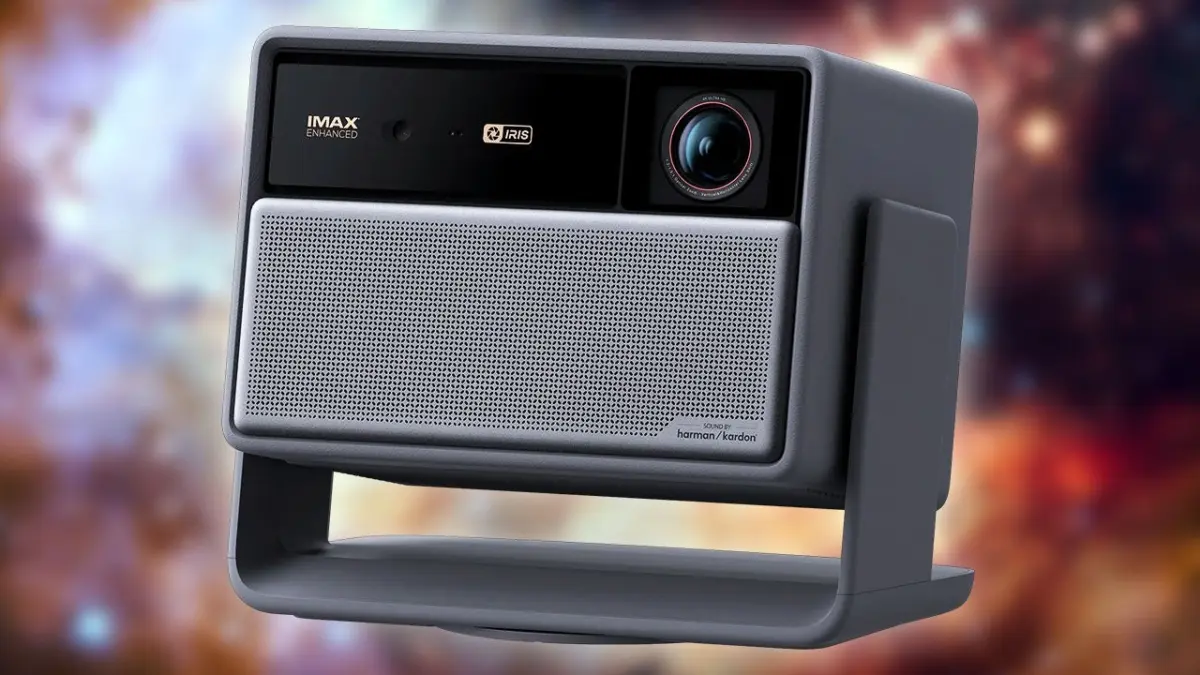
Leading the charge in this seasonal discount wave is the prominent consumer electronics brand XGIMI, which has slashed the price of its flagship XGIMI Horizon 30 Pro 4K Laser Projector. Normally retailing at a formidable sticker price of $2,499, this cutting-edge unit is currently available via major online retailers like Amazon at a massive $600 discount, bringing the final cost down to $1,899. This substantial price reduction represents one of the most compelling high-end home theater hardware deals of the season, positioning state-of-the-art projection technology at a much more accessible price point for early adopters and upgraders.
Beyond mere monetary savings, the XGIMI Horizon 30 Pro represents a watershed moment in automated projection engineering. Incorporating advanced laser illumination, proprietary image-processing silicon, integrated smart platform architecture, and sophisticated mechanical placement flexibility, this device aims to eliminate the historical friction points of projector ownership. Historically, setting up a high-end projector required tedious manual focusing, complex external streaming hardware, and precise physical calibration to combat ambient light and geometric distortion. The Horizon 30 Pro mitigates these barriers through intelligent automation, offering consumers a plug-and-play experience that rivals the user-friendliness of modern smart televisions while delivering a massive, movie-theater-sized canvas.
This comprehensive report examines the technical architecture, market context, and consumer implications of the XGIMI Horizon 30 Pro deal. Furthermore, we analyze broader trends in the 2026 Black Friday hardware market, exploring how competing display technologies and pricing strategies are reshaping consumer choices as the year draws to a close.
Detailed Chronology: The Evolution of Smart Projection and the Horizon 30 Pro Launch
To understand the significance of the current $600 discount on the XGIMI Horizon 30 Pro, one must trace the trajectory of home projection technology over recent years. For decades, home projectors were largely relegated to two distinct categories: ultra-expensive, custom-installed theater systems requiring professional calibration, or cheap, low-resolution "novelty" units plagued by dim lamps, poor contrast ratios, and noisy cooling fans.
The Shift Toward Laser and Intelligent Automation
Around 2021 and 2022, manufacturers began heavily investing in solid-state laser and LED hybrid illumination engines. These light sources promised tens of thousands of hours of maintenance-free operation, drastically reducing the degradation issues historically associated with traditional mercury-arc projector lamps. Concurrently, advancements in system-on-chip (SoC) processing power allowed manufacturers to integrate sophisticated computer vision algorithms directly into the hardware chassis.
XGIMI established itself as an industry innovator during this period by pioneering automated environmental adaptation features—such as real-time autofocus, automatic keystone correction, intelligent obstacle avoidance, and screen-alignment technology. These features transformed projectors from static, fragile hardware installations into dynamic, portable entertainment hubs that could be moved effortlessly from room to room or taken outdoors for backyard movie nights.
The Arrival of the Horizon 30 Pro
The release of the XGIMI Horizon 30 Pro marked a direct response to consumer demands for uncompromised 4K resolution paired with superior dynamic range and color fidelity. Previous iterations in the Horizon family achieved mainstream commercial success by balancing price and performance, but cinephiles frequently noted limitations in black level depth and peak brightness when competing against high-end OLED and Mini-LED televisions.
The Horizon 30 Pro addressed these criticisms head-on by integrating a revolutionary X-Vision image processor and advanced Dual Iris technology. These optical and computational upgrades were engineered to extract significantly greater shadow detail, expand the color gamut, and optimize contrast ratios dynamically based on the content being displayed. When XGIMI introduced the Horizon 30 Pro to the global market with a $2,499 MSRP, industry analysts recognized it as a formidable challenger to traditional high-end television setups. However, at that initial price point, it remained an investment reserved primarily for dedicated enthusiasts.
The Black Friday Price Correction
As the 2026 holiday shopping season approached, retail analysts anticipated steep competition in the display market. To maintain momentum against aggressive pricing on ultra-large-screen televisions, XGIMI and its retail partners authorized a temporary yet dramatic price correction. Dropping the unit to $1,899 effectively repositioned the Horizon 30 Pro, undercutting competing laser projectors in its performance tier and igniting a surge in consumer demand across e-commerce platforms.

Supporting Context & Metrics: Technical Breakdown of the XGIMI Horizon 30 Pro
When evaluating a $1,899 investment in a home projection system, prospective buyers must look beyond the marketing terminology and examine the underlying hardware specifications, operational metrics, and ecosystem integrations.
Visual Performance: Resolution, Processing, and Color Architecture
At the core of the Horizon 30 Pro’s visual delivery is a native 4K imaging pipeline powered by the proprietary X-Vision image processor. Unlike basic scalers that simply stretch lower-resolution feeds, the X-Vision silicon utilizes advanced machine-learning algorithms to analyze incoming frames in real time, enhancing edge sharpness, reducing compression artifacts, and upscaling legacy content to match the projector’s high-density pixel grid.
A persistent challenge for laser and LED projectors has been the representation of true blacks—a metric where emissive display technologies like OLED naturally excel. The Horizon 30 Pro combats this limitation through the implementation of Dual Iris technology. By dynamically adjusting physical aperture blades within the optical engine, the projector can restrict light output during dark scenes to deepen shadow levels, while instantly opening up to maximize peak luminance during bright, high-impact action sequences. This hardware-level light management significantly enhances the perceived dynamic range, offering a richer, more cinematic image than standard fixed-iris projectors.
Software Integration and Smart Ecosystems
Convenience is a critical factor in modern home entertainment adoption. The XGIMI Horizon 30 Pro comes equipped with built-in Google TV access straight out of the box. This integration eliminates the immediate necessity of purchasing and wiring an external streaming dongle or Apple TV unit for standard streaming consumption. Users can sign into their Google accounts and access major subscription platforms—including Netflix, Disney+, Max, Prime Video, and YouTube—directly through the projector’s native user interface.
However, power users and gaming enthusiasts must account for physical connectivity. While the onboard smart platform handles streaming gracefully, plugging in high-performance hardware such as a PlayStation 5, Xbox Series X, or a dedicated 4K UHD Blu-ray player requires traditional HDMI cabling. The projector features modern HDMI ports capable of handling high-bandwidth signals, ensuring low input latency for competitive gaming and uncompressed audio-video transmission for physical media collectors.
Physical Design, Placement Flexibility, and Ergonomics
Traditional projectors often suffer from rigid mounting requirements, forcing users to construct elaborate ceiling mounts or precisely position coffee tables to achieve a properly proportioned image. The Horizon 30 Pro redesigns this ergonomic workflow by incorporating 360-degree rotation capabilities and advanced lens memory functions.
These mechanical attributes allow the projector to be placed at unconventional angles relative to the projection surface while the internal optics and software automatically correct for geometric distortion. The lens memory feature stores specific calibration profiles, meaning users who frequently shift the projector between an indoor living room setup and an outdoor patio configuration can instantly recall their preferred zoom, focus, and alignment settings without enduring a tedious manual calibration process every single time.
Official Statements and Industry Perspective
Industry analysts and retail observers have closely monitored the trajectory of high-end home entertainment pricing throughout the late-year shopping cycle. The aggressive discounting strategy applied to the XGIMI Horizon 30 Pro reflects a broader corporate pivot toward capturing market share in the premium lifestyle technology segment.
In recent industry briefings, consumer electronics manufacturing executives have emphasized that modern buyers are increasingly unwilling to compromise between screen size and visual fidelity. While a 75-inch or 85-inch flat-screen television offers impressive daytime brightness, it remains constrained by its physical dimensions during shipping, installation, and storage. Projectors like the Horizon 30 Pro offer a portable, scalable alternative capable of generating images well exceeding 100 inches diagonal without requiring structural reinforcement of living room walls.
Furthermore, tech reviewers have lauded the integration of automated environmental adjustments. As one prominent home theater hardware reviewer noted during early testing phases:

"The true revolution of modern projection is not merely raw pixel count or laser lifespan, but the eradication of setup friction. When a projector can automatically square its image, focus its lenses, and adapt to wall color within seconds of being powered on, it transitions from a niche enthusiast project into a mainstream consumer appliance."
The $600 discount sanctioned for this Black Friday window is viewed by financial analysts as a calculated effort to accelerate mass-market penetration for premium laser projection, encouraging consumers who might have otherwise settled for mid-tier televisions to leap into the world of large-format projection cinema.
Broader Market Analysis: Navigating Black Friday TV and Display Deals
While the XGIMI Horizon 30 Pro 4K Laser Projector stands out as a premier hardware highlight for home theater enthusiasts, the current holiday shopping landscape offers an unprecedented array of alternative display discounts. Consumers who determine that projection technology does not align with their specific living space—such as rooms with uncontrollable ambient daylight or limited throw distances—have access to extensive promotional pricing across traditional display categories.
The Television Alternatives Market
Retailers across the globe have rolled out comprehensive discount matrices covering everything from entry-level budget panels to ultra-premium OLED and Mini-LED flagships.
- Budget and Mid-Range Displays: Consumers seeking straightforward replacements for older, non-smart panels can find aggressive price cuts on 50-inch to 65-inch 4K LED televisions, many of which now feature built-in smart operating systems and basic HDR support for under $400.
- Premium OLED and Mini-LED Upgrades: For buyers prioritizing absolute black levels and intense peak brightness in brightly lit living environments, top-tier brands have reduced prices on large-format OLED panels and high-zone-count Mini-LED televisions by up to 30% to 40%.
Deciding between a high-end laser projector like the Horizon 30 Pro and a massive flat-screen television ultimately hinges on three core environmental factors:
- Lighting Control: Projectors perform exceptionally well in dark or moderately controlled environments where ambient light can be minimized. Conversely, high-end televisions dominate in brightly lit daytime environments with direct window glare.
- Scale vs. Footprint: A projector can scale its image dynamically from 60 inches to over 150 inches while occupying minimal physical floor space when stowed away. A massive television commands permanent visual dominance over a room’s decor, even when powered off.
- Audio-Visual Integration: Both display categories require external audio solutions (such as soundbars or multi-channel AV receivers) to achieve true cinematic sound, though projectors often require additional consideration for cable routing depending on placement.
Future Outlook: The Horizon of Home Entertainment
As the consumer electronics industry looks beyond the current holiday shopping season and toward the future, the boundaries between commercial cinema and residential display technology will continue to blur. The strong consumer uptake of discounted high-end hardware, exemplified by the promotion surrounding the XGIMI Horizon 30 Pro, signals robust consumer appetite for immersive visual experiences at home.
Looking forward, industry roadmaps suggest several key areas of technological advancement for the projection market over the next several years:
- Micro-LED and Advanced Laser Phosphor Engines: Manufacturers are continuing to refine solid-state illumination technologies, pushing thermal efficiency higher while shrinking the physical footprint of the optical blocks. This will likely lead to even more compact, ultra-bright portable units.
- AI-Driven Calibration and Content Optimization: Building upon the successes of processors like XGIMI’s X-Vision, future projection systems will increasingly leverage artificial intelligence to analyze room acoustics, ambient light spectra, and specific wall textures, automatically tailoring both video output and audio processing to match the exact physical environment in real time.
- Gaming-Centric Features: As refresh rates climb and input latencies plummet, projectors are shedding their historical reputation as sluggish display devices. Future iterations are expected to incorporate native support for high-refresh-rate gaming (120Hz and beyond) at 4K resolution, catering directly to next-generation console and PC gamers seeking massive, boundary-pushing visual fields.
In conclusion, the current Black Friday promotion offering the XGIMI Horizon 30 Pro 4K Laser Projector for $1,899 represents more than just a seasonal bargain—it serves as a milestone in the democratization of high-end home cinema. By combining exceptional laser visual fidelity, intelligent automation, built-in Google TV streaming, and a significant $600 price reduction, XGIMI has established a compelling benchmark for what consumers should expect from modern residential entertainment hardware. Whether outfitting a dedicated basement media room or preparing for warm-weather outdoor movie nights, buyers investing in this tier of projection technology are securing a future-proof window into cinematic scale and immersion.