By Ford James
Published November 28, 2026
Executive Overview
The digital storefront of Steam is a vast, untamed digital ocean. Home to more than 12,000 completely free-to-play titles, the platform acts as both a launchpad for generational multiplayer juggernauts—such as Apex Legends, Dota 2, and the explosive Marvel Rivals—and a sprawling graveyard of low-effort shovelware. Navigating this endless catalog often feels like sifting through sand to find grains of gold.
Yet, every so often, a title slips past the algorithmic gatekeepers, defies conventional marketing budgets, and achieves legendary status purely through organic word-of-mouth. Enter The WereCleaner, a bite-sized, stealth-comedy indie project developed by a team of student creators at the University of Southern California (USC).
Described by players and critics alike as an "anti-Hitman," The WereCleaner challenges players to navigate the mundane horrors of mandatory office overtime while grappling with a supernatural affliction. Despite costing nothing and featuring a runtime that can be conquered in under an hour, the game has quietly clawed its way to astonishing heights. Backed by over 8,500 overwhelmingly positive reviews, SteamDB metrics currently position The WereCleaner as the 20th highest-rated Steam game of all time. In doing so, this unassuming student project sits directly ahead of monumental, multi-million-dollar masterpieces like Half-Life 2, Arkane Studios’ Dishonored, and Larian Studios’ RPG titan Baldur’s Gate 3, trailing only a single spot behind indie royalty like Balatro.
Detailed Chronology: From Campus Project to Global Phenomenon
The journey of The WereCleaner is a masterclass in grassroots game development, proving that tight design loops and clever comedic premises can eclipse high-fidelity graphics and massive publisher backings.
Genesis at USC Games
Long before it was rubbing shoulders with all-time gaming greats on SteamDB leaderboards, The WereCleaner began as an academic and creative collaborative effort under the banner of Howlin’ Hugs, a student development studio operating out of the renowned USC Games program. The university has a storied history of churning out innovative industry talent, but The WereCleaner quickly distinguished itself from standard student showcases through its high degree of polish, crisp cartoony art direction, and instantly understandable high-concept premise.
The Mechanics of Chaos: Kyle’s Night Shift
In The WereCleaner, players step into the oversized shoes of Kyle, a diligent office and warehouse janitor. By day, Kyle is simply trying to earn an honest living, mop up spills, empty trash bins, and survive a grueling week of mandatory overtime alongside his unsuspecting coworkers.
However, Kyle harbors a dark, furry secret: he is a werewolf by night.
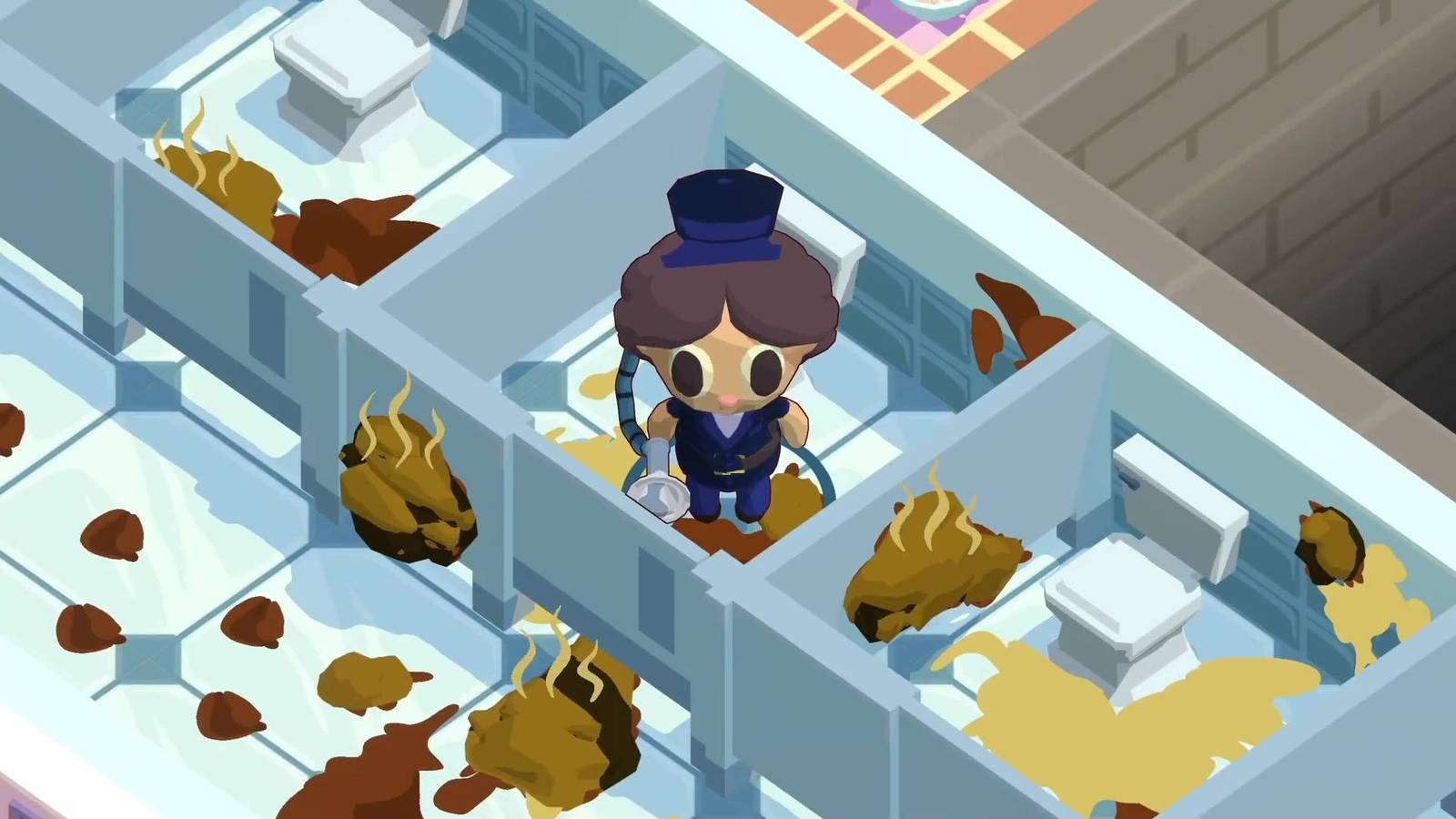
The core gameplay loop introduces a brilliant twist on the stealth genre. Instead of assassinating targets, Kyle’s primary objective is to avoid violence at all costs. Players must meticulously clean the facility while managing their proximity to lingering colleagues. If a coworker catches a glimpse of Kyle mid-transformation—or spots his terrifying true nature—his supernatural lust for blood is instantly triggered.
The result? Kyle inevitably loses control, devours an innocent coworker (such as Sue from accounting), and leaves behind an exponentially worse biohazard mess that the player must then frantically clean up before dawn. This frantic balancing act of stealth, cleanup simulator mechanics, and slapstick horror comedy forms the backbone of the game’s addictive appeal.
Silent Launch and the Viral Word-of-Mouth Wave
Upon its initial digital release, The WereCleaner suffered the fate of many independent student projects: it launched largely under the radar, eclipsed by the sheer volume of daily releases flooding the Steam ecosystem. However, its zero-dollar price tag acted as a frictionless barrier to entry.
As early adopters took a chance on the quirky thumbnail and charming description, social media platforms, Reddit communities, and streaming channels began to catch wind of the emergent comedic chaos. Players gleefully shared stories of meticulously maintaining corporate stealth until the final shift, only to accidentally shred half the stockroom in a panicked furry rampage on night five. The game transitioned from an obscure academic release into a viral sensation, fueled by the sheer disbelief that an experience of this quality was being handed out for completely free.
Supporting Context & Metrics: Analyzing the SteamDB Phenomenon
To truly understand the gravity of The WereCleaner’s success, one must examine the hard data governing modern digital storefronts. Steam features tens of thousands of games, yet very few manage to achieve the elusive "Overwhelmingly Positive" user review consensus based on thousands of individual data points.
The Numbers That Matter
- Review Volume: Over 8,500 player reviews.
- Review Sentiment: Overwhelmingly positive (consistently sitting above a 98% approval rating).
- All-Time Ranking: Ranked 20th highest-rated game on Steam according to SteamDB aggregations (filtering for games with a minimum threshold of user reviews).
- Comparative Standing: Ranks directly behind Balatro and ahead of industry-defining milestones like Half-Life 2, Dishonored, and Baldur’s Gate 3.
- Monetization: 100% free-to-play, with zero microtransactions, battle passes, or monetization hooks.
What the Community is Saying
Player sentiment across Steam review boards highlights a universal sense of joyful astonishment.
- "Incredible indie game, simple yet brilliant, first game I ever wanted to complete 100%," notes one prominent Steam user, emphasizing the title’s clean achievement structure that appeals strongly to completionists.
- Another reviewer passionately urges prospective players to bypass trailers and hesitation entirely: "Stop reading reviews and go play it, it’s criminal that it’s free."
- Praise frequently centers on the game’s brisk pacing and understated humor. "One of the best free games I’ve played, and it was done in under an hour," reads another review. "The art is cute and cartoony, and the humor lands without trying too hard. For a free game, the charm and polish are hard to beat."
The emergent storytelling generated by the game’s artificial intelligence and stealth mechanics also fuels its replayability. Players routinely recount hilarious tales of restraint collapsing into absolute carnage. One user detailed managing a pacifist run all the way until the fourth night, only to completely lose control on the fifth night and obliterate half the staff roster in the stockroom.
Official Statements & Academic Impact
The unexpected triumph of Howlin’ Hugs serves as a shining testament to the caliber of modern game design education, specifically highlighting the infrastructure provided by programs like USC Games.

Industry analysts and academic supervisors have pointed to The WereCleaner as a textbook example of scoping done right. Rather than attempting an overly ambitious open-world epic that risks buckling under its own weight—a common trap for student developers—Howlin’ Hugs narrowed their focus onto a single, highly polished, mechanically cohesive vertical slice.
While formal corporate press releases from major publishers are absent (given the student-led nature of the project), campus features and local student spotlights have documented the intense collaboration, creativity, and iterative playtesting that went into refining Kyle’s nocturnal escapades. The developers succeeded in understanding a fundamental rule of comedy and game design: establish a clear, high-concept premise, build tight mechanics around it, and get out of the player’s way before the joke wears thin. At roughly 45 to 60 minutes in length, The WereCleaner never overstays its welcome.
Future Outlook: What The WereCleaner Means for Indie Development
As The WereCleaner continues to cement its surreal legacy in the upper echelons of Steam’s historical rankings, its success sends powerful ripples through the broader video game industry.
1. The Power of Frictionless Distribution
In an era where AAA game prices routinely push past the $70 threshold—accompanied by digital deluxe editions, pre-order bonuses, and aggressive monetization frameworks—The WereCleaner reminds the gaming public of the pure, unfiltered joy of discovery. By removing the financial barrier entirely, Howlin’ Hugs allowed their creative vision to speak for itself.
2. The Rise of Micro-Indies
Gamers are increasingly fatigued by 100-hour open-world checklists and live-service burnout. The viral momentum behind The WereCleaner, alongside other bite-sized masterpieces, signals a robust appetite for "micro-indies"—experiences designed to be consumed in a single sitting, packed with personality, and priced accessibly (or free).
3. A Bright Future for the Next Generation of Developers
For the student creators at Howlin’ Hugs and the broader USC Games ecosystem, The WereCleaner functions as the ultimate portfolio piece. Having their names attached to the 20th highest-rated game on Steam of all time—outperforming tier-one industry legends—virtually guarantees these developers a golden ticket into the professional game development sphere.
Final Verdict
If you find yourself scrolling through your Steam library looking for a pallet cleanser, a quick laugh, or a brilliantly designed stealth puzzle that turns corporate culture on its head, look no further. The WereCleaner is entirely free, endlessly charming, and ready to be conquered in less time than it takes to watch a sitcom episode. Just try your best to keep Kyle calm—Sue from accounting has suffered enough.