Executive Overview
For decades, the intersection of fan creativity and corporate intellectual property has yielded some of the most innovative consumer products on the market. Among platforms fostering this synergy, the LEGO Ideas program stands out as a beacon of participatory design. It empowers passionate builders worldwide to submit their custom "My Own Creation" (MOC) concepts, rally community support, and potentially watch their digital or physical bricks transform into official retail sets. Yet, despite the program’s massive success and the global adoration for Japanese animation powerhouse Studio Ghibli, an official LEGO Studio Ghibli set remains an elusive white whale.
As of the first official LEGO Ideas review cycle of 2026, four distinct Studio Ghibli-themed fan designs remain active in the evaluation pipeline. This persistence highlights a paradox that has bewildered builders and collectors for years: why has a multi-billion-dollar toy manufacturer not yet partnered with one of the most culturally revered animation houses in history?
The hurdles are as multifaceted as they are rigid, involving complex international licensing rights, corporate distribution networks, and the rigorous criteria of the LEGO Group’s internal review boards. This comprehensive investigative report explores the history of Studio Ghibli LEGO concepts, the licensing mazes preventing their production, the persistent fan-driven momentum surrounding milestone anniversaries, and what the future holds for builders hoping to construct their own slices of Spirited Away, My Neighbor Totoro, Howl’s Moving Castle, and Princess Mononoke out of ABS plastic.
Detailed Chronology: A History of Ghibli on LEGO Ideas
The relationship between the LEGO Ideas platform—originally launched as LEGO CUUSOO in 2008—and the cinematic artistry of Hayao Miyazaki and Isao Takahata has been a slow-burn narrative of passion met with institutional restraint.
The Early Years and the First Breakthroughs
In the early days of LEGO CUUSOO, the platform served as an experimental testbed for crowdsourced manufacturing. While properties like Minecraft and Back to the Future quickly proved the viability of community-driven sets, anime and Japanese cinematic properties struggled to gain mainstream traction within the Western-centric platform. However, as the user base diversified, builders began utilizing digital rendering software like BrickLink Studio to conceptualize intricate, brick-built tributes to Ghibli’s iconic aesthetics.
The true turning point arrived when creators began cracking the code of scale and color palette required to capture Ghibli’s organic, hand-drawn worlds in geometric, interlocking plastic. The honor of being the very first Studio Ghibli concept to cross the coveted threshold of 10,000 fan votes—the mandatory milestone required to trigger an official LEGO review board evaluation—belonged to an ambitious Spirited Away project featuring the iconic bathhouse.
Reaching the Review Board
When a submission hits 10,000 supporters, it enters a periodic review phase where LEGO designers, marketers, and executives evaluate the concept based on strict criteria: playability, safety, structural integrity, market fit, and, crucially, intellectual property viability.
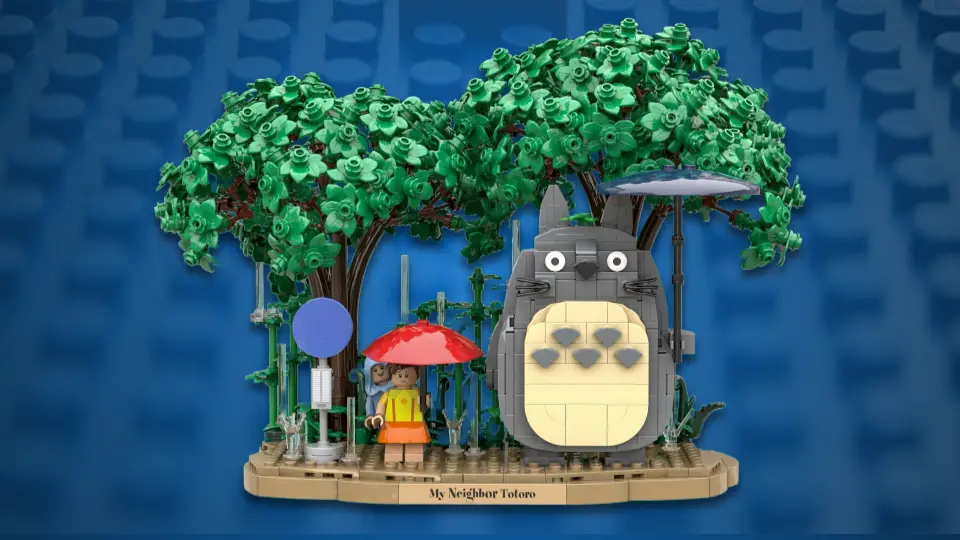
Over the subsequent review cycles, multiple Ghibli builds achieved this landmark status. Submissions ranged from microscale depictions of Howl’s Moving Castle—complete with its shambling, steam-punk legs and soot sprite details—to playsets centered around My Neighbor Totoro’s rustic countryside house and the ancient camphor tree. Despite crossing the finish line with overwhelming community backing, these projects inevitably hit a brick wall during the evaluation phase, stamped with the dreaded "not approved" status.
The 2026 Resurgence
The narrative shifted entering 2026, a landmark year marked by significant studio milestones and a renewed push from builders. When LEGO announced the qualifying entries for the first review period of 2026 back in May, community observers were electrified to find that multiple Studio Ghibli concepts had once again survived the gauntlet of fan voting.
With two separate MOCs directly timed to coincide with major franchise anniversaries—most notably approaching 40-year milestones within the broader Ghibli legacy—the pressure on corporate decision-makers has never been higher. These active submissions represent the closest the fandom has ever come to bridging the gap between Tokyo and Billund.
Supporting Context & Metrics: Navigating the Licensing Labyrinth
To understand why a LEGO Studio Ghibli set has never materialized, one must look past the plastic bricks and examine the sprawling, complicated web of global copyright law and entertainment distribution.
The Mechanics of LEGO Intellectual Property
The modern LEGO portfolio is heavily propped up by lucrative, multi-year intellectual property (IP) partnerships. Major themes such as LEGO Star Wars, LEGO Marvel, LEGO Indiana Jones, and LEGO Disney are streamlined through centralized corporate entities. For instance, The Walt Disney Company acts as a singular master licensor for a vast umbrella of subsidiary brands, making cross-promotion and contractual negotiations remarkably efficient for the LEGO Group.

When a fan submits an idea based on an independent or foreign IP, however, the corporate overhead shifts dramatically:
- Decentralized Distribution: Unlike Disney-owned properties, Studio Ghibli’s global distribution rights are fragmented. While GKIDS handles theatrical and home video distribution in North America, international streaming, merchandising, and regional toy rights are sliced among various entities, including Wild Bunch in Europe and various regional partners in Asia.
- Direct Studio Oversight: Studio Ghibli is famously protective of its brand identity, artistic integrity, and merchandising aesthetic. Founded by Hayao Miyazaki, Toshio Suzuki, and the late Isao Takahata, the studio operates under a philosophy that prioritizes artistic purity over aggressive commercialization.
- Pre-Existing Toy Partnerships: Securing a toy license often requires navigating pre-existing agreements. While companies like Donguri Kyoshoku (the official Ghibli specialty goods store chain in Japan) hold exclusive merchandising rights for specific regions, translating those rights into a global, mass-market construction toy contract requires unprecedented international synergy.
Comparative Case Studies: The X-Files and Beyond
It is worth noting that LEGO is entirely capable of acquiring complex or unexpected licenses when the business case aligns. Recently, the confirmation of an official The X-Files LEGO Ideas set proved that nostalgic, non-traditional properties can break through the review process if the licensing negotiations prove fruitful.
However, The X-Files is a North American television property owned by 20th Century Fox (now under Disney), making the legal pathway relatively straightforward compared to negotiating with a Japanese animation house that historically prefers tightly controlled, artisanal merchandise lines over massive, mass-market plastic manufacturing deals.
Official Statements and Industry Perspectives
While corporate statements regarding unapproved LEGO Ideas concepts are traditionally tight-lipped—usually citing standard review disclaimers about commercial viability and licensing constraints—industry insiders and community liaisons have frequently shed light on the realities of the process.
Representatives from the LEGO Ideas team have consistently reiterated that passing the 10,000-vote threshold is only the beginning of a rigorous corporate journey. In past developer roundtables and design-phase retrospectives, LEGO designers have expressed personal admiration for anime-inspired builds, noting the incredible architectural ingenuity required to translate fluid, hand-drawn animation into rigid brick geometries.
The Fan Community Response
Within online communities such as Reddit’s r/lego and specialized Eurobricks forums, the sentiment regarding Ghibli sets is a mixture of profound hope and weary cynicism. Fans frequently point out the commercial goldmine LEGO is leaving on the table. Sets depicting the whimsical bakery from Kiki’s Delivery Service or the sprawling bathhouse from Spirited Away would effortlessly capture both the adult collector (AFOL) demographic and mainstream pop culture enthusiasts.
Yet, veteran builders also understand the realities of IP law. As one prominent community builder noted during the 2026 review announcements: "We can design the most structurally sound, beautiful Totoro set imaginable, but until someone in Tokyo and someone in Billund sign a piece of paper that satisfies both Ghibli’s artistic standards and LEGO’s profit margins, it’s just a digital render."
Future Outlook: Will We Ever Get a LEGO Studio Ghibli Set?
As the remaining four Studio Ghibli concepts wind their way through the final stages of the 2026 LEGO Ideas review cycle, the ultimate question remains: Is this the year the wall finally crumbles?
Signs of Hope
Several market indicators suggest that the odds are slightly more favorable today than they were a decade ago:
- Mainstream Acceptance of Anime: Anime and Japanese animation have broken decisively into the Western cultural mainstream. Properties that were once considered niche are now driving global box office numbers and massive consumer product lines.
- Adult Collector Focus: The LEGO Group’s aggressive pivot toward the "Adults Welcome" marketing strategy has resulted in sophisticated, display-oriented sets (such as the LEGO Art and LEGO Icons lines) that cater precisely to the demographic that grew up watching Miyazaki films.
- Anniversary Momentum: With major milestones being celebrated across the Ghibli catalog, promotional partnerships are at an all-time high, creating potential windows of opportunity for unexpected global collaborations.
The Verdict
While there are no guarantees that the current batch of review concepts will bypass the corporate chopping block, the sheer persistence of the fan community ensures that Studio Ghibli will remain at the forefront of the conversation. Whether through a surprise LEGO Ideas greenlight or a future, independently negotiated corporate partnership, the day an official brick-built Catbus or Howl’s Castle hits store shelves feels less like an impossibility and more like an inevitable destination waiting for the right alignment of art, commerce, and plastic.
Until that day arrives, builders around the globe will continue to download digital design software, source custom printed bricks, and keep the flame of imagination alive—proving that some dreams are too stubborn to stay unbuilt.