Executive Overview
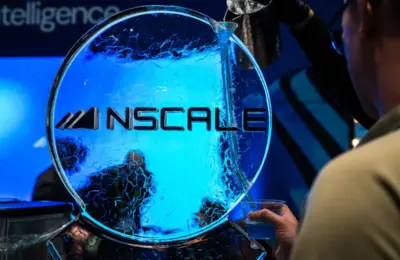
In an era where the rapid expansion of artificial intelligence is straining global energy grids and local resource networks, an unexpected cultural cross-over has thrust one of the tech sector’s most pressing environmental challenges into the mainstream spotlight. Beverage brand Liquid Death—known for its irreverent marketing—recently partnered with craft brewery Garage Beer and retired Philadelphia Eagles offensive lineman Jason Kelce to launch a satirical campaign targeting the immense water consumption of modern AI data centers.
While the campaign humorously calls upon the public to donate their urine to cool down overheating server racks, the premise touches upon an essential and complex engineering reality: hyperscale data centers are consuming billions of gallons of water annually to manage thermal output, forcing the industry to increasingly rely on recycled wastewater streams. As compute-heavy workloads like large language model (LLM) training and real-time inference proliferate, data center operators are confronting acute resource bottlenecks, local community pushback, and critical infrastructure deficits.
What began as a tongue-in-cheek marketing stunt has exposed a broader structural dilemma. Hyperscalers—including Meta, Microsoft, Google, and Amazon—are finding that their ability to scale next-generation hardware relies not just on gigawatts of power, but on millions of gallons of daily water flow. Consequently, the boundary between consumer satire and industrial water management has blurred, highlighting the urgent need to transition from potable municipal drinking water to advanced recycled water infrastructure.
Detailed Chronology: From Satirical Stunt to Industrial Reality
The Viral Campaign That Caught the Tech Industry’s Eye
The campaign opened with a spot featuring Jason Kelce standing against a backdrop of technical hardware and natural environments. "AI data centers waste millions of gallons of water," Kelce quips in the promotional video. "That’s why Liquid Death and Garage Beer have teamed up. We want your pee to cool these data centers."
The commercial culminates in a surreal, comedic scene where a crowd sipping branded beverages marches through an open field, singing in unison: "Let’s pee on computers together to save humanity!"
Behind the comedic delivery lay a genuine industry challenge. The campaign caught fire across social platforms, capitalizing on growing public fatigue over the ubiquitous integration of AI features into everyday consumer software, contrasted against the tangible environmental footprint of physical data centers.
The AI Boom and the Escalating Water Crisis
The genesis of this issue traces back to the rapid hardware deployment race that accelerated in late 2022. Modern high-density server racks housing graphics processing units (GPUs) generate intense heat. To prevent hardware degradation and maintain operating thresholds, facilities rely heavily on cooling systems.
Historically, data centers utilized evaporative cooling towers—systems that pass hot air over wet media, absorbing heat through water evaporation. While energy-efficient compared to mechanical refrigeration alone, evaporative cooling demands massive volumes of high-quality water. As data center footprints expanded across North America and Europe, hyperscalers began consuming significant portions of regional potable water supplies, leading to municipal tension and legal friction in water-stressed regions.
The Technical Reality Behind the Joke
While the campaign urged citizens to directly target server equipment with raw urine, environmental engineers and water treatment specialists were quick to clarify the underlying chemistry. Raw human urine cannot be directly introduced into industrial cooling infrastructure.
Human urine contains high concentrations of dissolved solids, urea, sodium, uric acid, and organic compounds. Introducing untreated biological liquid directly into industrial evaporative cooling towers would lead to extreme biological fouling, aggressive scaling on heat exchangers, accelerated pipe corrosion, and severe odor issues caused by ammonia volatilization when exposed to warm air streams.
However, once human liquid waste enters municipal sewage systems, it forms part of the influent stream at wastewater treatment plants. Through multi-stage purification processes, this waste is converted into high-grade industrial recycled water—making Kelce’s joke unexpectedly accurate in its broader concept.
Supporting Context & Technical Metrics
Thermodynamics and the Mechanics of Evaporative Cooling
Data center thermal management relies on fundamental thermodynamic principles. When servers execute complex algorithms, electrical energy converts almost entirely into thermal energy. Heat must be continuously rejected from the server chassis to maintain stable operating temperatures (typically below 85°C for processors).
   +-------------------------------------------------------+
   |             Data Center Thermal Cycle                 |
   +-------------------------------------------------------+
   |                                                       |
   |   [ Server GPUs / Racks ]  -->  Generates Thermal Heat |
   |              |                                        |
   |              v                                        |
   |   [ Heat Exchangers / Air ]                           |
   |              |                                        |
   |              v                                        |
   |   [ Evaporative Cooling Towers ]                      |
   |              |                                        |
   |              +--> (Hot Air + Water Evaporation)       |
   |              |                                        |
   |              v                                        |
   |   [ Makeup Water Required ]                           |
   |        /                                             |
   |       v             v                                 |
   |  (Potable Water)  (Recycled Wastewater)               |
   |   [High Cost]     [Requires Infra]                    |
   +-------------------------------------------------------+
In traditional evaporative cooling systems, dry, warm air from the hot aisles of the computer room is passed through wet cooling pads or sprayed with water droplets. As the water evaporates, it absorbs heat latent in the air, returning cooler air back to the facility. This process requires continuous replenishment of liquid—known as "makeup water"—to replace volume lost to evaporation and to flush away concentrated mineral buildup (blowdown water).
The Water Recycling Pipeline
To render municipal wastewater suitable for industrial cooling towers, water facilities employ advanced, multi-barrier purification processes:
- Primary and Secondary Settling: Removal of large solids and biological organic material via microbial degradation.
- Membrane Bioreactors (MBR): Combination of biological treatment with microfiltration or ultrafiltration membranes to strain out particulate matter and bacteria.
- Reverse Osmosis (RO): High-pressure filtration forcing water through semi-permeable membranes to remove dissolved salts, heavy metals, traces of urea, and micro-pollutants.
- Ultraviolet (UV) Disinfection & Advanced Oxidation: Neutralization of lingering pathogens and trace organic compounds.
The resulting effluent, often referred to as reclaimed or recycled water, meets strict industrial purity criteria, preventing mineral scaling and bio-fouling in high-efficiency cooling systems.
Regional Strain: Loudoun County Case Study
The impact of data center water reliance is nowhere more evident than in Loudoun County, Virginia—widely known as "Data Center Alley." Hosting over 250 operational data center facilities with dozens more in development, the region serves as a global hub for internet traffic routing.
According to data from Loudoun Water, the local public utility, the scale of water consumption within this single jurisdiction demonstrates both the progress and the limits of recycled water adoption:
| Water Source Type | Daily Consumption (Gallons) | Percentage of Total Data Center Water Usage |
|---|---|---|
| Recycled Wastewater | ~200 Million Gallons / Day | 43% |
| Potable Drinking Water | ~260 Million Gallons / Day | 57% |
| Total Water Footprint | ~460 Million Gallons / Day | 100% |
Despite Loudoun County possessing one of the most advanced industrial recycled water distribution loops in the nation, more than half of the region’s massive data center water footprint still relies on clean, potable drinking water sources—competing directly with residential and commercial demand.
Loudoun County Data Center Water Sources (Daily Usage)
=====================================================
Recycled Wastewater: [|||||||||||||||||||] 43% (200M gal)
Potable Water:       [|||||||||||||||||||||||||] 57% (260M gal)
The Rural Infrastructure Deficit
As land availability diminishes and power grid constraints tighten in primary markets like Northern Virginia and Silicon Valley, hyperscalers are increasingly moving into secondary and rural markets. However, rural site selection introduces severe water infrastructure mismatches.

Small municipal utility providers in rural districts typically operate wastewater treatment plants designed solely for low-volume residential populations. These facilities lack both the volumetric capacity to supply millions of gallons of daily process water and the capital equipment (such as tertiary RO filtration) required to produce industrial-grade effluent. Consequently, data centers built in rural areas often rely entirely on local aquifers or municipal drinking water networks, sparking intense local environmental disputes.
Official Statements and Industry Insights
Experts across water management, engineering, and data center operations emphasize that while satire draws attention to the topic, addressing the underlying infrastructure gap requires sustained capital investment and policy intervention.
Perspectives from Environmental and Engineering Leadership
Michael Obradovitch, Vice President of Data Center Global Accounts at water treatment giant Ecolab, emphasized that utilizing non-potable water is already a core strategy for modern facilities, albeit one that needs expansion:
"The Liquid Death commercial is funny and tongue-in-cheek. But in reality, there is a fair amount of alternative water sources already being used to a similar extent to cool these data centers… That’s where data centers can actually come in and be anchors of water infrastructure. There’s a number of cases and examples where data centers, as part of their engagement with communities, have committed funding and capital to some of these municipalities to help in addressing some of those exact challenges."
Dr. Greta Zornes, Practice Leader for Water Reuse at global engineering firm CDM Smith, noted a dramatic shift in industry demand over recent years:
"We use recycled water for cooling for all kinds of industries, and we have for decades. So this is only one application, but definitely, there’s been a boom in recycled water for data center cooling. Every day right now, I’m working on recycled water for data centers."
Zornes further pointed to the logistical obstacles hindering faster deployment:
"You have to be somewhat near a wastewater treatment facility that’s sizable enough that you have enough water to use. So when data centers go out into rural areas, a lot of times the wastewater treatment plants just aren’t big enough — they’re not treating enough water for them to be able to take it and treat it and use it. There’s a lot of infrastructure that has to be built out and usually isn’t existing today, and that takes time. That’s one of the problems — it’s just the time that it takes to get that done."
Bruno Pigott, Executive Director of the WateReuse Association and former acting assistant administrator in water for the U.S. Environmental Protection Agency (EPA), addressed both the comedic premise and the underlying chemistry:
"Pee contains all sorts of stuff. It contains salts, it contains urea, bacteria, organic matter of all sorts that can leave mineral deposits. If you just put that into a cooling tower or something else, it would require constant cleaning. One of the methods of cooling is called evaporative cooling, where hot air is passed through water to remove heat through evaporation. Can you imagine if you just poured urine through hot air?"
"You wouldn’t just use pee, but you can clean it and make it into useful water, and that’s what we advocate… I’m glad that people are concerned about water, and anything that raises awareness of water, however crude it may be, could actually be beneficial. It gives us a chance to educate the public about what we’re doing today."
Corporate Capital Allocation
Recognizing the reputational and operational risks of water scarcity, tech conglomerates have begun funding dedicated utility upgrades. Meta, for instance, committed over $270 million toward municipal wastewater infrastructure projects directly adjacent to its data center campuses, attempting to offset its water footprint by expanding treatment capacity for host communities.
Future Outlook: Policy Reforms, Public Backlash, and Infrastructure Realities
Legislative Solutions and Economic Incentives
To accelerate the transition away from drinking water, industry advocacy groups are pushing for targeted legislative mechanisms. The WateReuse Association and bipartisan members of Congress have championed federal initiatives, including the proposed Advancing Water Reuse Act.
This legislation seeks to establish a 30% investment tax credit for commercial and industrial entities that construct or integrate recycled water infrastructure. Proponents argue that a dedicated tax credit would dramatically shorten the payback period for hyperscalers building dedicated purple-pipe networks (the industry standard color for non-potable reclaimed water lines) directly connecting municipal treatment facilities to data center cooling plants.
Escalating Public Sentiment and Community Backlash
The viral resonance of Liquid Death’s campaign highlights a growing social rift regarding technology deployment. Communities across North America and Europe are increasingly scrutinizing data center site proposals, questioning whether local tax revenues justify the consumption of municipal resources.
According to a nationwide survey by Gallup, approximately 70% of Americans oppose the construction of data centers in their immediate local communities. This sentiment is driven by concerns over:
- Cumulative strain on residential electricity prices and grid stability.
- Depletion or contamination of local groundwater aquifers.
- Noise pollution from continuous industrial HVAC and back-up diesel generator operations.
- Skepticism regarding the tangible public benefits of resource-intensive AI models.
As consumer skepticism grows, tech giants face increasing public relations pressure to prove that their AI platforms provide positive societal utility that offsets their physical resource consumption.
Public Attitude Toward Local Data Center Construction (Gallup Survey)
====================================================================
Oppose Construction:   [||||||||||||||||||||||||||||||] 70%
Support / Neutral:     [||||||||||||] 30%
Strategic Imperatives for the Next-Generation Data Center
Moving forward, the data center industry is pursuing several technical paths to break its reliance on local water supplies:
- Direct-to-Chip Liquid Cooling: Closed-loop systems that circulate dielectric fluids or treated water directly across server microprocessors. Because these loops are completely sealed, they experience zero evaporative loss, drastically reducing ongoing water intake.
- Dry Cooling and Air-Cooled Chiller Arrays: Eliminating water entirely by relying on ambient air temperature and mechanical refrigeration. While this approach neutralizes water usage, it significantly increases facility electricity consumption—creating a direct trade-off between energy efficiency and water conservation.
- Mandatory Offsite Reclamation Agreements: Future facility permitting will increasingly require data center developers to fully fund tertiary municipal wastewater treatment systems before groundbreaking can occur.
Ultimately, Liquid Death’s irreverent campaign achieved something rare for a corporate publicity stunt: it accurately distilled a complex, technical crisis into a mainstream cultural conversation. While public urine donation will remain a joke, the tech industry’s urgent pivot toward advanced wastewater recycling is becoming an essential condition for the future of computing.