Executive Overview
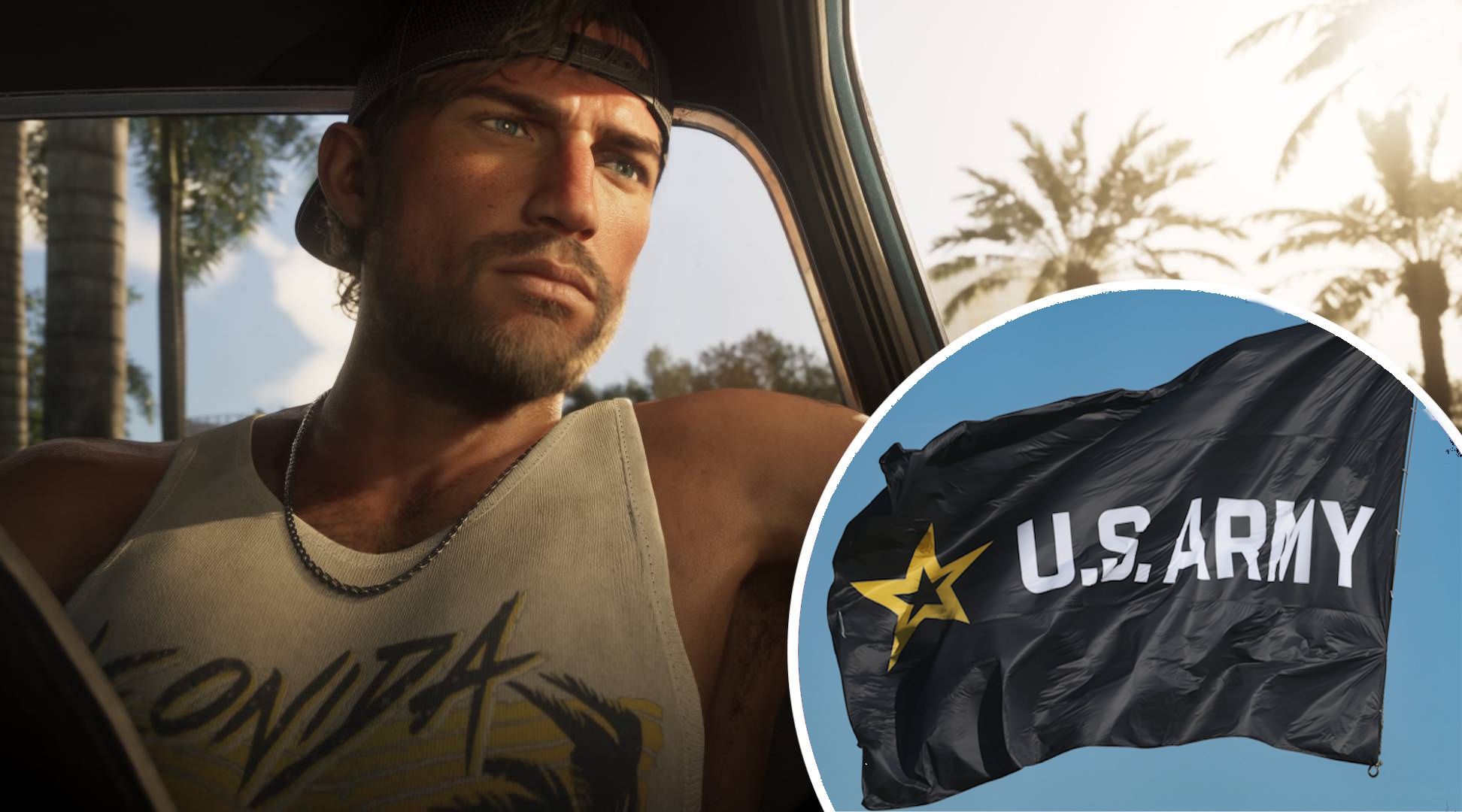
In an era where modern military recruitment and retention strategies increasingly intersect with youth culture, the United States Army has struck a nerve—and set social media ablaze—with a decidedly contemporary incentive package. The U.S. Army’s 3rd Infantry Division has officially confirmed that it is offering a four-day pass to soldiers who agree to reenlist for a minimum of two years. The catch? The time off is specifically timed to coincide with the highly anticipated November launch of Rockstar Games’ blockbuster title, Grand Theft Auto 6.
The policy, outlined in a "Special Reenlistment Incentive" memo dated July 28, quickly surfaced via the viral Instagram account U.S. Army WTF! Moments, igniting a fierce debate across digital forums. To civilian observers, trading an absolute minimum of 24 additional months of military service for a four-day gaming weekend might seem like an unbalanced, almost satirical bargain. Yet, within the hyper-targeted ecosystem of military retention—where commanders constantly seek creative pathways to preserve institutional talent—the program is viewed as a pragmatic, morale-boosting administrative bonus.
While critics decry the maneuver as a tone-deaf or predatory exploitation of young service members’ media consumption habits, Army leadership maintains a different perspective. They frame the initiative not as a desperate recruitment stunt, but as an organic, localized effort by junior leadership to reward qualified troops in a manner that genuinely resonates with their personal interests. This deep dive examines the genesis of the policy, the numbers behind its rollout, the historical context of the military’s engagement with the gaming industry, and the broader socio-political questions raised when digital entertainment and national defense collide.
Detailed Chronology: From Bureaucratic Memo to Viral Phenomenon
The story of how one of the world’s most anticipated video games became a bargaining chip for American military service begins quietly within the bureaucratic machinery of the U.S. Army, only to explode across the public consciousness via social media channels.
- July 28, 2026: A specialized "Special Reenlistment Incentive" memo is drafted within the ranks of the U.S. Army’s 3rd Infantry Division. Formulated to address fiscal year 2027 retention goals for the 9th Brigade Engineer Battalion, the memo outlines a novel pass system. It states that any soldier signing a reenlistment contract between August 1, 2026, and November 14, 2026, will be authorized a special four-day administrative pass.
- Late Summer 2026: The internal memo leaks beyond secure military channels, landing on the popular Instagram page U.S. Army WTF! Moments. The account, known for exposing the unfiltered, often absurd realities of day-to-day military life, publishes the document, immediately triggering widespread public fascination and skepticism.
- August – September 2026: As the post goes viral, mainstream gaming outlets and military watchdogs begin analyzing the implications. Commentators across social media platforms question the disparity between a multi-year military commitment and a fleeting four-day gaming window, drawing comparisons to broader socioeconomic pressures facing young Americans.
- Fall 2026: Army public affairs officers step forward to clarify the scope of the program. Representatives confirm that the initiative is not a blanket, Army-wide mandate, but a localized, creative pilot program engineered by unit career counselors to directly engage troops sitting inside their active retention windows.
Supporting Context & Metrics: Retention, Reality, and the Gaming Economy
To understand why the 3rd Infantry Division leaned into Grand Theft Auto 6 as a retention tool, one must examine the operational pressures facing modern military branches. While recruitment numbers have experienced occasional surges—often tied to broader economic anxieties, inflation, and civilian job market fluctuations—retaining experienced, fully trained personnel remains a perennial hurdle.
The Numbers Game
According to leadership within the 9th Brigade Engineer Battalion, the localized program targeted a specific pool of candidates:
- Eligible Population: Approximately 130 soldiers within the battalion met the criteria for this specific retention window.
- Commitment Length: To qualify, service members were required to extend their service by a minimum of two years, with options stretching up to six years.
- Initial Uptake: Within weeks of the memo’s public circulation, roughly 20 of the 130 eligible soldiers had formally opted into the program.
Military analysts point out that while a four-day pass sounds trivial to an outsider, time off within structured military environments is a heavily regulated and highly prized commodity. For soldiers enduring grueling field training rotations, erratic deployment schedules, and demanding operational tempos, guaranteed consecutive days of unstructured personal time hold significant psychological value. Furthermore, military officials note that a portion of those who accepted the incentive likely intended to reenlist regardless, choosing the GTA 6 pass simply as a value-added bonus layered on top of standard retention benefits, such as station-of-choice assignments or specialized military occupational specialty (MOS) bonuses.
The Broader Socio-Economic Critique
Despite the internal success reported by unit leaders, the program has drawn sharp criticism from civilian commentators and veterans’ advocacy circles. Critics argue that leveraging a pop-culture touchstone like Grand Theft Auto 6 highlights a systemic disconnect.
This critique frequently intersects with broader reporting on military recruitment demographics. Investigations—such as recent analyses by major news networks highlighting that many new recruits struggle to identify fundamental government offices like the Secretary of Defense—paint a picture of an organization drawing heavily from economically vulnerable demographics. In an economic climate marked by high living costs and shrinking civilian opportunities, critics argue that dangling access to consumer entertainment products before young adults creates an asymmetric dynamic. To detractors, framing a two-year contract extension around a video game launch trivializes the gravity of military service and the potential risks of deployment.
Official Statements and Leadership Perspectives
In response to the public discourse surrounding the viral memo, military public affairs representatives have pushed back against the narrative that the program is predatory or emblematic of a desperate force.
Lt. Col. Angel Tomko, speaking directly on the mechanics and philosophy behind the initiative, emphasized that the idea originated from the ground up, driven by modern career counselors seeking to relate directly to the modern enlisted demographic.
"The idea was to have a unique incentives program that connects to what soldiers are interested in," Lt. Col. Tomko explained. "The command team, in conjunction with the career counselor, wanted to get soldiers excited to reenlist. The command team thinks eligible soldiers are more aware that they are in their window for reenlistment and engage their leadership and the career counselor earlier to see available opportunities."
Tomko stressed that the program is entirely localized to the 3rd Infantry Division and should be viewed as an administrative perk rather than a sweeping institutional policy.
"Reenlistment incentives are routine for the U.S. Army to reward our soldiers," Tomko noted. "We want to retain the best talent and it’s a credit to the creativity of the career counselor within the organization to develop this unique opportunity surrounding the launch of this popular videogame."
Addressing the public scrutiny and negative social media reactions, Tomko maintained that external commentary fails to capture the day-to-day reality of troop morale.
"The heightened interest in the press does not change the purpose of the program: to reward dedicated soldiers for service to their nation. Every soldier who is eligible for this program is already serving, already trained, and already fully qualified. Reenlistment incentives are a longstanding part of Army retention, and units often tailor them to their formations in ways that build morale and spark early conversations about career options."
A Legacy of Digital Integration: The Military-Gaming Complex
The U.S. military’s decision to tie Grand Theft Auto 6 to a retention contract is merely the latest chapter in a long, deeply intertwined history between the armed forces and the video game industry. For over two decades, the Department of Defense has recognized that youth culture is anchored in interactive digital media, prompting sustained investments in gaming ecosystems for both recruitment and public relations.
A Timeline of Digital Engagement
- 2002 – America’s Army: Debuting nearly 25 years ago—coincidentally arriving just months after the onset of the Global War on Terrorism—the U.S. Army released America’s Army, a free-to-play tactical multiplayer shooter designed explicitly as a recruitment and public outreach tool. The game allowed civilians to experience virtual basic training and simulated combat missions, laying the groundwork for modern military-entertainment complexes.
- 2018 – Esports Expansion: The Army launched its official esports team, operating under the Marketing and Engagement Brigade based at Fort Knox, Kentucky. The team was tasked with competing in popular competitive gaming titles and interacting directly with young audiences on streaming platforms.
- 2020 – Twitch Integration: The military expanded its digital footprint by establishing active streaming channels on Twitch. While intended as informal community engagement, the initiative faced immediate pushback, including being flooded with probing questions regarding foreign policy and historical conflicts, reflecting the friction that occurs when institutional military messaging enters open digital playgrounds.
Viewed through this historical lens, utilizing Grand Theft Auto 6 as a localized retention incentive is not an isolated anomaly, but rather the logical evolution of an institution continuously adapting its vocabulary to match the cultural touchstones of its workforce.
Future Outlook
As the release date for Grand Theft Auto 6 draws closer, the ripple effects of the 3rd Infantry Division’s experimental memo will likely be felt across military human resources departments. While upper command structures are unlikely to mandate video game-based incentives on a national scale, the localized success—measured by the battalion securing dozens of early contract extensions—demonstrates the tangible power of culturally relevant, hyper-targeted reward systems.
For the soldiers of the 9th Brigade Engineer Battalion who secured their four-day passes, November will bring a brief, highly anticipated reprieve from the demands of military life, spent traversing the virtual streets of Rockstar’s latest open world. Meanwhile, for the broader defense establishment, the episode serves as a striking case study in the modern intersection of national service, digital consumerism, and the relentless quest to maintain force readiness in an increasingly online world.