Executive Overview
In the modern landscape of digital governance, few issues have generated as much bipartisan friction, legislative anxiety, and outright regulatory theater as the relationship between the United States government and TikTok. For years, federal legislators, intelligence agencies, and state governors have cast the short-form video juggernaut as an insidious Trojan horse—a direct pipeline for foreign surveillance and psychological manipulation operated by its Beijing-based parent company, ByteDance.
This grave assessment has translated into sweeping legislative action. Across more than 30 states, elected officials have slammed the door on the application, passing draconian bans that prohibit state employees from downloading or using TikTok on government-issued smartphones, laptops, and networks. Governors have stepped before flashing television cameras to warn their constituents about the catastrophic risks of yielding personal data to a foreign adversary, framing their bans as vital acts of digital self-defense.
Yet, a walk through the digital domain reveals a striking, deeply hypocritical paradox. While the executive mansions and state capitols preach vigilance and operational containment, their taxpayer-funded tourism boards are actively scrolling, posting, and dancing.
From the sun-drenched beaches of Florida to the rugged expanses of Montana and the sprawling highways of Texas, state-backed travel organizations continue to operate official TikTok accounts. They leverage the platform’s hyper-addictive recommendation algorithm to peddle scenic vistas, local delicacies, and family-friendly itineraries to millions of Gen Z and millennial travelers.
This glaring disconnect exposes a profound tension at the heart of contemporary American policymaking: when the imperatives of national security collide with the cold, hard economics of destination marketing, economic self-interest almost always wins. TikTok may be treated as a pariah in legislative chambers, but to tourism bureaus tasked with driving multi-billion-dollar visitor economies, it remains too lucrative to quit.
Detailed Chronology: From Capitol Hill Warnings to State-Level Double Standards
To understand how state governments arrived at this dizzying state of cognitive dissonance, one must trace the rapid evolution of the TikTok prohibition movement.
The Regulatory Crackdown Begins
The anti-TikTok crusade gained serious legislative momentum in late 2022. Citing classified intelligence briefings and mounting public anxiety regarding data collection practices—specifically the potential for Chinese intelligence operatives to access U.S. user data—federal agencies and state executives began drawing lines in the digital sand.
Governors across the political spectrum initiated executive orders barring state agencies from permitting TikTok on official hardware. Texas Governor Greg Abbott spearheaded one of the most aggressive campaigns, framing the app as a clear and present danger. In official memorandums, Abbott warned that the platform posed a severe security risk, noting that ByteDance could be compelled by Chinese law to hand over sensitive information gathered from state infrastructure.
Florida Governor Ron DeSantis mirrored these anxieties, enacting stringent prohibitions across the Sunshine State’s public sector networks. Montana followed suit, taking an even more radical step by attempting to enact a total, statewide ban on the application for all residents—a move that immediately triggered fierce legal battles over First Amendment rights.
The Federal Ultimatum
The pressure reached a fever pitch in April 2024, when President Joe Biden signed a landmark bipartisan bill into law. The legislation delivered a clear ultimatum to ByteDance: divest its ownership stake in TikTok within a strict statutory window—ultimately concluding in early 2025—or face a nationwide prohibition across all American app stores and web hosting services.
Proponents of the federal bill pointed to the national security threat posed by algorithmic control, arguing that a foreign adversary could weaponize the platform to shape political discourse or harvest intelligence on American citizens. Yet, despite the apocalyptic warnings issuing from Washington, the enforcement deadlines came and went without a corporate divestiture. Legal challenges wound their way through federal courts, and the app remained fully operational, boasting hundreds of millions of domestic users who continued to upload, stream, and consume content daily.
The Tourism Loophole in Action
Even as these high-stakes geopolitical dramas played out in federal courts and congressional hearing rooms, a parallel reality unfolded on the ground. State-funded and state-sanctioned tourism boards quietly maintained their digital presence, adapting to the whims of the algorithm.
In Texas, where Governor Abbott had issued sweeping bans to safeguard state assets from foreign espionage, the official tourism marketing wing—colloquially operating through channels like @txvacation—continued to publish upbeat, highly polished videos. These clips featured cheerful influencers and state representatives highlighting local landmarks, roadside attractions, and barbecue joints, effectively utilizing the very platform that state leadership condemned as a digital weapon.
Similarly, in Florida, Governor DeSantis’s administration heavily restricted TikTok on state-owned devices while regional and municipal entities—such as @VisitCentralFL—remained active. These accounts continued to beam high-definition footage of white-sand beaches, theme parks, and wildlife reserves directly to the screens of prospective travelers.
This bifurcation created an untenable public relations and operational reality: state employees could face disciplinary action for opening TikTok on a state-issued cell phone while sitting at their desks, yet digital marketing teams down the hall were utilizing the app on personal devices or contracted third-party agencies to pitch state tourism packages to millions of potential visitors.
Supporting Context & Metrics: The Undeniable Power of the Algorithm
The persistence of state tourism boards on TikTok cannot be dismissed as mere bureaucratic oversight or administrative clumsiness. Rather, it is a calculated decision rooted in hard metrics and undeniable audience demographics. Simply put, state marketers cannot afford to ignore where the eyeballs are.
Explosive User Growth and Demographic Reach
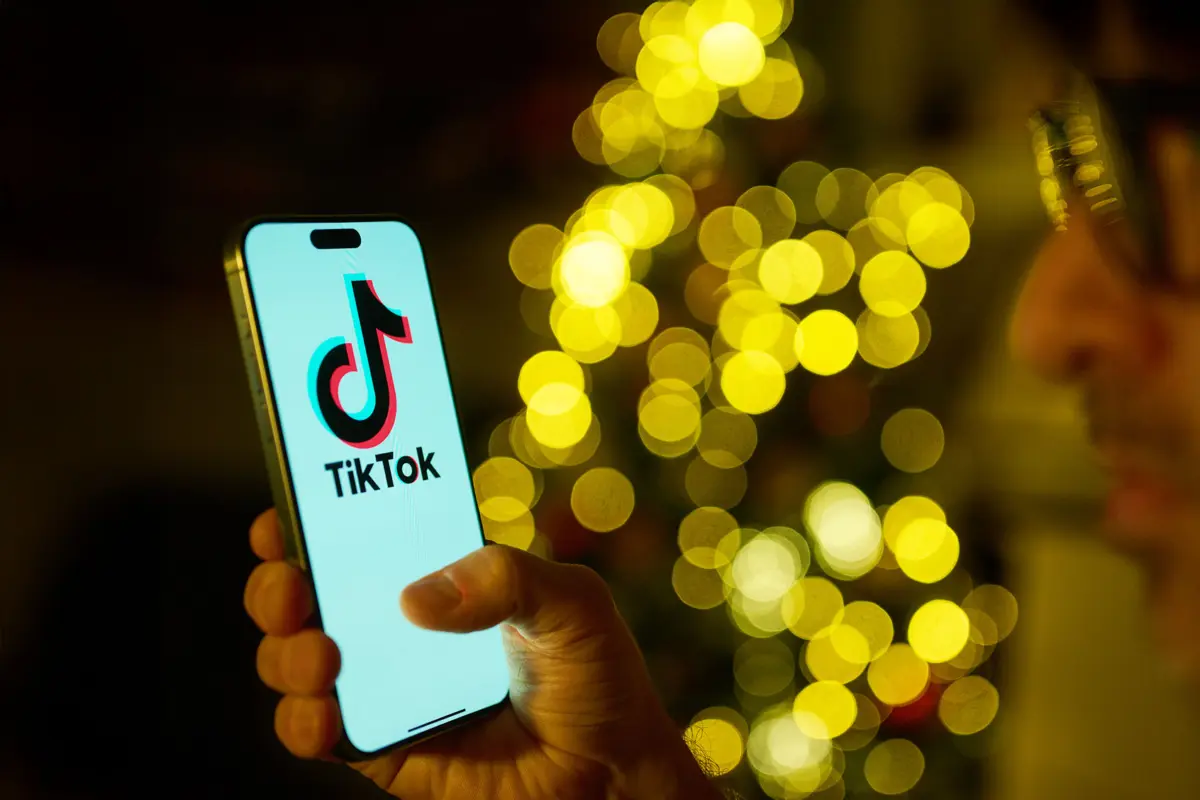
Despite the relentless barrage of negative political rhetoric, TikTok’s popularity has continued to skyrocket. Global user metrics reveal a platform operating at an unprecedented scale:
- Global Footprint: By the close of 2024, TikTok expanded its active user base by an estimated 100 million people, cementing its status as a global communication titan with approximately 1.6 billion active users worldwide.
- Domestic Dominance: Within the United States alone, the platform commands an audience exceeding 135 million users.
- The Gen Z Factor: For younger demographics—specifically Generation Z and younger millennials—traditional forms of advertising such as television commercials, print brochures, and static banner ads hold minimal sway. TikTok’s immersive, video-first format has fundamentally transformed how consumers discover travel destinations, restaurant recommendations, and cultural hotspots.
The Economics of Destination Marketing
Tourism is a massive economic engine for state economies, generating billions of dollars in tax revenue, supporting hundreds of thousands of hospitality jobs, and driving small-business growth. Destination Marketing Organizations (DMOs) are under immense pressure to demonstrate a high return on investment (ROI) for every taxpayer dollar allocated to promotional campaigns.
Market research consistently shows that younger travelers increasingly bypass traditional search engines in favor of social discovery platforms like TikTok and Instagram Reels. A short, engaging 15-second video showcasing a hidden waterfall in Montana, a historic district in Texas, or a coastal sunset in Florida can achieve viral reach and drive bookings in a manner that traditional media campaigns can rarely replicate.
Faced with these economic realities, state tourism boards are trapped in a pragmatic dilemma. To abandon TikTok would be to voluntarily cede a crucial marketing channel to rival states and international destinations, potentially costing local economies millions in lost tourist revenue. Consequently, tourism directors have tacitly embraced a policy of strategic compartmentalization: treat TikTok as a pariah in public policy debates, but treat it as an essential storefront in marketing operations.
Official Statements and Political Rationalizations
The defense mechanisms deployed by state governments to justify this glaring double standard reveal a fascinating study in political gymnastics. When questioned by journalists and watchdog groups about why tourism boards continue to utilize a platform officially deemed a national security threat, state spokespersons typically resort to a familiar set of technical distinctions and semantic maneuvers.
The "Device vs. Platform" Distinction
The primary defense offered by state agencies hinges on a fine legal and technical distinction: the bans target state-issued hardware and official networks, not the inherent legitimacy of the platform itself.
Governors and agency heads frequently argue that the executive orders were designed to prevent foreign entities from embedding malicious software or harvesting sensitive data from government servers and corporate networks. Under this interpretation, as long as state employees manage TikTok accounts using personal smartphones, unmanaged private networks, or third-party marketing contractors who are legally disconnected from state IT infrastructure, the letter of the law is technically upheld.
Critics, however, have been swift to dismantle this defense. Cybersecurity experts point out that the data security risks cited by governors—such as algorithmic surveillance, device fingerprinting, and potential data backdoors—do not vanish simply because a social media manager logs in via an iPhone purchased with personal funds rather than state funds. If TikTok is fundamentally a tool of foreign intelligence gathering, the method of access is irrelevant to the core security vulnerability.
Economic Necessity Overrides Political Rhetoric
Behind closed doors, state marketing officials are often even more candid, albeit off-the-record. Industry insiders acknowledge that tourism boards operate under statutory mandates to maximize visitor numbers and support local commerce. In this context, moral panics and geopolitical posturing take a back seat to the bottom line.
One regional tourism official, speaking on the condition of anonymity, summarized the prevailing sentiment within state marketing circles: "Governors are playing to their political base when they sign these bans, but we have to answer to hotels, restaurants, and tour operators whose livelihoods depend on filling rooms. If the state legislature wants to fund our marketing campaigns, they expect results. Right now, ignoring TikTok would be professional malpractice."
Future Outlook: Navigating the Digital Crossroads
As the regulatory environment surrounding digital platforms continues to evolve, the precarious balancing act performed by state tourism boards is reaching an unsustainable tipping point. Several key trends will dictate how this contradiction resolves in the years ahead.
Escalating Legal and Legislative Battles
The future of TikTok in the United States remains clouded by protracted litigation. Legal challenges asserting that federal and state bans violate First Amendment protections—both for the platform’s operators and for the millions of American creators and businesses who rely on it—are steadily winding their way through the judicial system. Should federal courts ultimately strike down attempts to ban or force the sale of the application, state tourism boards may find themselves vindicated, albeit retroactively, for maintaining their digital presence.
Conversely, if federal regulators succeed in enforcing a nationwide shutdown or structural divestiture of TikTok, state tourism boards will be forced to undergo a rapid, chaotic migration to alternative platforms like Instagram Reels, YouTube Shorts, or emerging decentralized social networks.
The Broader Implications for State Tech Policy
Beyond the fate of a single app, the TikTok hypocrisy highlights a broader, systemic failure in modern state-level technology policy. As geopolitical tensions between the United States and foreign tech powerhouses intensify, lawmakers are increasingly forced to legislate complex, globalized technological ecosystems through a localized, partisan lens.
When political theater diverges too sharply from economic reality, the resulting contradictions erode public trust in government directives. If citizens observe state leaders publicly condemning a platform as a existential threat on Monday, only to watch official state accounts utilize that same platform to promote vacation spots on Tuesday, the gravity of genuine national security warnings is inevitably diminished.
Ultimately, the saga of state tourism boards and TikTok serves as a cautionary tale about the friction between geopolitics and digital commerce. Until policymakers can reconcile their national security rhetoric with the undeniable economic gravitational pull of modern social media, state governments will likely continue their awkward dance—condemning the algorithm with one hand while eagerly riding its reach with the other.