Executive Overview
In a development that has sent shockwaves through Silicon Valley and Capitol Hill, a bipartisan senatorial coalition has launched a sweeping investigation into TikTok. The probe follows revelations that the social media giant conducted a covert algorithmic experiment that stripped critical safety safeguards from approximately 15 million American users. The experiment, designed to measure whether safety protocols suppressed user engagement, left a vast control group exposed to highly toxic, repetitive content. Among those caught in this experimental cohort was Chase Nasca, a 16-year-old from Long Island, New York, who died by suicide after his feed was systematically flooded with thousands of videos promoting self-harm, depression, and suicide.
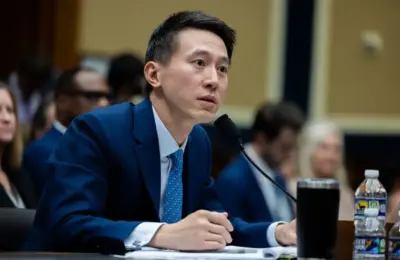
On August 20, 2026, Senators Marsha Blackburn (R-TN) and Richard Blumenthal (D-CT) sent a scathing, highly detailed letter to TikTok Chief Executive Officer Shou Chew and Adam Presser, the head of the company’s U.S. operations. Labeling the company’s decision to conduct human-subject testing without consent as "depraved," the lawmakers demanded absolute transparency regarding the design, authorization, and execution of the experiment. With a strict deadline of September 1, 2026, the congressional ultimatum marks a critical turning point in the battle over algorithmic accountability, product liability, and the ethical boundaries of Big Tech’s optimization practices.
Detailed Chronology: From Code Deployment to Congressional Fury
[Late 2021 / Early 2022]  TikTok deploys a secret experiment disabling safety filters for 10% of U.S. users (15 million people), including minors.
       │
[Feb 2022] ─────────────── 16-year-old Chase Nasca, trapped in the experimental control group, dies by suicide after being bombarded with self-harm content.
       │
[2023 - 2025] ──────────── The Nasca family files a landmark lawsuit; litigation uncovers internal documents regarding algorithmic testing.
       │
[August 2026] ──────────── Bloomberg publishes an investigative exposé detailing the mechanics of the "depraved" experiment.
       │
[August 20, 2026] ──────── Senators Blackburn and Blumenthal issue a formal demand letter to TikTok executives with a Sept 1 deadline.
The origins of the controversy date back to internal engineering decisions made within TikTok’s product development division. According to investigative reporting by Bloomberg, which first exposed the details of the internal testing, TikTok executives and data scientists grew concerned that the platform’s content-dampening algorithms—designed to prevent users from falling into harmful "rabbit holes"—were negatively impacting daily active user (DAU) metrics and overall session lengths.
To quantify this impact, the platform initiated a massive A/B test. The methodology was straightforward yet highly controversial:
- The Treatment Group: Kept the standard algorithmic safeguards, which theoretically detect when a user is spiraling into repetitive, depressive, or self-harm content and inject alternative, lighter content into their "For You" page (FYP).
- The Control Group: Had these protective dampening filters completely disabled. For these users, the recommendation engine was allowed to run completely uninhibited, feeding them increasingly extreme versions of whatever content they lingered on, regardless of its psychological toll.
This control group comprised roughly 10% of TikTok’s United States user base, translating to more than 15 million accounts. No warnings were issued, no parental consent was sought, and no opt-out mechanisms were provided. Minors, who make up a disproportionate segment of TikTok’s highly active user base, were fully integrated into the test.
Among those randomly assigned to this unshielded control group was 16-year-old high school student Chase Nasca. Unbeknownst to his parents, Chase’s FYP became a closed loop of despair. Because the safety mechanisms that should have flagged and broken his exposure to depressive media were turned off, the algorithm interpreted his passive lingering on sad videos as a signal to feed him more of the same. He was targeted with more than 1,000 highly dark, depressive, and suicide-themed videos over a period of weeks. In February 2022, Chase took his own life.
For years, the exact circumstances of Chase’s digital environment remained obscured behind proprietary algorithms and corporate secrecy. However, ongoing wrongful death litigation filed by the Nasca family, represented by the Social Media Victims Law Center, began chipping away at this defense. The breakthrough came in August 2026, when internal communications and documents detailing the mechanics of the 10% bypass experiment were brought to light, prompting immediate action from the Senate Committee on the Judiciary.
Supporting Context & Metrics: The Cost of Engagement
The revelations have reignited a fierce debate over the business model of modern social media platforms, which translates human attention directly into advertising revenue. To understand the scale of the experiment, it is necessary to examine the metrics that govern TikTok’s operations.
| Metric | Estimated Value / Impact |
|---|---|
| U.S. User Base (2026) | ~150 Million Active Users |
| Experimental Cohort Size | 10% of U.S. Base (~15 Million Users) |
| Average Teen Daily Usage | 95+ Minutes |
| Content Delivery Volume | Up to several hundred videos per session |
| Target Safety Bypass | Disabling of repetitive exposure limits on self-harm/suicide content |
The Mechanics of the Algorithmic "Rabbit Hole"
TikTok’s recommendation engine relies on a highly sophisticated deep learning model that processes real-time user behavior. The algorithm tracks micro-behaviors, including:
- Dwell Time: The exact millisecond a user pauses on a video while scrolling.
- Re-watch Rate: Whether a video is watched more than once.
- Sharing and Saving: Active engagement markers that signal high emotional resonance.
When safety features are active, a "dampening" layer acts as a circuit breaker. If the system detects that a user has watched several consecutive videos categorized under "hopelessness" or "self-harm," it is programmed to forcibly diversify the feed with neutral or positive content (e.g., sports, cooking, or comedy). By deliberately turning off this circuit breaker for 15 million users, TikTok’s product team chose to prioritize "dwell time" over psychological safety, knowing that negative emotional triggers are among the most powerful drivers of compulsive app usage.

Official Statements and Congressional Demands
The bipartisan letter sent by Senators Blackburn and Blumenthal represents one of the most aggressive congressional challenges to a tech platform’s internal testing protocols to date. The senators did not mince words, characterizing the experiment as a profound betrayal of public trust and basic human decency.
"Conducting experiments on children to see if safety features decrease engagement—at the expense of their mental health and, ultimately, their lives—is depraved," the senators wrote. "TikTok’s apparent willingness to sacrifice the well-being of millions of its most vulnerable users to optimize profit metrics is a chilling reminder of why strict federal oversight is urgently required."
The 13 Key Demands
The lawmakers have presented TikTok with a list of 13 highly specific, legally consequential questions. Key inquiries include:
- The Target Demographics: Did TikTok actively exclude minors from the 10% control group, or were children treated as standard experimental subjects?
- Executive Authorization: Which specific executives, product managers, and data scientists authorized the disabling of the safety filters?
- Scope of Testing: A complete list of every algorithmic experiment conducted in the United States over the last five years in which safety features were either delayed, degraded, or entirely disabled.
- Internal Pushback: Did any internal trust and safety officers, ethicists, or engineers formally object to the deployment of the experiment?
As of the publication of this report, TikTok has not publically responded to the senators’ letter, nor have they fulfilled requests for comment from major journalistic outlets. Historically, the company has maintained that it employs thousands of safety experts and spends billions of dollars annually on content moderation. However, critics argue that these public relations claims are completely undermined by the company’s internal engineering practices.
Future Outlook: Legal Liabilities and Regulatory Reckoning
The fallout from this controversy is expected to reshape the legal and regulatory landscape for social media companies. Historically, interactive computer services have enjoyed broad immunity from liability for third-party content under Section 230 of the Communications Decency Act. However, legal scholars argue that this defense may not hold up in the face of the new revelations.
The Shift from Content to Product Design Liability
The core of the legal argument against TikTok is shifting. Plaintiffs’ attorneys are no longer arguing merely that TikTok hosted harmful content; instead, they are arguing that the platform’s intentional modification of its product architecture—specifically, the deliberate removal of safety features for testing purposes—constitutes a defective and dangerous product design.
- "Section 230 was never intended to protect companies that actively conduct hazardous experiments on their users," says Matthew P. Bergman, founder of the Social Media Victims Law Center. "When TikTok chose to turn off the safety switch for Chase Nasca, they didn’t just host a video—they designed a lethal delivery mechanism."
Legislative Momentum: The Kids Online Safety Act (KOSA)
This scandal is highly likely to provide the final, decisive momentum needed to pass the Kids Online Safety Act (KOSA) into law. KOSA, which has been championed by both Blackburn and Blumenthal, would impose a strict "duty of care" on social media platforms, legally requiring them to prevent and mitigate harms to minors, including suicide, eating disorders, and substance abuse.
If KOSA is enacted, experiments like the one conducted by TikTok would not just be considered ethically bankrupt—they would be outright illegal, exposing executives to severe civil penalties, mandatory independent audits, and potential criminal negligence charges.
As the September 1, 2026, deadline approaches, the tech industry is watching closely. The answers TikTok provides—or fails to provide—will likely determine whether the platform faces a new wave of federal lawsuits, state-level bans, and a fundamental restructuring of how recommendation algorithms are allowed to operate in the United States.