By Saf Malik
Senior Content and Insights Manager
Executive Overview
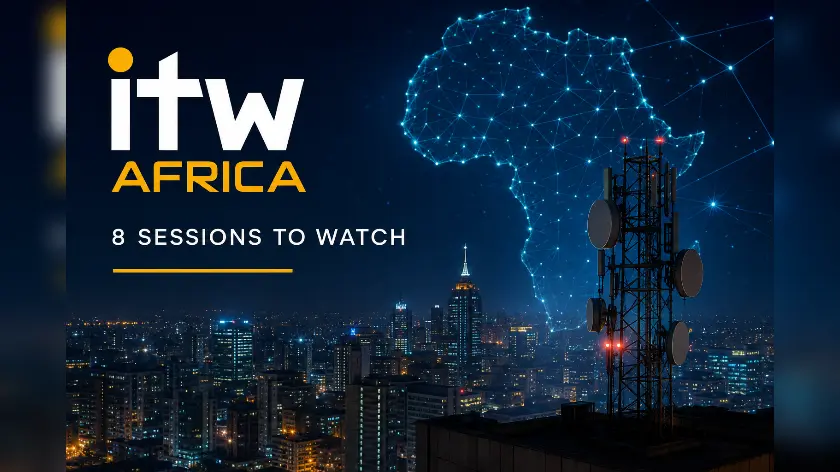
As Africa’s digital transformation accelerates at an unprecedented pace, the continent’s premier digital infrastructure gathering, ITW Africa, is officially returning to Nairobi, Kenya. Scheduled to run from September 7 to September 10, the landmark event promises to serve as a high-stakes crucible for the leaders, investors, policymakers, and innovators steering the future of telecommunications and data storage across the region.
This year’s conference is notably comprehensive, running its signature ITW and Datacloud tracks alongside highly anticipated, dedicated summits focused on fibre optics, sustainable energy, voice and messaging, and strategic investment. With the official agenda now confirmed, industry stakeholders are turning their attention to the critical panels and workshops designed to address the operational realities of the continent.
From scaling sustainable delivery and evaluating real demand versus built capacity, to navigating shifting regulatory landscapes—such as Nigeria’s looming 2027 Data Localisation Directive—ITW Africa 2026 is poised to tackle the hard truths facing the sector. As operators, hyperscalers, and regulators converge in Nairobi, the conversations held this September will undoubtedly shape the architecture of Africa’s digital economy for the next decade.
Detailed Chronology and Key Sessions: What to Watch at ITW Africa 2026
The four-day conference is packed with critical discussions, high-level roundtables, and forward-looking workshops. Based on the finalized agenda, industry experts have highlighted key sessions that are expected to set the tone for the entire event.
1. The Grand Opening Keynote: From Strong Foundations to Sustainable Scale
- Speakers: Wole Abu (Equinix), Andile Ngcaba (Convergence Partners), Adil El Youssefi (Africa Data Centres), Chris Wood (WIOCC)
- Chaired by: Silvia Peneva
The opening keynote panel immediately dives into the deep end of the continent’s digital growth. Over the past several years, Africa has laid formidable foundations in connectivity and attracted billions in foreign and domestic investment. However, the core question facing this high-profile panel is how to translate these strong foundations into large-scale, sustainable commercial delivery. Setting the framework for the rest of the week, these industry titans will explore how operators can bridge the gap between initial infrastructure deployment and long-term, profitable, and eco-friendly operational scale.
2. Supply vs. Demand: A Reality Check on African Data Centres
- Chaired by: Johann Adjovi (Analysys Mason)
- Participants: iXAfrica, Open Access Data Centres (OADC), Wingu Africa, UniCloudAfrica
Given the massive influx of capital directed toward African data centre construction over the past 24 months, this session serves as an essential reality check. Chaired by Johann Adjovi, the panel brings together leading data centre operators to interrogate a pressing question: Is the immense capacity currently being built actually being matched by real, sustained market demand? As new facilities come online in key hubs, this session will evaluate utilization rates, enterprise adoption curves, and the risk of over-saturation in specific sub-regions.
3. The Open Access Model Under Pressure
- Chaired by: McKinsey & Company
- Participants: Infratel, Africa Infrastructure Investment Managers (AIIM)
For over a decade, the open-access model has acted as the primary catalyst for African connectivity growth, allowing multiple operators to share infrastructure and drive down costs. However, this session examines whether the model can survive current macro-economic headwinds, including a wave of industry consolidation, skyrocketing energy costs, and increasingly stringent regulatory scrutiny. With representatives from Infratel and AIIM, attendees can expect a frank, unvarnished discussion on whether shared infrastructure can continue to work commercially as operators aggressively consolidate assets to achieve economies of scale.
4. Anatomy of Outages: Routing, Resilience, and Data Sovereignty
- Speakers: Representatives from WIOCC, Google, Digital Realty, Cassava Technologies
Moving away from forward-looking speculation, this session is grounded in concrete operational reality. Recent subsea cable cuts and terrestrial network outages sent shockwaves through African economies, revealing critical vulnerabilities in routing, redundancy, and data transit policies. Industry leaders from Google, Digital Realty, WIOCC, and Cassava Technologies will unpack what these recent incidents revealed about the continent’s resilience, examining where traffic is forced to travel and how operators can engineer more robust, self-healing networks.
5. Breaking Down Regulatory Barriers: A Regional Roundtable
- Chaired by: Temitope Osunrinde (Africa Hyperscalers)
- Participants: Representatives from the Nigerian Data Protection Commission (NDPC), NITDA, ATCON, and ICASA
Regulatory friction remains one of the most frequently cited bottlenecks slowing down the rollout of towers, fibre networks, and data centres across Africa. Chaired by Temitope Osunrinde, this powerhouse roundtable brings together key regulatory bodies from Nigeria, South Africa, and broader industry associations (including ATCON). The discussion will directly target fragmented licensing regimes, ambiguous rights-of-way, and inconsistent local permitting processes, seeking actionable pathways toward regulatory harmonization.
6. Powering the Digital Shift: Reliability Over Generation Capacity
- Chaired by: Christian Tshishiku (DC Byte)
In almost every emerging digital market in Africa, power reliability—rather than raw capital or construction capabilities—remains the ultimate operational constraint. Christian Tshishiku of DC Byte chairs a critical discussion addressing why the quality and stability of power supply matter exponentially more than sheer generation capacity. The panel will explore what energy providers realistically need from the digital infrastructure sector to plan long-term investments, shedding light on hybrid energy solutions, grid partnerships, and microgrids.
7. Mapping Regional Growth Hubs and Hyperscale Expansion
- Panel 1 Chaired by: Milan Radia (ConnectedCompute) with Rack Centre and Teraco
- Panel 2 Chaired by: Guy Zibi (Xalam Analytics) with Equinix and Raxio
Divided into two deeply analytical, connected panels, this session maps out the distinct pace and shape of data centre growth across various African regions. While Milan Radia explores developments with established giants like Rack Centre and Teraco, Guy Zibi navigates broader continental trends with Equinix and Raxio. Together, these sessions will demystify what is driving clear hub formation in cities like Lagos, Nairobi, Johannesburg, and Cairo, while identifying emerging secondary markets ripe for investment.

8. Deep Dive: Nigeria’s 2027 Data Localisation Directive and Investment Flows
As Africa’s largest digital economy, Nigeria commands immense attention from global investors. With the 2027 Data Localisation Directive fast approaching, this dedicated workshop explores how capital is flowing across the country’s digital infrastructure ecosystem. Experts will dissect the policy reforms urgently required to accelerate deployment, making this session an essential standalone briefing for any enterprise looking to capture market share in West Africa.
Supporting Context and Industry Metrics
To fully appreciate the gravity of the discussions slated for ITW Africa 2026, one must examine the broader economic and technological landscape of the continent.
Over the last five years, Africa’s internet user base has expanded exponentially, propelled by a youthful, tech-savvy demographic, rapid mobile-money adoption, and expanding fiber-optic footprints. According to recent industry metrics:
- Data Centre Growth: The African data centre market has experienced a compound annual growth rate (CAGR) exceeding 12%, with co-location and hyperscale investments funnevled predominantly into four major regional hubs: South Africa, Nigeria, Kenya, and Egypt.
- Subsea Cable Investments: Billions of dollars have been committed to high-capacity subsea cables (such as 2Africa and Equiano) circling the continent, dramatically lowering bandwidth costs and improving international connectivity.
- The Energy Hurdle: Despite these triumphs, over 60% of data centre operators in Sub-Saharan Africa cite power outages and unreliable grid infrastructure as their primary operational expenditure (OpEx) risk, forcing many to rely heavily on expensive diesel generators or pivot toward captive renewable energy projects (solar and hydro).
These dynamics underscore why events like ITW Africa—and specifically its Datacloud and energy tracks—are not merely networking opportunities, but essential problem-solving forums for the industry’s survival and maturation.
Official Perspectives and Industry Voice
The anticipation surrounding ITW Africa 2026 reflects a broader sentiment of cautious optimism across the telecommunications sector.
"The narrative in African digital infrastructure has shifted," notes a leading industry analyst ahead of the event. "We are no longer just talking about laying the first miles of cable or building our very first data facilities. The conversation today is about maturation, resilience, and profitability. Investors want to see returns, enterprises demand absolute reliability, and regulators are trying to catch up with a runaway digital train. Nairobi will be the litmus test for how the industry addresses these realities collectively."
By bringing together competing operators, hyper-scalers, financial institutions, and government regulators under one roof, ITW Africa provides a rare neutral ground where collaborative ecosystems can be forged. The focus on concrete case studies—such as post-outage routing strategies and regulatory harmonization—signals a mature industry ready to transition from ambitious promises to ironclad execution.
Future Outlook: What ITW Africa 2026 Means for the Next Decade
As the curtain rises on ITW Africa 2026 in Nairobi, the stakes could not be higher. The outcomes of the panels, workshops, and bilateral meetings held between September 7 and 10 will ripple across the continent’s digital landscape for years to come.
Key milestones to watch in the wake of the conference include:
- Regulatory Alignment: Whether regional bodies like NITDA, the NDPC, and ICASA can take tangible steps toward harmonizing cross-border licensing and data protection laws.
- Energy Innovation: How data centre operators and energy providers structure public-private partnerships to guarantee green, reliable power supplies, mitigating reliance on fossil fuels.
- Consolidation and M&A Activity: How smaller open-access providers navigate the tightening economic climate, and whether market consolidation leads to stronger, more resilient pan-African telecommunication giants.
Ultimately, ITW Africa 2026 is more than a conference; it is the definitive roadmap for Africa’s digital destiny. As stakeholders gather in Nairobi, the collective ambition remains clear: to build a connected, secure, and digitally empowered Africa capable of competing on the global stage.
For more information on the full agenda, speaker line-ups, and registration details, visit the official ITW Africa Agenda and secure your pass via the ITW Africa Registration Portal.