Executive Overview
As the Super Nintendo Entertainment System (SNES) marks its milestone 35th anniversary, players and industry analysts alike find themselves reflecting on a console that fundamentally shaped modern video game design. Launched in North America in November 1991, the 16-bit powerhouse became a cultural touchstone, serving as the battleground for the fierce "console wars" of the era and birthing franchises that remain pillars of the industry today.
While cultural memory frequently gravitates toward universally acclaimed heavyweights like Super Mario World, The Legend of Zelda: A Link to the Past, and Chrono Trigger, the system’s expansive global library contains vast expanses of overlooked and region-locked curiosities. Thanks to modern digital distribution platforms such as the Nintendo Switch Online (NSO) app, contemporary audiences have unprecedented access to titles that never graced Western shores or were overshadowed at retail by marketing juggernauts.
Revisiting these archives offers more than mere nostalgia; it provides a fascinating archaeological window into 1990s game development, highlighting experimental control schemes, innovative puzzle mechanics, and distinct genre hybrids. This retrospective examines five distinct, lesser-known SNES titles—ranging from quirky falling-block puzzle games to chaotic arena brawlers—evaluating how they hold up three and a half decades after the hardware’s original debut.
Detailed Chronology: A Retrospective Journey Through Five Overlooked Classics
5. Cosmo Gang The Puzzle (Namco)
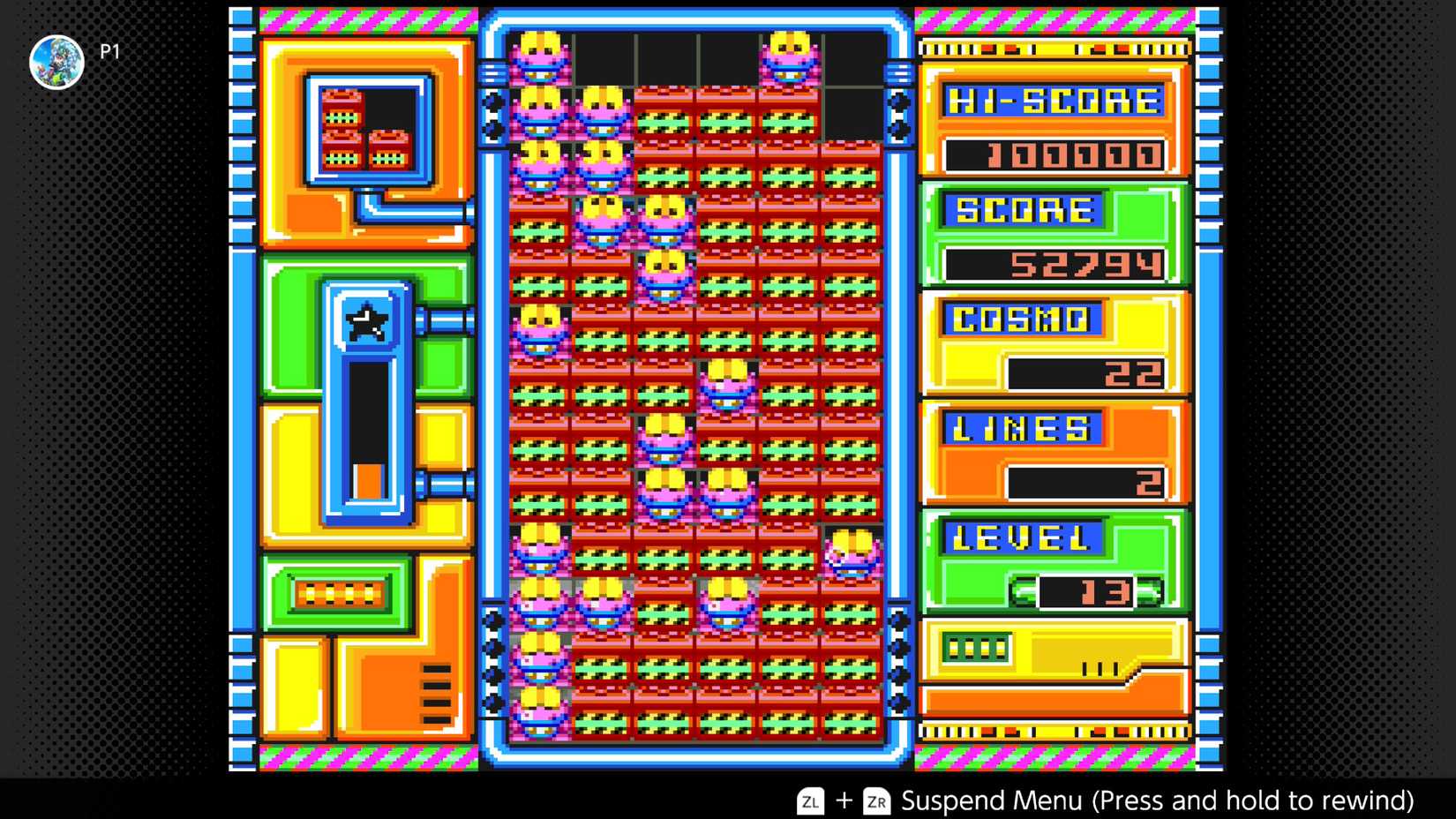
At first glance, Namco’s Cosmo Gang The Puzzle reads as an uninspired, space-themed clone of Alexey Pajitnov’s legendary Tetris. However, spending time with the title reveals a deeply strategic puzzle framework that bridges the gap between traditional line-clearing and the positional planning seen in titles like Puyo Puyo.
Unlike Tetris, which continuously tests spatial awareness with a diverse array of geometric tetrominoes, Cosmo Gang restricts the player to a uniform 2×1 block shape. These blocks contain mixtures of space metal, hostile aliens, and directional arrows. While solid metal blocks are cleared by completing horizontal rows in standard puzzle fashion, alien blocks are completely immune to traditional row completion.
To eradicate the aliens, players must deploy directional arrow squares adjacent to them. Once triggered, the arrow races along the grid in a cardinal direction, wiping out connected lines of aliens. Crucially, the pathing mechanics introduce high-level risk and reward: the clearing arrow halts instantaneously upon colliding with a metal block. This strict spatial limitation forces players to meticulously construct pathways, transforming what appears to be a casual arcade diversion into a thoughtful exercise in forward-thinking logic.
4. Mario and Wario (Game Freak / Nintendo)
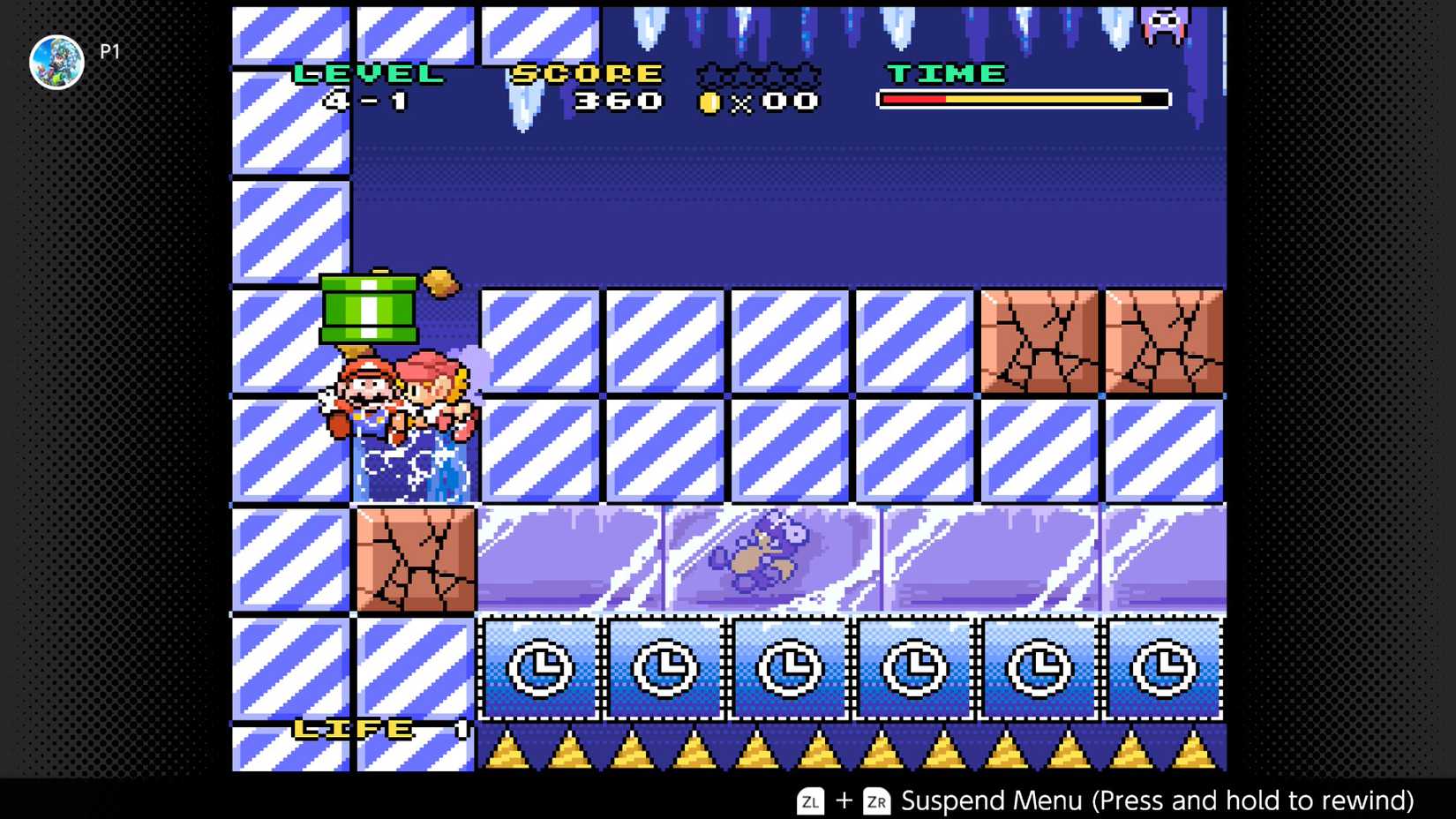
Developed by Game Freak prior to their global domination with Pokémon, Mario and Wario represents one of the most eccentric experiments in Nintendo’s history. Starring Wario in a delightfully antagonistic role, the title was designed explicitly to showcase the Super NES Mouse peripheral—a hardware accessory that ultimately struggled to find a permanent foothold in the console market.
In this title, players do not control the titular plumbers directly. Instead, they guide Wanda, a benevolent fairy, whose task is to lead an incapacitated Mario, Princess Toadstool, or Yoshi safely across hazardous stages after Wario drops an obstructive bucket or pot over their heads. Wanda must use a magic wand to manipulate the environment, activate platforms, shatter barriers, and neutralize obstacles.
While the visual design is charming and serves as an intriguing conceptual prototype for later puzzle-platformers like Mario vs. Donkey Kong, the execution is heavily hindered by its mandatory mouse controls. The sensitivity and precision of the SNES Mouse—or its modern software emulation—often leaves Wanda lagging frustratingly behind the automatically moving protagonist. Despite its control frustrations, the game remains an essential historical artifact, highlighting an era when Nintendo was intensely willing to gamble on unproven input methods.
3. Uncharted Waters: New Horizons (Koei)
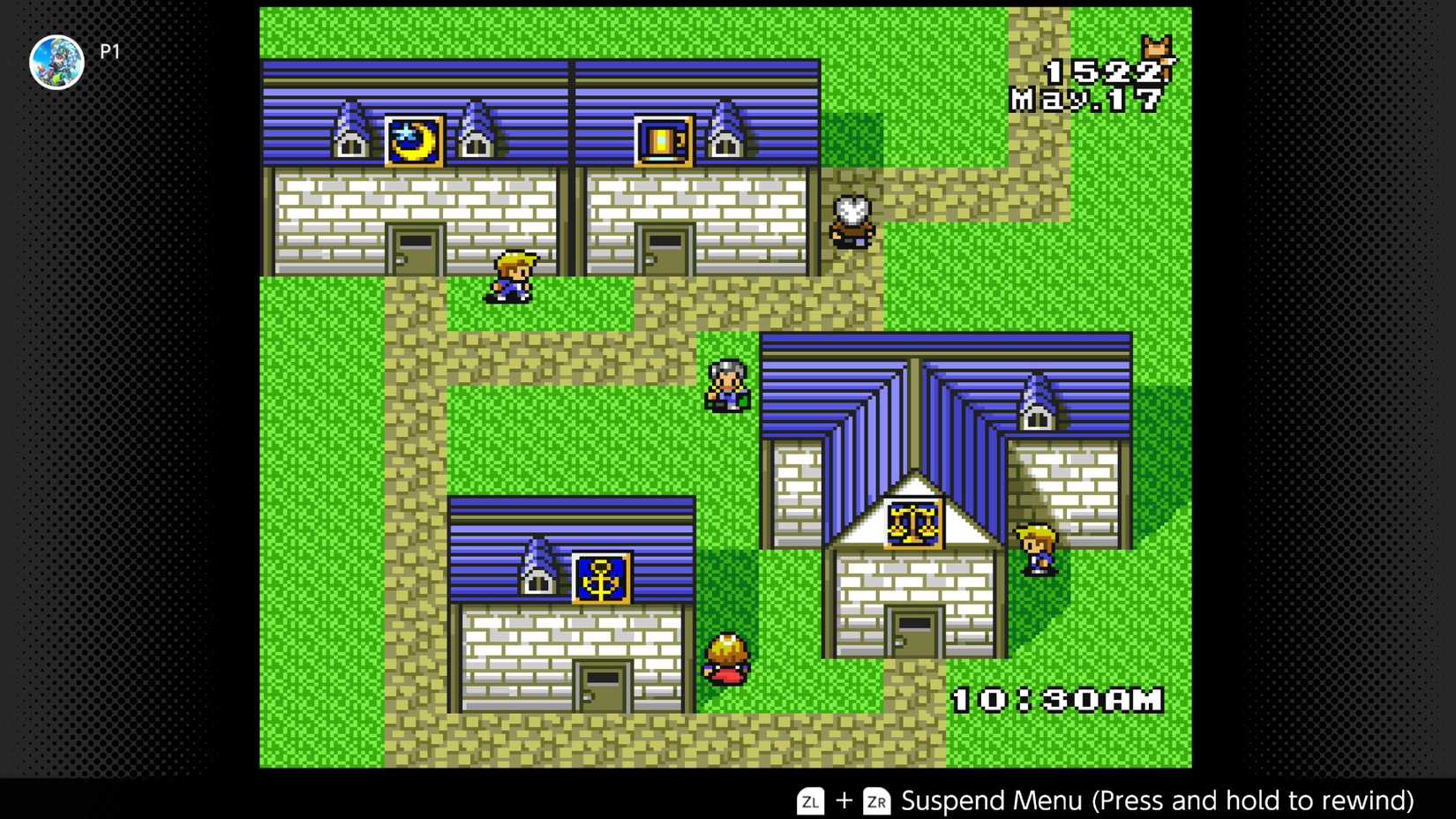
During the 1990s, Koei carved out a definitive reputation for deep, historically grounded simulation titles, establishing the benchmark for strategy gaming on home consoles. While North American audiences were largely introduced to the publisher through Romance of the Three Kingdoms and Nobunaga’s Ambition, Uncharted Waters: New Horizons offered a vastly different, deeply immersive historical simulation set during the height of the 16th-century Age of Exploration.
The game empowers players to select from a diverse roster of historical and fictional maritime protagonists, each driven by distinct motivations ranging from naval dominance and political intrigue to pure cartographic discovery. For instance, players might choose Otto Baynes, an ambitious naval captain tasked by the English crown with curbing Spanish influence, or pivot to Ernst Von Bohr, a Dutch cartographer entirely uninterested in geopolitical conflict, focusing instead on charting uncharted coastlines.
The gameplay loop is remarkably intricate, blending macro-level economic trade routes, resource management, and ship customization with tactical naval combat. It stands as a testament to the sheer depth developers were willing to program into 16-bit software, offering vastly divergent narrative paths that reward patience and strategic long-term planning.
2. Wild Guns (Natsume)
Natsume’s Wild Guns defies easy categorization, fusing traditional arcade-style gallery shooting with a hyper-stylized steampunk aesthetic set in the American Old West. Players select between Clint or Annie—both armed with standard sidearms, lassos for immobilizing fast-moving targets, and devastating screen-clearing explosives (TNT for Clint, a bazooka-style ordinance for Annie).
The game drops players into frantic, multi-layered environments where traditional outlaws clash with futuristic mechanical abominations. Saloons crumble under heavy gunfire, street thugs pilot armored tanks, and colossal robotic bosses rain projectiles from above. The pacing is relentless, requiring lightning-fast reflexes to dodge incoming fire while targeting weak points across the screen. Wild Guns successfully revitalized a genre that many presumed was bound exclusively to arcade cabinets, proving that 16-bit hardware could deliver white-knuckle, cooperative arcade action directly to living rooms.
1. Amazing Hebereke (Sunsoft)
Rounding out the list is Sunsoft’s Amazing Hebereke, a wonderfully chaotic and bizarre arena brawler starring an eclectic cast of aggressively cute fantasy creatures. Released primarily in Japan, the game invites players to select a stylized animal combatant and engage in frantic tournament matches across hazardous floating stages.
Mechanically, the objective is simple: deplete an opponent’s stamina or knock them out of the arena a set number of times to advance. However, the simplicity of the premise masks a surprisingly robust combat engine. Characters are capable of executing complex strings of physical attacks, aerial maneuvers, backflips, and bizarre specialized moves—such as extending a character’s neck across the screen.
Balanced by pastel aesthetics and a jaunty, relaxing chiptune soundtrack, Amazing Hebereke subverts the high-stress, technical execution required by heavyweights like Street Fighter, offering an accessible yet deeply entertaining multiplayer brawler that remains a hidden treasure of the platform’s international library.
Supporting Context & Metrics: The SNES Library Landscape
To fully understand the significance of these hidden gems, one must examine the sheer scale and demographic reach of the Super Nintendo library. Over its production lifespan, the SNES played host to approximately 1,750 officially licensed titles worldwide.
| Region / Category | Approximate Title Count | Market Impact & Accessibility |
|---|---|---|
| North America (SNES) | ~721 games | Dominated by platformers, sports titles, and RPG heavyweights. |
| Japan (Super Famicom) | ~1,447 games | High concentration of text-heavy RPGs, experimental simulations, and quirky arcade ports. |
| Nintendo Switch Online Library | ~100+ titles (Growing) | Primary modern avenue for legal, accessible emulation of regional exclusives and cult classics. |
Market analytics from historical trade reports indicate that while Nintendo of America maintained strict quality control and content guidelines during the early 1990s, a vast segment of innovative software remained exclusive to the Japanese Super Famicom market. The gradual integration of these titles into modern subscription ecosystems like Nintendo Switch Online has effectively bridged a decades-long geographical divide, allowing modern researchers and gamers to analyze development trends that never crossed the Pacific.
Official Statements & Industry Perspectives
Reflecting on the enduring legacy of the hardware, industry historians and veteran developers have frequently highlighted the unique architectural harmony that made the SNES a timeless canvas.
In a retrospective industry panel discussing 16-bit game design, veteran hardware preservationists noted:
"The Super Nintendo succeeded not merely because of its raw processing muscle or its pioneering Mode 7 graphics scaling, but because it provided developers with a remarkably stable audio-visual toolkit. The Sony-designed SPC700 sound chip and dedicated graphics coprocessors allowed studios to push artistic boundaries in ways that subsequent generations initially struggled to replicate with early 3D polygons."
Furthermore, Nintendo’s ongoing curation of its retro library via digital platforms underscores a corporate commitment to software preservation. Spokespersons for digital distribution initiatives have repeatedly emphasized that bringing titles like Cosmo Gang The Puzzle and Amazing Hebereke to contemporary platforms is essential for maintaining gaming literacy. By making these once-obscure titles frictionless to access, modern distribution frameworks ensure that the experimental missteps and brilliant innovations of the 1990s continue to inform contemporary game design discourse.
Future Outlook: Preservation, Emulation, and the Next Decade of Retro Gaming
As the Super Nintendo officially crosses the threshold into its mid-30s, the conversation surrounding the platform has shifted decisively toward digital preservation and accessibility. With physical cartridges degrading over time and the market for pristine original hardware commanding exorbitant collector prices, official subscription services and community-driven emulation frameworks have become the primary custodians of gaming history.
Looking toward the next decade, the primary challenge for industry preservationists will be ensuring that region-locked curiosities and poorly documented software from the 16-bit era are thoroughly translated, archived, and analyzed. The rediscovery of titles like Uncharted Waters: New Horizons and Wild Guns demonstrates that the narrative of 16-bit gaming is far from fully told. As digital storefronts continue to evolve, unearthing these forgotten pixels guarantees that the foundational creativity of the SNES era will continue to inspire developers and delight players for generations to come.