Executive Overview
Summer has long occupied a mythical status in the cultural imagination. As a temporary escape from the rigid structures of everyday life, the season suspends conventional rules, replacing them with long, languid days, oppressive heat, and an acute heightening of human emotion. We shed our clothes at beaches and public pools, lounge indolently in parks and private gardens, and succumb to primal appetites. In short, summer is cinema’s premier season of transgression.
The intrinsic relationship between the sun and sin has been rigorously interrogated by filmmakers across generations. While certain cinematic romances unfold gently over the course of a single golden season, others weaponize the oppressive heat and liberating atmosphere of summer to examine the darker, more obsessive corners of human desire.
This curated curation of ten distinct cinematic milestones approaches summer’s hedonism through lenses that are alternately perverse, luminous, and devastating. Ranging from explicit, uninhibited X-rated explorations to subtle masterclasses in heated glances and the tactile eroticism of a single touch, these works capture the beauty and devastating intensity of a long, hot summer—leaving their characters fundamentally and permanently transformed.
Detailed Chronology: A Cinematic History of Sun-Drenched Obsession
1. Crazed Fruit (1956)
Kō Nakahira’s sensational 1956 summer drama stands as a foundational monument of Japan’s Taiyōzoku (“Sun Tribe”) movement—often celebrated as Japan’s answer to Rebel Without a Cause. Set against the shimmering, sun-bleached coast of Kamakura, the film chronicles the volatile dynamic between introverted Haruji and his gregarious older brother, Natsuhisa, as they find themselves locked in a fierce rivalry for the affections of the alluring, married Eri.
The characters pass their days in a blur of restless activity: sailing, waterskiing, smoking, gambling, and sharing illicit kisses. Years before the French New Wave popularized its restless visual grammar, Nakahira was actively experimenting with exhilarating camerawork and dynamic editing, infusing the narrative with an extraordinary sense of youthful momentum. Crazed Fruit remains a glittering treasure of mid-century cinema, brimming over with barely veiled summer sexuality and existential restlessness.
2. Accident (1967)
Joseph Losey’s 1967 masterpiece turns a languid English summer into an intricate, suffocating study of academic and sexual rivalry. Winner of the Cannes Grand Jury Prize, the film follows two married Oxford academics, Stephen (Dirk Bogarde) and Charley (Stanley Baker), as they aggressively compete for the affections of their enigmatic student, Anna (Jacqueline Sassard).
The setting is deceptively idyllic—featuring lunches in manicured gardens, matches of cricket and tennis, and long afternoons spent basking in the English countryside. Yet, beneath the polite rituals of middle-class summer leisure lies a treacherous ecosystem of jealousy, deep-seated desire, and psychological deception. Harold Pinter’s razor-sharp screenplay converts polite parlor conversation into a brutal battlefield, while Losey utilizes the lush, overexposed landscape as a backdrop for one of British cinema’s most devastating portraits of amorous infatuation.
3. La Piscine (1969)
Arguably the most iconic summer film ever committed to celluloid, Jacques Deray’s Côte d’Azur psychological drama is a masterclass in style, tension, and latent hostility. The film stars Alain Delon and Romy Schneider—formerly one of European cinema’s most legendary real-life couples, reunited at Delon’s explicit request—as an isolated couple whose luxurious holiday is abruptly disrupted by the arrival of an old acquaintance (Maurice Ronet) and his sultry, eighteen-year-old daughter, played by Jane Birkin.
The reunion injects a palpable, volatile eroticism into the narrative that would later inspire Luca Guadagnino’s 2015 reimagining, A Bigger Splash. Anchored by saturated Mediterranean colors, modernist architecture, a haunting score by Michel Legrand, bronzed stars, and striking Courrèges costumes, La Piscine effortlessly encapsulates the effortless cool of late-1960s European cinema.
4. Claire’s Knee (1970)
While any number of Éric Rohmer’s sun-drenched features could comfortably occupy a space on this list, Claire’s Knee—the fifth installment of his celebrated Six Moral Tales—remains his most exquisitely erotic work. Set against the breathtaking backdrop of Lake Annecy, the narrative follows Jérôme (Jean-Claude Brialy), a diplomat holidaying before his wedding, who becomes acquainted with Laura (Béatrice Romand), the teenage daughter of an old friend. Laura soon introduces him to her fiercely independent half-sister, Claire (Laurence de Monaghan).
Despite his impending marriage, Jérôme becomes increasingly hypnotized by Claire’s youthful vitality, leading to an obsessive, psychological fixation on the seemingly trivial object of her knee. Photographed with luminous clarity by regular collaborator Nestor Almendros, the French lakeside scenery practically glows, providing an idyllic canvas for Rohmer’s characters to spend endless summer days developing complex crushes and philosophizing on the intricate architecture of human desire.
5. Je t’aime moi non plus (1976)
A singular, provocative intervention in 1970s European cinema, Je t’aime moi non plus was written, directed, and scored by French iconoclast Serge Gainsbourg, with his notorious title track echoing continuously through the film’s desolate soundscape. Jane Birkin stars as Johnny, an androgynous truck-stop waitress who falls desperately for a rugged trucker named Krassky (Joe Dallesandro)—complicating matters significantly due to the fact that Krassky is already in a domestic relationship with another man.
Set against the sweaty, baking, and desolate landscape of Uzège, the film unfurls as one of the strangest, most tender, and outrageous romances ever put to film. Its artistic merit was championed by none other than François Truffaut, who reportedly advised contemporaries: "Don’t bother going to see my film, see Gainsbourg’s. That is a work of art."
6. Jamón Jamón (1992)
Bigas Luna’s 1992 romantic tragicomedy is a sweat-soaked, highly sensual slice of Spanish life that famously launched the international film careers of Penélope Cruz and Javier Bardem—two magnetic leads whose electric chemistry on screen foreshadowed their eventual real-life marriage years later.
Set during an aggressively hot Spanish summer, the narrative follows the daughter of a local roadside prostitute as she falls for an aspiring bullfighter. Luna revels in the tactile pleasures of human bodies, sun-baked rural landscapes, and primal appetites pushed to delirious, almost absurd extremes. Sexy, darkly funny, and deeply preoccupied with food and flesh, Jamón Jamón remains an unforgettable celebration of Mediterranean passion.
7. Frivolous Lola (1998)
Tinto Brass’s Frivolous Lola offers a breezy, uninhibited softcore comedy that revels in sexual frolics across the sun-drenched Italian countryside. The lovable protagonist Lola, played with infectious joy by Anna Ammirati, is fiercely determined to consummate her relationship with her fiancé, Masetto, before their wedding night—only to find that her traditional beau insists on abstinence until the altar.
In response, Lola embarks on a madcap campaign of transgressive encounters, determined to lose her virginity to anyone, anywhere, and by any means necessary. Unabashedly horny and steeped in vibrant, kitschy Italian style, Frivolous Lola stands as one of Brass’s most charmingly subversive cinematic excursions.
8. Wild Things (1998)
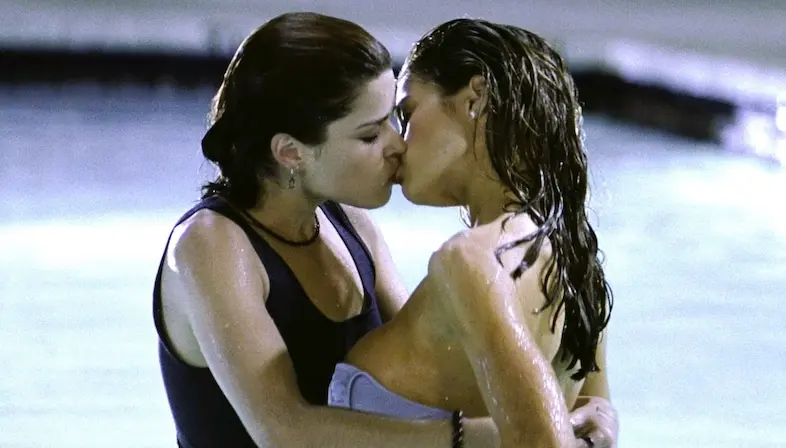
Summertime boils over into outright camp hysteria in John McNaughton’s Floridian neo-noir thriller, widely celebrated as one of the sexiest genre exercises of the late 20th century. Set among the steamy swamps and upscale enclaves of southern Florida, Wild Things follows a high-school guidance counselor (Matt Dillon) who is accused of rape by two affluent female students (Denise Richards and Neve Campbell).
What begins as a standard suburban procedural quickly spirals into a labyrinthine investigation packed with increasingly outrageous narrative twists. Featuring an eclectic ensemble cast that includes Kevin Bacon, Bill Murray, Daphne Rubin-Vega, and Theresa Russell, McNaughton fully embraces a sticky, subtropical excess. Renowned critic Roger Ebert affectionately summarized its appeal as "bad taste elevated to the level of demented sleaze"—an intoxicating blend of high camp and carnal intrigue that remains entirely irresistible.
9. Stranger by the Lake (2013)
Alain Guiraudie’s Cannes-winning thriller, Stranger by the Lake, is an uncompromising, explicit, and sun-drenched masterpiece set within the cloistered confines of a secluded lakeside cruising spot in southern France. The protagonist, Franck (Pierre Deladonchamps), becomes infatuated with Michel (Christophe Paou), a seductive yet dangerously sociopathic regular whom Franck actually witnesses drowning his previous lover in the lake.
Rather than fleeing, Franck yields to a dark, intoxicating romance defined by high-stakes psychological tension. Notable for its unblinking depiction of male cruising culture, unsimulated intimate encounters, and uncompromising full-frontal nudity, Guiraudie’s critically acclaimed drama stands as an enthralling, morally ambiguous exploration of lust, surveillance, and fatal obsession.
10. Last Summer (L’Été Dernier, 2023)
Bringing this cinematic lineage into the contemporary era, Catherine Breillat’s Last Summer marks a triumphant return for the legendary French auteur after a decade away from feature filmmaking. A luminous reworking of May el-Toukhy’s 2019 Danish drama Queen of Hearts, Breillat’s film follows Anne (Léa Drucker), a successful lawyer living in an affluent Parisian suburb who embarks on a reckless, all-consuming affair with her teenage stepson, Lucas (Samuel Kircher).
Set against the height of the summer season, Breillat proves she remains cinema’s most fearless chronicler of amour fou (mad love). Complex, morally ambiguous, humane, and visually breathtaking, Last Summer captures the devastating human cost of succumbing to seasonal transgression, cementing its place as one of the director’s crowning achievements.
Supporting Context & Metrics: The Box-Office and Critical Legacy of Summer Erotica
While summer blockbusters traditionally dominate discussions of seasonal box office revenue—frequently commanding budgets exceeding $200 million and driving multiplex attendance—arthouse and transgressive cinema occupies a distinct cultural niche during the warmer months. Historically, specialty distributors note a distinct behavioral shift in summer audiences: while mainstream viewers flock to air-conditioned multiplexes for escapist action, discerning cinephiles seek out provocative, atmosphere-heavy European and independent dramas that mirror the sensory experiences of heat, idleness, and liberation.
| Film Title | Release Year | Director | Primary Setting | Critical Accolades / Reception |
|---|---|---|---|---|
| Crazed Fruit | 1956 | Kō Nakahira | Kamakura, Japan | Landmark "Sun Tribe" youth phenomenon; praised for radical editing. |
| Accident | 1967 | Joseph Losey | Oxfordshire, England | Cannes Grand Jury Prize winner; scripted by Harold Pinter. |
| La Piscine | 1969 | Jacques Deray | Côte d’Azur, France | Iconic stylistic benchmark of 1960s European cool; later remade as A Bigger Splash. |
| Claire’s Knee | 1970 | Éric Rohmer | Lake Annecy, France | Part of the Six Moral Tales; winner of the Louis Delluc Prize. |
| Je t’aime moi non plus | 1976 | Serge Gainsbourg | Uzège, France | Championed by François Truffaut as a vital work of transgressive art. |
| Jamón Jamón | 1992 | Bigas Luna | Monegros, Spain | Silver Lion winner at Venice; launched Cruz and Bardem’s careers. |
| Frivolous Lola | 1998 | Tinto Brass | Italian Countryside | Celebrated cult classic of Mediterranean softcore comedy and camp. |
| Wild Things | 1998 | John McNaughton | Florida, USA | Grossed over $67 million worldwide; praised by Roger Ebert for elevated camp. |
| Stranger by the Lake | 2013 | Alain Guiraudie | Southern France | Un Certain Regard Director’s Prize at Cannes; Queer Palm winner. |
| Last Summer | 2023 | Catherine Breillat | Paris Suburbs, France | Official Selection in Competition at the 76th Cannes Film Festival. |
Official Statements and Critical Perspectives
The enduring appeal of transgressive summer cinema has frequently been articulated by its creators and foremost critics, who view the season not merely as a backdrop, but as an active narrative participant.
Reflecting on the psychological weight of seasonal settings, director Catherine Breillat noted during the promotional campaign for Last Summer:
"Summer strips away our social armor. When the temperature rises and the city empties out, the rules we use to govern our impulses begin to melt. My characters do not fall into transgression because they are evil; they fall because the season demands absolute honesty with one’s desires, regardless of the devastation left in the wake."
Similarly, the late film critic Roger Ebert, writing on the mechanics of cinematic heat and transgressive thrillers like Wild Things, observed:
"There is a specific category of cinema that understands how humidity alters human behavior. When filmmakers embrace sticky excess rather than running from it, the screen becomes a mirror for our most irrational, feverish impulses. It is bad taste, yes—but elevated to the level of art through sheer commitment to atmosphere."
Future Outlook: The Evolution of the Summer Cinematic Landscape
As the global film industry continues to navigate shifts in distribution models, streaming algorithms, and changing audience demographics, the tradition of the "hot summer drama" faces a fascinating evolution. While traditional brick-and-mortar art-house cinemas increasingly rely on eventized retrospective screenings of 20th-century classics—such as 4K restorations of La Piscine and Claire’s Knee—contemporary independent filmmakers continue to find fertile ground in the intersection of seasonal isolation and moral ambiguity.
Looking ahead, international film festivals increasingly platform daring, sun-bleached narratives that reject tidy resolutions in favor of complex, morally gray explorations of human longing. Whether set along the baking coastlines of the Mediterranean or the claustrophobic interiors of suburban estates during a heatwave, cinema’s fascination with the crucible of summer remains undiminished. As long as human beings seek temporary escape from the monotonous structures of daily life, filmmakers will continue to turn to the sun not just for warmth, but for the illuminating, destructive fire of unbridled desire.