Executive Overview
Few psychological phenomena have captured the collective imagination of the internet quite like the "Mandela Effect"—a term coined by paranormal researcher Fiona Broome to describe situations where a large group of people share identical, vivid, but entirely false memories. While examples range from the spelling of the Berenstain Bears to the cinematic non-existence of Sinbad playing a genie in a 1990s movie called Shazaam, none has proven quite as pervasive, baffling, or stubbornly resistant to logic as the Fruit of the Loom Cornucopia.
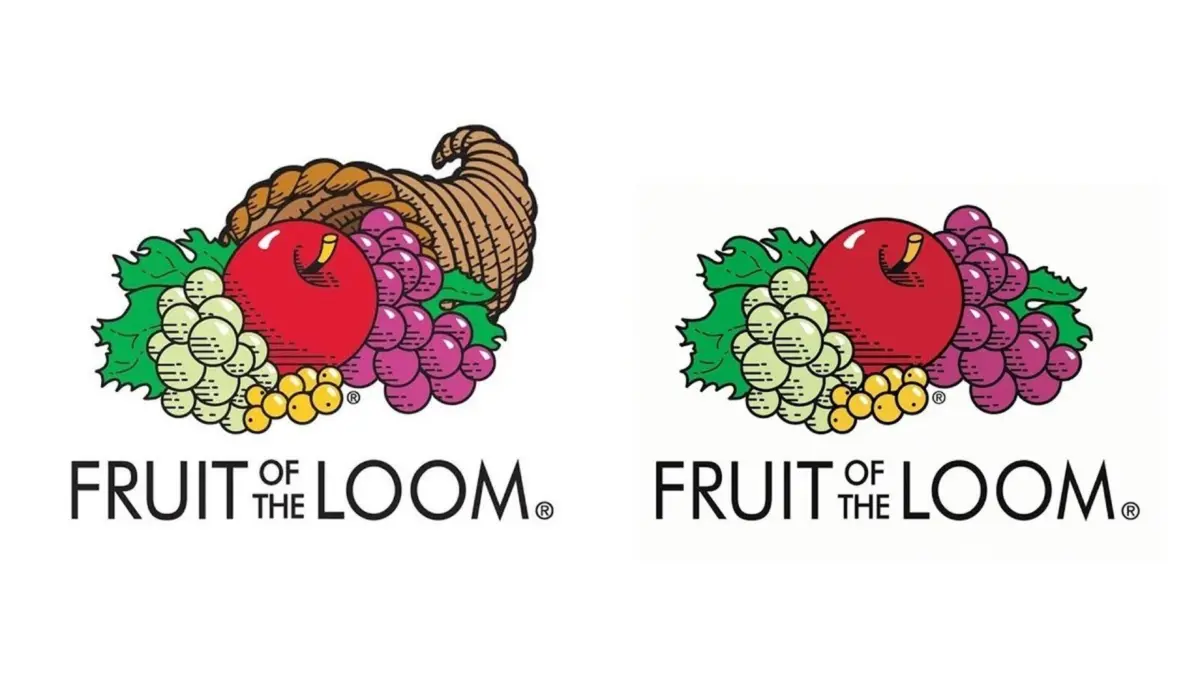
For millions of people worldwide, the clothing and textile brand Fruit of the Loom is permanently associated with a specific logo: a cluster of fruit resting against, or spilling out of, a large, woven horn of plenty—known formally as a cornucopia. Ask individuals from Gen X and the Millennial generation to describe the tag on their childhood undershirts, underwear, or socks, and an overwhelming majority will recall the brown, wicker-like cornucopia nestled behind the apples, grapes, and leaves.
There is just one glaring problem: according to historical records, corporate archives, official trademark filings, and the company itself, the cornucopia has never existed.
Despite exhaustive searches through official archives dating back to the late 19th century, no official Fruit of the Loom logo has ever featured a cornucopia. The company’s visual history reveals a progression of fruit arrangements, leaves, and typography, but zero instances of the iconic Thanksgiving-associated horn. This stark contradiction between corporate history and millions of personal memories has transformed the Fruit of the Loom cornucopia mystery into a cultural touchstone. It stands as the quintessential case study of mass confabulation, consumer psychology, and the strange ways in which the digital age dissects shared human illusion.
Detailed Chronology: From Obscure Reddit Thread to Viral Phenomenon
The Spark: August 2018
While the collective false memory had been quietly discussed on internet forums and message boards for years prior, the modern phase of the Fruit of the Loom cornucopia investigation crystallized on August 22, 2018. A Redditor operating under the handle jinglesbobingles published a detailed, seminal post on the dedicated forum r/MandelaEffect.
The post formally laid out the parameters of the mystery, juxtaposing the modern, fruit-only logo against an artist’s digital recreation featuring the remembered cornucopia. Crucially, jinglesbobingles did not merely state the memory; they brought forward a collection of circumstantial and historical "clues" that would fuel internet sleuths for the better part of the next decade.
Among these early pieces of evidence were:
- An obscure reference to a canceled or altered trademark description.
- A humorous or bewildered customer service interaction involving a Fruit of the Loom employee.
- Pop-culture artifacts, such as a parody logo appearing in the 2006 animated family film The Ant Bully.
- The 1973 jazz-fusion album cover for Flute of the Loom by flutist Frank Wess.
This initial thread acted as a catalyst, sparking a wave of secondary investigations across social media platforms as internet users attempted to prove—or disprove—the reality of their own childhood memories.
Deepening the Mystery: The 2019 Investigations
As the r/MandelaEffect community grew more engaged, users began digging deeper into the pop-culture artifacts cited in the original thread. On June 17, 2019, Redditor JugglingKnives shared the results of a remarkable piece of investigative journalism: correspondence with Reed Chappell, the son of the late artist Ellis Chappell, who painted the cover for Frank Wess’s 1973 album Flute of the Loom.
The response from the Chappell family added fuel to the fire for believers in the Mandela Effect. Reed Chappell confirmed that both he and his father distinctly remembered the cornucopia in the original Fruit of the Loom logo. More importantly, Reed explained that the album cover—which featured soul food pouring out of a musical flute—was intentionally designed as a direct visual parody of the Fruit of the Loom logo.
In the correspondence, Reed quoted his father’s baffled reaction when asked why he included the horn-like shape: "Why the hell else would I have used a cornucopia?" For many followers of the phenomenon, this statement from a commercial artist working in the early 1970s served as compelling "proof" that the cornucopia must have existed at the time the album was designed. Skeptics, however, countered that the artist himself could simply have fallen victim to the very same false memory years prior.
Mainstream Explosion (2019–2022)
By late 2019, the mystery had broken out of niche Reddit echo chambers and entered the broader social media consciousness. On October 19, 2019, Twitter user @NickHintonn posted a thread about the Fruit of the Loom Mandela Effect, which quickly went viral. The post accumulated over 6,300 retweets and 23,800 likes, exposing hundreds of thousands of new users to the cognitive dissonance of the logo.
The phenomenon reached new visual and narrative heights on November 25, 2020, when popular essayist and YouTuber EmpLemon released a deep-dive video exploring the history and psychological weight of the controversy. The video resonated deeply with viewers, pulling in over 1.3 million views within two years and cementing the cornucopia debate as a masterclass in internet folklore.
By 2022, the conversation had migrated to short-form video platforms. On January 23, 2022, TikToker @madelinemorera posted a video detailing the logo discrepancy, which accrued over 818,000 views and 153,000 likes. Days later, TikToker @lilbroomstick06 launched a viral meme format based on the topic, generating an additional 707,000 views. Throughout 2022 and 2023, viral posts, TikTok stitches, and YouTube video essays continued to keep the discourse vibrant and active.

Supporting Context & Metrics: Analyzing the Illusion
To understand why millions of people can experience the exact same hallucinated detail regarding a commercial brand, researchers, psychologists, and branding experts have analyzed the mechanics of the illusion. Several distinct factors contribute to the persistence of the Fruit of the Loom cornucopia memory.
1. Visual Association and Archetypes
From a design psychology perspective, the human brain relies heavily on heuristics—mental shortcuts—to process and categorize visual information. A cluster of harvested autumn fruit (apples, grapes, green leaves) is visually and culturally inseparable from the concept of harvest, abundance, and Thanksgiving. In Western iconography, the universal vessel for a harvest of fruit is the cornucopia.
When children in the mid-to-late 20th century encountered a logo featuring an arrangement of leaves and fruit, their brains may have automatically applied the missing contextual container (the cornucopia) to make the image fit pre-existing cultural templates. Over time, this inferred detail was solidified in memory as an actual visual component of the brand.
2. The Power of Suggestion and Social Reinforcement
The internet has accelerated the Mandela Effect by providing a digital town square where isolated memories are validated by thousands of strangers. When a person who hasn’t thought about a clothing tag in twenty years reads a post claiming, "The Fruit of the Loom logo used to have a cornucopia," their brain undergoes a process of retroactive memory reconstruction. The suggestion plants a seed, and the individual’s mind often reinterprets past neutral observations to align with the new narrative.
3. Quantitative Engagement Metrics
The scale of public engagement with the Fruit of the Loom mystery dwarfs almost every other consumer-brand Mandela Effect. Key performance indicators across platforms highlight its enduring appeal:
- Twitter/X Virality: Foundational viral threads consistently cross tens of thousands of engagements, demonstrating high shareability.
- YouTube Reach: Long-form video essays covering the topic routinely surpass the million-view threshold, indicating a deep hunger for investigative deep-dives into consumer mysteries.
- TikTok Virality: Short-form reaction and educational videos regularly pull hundreds of thousands of views, introducing Gen Z and younger demographics to a corporate logo they likely never wore or interacted with physically in its heyday.
Official Statements and Corporate Reality
Faced with a mounting tide of bewildered consumers, conspiracy theories involving parallel universes, and relentless social media inquiries, Fruit of the Loom has occasionally addressed the phenomenon directly.
In private customer service interactions—such as the widely circulated screenshot featuring a company representative responding to an inquiry from a user named Emma—the corporate stance has been humorously candid yet definitive. The representative confirmed: "Hi Emma. Yes it is true, the cornucopia never existed. Even some of us are still convinced it was a thing though!"
Official corporate statements reiterate this reality. Historical brand timelines maintained by trademark archives show that when Robert Knight established the company in Providence, Rhode Island, and later registered trademarks incorporating fruit motifs, a cornucopia was never part of the official design assets. Iterations from 1893, 1927, 1936, 1951, 1962, 1978, and onward feature variations of apples, currants, grapes, and leaves, but no woven horn.
Despite these official rebuttals, the corporate acknowledgement that even internal employees have fallen victim to the false memory only serves to deepen the psychological intrigue for the public.
Future Outlook: Will the Mystery Ever Be Solved?
As we look toward the future, the Fruit of the Loom cornucopia conundrum is unlikely to find a neat, universally accepted resolution.
For skeptics and cognitive scientists, the mystery is already "solved": it is a textbook case of mass confabulation, driven by visual design heuristics, misremembered elementary school art projects, and the power of internet suggestion.
However, for the millions who hold an unshakeable, visceral memory of tracing the curved wicker lines of a cornucopia on the back of their school shirts, scientific explanations often feel inadequate. The phenomenon has crossed the boundary from corporate trivia into modern folklore, functioning almost as a secular urban legend for the digital age.
As long as human memory remains fallible, and as long as internet communities continue to unearth quirky pieces of circumstantial evidence—from obscure album covers to animated film parodies—the debate will endure. The Fruit of the Loom cornucopia stands as a humbling reminder of the fragility of human perception, proving that sometimes, the most fascinating mysteries are the ones manufactured entirely within our own minds.