Executive Overview
In the sprawling pantheon of dark fantasy action role-playing games, Blizzard Entertainment’s Diablo franchise stands as a towering pillar. Within its fervent community, however, a strict social hierarchy of approval exists. For purists and veterans alike, 2000’s Diablo 2—especially in its modernized Resurrected incarnation—holds an untouchable status as the gold standard of mood, unforgiving difficulty, and thematic dread. Meanwhile, the franchise’s newest iteration, Diablo 4, dominates contemporary discourse, capturing the lion’s share of player engagement while shouldering the inevitable cycle of community scrutiny regarding seasonal balance patches, endgame design, and live-service monetization.
Lost between these heavy cultural bookends lies Diablo 3, a game trapped in a unique reputational purgatory. Pilloried at its 2012 launch for a more vibrant, stylized aesthetic, plagued by server stability disasters, and forever stained in community memory by the notorious real-money auction house, the title was written off by many early adopters. Even though Blizzard systematically repaired, balanced, and elevated the experience through transformational updates and the universally acclaimed 2014 expansion, Reaper of Souls, the foundational stigma lingered.
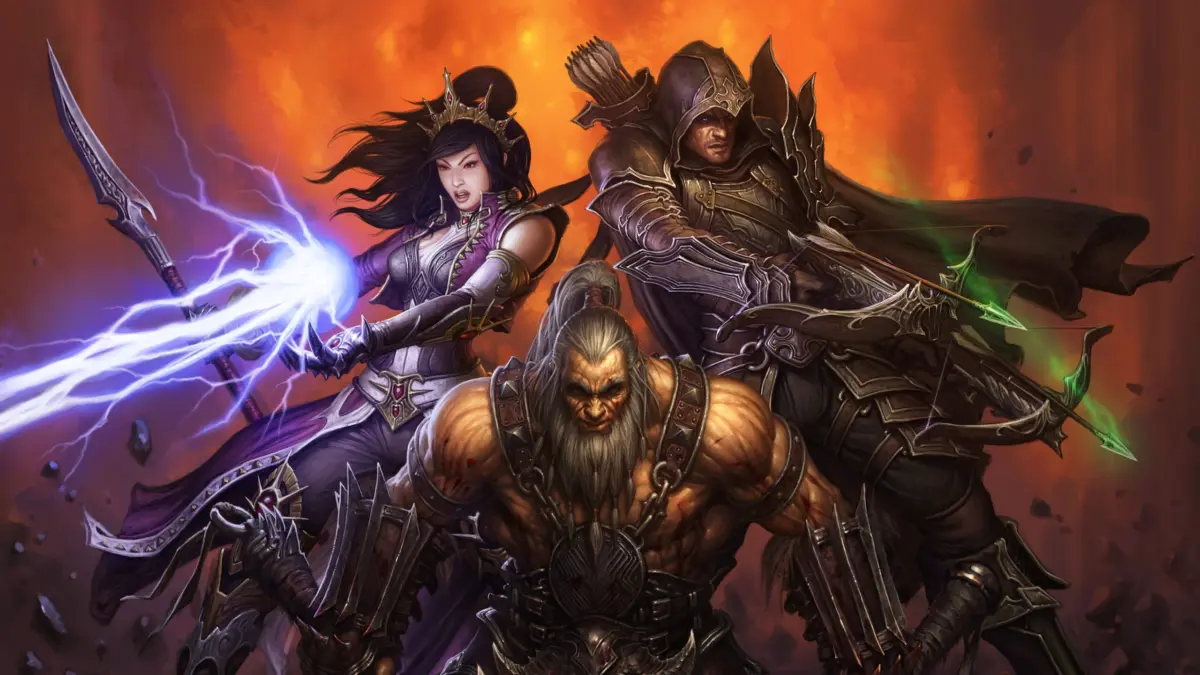
Yet, fourteen years after its initial release and following over a decade of active content updates, Diablo 3 has quietly endured. Available via modern subscription services like Xbox Game Pass, it offers an astonishingly fresh, highly accessible, and mechanically refined experience. Stripped of the oppressive friction of older entries and unburdened by the contemporary bloat of modern live-service structures, Diablo 3 stands not as a historical misstep, but as an arcade-infused masterpiece of game feel, fluid character progression, and—particularly on home consoles—one of the greatest local co-op experiences in video game history.
Detailed Chronology: From Troubled Genesis to Triumphant Redefinition
To understand the complex legacy of Diablo 3, one must retrace its turbulent historical timeline, which serves as a fascinating case study in long-term game development and community redemption.
The Era of Anticipation and the 2012 Launch Disaster
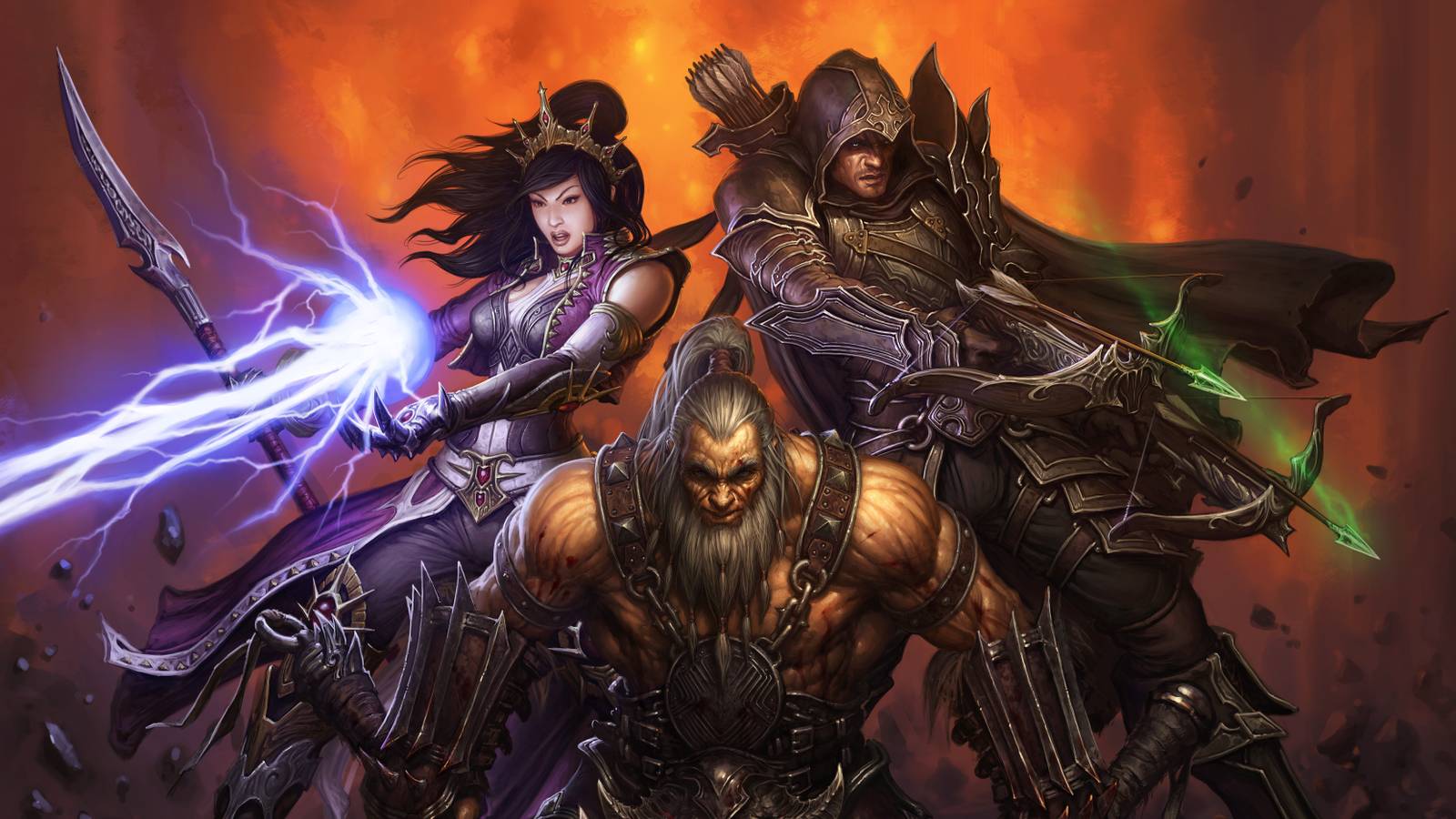
When Blizzard Entertainment announced Diablo 3 in 2008, anticipation reached a fever pitch. Fans had waited over a decade for a true successor to Diablo 2. However, early promotional materials immediately sparked controversy. The community decried the brighter, more painterly art style, arguing it lacked the grim, monochromatic squalor of its predecessor.
When the game finally launched on May 15, 2012, aesthetic complaints were quickly overshadowed by systemic catastrophes. The infamous "Error 37"—a manifestation of catastrophic server failures caused by mandatory always-online DRM—locked players out of a single-player-capable game for days. Worse still was the implementation of the Real-Money Auction House (RMAH). By allowing players to buy and sell in-game gear for real currency, Blizzard fundamentally broke the core loot-hunt loop that defines the genre. Drop rates for high-end items were artificially depressed to encourage RMAH usage, reducing the thrill of monster-slaying to a tedious exercise in economic arbitrage.
The Turning Point: Reaper of Souls and Loot 2.0 (2014)
Recognizing the existential threat to the franchise’s reputation, Blizzard took the drastic step of overhauling the game’s foundational architecture. Led by new design leadership under Josh Mosqueira, the studio initiated "Loot 2.0" in early 2014, completely dismantling the auction house economy and rewriting how items dropped, scaling rewards directly to the player’s class and progression.
This structural revolution culminated in the release of the Reaper of Souls expansion in March 2014. Introducing Act V, the Crusader class, and the revolutionary Adventure Mode, the expansion wiped away the memory of the vanilla launch. Adventure Mode replaced the linear, mandatory campaign playthrough with dynamic Bounties, Nephalem Rifts, and Greater Rifts—turning Diablo 3 into an endless, infinitely scalable playground of randomized slaughter and reward.
The Long-Tail Evolution and Modern Renaissance
Over the subsequent decade, Blizzard continued to support Diablo 3 with unexpected content drops, seasonal themes, Quality-of-Life (QoL) improvements, and the 2017 introduction of the fan-favorite Necromancer class. Even after active development scaled down following the launch of Diablo 4, the game’s seasons continued to cycle, proving its underlying mechanical engine was virtually evergreen. Today, with its integration into platforms like Xbox Game Pass, Diablo 3 enjoys a quiet renaissance, welcoming a new generation of players who can experience a feature-complete, polished version of the game without any of its historical growing pains.
Supporting Context & Metrics: Mechanics and Modern Relevance
While Diablo 2 remains celebrated for its complex stat allocation and Diablo 4 focuses on sprawling, shared-world open environments, Diablo 3 carved out a distinct identity rooted in pristine moment-to-moment action.

The Pinnacle of Action-RPG Game Feel
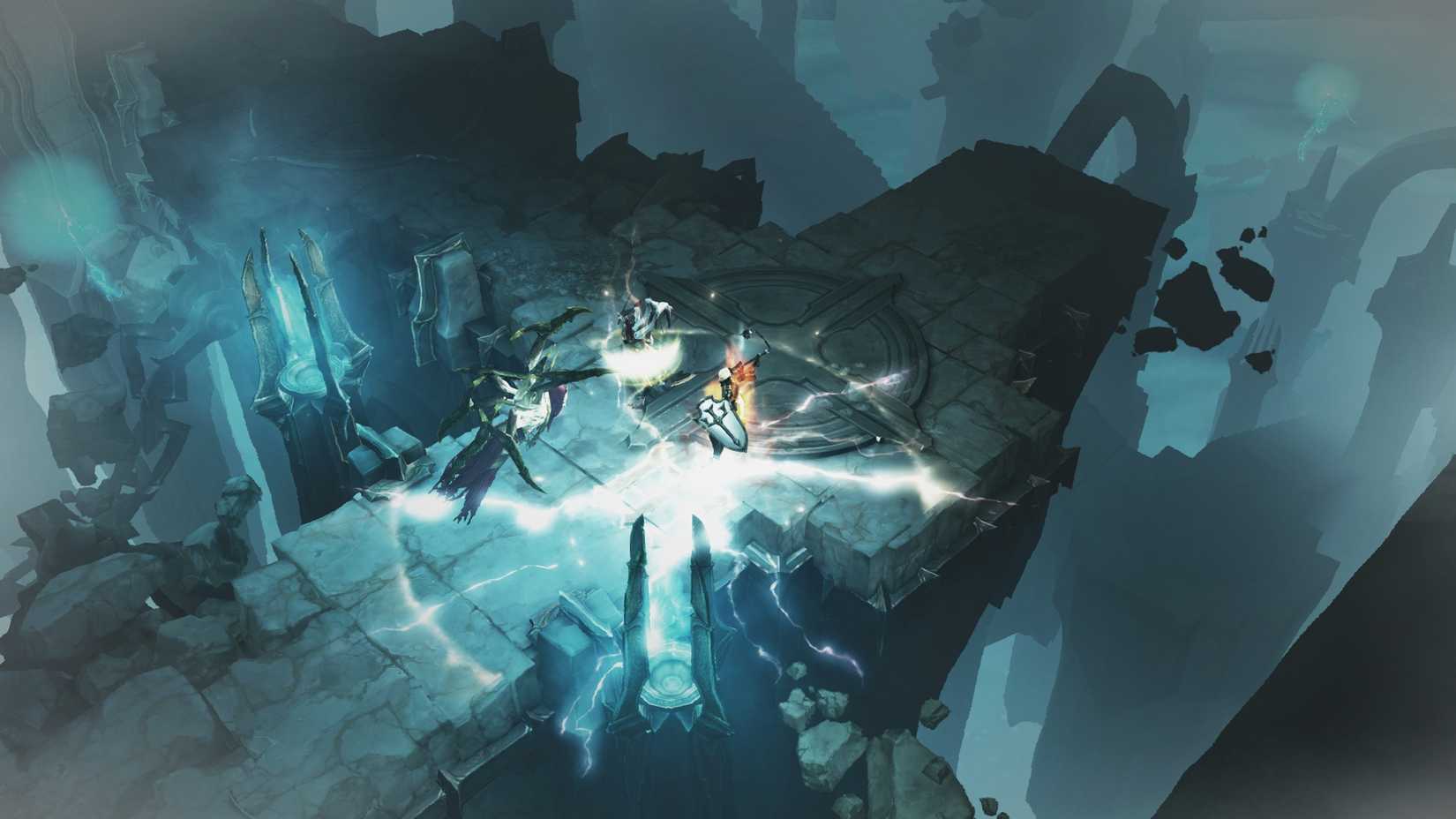
From a purely tactile perspective, no other game in the Diablo franchise matches the fluid responsiveness of Diablo 3. Movement is nimble, attack animations carry visceral weight, and crowd control mechanics require deliberate spatial awareness. Healing is handled dynamically through health globes dropped by defeated enemies, tethered to a single, high-stakes health potion on a cooldown. This forces players into an aggressive, rhythmic dance of engagement and evasion rather than passive stat-checking.
| Feature / Metric | Diablo 2: Resurrected | Diablo 3 | Diablo 4 |
|---|---|---|---|
| Primary Design Philosophy | Unforgiving, moody, rigid stat builds | Arcade-paced, fluid, highly adaptive | Open-world live-service, sprawling endgame |
| Skill Customization | Permanent choices (skill trees) | Total fluidity (swap skills anytime) | Branching skill webs with resource sinks |
| Itemization Focus | Rare base items, runewords | Set bonuses, legendary affixes | Aspect extraction, affix re-rolling |
| Local Co-op Support | None (PC-centric heritage) | Up to 4 Players (Console exclusively) | None (Online multiplayer only) |
| Active Lifecycle | Remaster of 2000 classic | 14 Years of operational history | Contemporary live-service model |
Fluid Progression vs. Rigid Min-Maxing
One of the most profound divides among ARPG enthusiasts concerns character building. Traditional titles utilize rigid skill trees that punish experimentation, forcing players to meticulously plan builds weeks in advance or roll a new character if a mistake is made.
Diablo 3 discarded this philosophy entirely. Skills, passives, and skill-altering runes can be swapped at almost any moment outside of combat. Rather than forcing the player to grind toward a rigid, pre-determined theoretical build, the game encourages reactive adaptation. Players alter their loadouts organically based on the legendary items and set pieces that drop during their adventures. While orthodox min-maxers occasionally dismiss this flexibility as lacking depth, it keeps moment-to-moment gameplay dynamically evolving and constantly exciting.
Official Statements and Industry Perspectives
Blizzard Entertainment developers and industry critics have frequently reflected on the turbulent trajectory of Diablo 3, noting how the lessons learned during its lifecycle fundamentally shaped modern game design within the studio.
During a retrospective panel discussing the evolution of the franchise, former game director Josh Mosqueira addressed the massive overhaul required post-launch:
"When you build a franchise as storied as Diablo, you carry the heavy weight of expectation. In 2012, we missed the mark on the foundational economic and structural loops that make an ARPG satisfying. Admitting those failures required us to tear down core pillars—like the auction house—and rebuild the game from the player up. What Reaper of Souls proved is that an action RPG is defined not by its launch day scars, but by how it respects the player’s time and desire for visceral fun."
Industry analysts have similarly noted the unique positioning of Diablo 3 in the current market landscape. With Diablo 4 operating under the modern pressures of seasonal passes, shop monetization, and continuous live-service balancing, Diablo 3 stands as a remarkably self-contained monument. It offers an unbroken, definitive arc of progression without the modern distractions of persistent online storefronts or artificial progression slowdowns.
Future Outlook: The Indestructible Legacy of Sanctuary’s Arcade Epic
As the Diablo franchise marches into the future with upcoming expansions and continuous live-service roadmap updates for Diablo 4, the permanent footprint of Diablo 3 is secure.
It may lack the contrarian "cool factor" of Diablo 2’s nostalgic grimness, and it avoids the frenetic current-events discourse surrounding Diablo 4. Yet, for newcomers stepping into the genre for the first time, or for veteran players seeking unadulterated, fast-paced cooperative carnage, Diablo 3 remains an essential masterpiece.
Whether experienced through its explosive Adventure Mode, its unapologetically campy high-fantasy campaign, or via the unmatched joy of couch co-op with friends on a living room couch, Diablo 3 needs no further updates, expansions, or redemptions. It stands complete, vibrant, and endlessly playable—a testament to the enduring power of pure, unadulterated game design.