Executive Overview
The landscape of enterprise cloud computing and artificial intelligence is undergoing a seismic shift. For years, deploying advanced machine learning capabilities, generative AI agents, and sophisticated customer experience (CX) workflows required deep engineering expertise, extensive coding backlogs, and prolonged development cycles. However, as organizations race to meet escalating consumer expectations, the traditional bottleneck of software engineering bandwidth has become untenable.
Amazon Web Services (AWS) has stepped forward to address this friction point head-on. In a major strategic push highlighted during the bustling AWS Summit circuit—spanning from the high-energy workshops of New York City to the public-sector innovation hubs of Washington, D.C.—AWS has unveiled a transformative approach to cloud architecture and customer engagement.
At the center of this week’s announcements is the preview release of the Agentic CX Designer (NLX) within Amazon Connect Customer. This groundbreaking capability introduces a no-code canvas designed explicitly for business teams, allowing non-technical professionals to design, simulate, and deploy AI-powered self-service experiences without writing a single line of code. By bridging agentic workflows (autonomous, goal-driven AI reasoning) with deterministic guardrails (predictable, rule-based logic), AWS is fundamentally redefining who gets to build enterprise-grade customer experiences.
Concurrently, AWS developer advocates and engineers are demonstrating how serverless architectures can be leveraged to wire up AI agents in mere hours, democratizing innovation across both the private and public sectors. This comprehensive report explores the technological mechanics, strategic implications, and future outlook of these landmark AWS developments.
Detailed Chronology: From the Summit Circuit to the Agentic Era
The narrative of this week’s AWS advancements unfolds across both physical conference halls and digital cloud environments. Understanding the trajectory of these announcements requires tracking the events leading up to the rollout of the Agentic CX Designer.
The AWS Summit Circuit: New York to Washington, D.C.
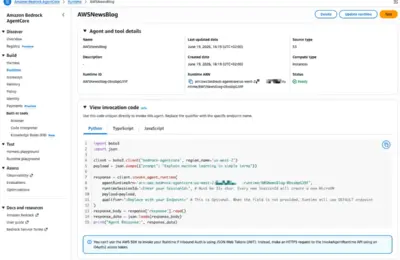
The past month has been a whirlwind of technical immersion across the AWS Summit events. At the New York City Summit, developer communities converged to explore the practical realities of modern cloud infrastructure. A standout session, "Building AI Architectures with AWS Serverless," offered attendees a firsthand look at how rapidly modern applications can be constructed when developers combine serverless compute paradigms—such as AWS Lambda and AWS Step Functions—with modern foundational models. Observers noted the speed at which builders could wire up autonomous agents to solve real-world operational problems in a single afternoon.
Following the success in New York, the summit circuit transitioned to the Washington, D.C. event, a venue historically renowned for highlighting technological innovation within the public sector. Government agencies and defense contractors continually look to the cloud to modernize legacy systems securely and efficiently. The dialogue in Washington heavily emphasized how artificial intelligence can streamline citizen services while maintaining strict governance and compliance standards.
The Core Challenge: Clearing the Engineering Backlog
Throughout these events, a recurring theme emerged in conversations with enterprise leaders, product managers, and customer service directors: the engineering backlog.
Organizations across all verticals are eager to harness the power of generative and agentic AI. Yet, traditional deployment models demand that business requirements be translated into technical specifications, queued up for development sprints, coded, tested, and iteratively debugged. This multi-month pipeline creates a massive lag between business strategy and execution.
Business teams—those closest to customer pain points, marketing messaging, and support challenges—frequently find themselves sidelined, waiting for IT departments to implement CX modifications. AWS recognized that to truly scale AI adoption, the barrier to entry must be lowered not just for developers, but for the business users who understand customer workflows best.
The Unveiling: Agentic CX Designer (NLX)
Addressing this exact challenge, AWS officially launched the preview of the Agentic CX Designer (NLX) for Amazon Connect Customer. Positioned as a paradigm shift for contact centers, the tool provides an intuitive, visual, no-code canvas.
Through this interface, business users can orchestrate complex voice and digital self-service experiences. The system uniquely bridges two distinct worlds of artificial intelligence:
- Agentic AI: Autonomous systems capable of reasoning, adapting to conversational nuances, and dynamically solving complex, open-ended customer inquiries.
- Deterministic AI: Rigid, rule-based execution paths that guarantee regulatory compliance, accurate database lookups, and secure transactional hand-offs.
By combining these methodologies into a single, governed workflow, teams can transition a customer experience concept from the initial design phase, through rigorous simulation and testing, and into a production-ready environment in a matter of weeks rather than months.
Live Sync Technology: Real-Time Omnichannel Orchestration
A key technical highlight accompanying the Agentic CX Designer launch is Live Sync, a patented technology currently available in preview.
Historically, omnichannel customer service often suffered from synchronization gaps. A customer might be speaking with a voice bot while navigating a mobile application or a website, resulting in disjointed states where the digital interface fails to reflect the verbal conversation.
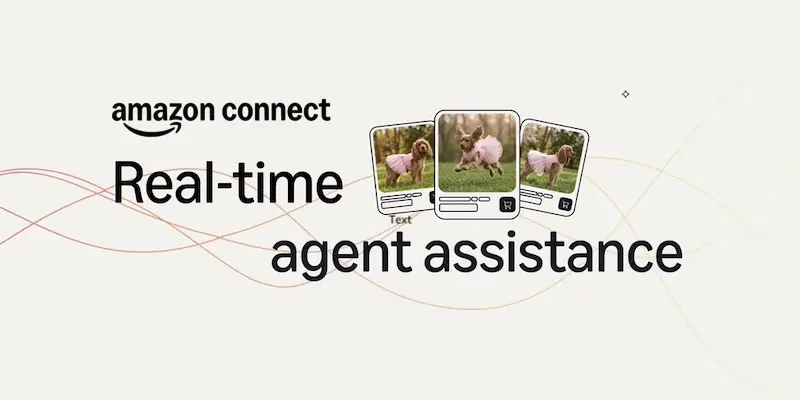
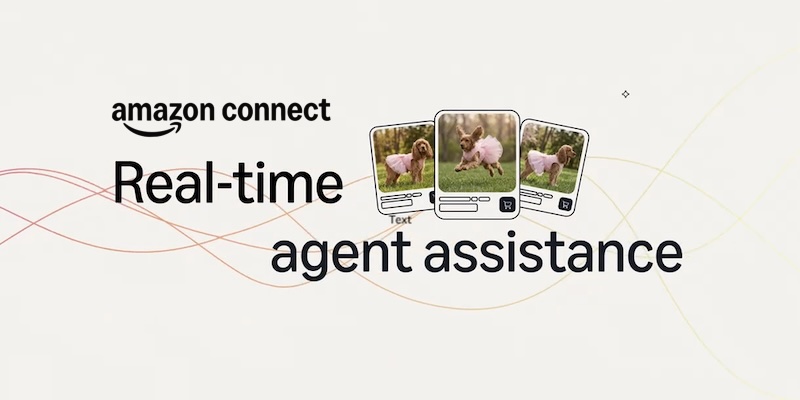
Live Sync resolves this friction by driving a customer’s web or mobile experience in real-time as they speak or type. For instance, if a customer calls a support line regarding a billing discrepancy or a specific hardware order, the conversational AI agent can automatically navigate the user’s web browser to the exact product page or dynamically pre-fill a secure online form. The customer completes necessary actions seamlessly without ever breaking the flow of conversation, drastically reducing Average Handle Time (AHT) and dramatically elevating Customer Satisfaction (CSAT) scores.
Supporting Context & Metrics: The Paradigm Shift in CX Architecture
To fully grasp the magnitude of the Amazon Connect Customer updates, one must examine the broader economic and operational realities facing modern contact centers.
The Cost of Complexity
For decades, building interactive voice response (IVR) systems and digital chat assistants required specialized software development kits (SDKs), custom integration scripts with Customer Relationship Management (CRM) databases, and ongoing maintenance by software engineering squads. Industry analyses consistently show that:
- Time-to-Market: Traditional enterprise CX modifications average 12 to 24 weeks from conception to production deployment.
- Resource Constraints: IT and engineering departments routinely report backlogs exceeding six months for non-core infrastructure adjustments.
- Operational Overhead: Maintaining custom-coded integrations often consumes up to 40% of a contact center’s IT maintenance budget.
By shifting to a no-code canvas, AWS is targeting these inefficiencies directly. Early internal simulations and partner trials indicate that business-led design can compress the deployment timeline down to 2 to 4 weeks, representing an efficiency gain of up to 80%.
Bridging Autonomous Flexibility with Enterprise Governance
One of the primary hesitations enterprises face when adopting generative and agentic AI is the risk of "hallucinations"—instances where an AI model generates factually incorrect or unauthorized responses. In customer-facing environments, a single hallucination can result in regulatory violations, brand damage, or financial liability.
The Agentic CX Designer solves this through its hybrid architecture:
- Governed Guardrails: While the agentic layer provides conversational fluidity and empathetic problem-solving, the deterministic framework acts as an unyielding safety net.
- Hardcoded Parameters: Sensitive actions—such as processing refunds, modifying account credentials, or confirming legal agreements—are locked behind deterministic verification steps.
- Audit Trails: Every interaction is logged with enterprise-grade traceability, allowing compliance officers to review decision trees and agent logic easily.
This architecture satisfies both the innovation-driven demands of marketing and executive leadership and the rigorous risk-mitigation mandates of Chief Information Security Officers (CISOs) and legal counsels.
Official Statements and Industry Perspective
The launch of the Agentic CX Designer and the broader conversation around serverless AI architectures have generated substantial commentary from AWS leadership and community builders.
In a recent technical deep dive published on the AWS Contact Center blog, industry experts framed the transformation succinctly: "The business user is the new architect of customer experience."

This philosophical shift acknowledges that the individuals who interact daily with customer feedback, churn reports, and market demands are best positioned to map out customer journeys. Rather than forcing these professionals to act as intermediaries who must explain their vision to software engineers, AWS is handing them the tools to execute directly.
An AWS spokesperson noted during the New York Summit workshop:
"Builders don’t just want infrastructure; they want momentum. When we remove the friction of wiring up serverless microservices and autonomous agents, we aren’t just saving hours—we are unlocking human creativity. Business teams know what their customers need; our goal is to provide a governed canvas where those visions can become production-ready realities in weeks, not quarters."
Furthermore, public sector analysts observing the Washington, D.C. Summit highlighted the profound implications of these tools for government agencies. By utilizing no-code agentic interfaces backed by secure AWS infrastructure, public sector organizations can rapidly deploy citizen-facing portals that handle inquiries regarding benefits, public services, and regulatory guidance with unprecedented accuracy and speed.
Future Outlook: What Lies Ahead for AWS Builders and Enterprises
As the AWS Summit circuit continues its global trajectory and engineering teams digest the latest wave of features, the roadmap for cloud-native AI is coming into sharp focus.
1. The Democratization of Enterprise Architecture
The success of the Agentic CX Designer preview signals a broader trend across AWS: the abstraction of complexity. As no-code and low-code tooling matures, the line between "builder" and "business user" will continue to blur. We can expect future AWS updates to extend similar governed, no-code canvases to other domains, such as supply chain orchestration, internal HR automation, and data analytics.
2. Deeper Real-Time Multimodal Integration
With the introduction of patented Live Sync technology, AWS has set a new benchmark for omnichannel synchronization. Future iterations will likely expand beyond web and mobile browsers into Internet of Things (IoT) devices, augmented reality (AR) interfaces, and ambient computing environments. Imagine a customer interacting with a smart appliance while simultaneously speaking to an AI support agent that proactively updates the physical device’s diagnostic settings in real-time.
3. Serverless AI as the Default Paradigm
The enthusiastic participation in serverless AI workshops across New York and Washington underscores a permanent shift in developer preferences. Provisioning servers and managing clusters are rapidly becoming legacy practices. The future belongs to event-driven, serverless architectures where AI agents scale dynamically from zero to millions of concurrent sessions instantly, billed precisely for the compute they consume.
Conclusion
The convergence of serverless speed, no-code governance, and agentic AI marks a defining chapter in enterprise technology. Through the preview of the Agentic CX Designer and Live Sync, Amazon Web Services has proven its commitment to eliminating operational friction and empowering the true domain experts—the business users—to take the architectural wheel.
As organizations evaluate their digital transformation strategies for the remainder of 2026 and beyond, the message from AWS is clear: the future of customer experience is fast, governed, autonomous, and accessible to all.