Executive Overview
The promise of artificial intelligence in marketing has long been plagued by a fundamental paradox: while introductory tool demos showcase cinematic, hyper-polished video and jaw-dropping creative assets, the actual day-to-day application by in-house marketing teams frequently yields flat, uncanny, and unusable results. For years, digital marketers have grappled with this execution gap, often blaming their own prompt-crafting abilities when a single-button generation fails to produce campaign-ready assets.
According to AI educator and creative workflow expert Jerrod Lew—co-creator of this strategic guide alongside Michael Stelzner—the root of the problem lies in a pervasive misconception. The breathtaking visual content seen in platform launch videos is rarely the product of a casual text prompt. Instead, these clips are engineered by professionals with deep backgrounds in traditional filmmaking, supported by creative teams, extensive production timelines, and—most importantly—a rigid, pre-existing creative vision.
In this comprehensive blueprint, we examine how marketers can transition from random experimentation to deploying predictable, professional-grade AI image and video pipelines. By establishing brand foundations, curating robust multi-angle reference assets, utilizing modular platform aggregators, and prioritizing image-based storyboarding over costly video generation, modern brands can unlock the true operational leverage of generative AI.
Detailed Chronology: The Evolution of AI Creative Workflows
To understand where AI-assisted marketing is heading, it is vital to trace how the toolsets have evolved from isolated novelty applications into interconnected, enterprise-grade production environments.
Phase 1: The Single-Prompt Era (2022–2023)
In the early days of generative media, models operated in isolation. Creators relied on monolithic text prompts to generate static images or short, silent video clips from scratch. Because the underlying models had no persistent memory of brand style, character consistency, or product geometry, every single generation was a roll of the dice. Maintaining visual continuity across a series of ad creatives or social media posts required hours of manual tweaking and tedious regeneration.
Phase 2: The Rise of Specialized Multi-Modal Models (2024–2025)
As the technology matured, developers introduced reference-image inputs, allowing models to take a source photograph and map features onto new contexts. However, marketers were forced to juggle dozens of distinct platform subscriptions—paying separate fees for image generators, video tools, voice synthesizers, and upscalers. Workflows were fractured, and data had to be constantly exported from one proprietary app and imported into another.
Phase 3: The Integrated Project-Based Ecosystem (2026 and Beyond)
Today, the paradigm has shifted toward unified production suites and conversational agent layers. Modern AI environments now treat creative generation as an end-to-end, node-based pipeline.
- Google Flow’s Project Architecture: Unveiled during Google’s major ecosystem refresh, tools like Google Flow transformed from standalone interfaces into project-based production environments. Marketers can now group generated assets, character references, brand guidelines, and video sequences under a single shareable workspace, managed via a conversational agent layer that functions more like a human creative director than a parameter-adjustment panel.
- OmniFlash and Advanced Multimodality: Models such as Google’s OmniFlash accept complex multimodal inputs—ranging from raw scripts and text prompts to pre-existing footage—and execute targeted edits via natural language instructions, bypassing the need to rebuild scenes from scratch.
- State-of-the-Art Video Engines: Platforms like ByteDance’s Seedance 2.0 and Kling 3.0 have redefined character consistency and audio-visual synchronization, accepting multi-image reference sheets, native audio tracks, and reference photos of real people to produce broadcast-ready assets at 1080p and 4K resolutions.
Supporting Context & Metrics: Tool Stack and Architecture
Building a reliable content pipeline requires an intentional curation of tools. Rather than locking capital into single-tool subscriptions, leading marketing teams are adopting API-driven platform aggregators and node-based visual canvases.

The Essential Tool Matrix
| Category | Primary Recommendation | Key Strengths & Use Cases |
|---|---|---|
| Image Generation & Text Rendering | ChatGPT Images (v2.0) / Imagen 2 | Exceptional text rendering within images, rapid turnaround, precise personal likeness management, ideal for storyboards and thumbnails. |
| Video Generation & Consistency | Seedance 2.0 / Kling 3.0 | Handles 8–10 reference images simultaneously, generates synchronized native audio/dialogue, and maintains character consistency across shots. |
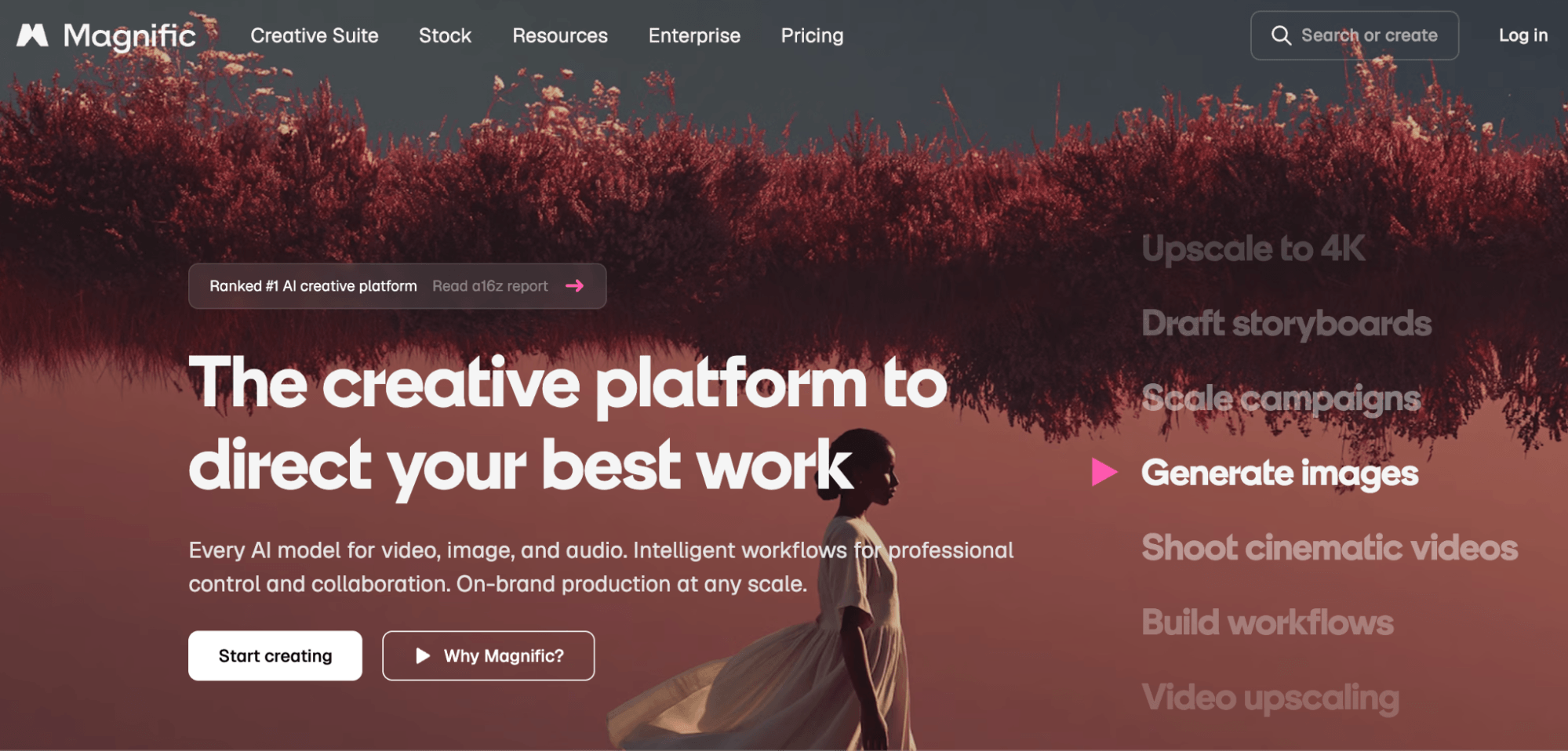
| Platform Aggregation & Nodes | Magnific (formerly Freepik) | Aggregates dozens of image and video APIs under one roof; features "Spaces" node-based canvas for bulk, automated workflows. |
| Brand Foundation Synthesis | CoreDesigner AI | Synthesizes scattered brand assets (logos, website screenshots) into cohesive, reusable design style guides. |
| Audio & Voice Synchronization | ElevenLabs | Generates professional voice-overs, character voices, sound effects, and powers lip-sync features for video continuity. |
The Power of Node-Based Aggregation
By investing in an aggregator platform like Magnific, teams bypass the financial drag of maintaining separate accounts for every new model released to the market. More importantly, node-based "Spaces" environments allow marketers to build visual workflows that execute in bulk.
For instance, rather than generating a single YouTube thumbnail, a marketer can upload reference photos, pipe them through Imagen 2 for facial angle variations, route those outputs into ChatGPT Images for layout composition and typography overlay, and run 30 variations simultaneously. Out of those 30 outputs, a team can systematically isolate the top 5 brand-aligned variants to serve as permanent visual reference standards.
Official Insights & Strategic Frameworks
Transitioning from amateur experimentation to professional AI production requires a disciplined, step-by-step methodology. Jerrod Lew outlines five foundational pillars that every marketing team must implement.
Step 1: Establish Your Brand Foundation
Before opening any generative tool, the fundamental rules of marketing remain unchanged: define the brand identity, identify the target audience, and document core visual assets including color palettes, typography, and logos.
If an organization lacks a cohesive brand style guide, AI-driven design systems like CoreDesigner can ingest fragmented assets—such as website screenshots, rough color preferences, and raw logo files—to synthesize a comprehensive style guide. Grounding AI operations in this consistency layer is what separates professional branded content from disjointed, random output.
Step 2: Build Comprehensive Reference Assets
Professional-grade AI output requires extensive preparation before a single prompt is written. This preparation is divided into two distinct categories:
- Product Reference Sheets: Professional studio photography is unnecessary for AI reference. Creators can input raw product shots along with contextual descriptions into an image model using a simple prompt: “Please create a product sheet for my product using the attached images to create a sheet with multiple angles.” The model generates a composite reference sheet displaying the product across multiple use cases and angles, which then acts as a style guide for all subsequent chat sessions.
- Human Character Sheets: Human likeness requires significantly more nuance due to micro-expressions and angle-specific features. Creators should capture comprehensive photo sets—front-facing, profile, and back-of-head—using a standard smartphone camera. Crucially, reference shots must include a range of expressions (smiling with visible teeth, determined, shocked, curious). Without these, models will attempt to extrapolate unfamiliar expressions, frequently resulting in facial distortion and uncanny valley artifacts. These images are compiled into a master character sheet to seed future sessions.
Step 3: Storyboard with Images, Not Video
Video generation remains computationally heavy, time-consuming, and expensive in terms of generation credits. Conversely, images can be generated rapidly and at high volume—roughly 100 images can be produced in the time it takes to render 40 video clips.
Marketers should treat image generation as a dedicated storyboarding phase. By utilizing the pre-established character sheet, creators place the character into each intended scene and environment as static images. This achieves two critical goals: it refines the visual direction cheaply before committing video resources, and it provides video models with precise visual starting points.
Step 4: Execute Precision Video Generation
When transitioning from images to video using advanced models like Seedance 2.0 or Kling 3.0, the nature of prompt engineering changes dramatically. Because the reference images already dictate the character’s appearance, clothing, and environment, the text prompt can focus entirely on camera movement, kinetic action, pacing, and interaction.
If minor errors occur—such as an errant background element or an unnatural movement—marketers no longer need to regenerate clips from scratch. Tools equipped with editing layers (such as OmniFlash, Runway, or Kling) allow creators to input targeted instructions (e.g., “Remove the car driving backward in the background”) while preserving the integrity of the rest of the scene.
Future Outlook: The Next Frontier for AI-Driven Marketing
As generative AI infrastructure matures, the competitive advantage will no longer belong to those who know how to write clever text prompts. Instead, value will concentrate in the hands of organizations that master pipeline architecture, brand governance, and creative direction.
We are rapidly approaching an era where multi-modal models will be natively embedded across standard enterprise workspace tools—from collaborative document editors to presentation software and cloud storage systems. For marketers, this integration means that AI will cease to be a separate "creative task" and will instead function as an ambient, invisible layer underlying every campaign produced.
Marketers who continue to treat AI as a slot machine—hoping for a blockbuster ad campaign from a single button press—will continue to experience erratic, sub-par results. Conversely, those who adopt the systematic, pipeline-driven methodologies outlined by industry leaders will unlock unprecedented creative scale, cost efficiency, and visual consistency across every channel they operate.
This article is adapted from insights originally shared on the AI Explored podcast, co-hosted by Michael Stelzner and featuring AI educator Jerrod Lew. To explore more strategies on integrating artificial intelligence into your business operations, subscribe to AI Explored across Apple Podcasts, Spotify, and YouTube.