Executive Overview
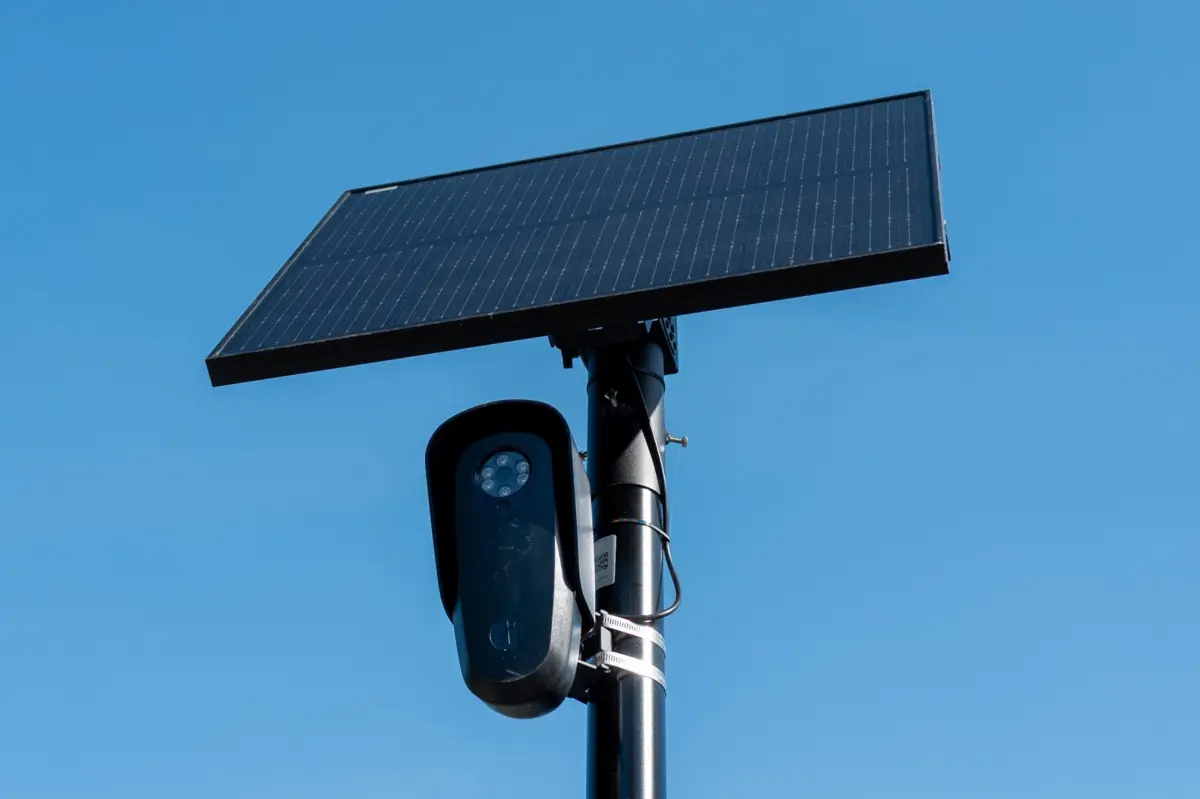
The rapid proliferation of automated surveillance technology across American communities has reached a critical inflection point. At the center of this firestorm is Flock Safety, a prominent provider of Automated License Plate Recognition (ALPR) cameras, AI-powered drones, and advanced biometric tracking infrastructure. Once championed by local police departments as an indispensable tool for rapid crime resolution, Flock Safety now finds itself embroiled in a nationwide debate spanning privacy, civil liberties, and law enforcement accountability.
The core tension rests on a fundamental question: Can a society preserve individual privacy while deploying pervasive, real-time monitoring networks? Flock Safety Chief Executive Officer Garrett Langley has publicly argued that the nation must find a workable "compromise" between public safety and privacy safeguards. However, mounting evidence of technology misuse by police officers, combined with an unprecedented bipartisan political backlash, has cast doubt on whether private self-regulation and minor software tweaks can adequately protect constitutional rights.
As documented abuses surface—including police officers leveraging vast surveillance networks for personal stalking—politicians from both sides of the aisle are taking aim at the company. From progressive leaders calling for an outright ban on AI mass surveillance to conservative lawmakers introducing federal legislation to block government purchases of Flock systems, the enterprise faces an existential threat to its operating model.
Detailed Chronology: From Rapid Adoption to Public Outcry
                                  FLOCK SAFETY CONTROVERSY TIMELINE

 [ Rapid Deployment ] ──► [ WaPo Investigation ] ──► [ Executive Response ] ──► [ Policy Revisions ] ──► [ Political Backlash ]
 Networks expanded across  46 instances of officer    Langley apologizes on CBS   Default retention cut to   Bipartisan opposition mounts;
 municipal police forces   misuse identified          and defends tech on Fox     7 days; Evidence Mode added  anti-Flock bill introduced
1. Mass Deployment and Network Expansion
Over recent years, Flock Safety expanded its footprint across thousands of municipalities, installing a dense matrix of internet-connected cameras designed to capture every passing vehicle. Beyond simple license plate capture, the system utilizes machine learning to index vehicle attributes—such as color, make, model, altered plates, roof racks, and distinctive stickers—building a searchable, real-time database accessible to law enforcement across jurisdictional lines.
2. Documented Systemic Abuse
The theoretical risks of pervasive tracking materialized into concrete scandal following a landmark investigation by The Washington Post. The report identified at least 46 distinct cases in which police officers were accused or convicted of utilizing Flock technology for unauthorized personal purposes. Documented infractions included officers using the network to track ex-wives, girlfriends, romantic rivals, and estranged partners, turning a public safety tool into an instrument of intimate abuse.
3. The Executive Media Campaign
Facing mounting public outrage, Langley embarked on a media tour to defend the company’s track record and mitigate reputational damage:
- CBS News Interview: After listening to an account from a victim of police stalking enabled by Flock technology, Langley offered a public apology: "I apologize. It kills me that she went through that." However, he resisted accepting structural blame for the abuse, asserting: "I don’t think that Flock created police abuse. I think we’re the first company to ever shine a light on it and build the tools to find it."
- Fox News Appearance: Langley framed the debate around national trade-offs, cautioning against absolute positions on civil liberties versus law enforcement capabilities: "When people talk about just one of these, privacy or safety, they’re prioritizing the wrong thing, and what we have to prioritize as a country is compromise. How do we have our safety, and how do we balance privacy?"
4. Technical Mitigations and Structural Countermeasures
In an effort to appease critics and establish guardrails, Flock Safety introduced two primary product adjustments:
- Reduced Data Retention Defaults: The company shortened its default cloud storage retention window for captured footage from 30 days down to seven days.
- Mandatory Case Codes: System access now requires officers to enter a specific justification or "case code" before running search queries against the database.
5. Escalation to the Political Arena
Rather than quelling public concern, Flock’s operational adjustments triggered broader political scrutiny. As mass surveillance joined data center expansion as a volatile issue in national politics, lawmakers on both the left and right launched coordinated critiques against the company’s business model.
Supporting Context & Technical Metrics
To understand the systemic impact of Flock Safety’s technological footprint, it is necessary to examine how the hardware, software, and administrative loopholes intersect within modern law enforcement workflows.
                    DATA LIFECYCLE & RETENTION OVERRIDE LOOPHOLE

 +--------------------------------+
 | Flock ALPR Camera Captures     |
 | Vehicle Fingerprint Data       |
 +---------------+----------------+
                 |
                 v
 +--------------------------------+
 | Standard Cloud Retention       | ◄── Default: Shortened from 30 Days to 7 Days
 | (Automatic Purge)              |
 +---------------+----------------+
                 |
                 | (Officer Invokes "Evidence Mode")
                 v
 +--------------------------------+
 | "Evidence Mode" Override       | ◄── Retention Period Extended Indefinitely;
 | (Bypasses Automatic Purge)     |     Lacks Required Independent Judicial Audit
 +--------------------------------+
The Mechanics of the "Evidence Mode" Loophole
While Flock’s reduction of default data retention from 30 days to seven days was presented as a major concession, privacy advocates point out critical structural flaws. Under current system configurations, law enforcement personnel can bypass the seven-day purge window by simply designating queries or captured footage under an "Evidence Mode" setting.
Once marked as evidence, the stored data can be retained indefinitely. Furthermore, because mandatory "case codes" are often manually typed text fields rather than verified, court-sanctioned warrant numbers, officers retain the ability to input generic or dummy text to execute unauthorized searches without immediate automated rejection.
The Regulatory Void
Unlike traditional wiretaps, physical search warrants, or location tracking via telecommunication providers—which require strict judicial oversight under Fourth Amendment jurisprudence—ALPR surveillance operates largely in an unregulated legal grey zone. In most states:
- There are no statutory criminal penalties specifically targeting the unauthorized internal access of automated surveillance databases by law enforcement officers.
- System audit logs are maintained internally by law enforcement agencies or vendor platforms, rarely undergoing independent third-party or judicial audits.
- Inter-agency data-sharing agreements allow local police departments to broadcast real-time vehicle movement alerts to hundreds of external agencies without regional public disclosure.
Official Statements & Political Responses
The controversy surrounding Flock Safety has created a rare consensus among ideological opponents, generating significant friction across the political spectrum.
| Actor / Entity | Political Alignment | Position / Official Action Taken | Key Statement / Text |
|---|---|---|---|
| Garrett Langley (CEO, Flock Safety) |
Corporate Executive | Advocates for balanced policy compromise; calls for state-level criminalization of unauthorized access. | "Today, it is too often that in Flock and in other technologies, there’s no regulation. There’s no accountability, and we think that’s wrong." |
| Bernie Sanders (U.S. Senator – VT) |
Progressive Left | Demands an immediate halt to AI surveillance expansion. | "STOP AI MASS SURVEILLANCE. STOP FLOCK." |
| Dr. Abdul El-Sayed (Senate Nominee – MI) |
Progressive Left | Attacks political opponents for facilitating unchecked private surveillance networks. | Accused opponent Mike Rogers of supporting "this mass proliferation of Flock cameras, any and everywhere, watching your every move to collect information without you even noticing." |
| House Republicans (119th Congress) |
Conservative Right | Introduced House Bill 9800 to ban federal procurement of ALPR and biometric tracking tech. | Explicitly prohibits federal purchases of automated surveillance systems using facial recognition, biometric IDs, or LPR, "including a Flock Safety camera." |
| American Civil Liberties Union (ACLU) | Civil Rights Advocacy | Evaluates Flock’s policy changes with deep skepticism, highlighting retention overrides. | "Whether this is a real change or just another Flock PR move, however, will depend on how its ‘Evidence Mode’ operates." |
Corporate Governance vs. Public Regulation
Garrett Langley has explicitly shifted part of the burden back onto federal and state lawmakers, arguing that public policy has failed to keep pace with technological advancement. Speaking to Fox News, Langley emphasized that private technology companies should not be left to self-regulate in a legal vacuum, urging state legislatures to introduce strict criminal penalties for officers who misuse surveillance databases.
However, civil liberties organizations argue that calling for state regulations while actively deploying unmonitored networks across thousands of towns constitutes an irreconcilable strategy. The ACLU maintains that until systems are engineered with hard technical prohibitions—rather than voluntary settings that can be overridden by end-users—mass privacy violations will remain an inevitable outcome.
Future Outlook: The Road Ahead for Automated Surveillance
As public scrutiny intensifies, the future of Flock Safety and the broader ALPR industry will likely be defined by three critical battlegrounds:
                          EMERGING REFORM BATTLEGROUNDS

  1. LEGISLATIVE BANS               2. MANDATORY AUDITS              3. JUDICIAL SCRUTINY
  Federal legislation (HB 9800)    Independent third-party          Fourth Amendment challenges
blocking procurement. audits for "Evidence Mode." to long-term tracking.- Federal and State Legislative Action: The introduction of House Bill 9800 signals a growing appetite within Congress to starve surveillance vendors of federal funding. If passed, the prohibition on purchasing facial recognition, biometric, and ALPR hardware would severely restrict federal law enforcement integration and serve as a model for state-level bans.
- Technological Accountability and Independent Auditing: Pressure is mounting on Flock to redesign its software architecture. To satisfy critics, the platform will likely be forced to implement immutable, block-level audit logs, eliminate unverified manual case code entries, and subject its "Evidence Mode" retention overrides to external judicial authorization.
- High-Stakes Industry Discourse: The ongoing clash between commercial incentives, law enforcement demands, and constitutional protections will reach a key public forum later this year. Garrett Langley is scheduled to appear on stage at the TechCrunch Disrupt 2026 conference in October, where he will face direct interrogation regarding the future of mass surveillance, system safeguards, and corporate accountability.
Ultimately, the resolution of the Flock Safety controversy will set a national precedent. As surveillance tools become increasingly sophisticated and accessible, the nation must decide whether pervasive monitoring is an acceptable price for public safety—or whether true public safety requires firm, unenforceable limits on the power of the state to watch its citizens.