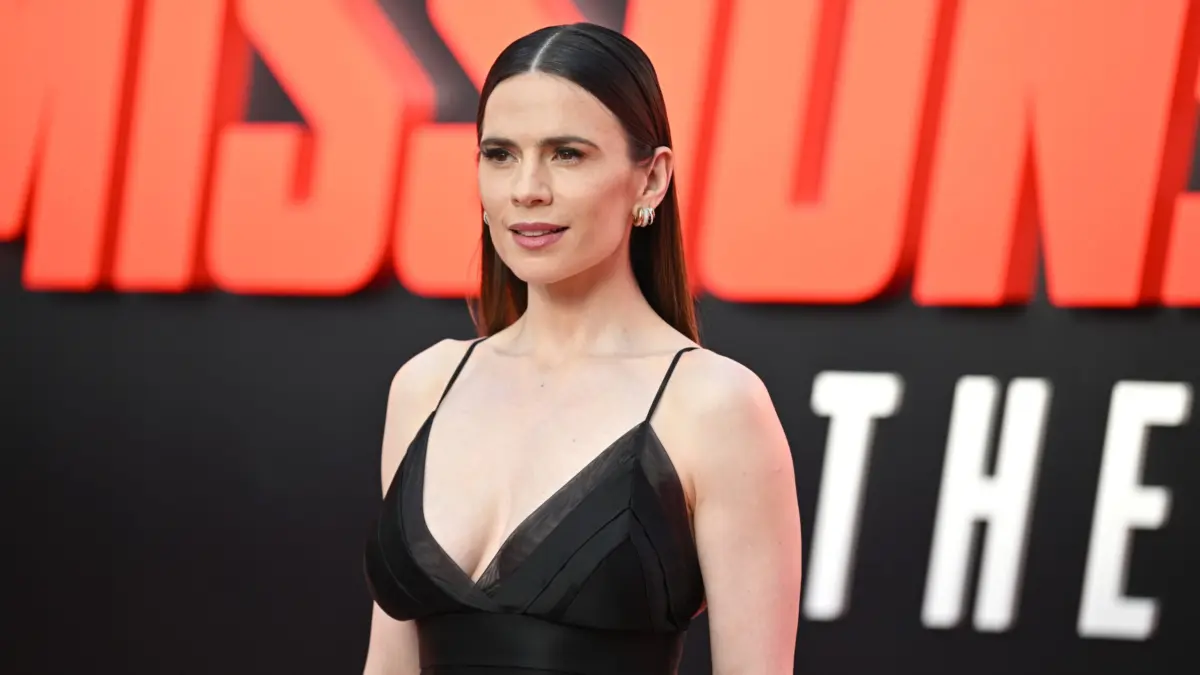
The debate surrounding the treatment of legacy characters within the Marvel Cinematic Universe (MCU) has intensified following candid remarks from actress Hayley Atwell. Speaking at the For the Love of Fantasy & Sci-Fi convention in London, Atwell did not mince words regarding the fate of her character, Peggy Carter, in Doctor Strange in the Multiverse of Madness. Referring to the character’s brutal and abrupt demise as a "complete disservice," the veteran Marvel star expressed deep frustration over how the studio handled the long-awaited live-action debut of Captain Carter.
For years, fans championed Atwell’s transition from the period-piece spy of Captain America: The First Avenger and the television series Agent Carter into an alternate-reality superhero. When Marvel Studios finally introduced Captain Carter in the 2022 multiverse blockbuster—complete with a Union Jack-emblazoned shield and a high-stakes role among the Illuminati—audiences anticipated a robust showcase of her tactical genius and super-soldier prowess. Instead, Carter’s arc culminated in a rapid, violent death at the hands of Elizabeth Olsen’s Scarlet Witch, who famously bisected the hero with her own rebounding shield.
Atwell’s public critique shines a light on a recurring tension within contemporary blockbuster filmmaking: the balance between serving narrative shorthand—such as establishing a villain’s overwhelming power—and honoring beloved characters who carry substantial fan equity. As Marvel Studios prepares for major crossover events like Avengers: Doomsday, Atwell’s commentary serves as an authoritative reminder that actors who inhabit these roles are deeply invested in the narrative integrity and cultural legacy of the superheroes they portray.
Detailed Chronology: From Golden Age Spy to Multiversal Casualty
To understand the weight of Hayley Atwell’s frustration, one must trace the evolution of Peggy Carter within the expansive tapestry of the MCU. Introduced in 2011’s Captain America: The First Avenger, Margaret "Peggy" Carter quickly established herself as much more than a romantic interest for Steve Rogers. As a strategic, sharp-witted, and formidable agent of the Strategic Scientific Reserve (SSR), she commanded respect on the front lines of World War II, fundamentally shaping the ideological foundation of what would become S.H.I.E.L.D.
Following her cinematic debut, Atwell reprised the role in the Marvel One-Shot short film Agent Carter (2013), which directly catalyzed the critically acclaimed ABC television series Agent Carter (2015–2016). Across two seasons, the show solidified Peggy Carter as a pioneer in a male-dominated espionage world, earning a dedicated cult following and cementing Atwell as a cornerstone of early Marvel television. Subsequent cameo appearances in Avengers: Age of Ultron, Ant-Man, and Avengers: Endgame—where she finally received her long-awaited dance with Steve Rogers—seafared her status as a beloved legacy figure.
The turning point for the character’s superhero trajectory arrived in Disney+’s animated anthology series What If…? (2021). In an alternate timeline where Peggy steps into the Super-Soldier serum chamber instead of Steve Rogers, she emerges as Captain Carter. The animated series allowed Atwell to fully lean into the physical, action-heavy aspects of comic book heroism, garnering immense praise from viewers and establishing an appetite for a live-action adaptation.

That appetite was seemingly satisfied when director Sam Raimi’s Doctor Strange in the Multiverse of Madness hit theaters in May 2022. As part of Earth-838’s Illuminati—a secret council comprising some of the smartest and most powerful beings in that reality—Captain Carter stood alongside Professor X (Patrick Stewart), Mr. Fantastic (John Krasinski), Black Bolt (Anson Mount), and Maria Rambeau’s Captain Marvel.
However, the sequence was designed primarily as a showcase for the corrupting, terrifying power of the Scarlet Witch, who had been possessed by the Darkhold. Within minutes of their introduction, the members of the Illuminati were systematically and gruesomely dispatched. Captain Carter’s cinematic superhero run concluded when Wanda caught her Union Jack shield and hurled it back at her, slicing the hero in half. The moment was punctuated by a grim callback to Steve Rogers’ iconic catchphrase: "I could do this all day"—a line that Atwell later noted felt fundamentally unearned and patronizing given the character’s instantaneous defeat.
Supporting Context & Metrics: The MCU’s "Worf Effect" and Fan Reception
Atwell’s critique touches upon a classic screenwriting trope known colloquially as the "Worf Effect"—named after the Klingon warrior in Star Trek: The Next Generation who was frequently beaten up by new adversaries simply to establish how dangerous those adversaries were. In Doctor Strange in the Multiverse of Madness, the entire Illuminati lineup served this exact narrative function.
From a box-office and cultural impact standpoint, Multiverse of Madness was an undeniable juggernaut, grossing over $955 million worldwide. The film capitalized heavily on audience anticipation surrounding multiversal cameos, driving massive social media engagement, ticket presales, and post-release discussions. Yet, the narrative efficiency required to service a runtime of two hours and six minutes often forces secondary and tertiary characters into truncated arcs.
| Milestone / Event | Year | Cultural Impact & Significance |
|---|---|---|
| Captain America: The First Avenger | 2011 | Establishes Peggy Carter as a core strategic and emotional pillar of the early MCU. |
| Agent Carter (Television Series) | 2015–2016 | Expands Peggy into a leading action hero and espionage icon across two seasons. |
| What If…? Season 1 | 2021 | Introduces the animated variant of Captain Carter, sparking massive fan demand for live-action. |
| Doctor Strange in the Multiverse of Madness | 2022 | Features the live-action debut and immediate death of Captain Carter at the hands of the Scarlet Witch. |
| For the Love of Fantasy & Sci-Fi Convention | 2026 | Hayley Atwell publicly criticizes the handling of her character’s death, calling it a "complete disservice." |
While the shocking brutality of the Illuminati deaths successfully generated initial theatrical gasps and horror-movie thrills—fitting director Sam Raimi’s signature aesthetic—it left a lingering sense of dissatisfaction among purists of specific characters. For a character who spent a decade fighting for agency, respect, and equality in a period-accurate patriarchal society, being reduced to a punchline—or rather, a "frisbee to death" casualty—felt jarringly dismissive to the actress who brought her to life.
Official Statements & Behind-the-Scenes Friction
Atwell’s disclosures at the London convention shed light on the collaborative limitations often faced by performers within tightly controlled franchise environments like Marvel Studios. According to the actress, her attempts to inject nuance, alter the choreography, or push back against the dismissive nature of the scene were met with polite stonewalling from production leadership.

"I tried on set to kind of go, ‘Can I just add? Can I just suggest?’ And they were like, ‘Sure, but no,’" Atwell recounted to fans.
The crux of her artistic grievance lies in the juxtaposition of dialogue and action. When Captain Carter delivers the line, "I could do this all day," she echoes the indomitable spirit of Steve Rogers. However, because she is instantly incapacitated and killed seconds later, the dialogue transforms from an inspiring declaration of resilience into an ironic, almost mocking footnote. Atwell noted that this created an unavoidable subtext for the audience: the immediate response became, "No, you couldn’t [do this all day]," ultimately leaving the character appearing weak or "lame" despite her formidable credentials in alternate media.
Industry analysts note that while Marvel Studios is renowned for its cross-media synergy and fan service, creators frequently struggle to balance the demands of sprawling multiversal plotlines with individual character dignity. Atwell’s willingness to voice her disappointment publicly highlights a growing shift among franchise actors, who are increasingly vocal about protecting the narrative legacies of the roles that define their careers.
Future Outlook: The Multiverse Ahead and Avengers: Doomsday
As the Marvel Cinematic Universe marches toward its next major multi-film climax with Avengers: Doomsday—slated for theatrical release on December 18—the question of how legacy variants will be handled remains paramount. Marvel has already released a comprehensive "homework" viewing list comprising 15 films and television series designed to prepare audiences for the complex narrative threads converging in Doomsday.
Hayley Atwell is officially confirmed to return to the franchise for Avengers: Doomsday, though the studio has kept tight-lipped regarding whether she will reprise her role as Captain Carter, a period-accurate variant, or explore an entirely different narrative avenue within the collapsing multiverse.
The actress’s candid remarks at the London convention may ultimately serve as a constructive catalyst for how writers and directors approach her character’s next chapter. With the multiverse offering infinite variations of any given hero, the door remains wide open for redemption. Whether Captain Carter returns to don the shield with greater agency or finds herself navigating entirely new cosmic landscapes, fans and critics alike will be watching closely to see if Marvel Studios heeds Atwell’s call for a more respectful and empowering treatment of one of the franchise’s most enduring figures.