Executive Overview
When cinematically inclined conversations turn to the visionary filmography of Tim Burton, a familiar pantheon of titles routinely dominates the discourse. Cinephiles and casual moviegoers alike immediately point to the macabre comedy of Beetlejuice, the gothic romance of Edward Scissorhands, the biographical tragicomedy of Ed Wood, or his era-defining contributions to the superhero genre with Batman and Batman Returns. Even tangential associations, such as Henry Selick’s The Nightmare Before Christmas—frequently misattributed to Burton due to its heavy visual footprint—enjoy a permanent place in the cultural zeitgeist.
Yet, buried beneath the weight of these towering gothic achievements lies a cinematic anomaly: Big Fish, released in late 2003. Famously distinct from the director’s traditional stylistic calling cards, this magical realist drama is arguably some of Burton’s finest, most emotionally resonant work. For years, it has occupied a peculiar blind spot in popular culture, rarely mentioned alongside his signature hits despite boasting critical acclaim and an all-star cast.
Now, a new window of discovery has opened for modern audiences. As of August 1, Big Fish is available to stream completely free on Tubi, offering a timely opportunity to reexamine a film that completely upended Burton’s stylistic template. Far from the eerie shadows, pale protagonists, and German Expressionist angles that define his early career, Big Fish is a sun-drenched, technicolor exploration of mythmaking, mortality, and the complex bonds between fathers and sons. This piece explores the anatomy of Burton’s most underrated masterpiece, examining its production history, its thematic triumphs, and why its current streaming availability makes it mandatory viewing.
Detailed Chronology: From Daniel Wallace’s Novel to the Silver Screen
To fully understand the cinematic journey of Big Fish, one must look back to its literary origins and the unique set of historical circumstances that brought it to Tim Burton’s desk.
The Literary Foundation (1998)
Before it was a major motion picture, Big Fish: A Novel of Mythic Proportions was published in 1998 by author Daniel Wallace. The novel established the framework of Edward Bloom’s life—a man who lived on a grand, hyper-stylized scale, blending truth and tall tales seamlessly. The book captured the imagination of producers Richard D. Zanuck and Lili Fini Zanuck, who optioned the rights even before publication. Initially, legendary director Steven Spielberg was attached to direct the project, with Jack Nicholson eyed for the role of the elder Edward Bloom.
However, as Spielberg’s schedule shifted toward other projects—including Minority Report and Catch Me If You Can—the film languished in pre-production limbo. By the time Spielberg stepped down, the production needed a visionary capable of handling whimsical fantasy combined with deeply emotional family dynamics. Enter Tim Burton.

Production and Casting (2002–2003)
Burton boarded the project under deeply personal circumstances. Shortly before signing on to direct, both of his parents passed away. This profound personal loss lent an unexpected layer of emotional gravity to a story explicitly centered on a son coming to terms with his father’s impending death.
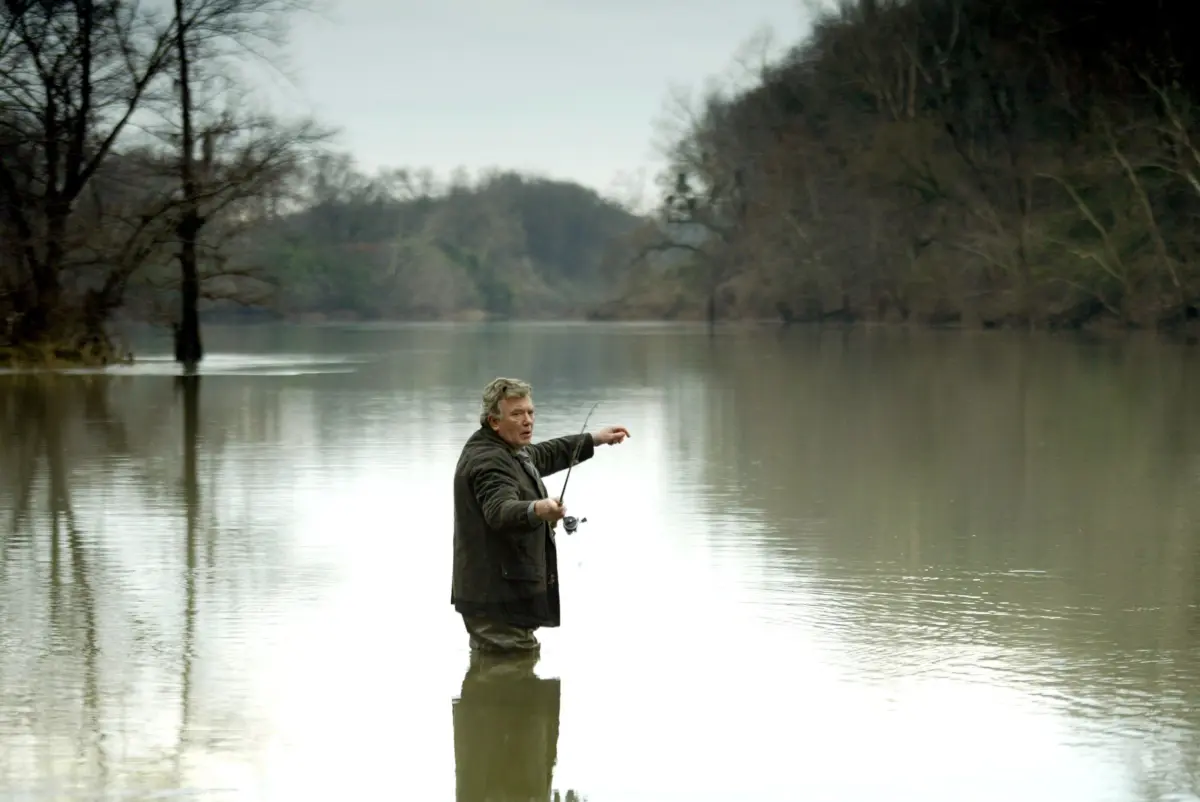
Casting proved crucial to bridging the gap between reality and fantasy. The production divided Edward Bloom’s life into two distinct eras: his golden years, portrayed by veteran British actor Albert Finney, and his adventurous youth, brought to life by Scottish actor Ewan McGregor. To anchor the magical realism, Billy Crudup was cast as Will Bloom, the skeptical, grounded journalist son attempting to separate fact from fiction before time runs out.
Filming took place primarily across Alabama, utilizing the state’s lush landscapes to construct the fictional, utopian town of Spectre—a mysterious village where time stands still and shoes are left hanging from telephone wires. When Big Fish premiered in December 2003, it arrived at a fascinating crossroads in Burton’s professional trajectory, sandwiched between the critically divisive Planet of the Apes (2001) and the commercially successful yet tonally polarizing Charlie and the Chocolate Factory (2005).
Supporting Context & Metrics: The Anatomy of an Underrated Gem
Despite earning strong critical notices and securing multiple high-profile accolades, Big Fish often gets lost in retrospective assessments of Burton’s career. A closer look at its critical reception, box office performance, and stylistic choices reveals a film that deserved far more cultural permanence than it initially received.
Box Office and Critical Reception
Upon its theatrical rollout, Big Fish grossed approximately $122.9 million worldwide against a production budget estimated at around $70 million. While profitable, it lacked the explosive, tentpole-level box office dominance of Burton’s previous hits like Batman or Sleepy Hollow.
Critics, however, were largely enchanted. The film holds a respectable approval rating on review aggregator platforms, with many singling out the screenplay by John August (adapted from Wallace’s novel) and the dual lead performances. The film earned four Golden Globe nominations—including Best Motion Picture – Musical or Comedy, Best Supporting Actor for Albert Finney, and Best Original Score for Danny Elfman—as well as an Academy Award nomination for Elfman’s soaring musical composition.

A Departure from the "Burtonesque" Aesthetic
The primary reason Big Fish is frequently overlooked in conversations about Burton’s masterworks is simple: it barely feels like a Tim Burton movie.
For over a decade, Burton had cultivated a singular visual vocabulary. His worlds were defined by angular tombstones, stark black-and-white stripes, pale, gothic misfits, and an oppressive, beautiful gloom. In Big Fish, however, that gloom is entirely absent. The color palette bursts with vibrant daffodil yellows, deep forest greens, and bright circus reds.
Furthermore, the protagonist of Big Fish defies Burton’s traditional character archetypes. Edward Bloom is not a misunderstood recluse, a brooding outcast, or a tortured antihero. Instead, McGregor’s younger Edward is remarkably handsome, fiercely confident, universally beloved, and effortlessly charming—qualities that, in many standard cinematic narratives, belong to the antagonist. Yet, Burton manages to imbue this archetype with a sense of genuine wonder, ensuring that Edward’s larger-than-life persona feels earned rather than obnoxious.
Thematic Analysis: Fact, Fiction, and the Stories We Tell
At its core, Big Fish transcends its whimsical trappings to offer a profound meditation on how humans process grief and mortality through storytelling.
The Dual Perspectives of Edward Bloom
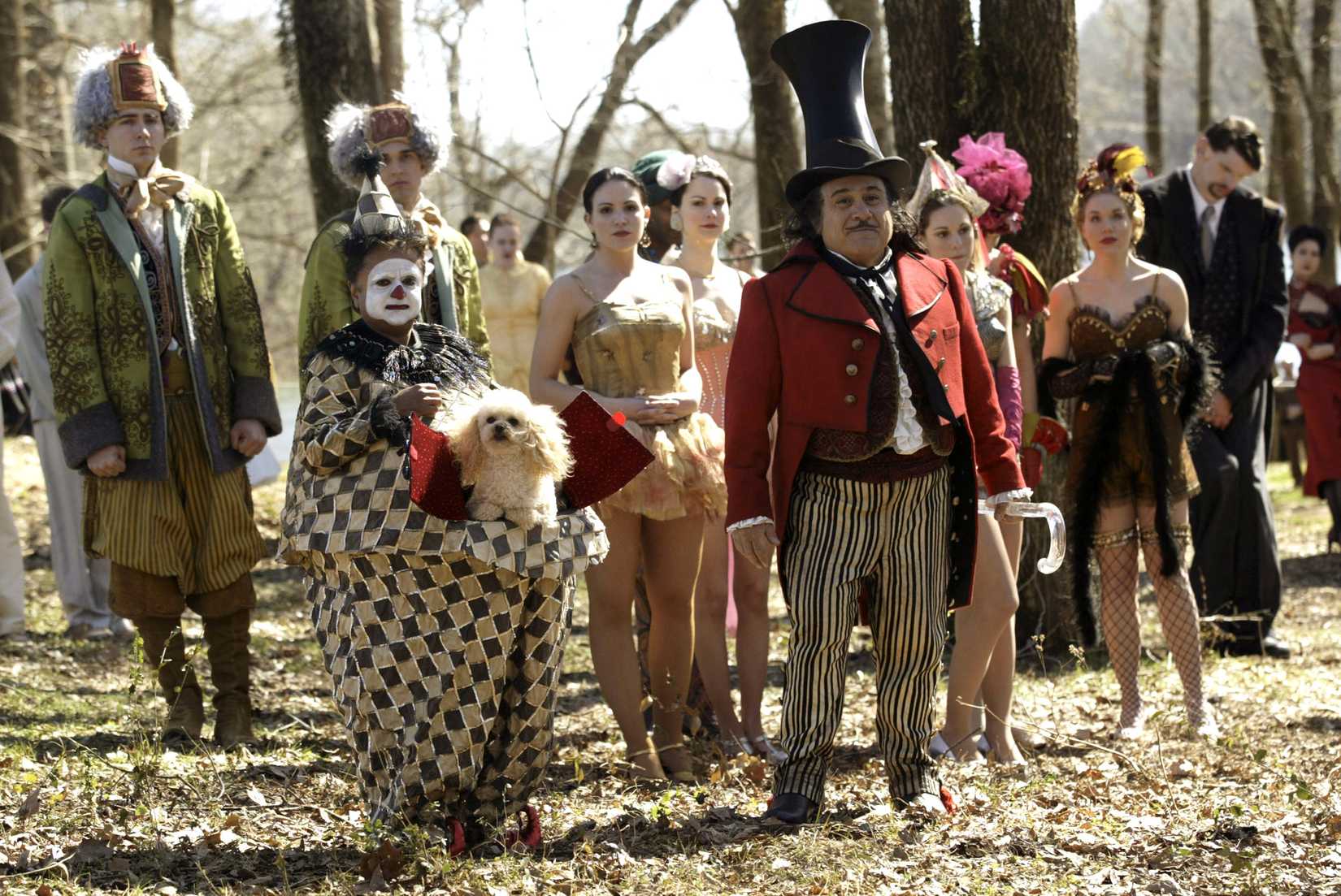
The film’s structural brilliance lies in the counterpoint between its two lead actors. Ewan McGregor captures the peak of youthful exuberance. As the younger Edward, his performance is loquacious and luminous. Whether he is wrestling a 7-foot catfish named "The Beast," joining a circus to discover the identity of the woman he loves, or wandering into the utopian village of Spectre, McGregor plays Edward as a man who genuinely believes that the world is an extraordinary place waiting to be explored.
Conversely, Albert Finney portrays the twilight of Edward’s life with a grounded, world-weary charisma. Finney’s charm is reminiscent of a beloved, eccentric uncle who has told the same stories at Thanksgiving dinner for decades. By the time Will Bloom (Crudup) arrives at his father’s bedside, he is exhausted by these "tall tales." Will is a journalist—a man dedicated to hard facts and verifiable truths. He views his father’s embellishments as a defensive wall, an emotional barrier preventing them from ever truly knowing one another.
The Power of Mythmaking
The emotional thesis of Big Fish addresses a fundamental human truth: facts are not always enough to sustain the human spirit. Through Will’s journey, the film argues that mythmaking is a form of emotional architecture. Edward does not tell stories to lie; he tells stories to elevate a mundane existence into something transcendent.
When the film reaches its breathtaking, life-affirming climax, the narrative perspective shifts in a way that brilliantly recontextualizes everything that came before it. Without spoiling the emotional payoff, the ending demonstrates how a son can finally honor his father not by stripping away his illusions, but by stepping inside them.
Future Outlook & Streaming Availability
As the media landscape continues to fragment across dozens of competing subscription services, the accessibility of classic and mid-budget cinema remains a vital topic for film preservationists and casual viewers alike. For years, finding Big Fish meant navigating digital rental fees or tracking down physical media copies.
The decision to bring Big Fish to free ad-supported streaming television (FAST) platforms like Tubi marks a significant victory for accessibility. In an era where streaming libraries constantly rotate content, making a critically acclaimed, emotionally resonant masterpiece available without a paywall ensures that younger generations—and nostalgic millennials—can easily rediscover it.
Looking forward, Big Fish deserves a radical critical reassessment. While cinematic history will always reserve a special place for Burton’s gothic experiments, Big Fish stands as proof that his directorial range extended far beyond the graveyard. It is a cinematic warm bath—a vibrant, tear-jerking, and ultimately joyous celebration of the stories that bind families together.
For anyone looking to experience a masterclass in magical realism, the journey is now easier than ever. Big Fish is streaming right now on Tubi, waiting to catch you in its extraordinary net.