Executive Overview
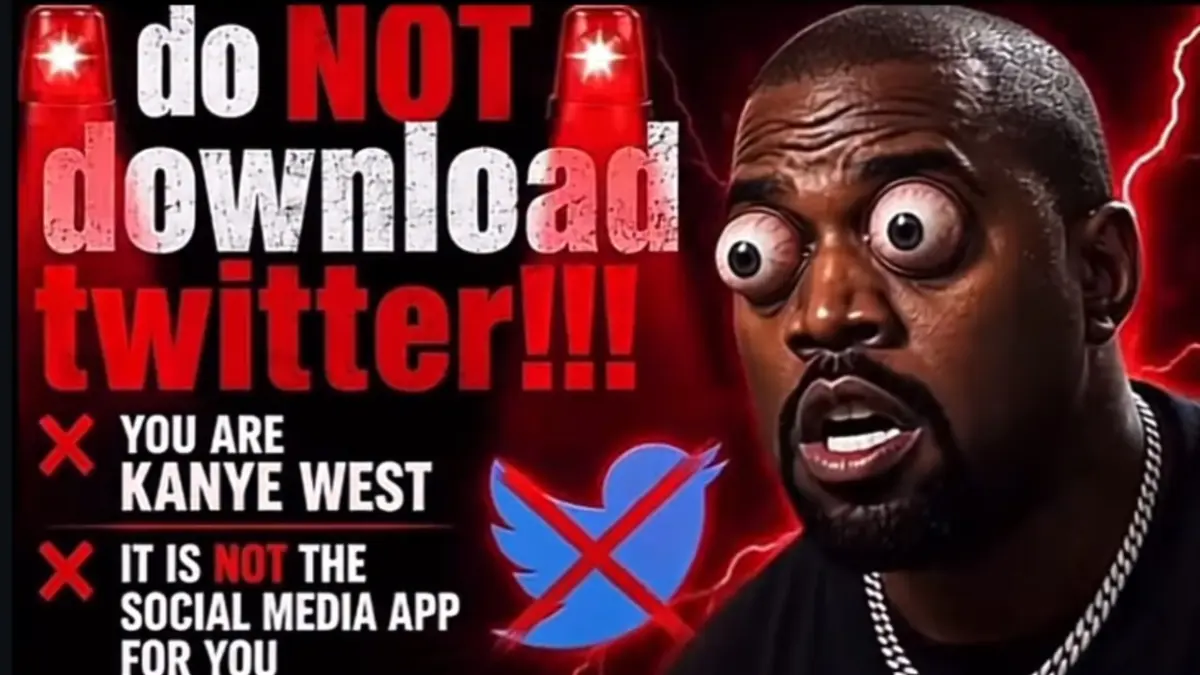
In the fast-paced, hyper-saturated ecosystem of modern internet culture, few phenomena emerge with the specific brand of absurdism and predictive self-awareness as the "Do Not Download Twitter" meme. Surging across TikTok, Instagram Reels, and X (formerly Twitter) throughout August 2026, the viral trend centers on a deceptively simple premise: an artificial intelligence-generated depiction of rapper and producer Kanye "Ye" West staring wide-eyed at a smartphone screen, reading a desperate, frantic warning pleading with him to close the App Store and stay off social media.
Rooted in a potent mixture of genuine public exhaustion, internet schadenfreude, and the rapid democratization of AI video generation tools, the meme acts as a digital intervention. The punchline relies on a universally acknowledged truth: Ye’s historical volatility on digital platforms—specifically his frequent, high-profile controversies and inflammatory posts—makes giving him internet access a public relations hazard.
What began as a single TikTok upload by user @stealthvent on August 6th, 2026, quickly ballooned into a multi-platform subculture. Within weeks, the joke mutated from a straightforward AI video into a versatile structural format. Creators began swapping out the subject, the app, and the medium, applying the frantic intervention format to figures like Elon Musk, Tyler, the Creator, and even historical icons like Michael Jackson, while remixing the audio into Brazilian funk tracks and generating fictional Google AI Overviews.
This deep-dive investigation explores the origins, rapid dissemination, sociological implications, and widespread cultural resonance of the "Do Not Download Twitter" meme. By examining the technical workflows behind its creation, the community dynamics of its spread, and its place within the broader history of celebrity-focused internet humor, we uncover how a joke about digital self-control became the defining viral sensation of late summer 2026.
Detailed Chronology: From Prompt to Viral Sensation
The trajectory of the "Do Not Download Twitter" meme offers a textbook case study in how modern internet lore is crowdsourced, iterated upon, and amplified across disparate social networks in a matter of days.
The Genesis: Early August 2026
The timeline traces back to August 6th, 2026. TikTok user @stealthvent published a short, AI-generated video featuring a hyper-realistic yet distinctly uncanny approximation of Kanye West. In the video, the rapper’s eyes bulge with a mixture of frantic realization and manic surprise as he reads a stark, capitalized message flashing across his device: "Do NOT download Twitter! You are Kanye West! It is not the social media app for you! Close the App Store now!"
The video struck an immediate chord, capturing the specific anxieties of fans who had watched Ye’s well-documented social media "crashouts" and controversies over preceding years. Within two weeks of its posting, the original TikTok clip amassed over 241,000 views, quickly catching the attention of algorithm-driven content aggregators.
However, the authorship of the foundational visual asset quickly became a point of discussion within the comment sections. TikTok user @jeonmyway2jk stepped forward, posting a screenshot as evidence claiming to have generated the original static image of West reading the cautionary text via an AI prompt before it was animated into video format. This collaborative, decentralized creation process—where one user prompts an image, another animates it, and subsequent users score or edit it—highlights the communal nature of AI-era meme generation.
The Spread: Mid-August 2026 and the Remix Wave
As the video breached the confines of TikTok’s algorithmic "For You" page, it entered the broader ecosystem of short-form video platforms, finding a particularly receptive audience on Instagram Reels. On August 15th, Instagram user @yetampa reposted the original video, driving over 25,000 likes in a single week and introducing the joke to a demographic less tethered to TikTok’s hyper-niche subcultures.
Simultaneously, the audio-visual landscape of the meme began to fracture and evolve. On the same day, TikToker @brian.boy1 published a high-energy Brazilian funk and phonk remix of the video. Featuring synchronized "tweening" animations and heavy bass drops native to the vibrant global remix culture on TikTok, this rendition accumulated over 245,000 views in under a week, proving that the meme possessed distinct musical adaptability.
The joke continued to mutate across formats:
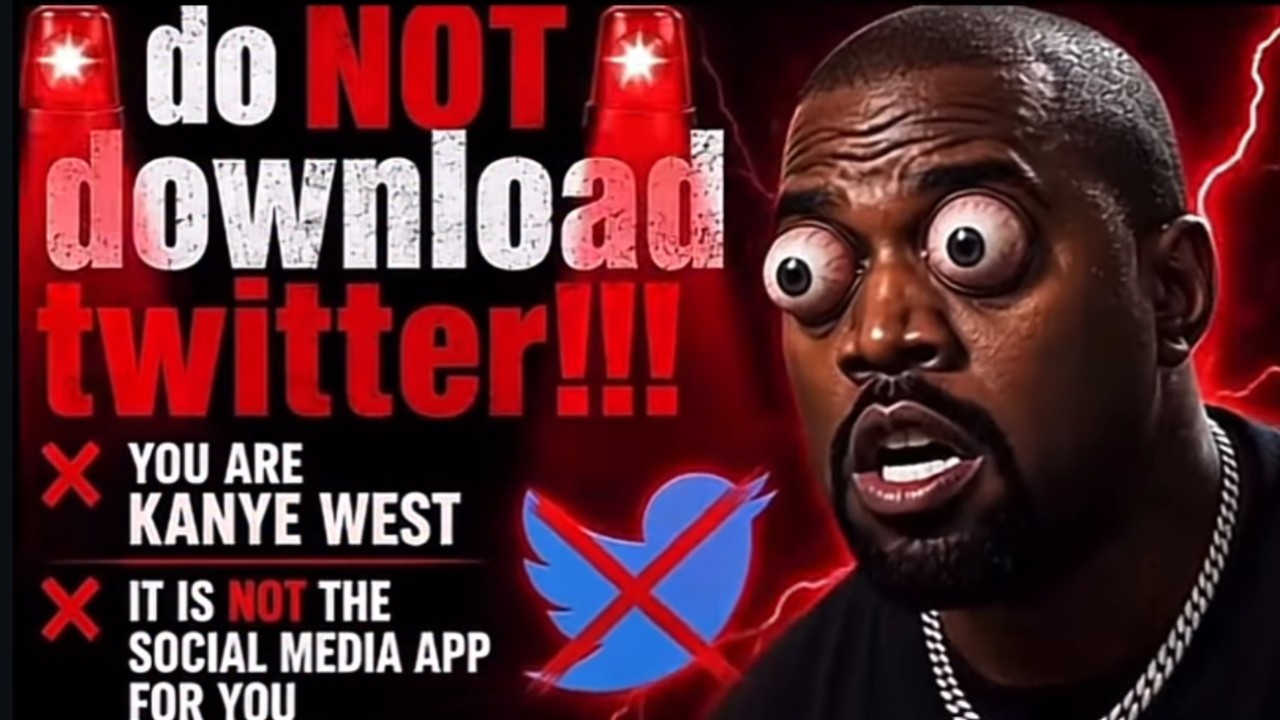
- August 17th: TikToker @miguel.juinio3 posted a satirical screenshot simulating a Google AI Overview that formally defined and displayed the "Do Not Download Twitter" text, poking fun at the bizarre, often hallucinated outputs of search engine generative AI. The post cleared 208,000 views within a week.
- August 19th: TikToker @jakobb288 introduced a psychological twist on the narrative, posting a variant where Kanye West actively questions whether he should heed the warning or take the plunge anyway, netting over 252,000 views in five days.
Supporting Context & Metrics: The Anatomy of an AI Meme
To understand why the "Do Not Download Twitter" meme resonated so deeply, one must analyze the technological and cultural conditions that allowed it to flourish.
The Democratization of AI Visual Media
In 2026, generative AI tools for video, image, and audio manipulation have reached a high level of consumer accessibility. Creating a convincing, talking-head video of a global celebrity no longer requires Hollywood-grade VFX studios or specialized coding knowledge; it can be accomplished via consumer-facing mobile apps and web prompts in minutes.
The meme leverages this uncanny valley effect deliberately. By intentionally crafting an image where Kanye West’s eyes bulge cartoonishly—evoking the classic tropes of internet "brainrot" and hyper-exaggerated expressions—the creators signal that the video is a satirical shitpost rather than a malicious deepfake designed to deceive. This transparency is crucial: it invites the viewer into the joke, transforming a potentially ethically fraught technology into a canvas for absurdist comedy.
Quantifying the Viral Footprint
While individual uploads were scattered across multiple accounts to maximize algorithmic reach, the cumulative metrics across platforms by late August 2026 underscore the meme’s scale:
- Initial TikTok Launch (@stealthvent): 241,000+ views within 14 days.
- Brazilian Funk Remix (@brian.boy1): 245,000+ views within 7 days.
- Google AI Overview Parody (@miguel.juinio3): 208,000+ views within 7 days.
- Existential Dilemma Variant (@jakobb288): 252,000+ views within 5 days.
- Cross-Platform Reposts (Instagram Reels via @yetampa): 25,000+ likes in 7 days, translating to an estimated audience reach in the hundreds of thousands.
The Taxonomy of Iteration: Broadening the Scope
The true sign of a meme’s cultural permanence is its ability to transition from a specific reference into a generalized template. By mid-August, internet users began applying the "Do Not Download" formula to an array of other public figures known for digital misbehavior or intense public scrutiny:
- Tyler, the Creator & Instagram: A variation urging the eccentric musician to avoid photo-sharing platforms.
- Elon Musk & X (Twitter): A deeply ironic variant warning the billionaire owner of the platform against downloading his own acquisition.
- Michael Jackson & Instagram: An absurd historical crossover treating deceased pop royalty as contemporary social media users prone to digital gaffes.
- Kanye West & WhatsApp: Expanding the intervention beyond microblogging to messaging apps, implying that Ye’s unfiltered thoughts are dangerous across all digital mediums.
Cultural Significance and Public Reception
The "Do Not Download Twitter" meme occupies a fascinating intersection of celebrity worship, parasocial intervention, and internet fatalism. For years, the public relationship between Kanye West and his digital footprint has been characterized by a morbid fascination. Every return to social media after a suspension or hiatus has historically been treated by internet commentators as a countdown to a high-profile controversy.
By framing this dynamic as a literal, panicked intervention—complete with frantic capitalization and desperate pleas to "close the App Store"—the meme externalizes the collective anxiety of the internet-using public. It treats Kanye West not as a distant, untouchable titan of pop culture, but as a reckless friend who needs his phone taken away at a party before he texts his ex or posts something regrettable.
Furthermore, the meme reflects a broader fatigue with the attention economy. In an era where digital platforms financially reward outrage, controversy, and erratic behavior, the idea of a celebrity being physically barred from downloading an app becomes a humorous utopia. It suggests that the best defense against digital self-destruction is total, enforced abstinence from the platform itself.
Future Outlook: Will the Meme Sustain Its Momentum?
As September 2026 approaches, the velocity of the "Do Not Download Twitter" meme raises questions common to all fast-burning internet trends: Will it establish permanent residency in the lexicon of internet humor, or will it burn out as generative video tools introduce newer, shinier formats?
Several factors suggest the meme has long-term staying power within specific digital subcultures:
- Infinite Mutability: Because the format relies on a simple Mad-Libs-style structure ("Do NOT download [App]! You are [Public Figure]! It is not the social media app for you!"), creators can continually inject newly relevant celebrities and trending apps into the template as news cycles shift.
- Cross-Genre Integration: The seamless blending of the meme with regional musical styles—such as the Brazilian funk and phonk remixes—demonstrates that auditory subcultures can adopt and prolong the life of visual jokes long after the initial visual template feels saturated.
- The Inevitability of Real-World Parallels: Given the unpredictable nature of celebrity social media usage, any future high-profile return of Kanye West—or similar figures—to platforms like X will inevitably trigger a resurgence of the meme, cementing it as a timeless digital reaction image for online volatility.
Ultimately, "Do Not Download Twitter" stands out as a defining artifact of 2026 internet culture: a self-aware, AI-assisted, highly collaborative piece of digital folklore that uses laughter to process the chaotic reality of modern celebrity communication.