Executive Overview
The landscape of web development is undergoing a rapid, structural transformation. As browser vendors race to implement sophisticated specifications, developers are no longer forced to rely on heavy JavaScript workarounds or brittle hacks to achieve complex layouts, dynamic animations, and responsive interactions. The latest wave of web platform updates brings unprecedented power directly into the realm of CSS and native browser architecture.
In this comprehensive review of recent developments across the web ecosystem, we examine the practical applications of emerging features highlighted in community resources like What’s !important #16. From the imminent Baseline status of the sibling-index() function and the mathematical wizardry of the infinity keyword, to sports-inspired layout engineering, container "stuck" queries, and debates over default resource loading policies, the modern browser is evolving into an extraordinarily capable application runtime.
This report provides an in-depth analysis of these foundational technologies, exploring how they solve long-standing frontend pain points, optimize developer workflows, and redefine what is possible on the open web.
Detailed Chronology of Recent Web Platform Advancements
To understand the trajectory of modern CSS, it is essential to trace the recent deployment of features that bridge the gap between theoretical specifications and cross-browser reality.
August 2026: The Rise of sibling-index() and Structural Animations
Following foundational work by Chris Coyier in his In-N-Out Animations series, developer and CSS expert Temani Afif demonstrated practical implementations of the sibling-index() function for dynamic animations. Crucially, Firefox version 154—scheduled for release on August 18, 2026—will officially ship support for this feature. This milestone pushes sibling-index() into "Baseline: Newly Available" status, meaning developers can safely target production environments without fearing fragmentation.
By allowing elements to know their exact index among their siblings natively in CSS, developers can orchestrate staggered animations, complex grid reveals, and dynamic list transitions dynamically without injecting inline JavaScript style variables or managing explicit index classes in markup.
Mid-2026: Mathematical Constants and Layout Breakthroughs
Concurrently, the exploration of advanced mathematical functions in CSS has yielded novel architectural patterns. Adam Argyle’s deep dive into the calc() keyword infinity (and its negative counterpart, -infinity) opened up discussions regarding edge-case geometric styling. While traditionally reserved for advanced mathematical modeling, keywords like infinity provide declarative controls for properties that require asymptotic or extreme boundary behaviors, such as superellipse corner shaping.
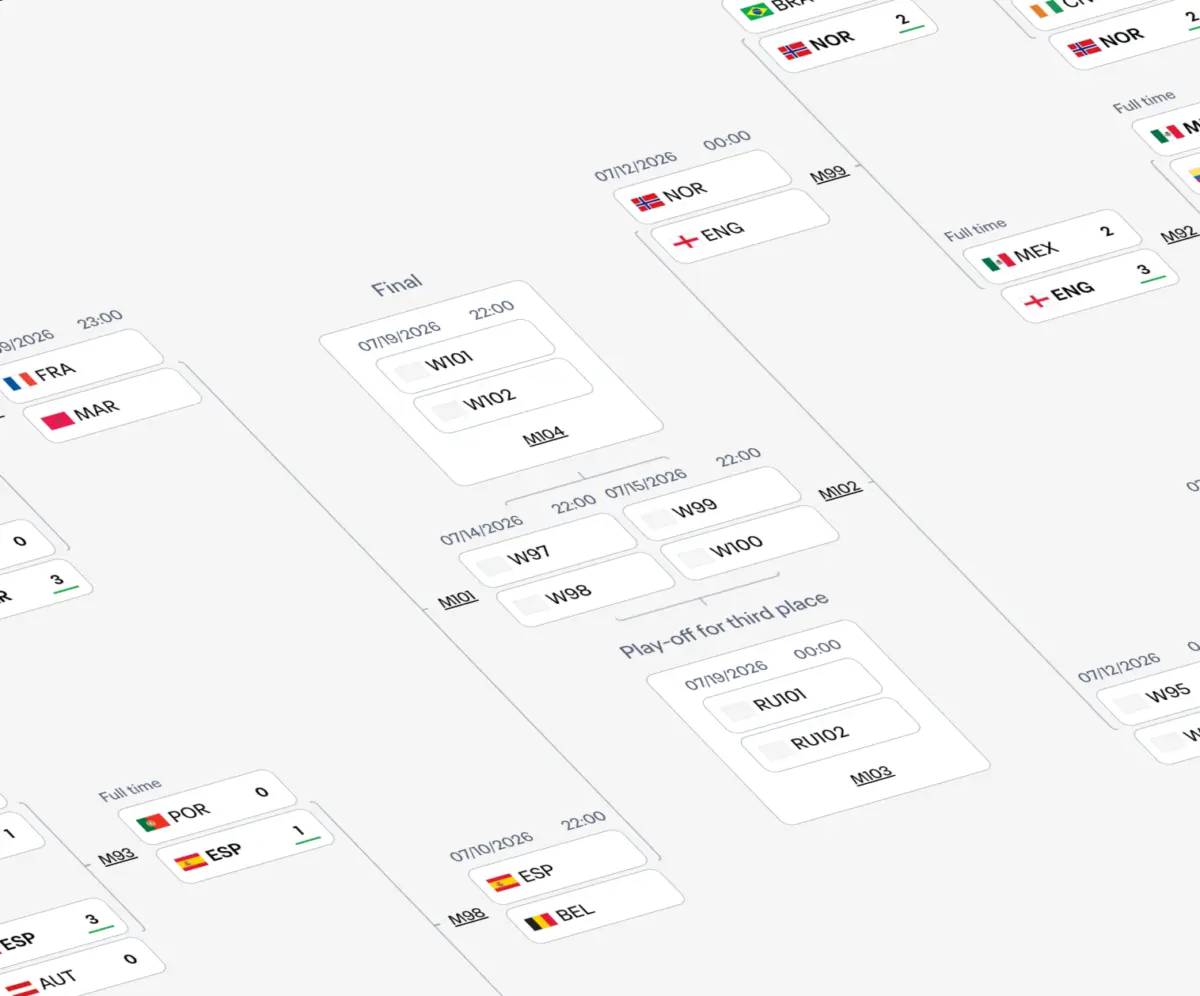
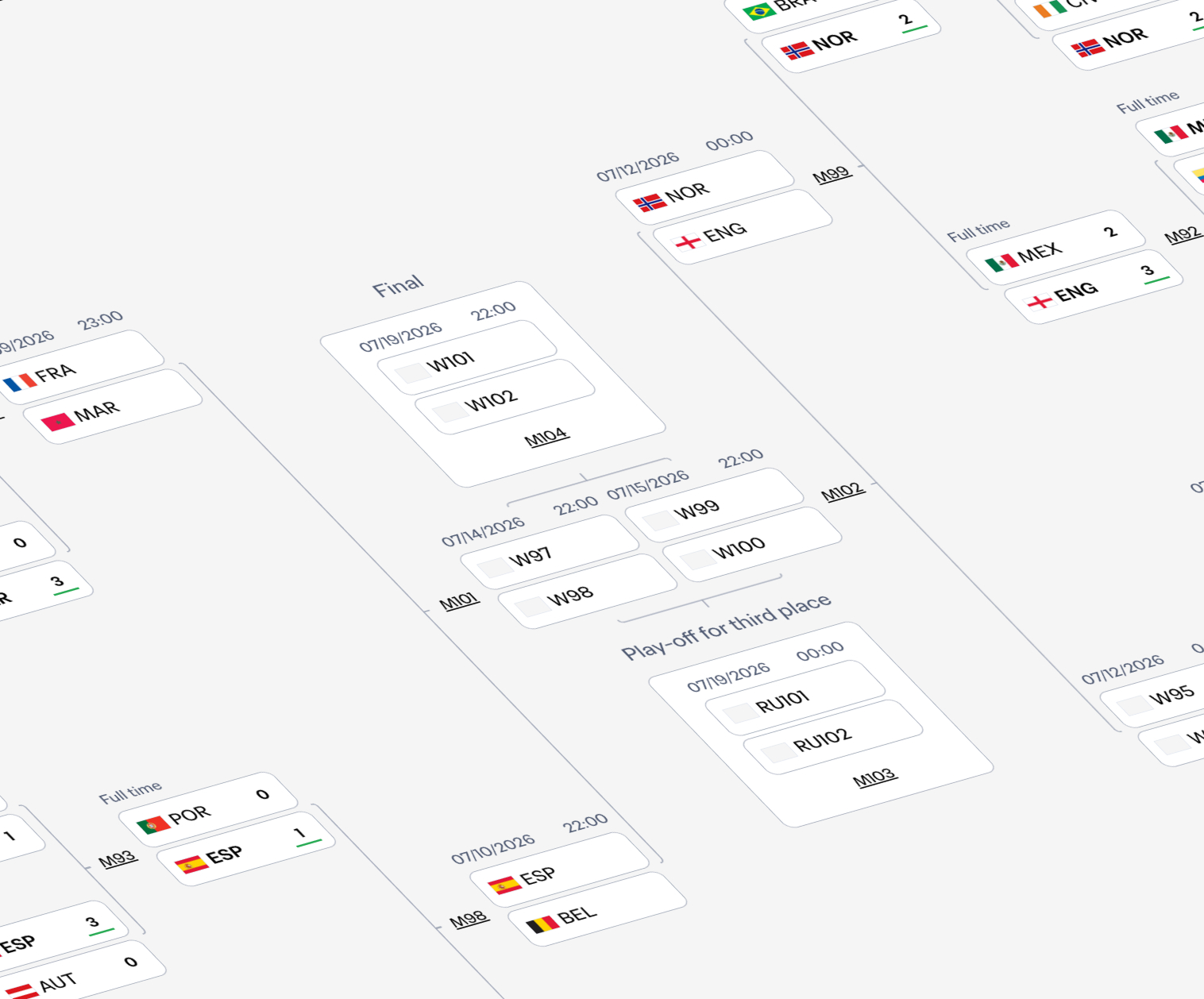
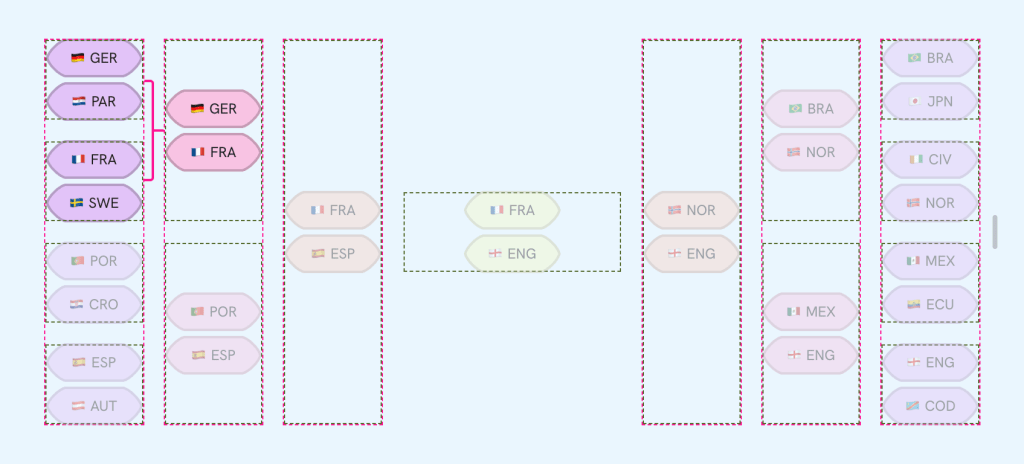
Furthermore, post-World Cup analysis in mid-2026 pushed layout engineers to test CSS grids against complex, asymmetrical structures. Ahmad Shadeed’s breakdown of coding a FIFA World Cup knockout bracket using pure CSS proved that modern layout engines can effortlessly handle multi-branched, non-linear hierarchies that historically required absolute positioning nightmares or SVG overlays.
Ongoing Debates: Default Lazy Loading and Architectural Proposals
Amidst layout and animation advancements, core web performance paradigms are also being re-evaluated. In July 2026, web standards advocate Lea Verou reignited discussions regarding resource loading defaults. Highlighting Tab Atkins’s historical Cascading Attribute Sheets (CAS) proposal, the conversation centered on whether the web platform should pivot to make loading: lazy the default behavior for media elements like images and videos, requiring explicit loading="eager" declarations only for critical, above-the-fold assets. This debate underscores a broader industry push toward out-of-the-box performance sustainability.
Supporting Context & Metrics: Technical Breakdown of Key Features
To fully grasp the impact of these developments, we must examine the technical mechanisms behind each feature, their intended use cases, and their current standing within the web standards pipeline.
1. Harnessing sibling-index() for Staggered Animations
Staggered animations have historically required JavaScript loops to calculate delays or manual assignment of custom properties (e.g., --i: 1;, --i: 2;). With the integration of sibling-index(), the browser automatically exposes this data to the style engine.
.card
  animation: fadeIn 0.5s ease forwards;
  animation-delay: calc(var(--sibling-index) * 100ms);
(Note: Exact syntax varies with specification finalization, but the architectural intent remains consistent—eliminating boilerplate JavaScript overhead).
2. The Geometry of Infinity: superellipse(infinity)
The introduction of the infinity keyword inside mathematical expressions like calc() unlocks precise geometric control over advanced border and corner properties. Consider the manipulation of modern CSS shape properties:
corner-shape: square;
/* Is semantically equivalent to: */
corner-shape: superellipse(infinity);

corner-shape: notch;
/* Is semantically equivalent to: */
corner-shape: superellipse(-infinity);
By leveraging infinity and -infinity, developers can push shape curves to their absolute mathematical limits, instantly transforming smoothly rounded superellipses into razor-sharp squares or deep, architectural notches without maintaining separate assets or complex clip-paths.
3. Container "Stuck" Queries (@container scroll-state)
One of the most anticipated additions to the container query specification is scroll-state queries. Pioneered by CSS explorations from Chris Coyier regarding sticky header detectors, developers can now query whether a sticky element has entered a "stuck" state against its scrolling container:
@container scroll-state(stuck: top)
  .header-title
    font-size: 1rem;
    border-bottom: 1px solid var(--border-color);
This capability removes the need for JavaScript Intersection Observers or scroll event listeners just to toggle a .is-stuck class when a table header or navigation bar pins to the top of a viewport. While Chromium-based browsers lead experimentation in this space, broader multi-engine support remains a target for upcoming release cycles.
4. Animating Hand-Drawn Text Without Complex SVGs
For years, achieving a dynamic, hand-drawn text or sketchy vector animation required exporting intricate paths from vector graphic software, embedding massive SVG blocks into HTML, and wrestling with stroke-dasharray and stroke-dashoffset properties. Frontend developer Johannes Bechberger recently demonstrated alternative methodologies leveraging streamlined CSS techniques and clean code comments, dramatically lowering the barrier to entry for organic, sketchy UI aesthetics.
Official Statements and Community Perspectives
The evolution of web standards is driven by continuous dialogue between browser engine implementers, specification authors, and everyday practitioners.
Regarding the architectural direction of resource loading, Lea Verou’s commentary on Bluesky captured a sentiment shared by many performance engineers:
"This is exactly why we need something like Tab Atkins’s old CAS proposal. Imagine if you could do
img, video loading: lazy;to change the defaults, and then just useloading="eager"on the actual elements to override."
This perspective highlights a fundamental philosophy in modern web design: the platform should protect developers from performance pitfalls by default. If lazy loading were the baseline standard, millions of poorly optimized legacy and modern websites would instantly see improved Largest Contentful Paint (LCP) metrics without requiring manual developer intervention across every single media asset.
On the tooling and longevity front, industry observers continue to monitor browser vendor roadmaps with a mixture of amusement and analytical scrutiny. Notably, recent public disclosures regarding Chrome’s long-range release planning reveal a roadmap mapped out across the next 14 years—extending systematically toward Chrome version 499. While software roadmaps over a decade out are inherently speculative and subject to rapid paradigm shifts (particularly with the integration of AI-driven compilation and quantum computing web runtimes), it demonstrates the unrelenting, systematic pace at which the web platform plans its backward-compatible evolution.
Future Outlook: What Lies Ahead for the Web Platform
As we look past current milestones toward upcoming specifications like What’s !important #17 and beyond, the trajectory of frontend development points firmly toward native capability expansion and declarative simplicity.
Bridging the JavaScript-CSS Divide
The ongoing inclusion of structural functions (sibling-index()), scroll-driven animations, and scroll-state container queries signals a clear philosophy from the CSS Working Group: if a visual state depends entirely on DOM structure or scroll position, it should ideally be manageable natively within CSS. This shift reduces hydration complexity in modern JavaScript frameworks, improves rendering performance by keeping layout calculations inside the browser’s C++ or Rust-based layout engines, and lowers battery consumption on mobile devices.
The Challenge of Multi-Engine Interoperability
Despite these exciting advancements, the primary hurdle facing modern CSS remains cross-browser parity. While Chromium frequently pioneers experimental features behind flags, Safari and Firefox must carefully evaluate specification stability before shipping features to Baseline status. Developers must continue to utilize progressive enhancement strategies, feature queries (@supports), and fallback mechanisms to ensure that cutting-edge capabilities like scroll-state queries or advanced mathematical keywords fail gracefully in legacy environments.
Conclusion
The web platform of 2026 is vastly more powerful, expressive, and performant than it was even a few years prior. By embracing tools like sibling-index(), mastering layout challenges through creative grid engineering, exploring mathematical extremes with the infinity keyword, and preparing for native container scroll-state queries, frontend engineers are better equipped than ever to build immersive, highly optimized digital experiences. As these specifications solidify into universal Baseline standards, the line between native application performance and web-based user interfaces continues to blur.