Executive Overview
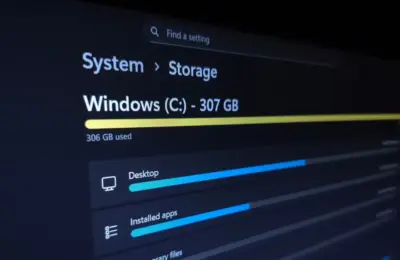
In the contemporary landscape of digital entertainment, the sheer inflation of file sizes for modern video games has transformed storage management from a minor administrative task into a critical challenge for enthusiasts and casual players alike. AAA titles routinely breach the 100GB threshold, making local hardware expansion an absolute necessity. Addressing this persistent industry bottleneck, Best Buy has launched a targeted, limited-time promotional event featuring a $50 instant discount on the Seagate "Game Drive for Xbox" 5TB USB 3.2 Portable Hard Drive, bringing the price down to $169.99 with complimentary shipping.
Sold and fulfilled by Newegg—an authorized Seagate reseller—this rare 24-hour flash sale offers a significant reprieve for consumers grappling with chronic storage deficits. However, navigating today’s volatile tech retail market requires a nuanced understanding of current pricing dynamics, hardware capabilities, and historical context. While macroeconomic shifts have fundamentally altered the baseline costs of flash and magnetic storage compared to previous years, this specific promotion currently stands as the most economical entry point for a portable 5TB drive available in the wider marketplace.
Beneath the sleek, Xbox-branded exterior lies a traditional external mechanical hard drive that serves specific logistical functions within a modern gaming ecosystem. Beyond the surface-level marketing appeal, this analysis examines the mechanical specifications, connection architecture, contextual retail climate, and strategic implications of investing in high-capacity portable storage amid evolving digital distribution trends.
Detailed Chronology
To fully understand the weight of this current retail promotion, it is necessary to examine the timeline of external storage pricing and the trajectory of the Seagate Game Drive product line within the consumer electronics ecosystem.
The Evolution of the 5TB Form Factor
The 5TB external portable hard drive category achieved mainstream consumer saturation several years ago as manufacturers successfully miniaturized magnetic platter densities to fit within pocket-sized enclosures powered solely by a USB bus connection. During this developmental era, intense competition among major hardware manufacturers—including Western Digital, Seagate, and Toshiba—drove component prices downward.
At the height of market stability and surplus production cycles roughly two years prior to this promotion, identical 5TB portable storage solutions routinely traded at retail lows of approximately $100. For early adopters and budget-conscious consumers, that era represented a golden age of cost-per-gigabyte value.
Market Disruption and the Post-Pandemic Retail Shift
Following global supply chain disruptions, semiconductor shortages, inflation spikes, and structural adjustments in raw material costs, the pricing architecture of both solid-state and mechanical storage experienced profound transformations. Baseline manufacturing and logistics expenditures escalated across the board, pushing component costs upward and forcing retailers to recalibrate promotional strategies.
As a result, sub-$100 pricing for 5TB portable drives effectively vanished from mainstream retail channels. By the time Best Buy and Newegg structured this current limited-time offering, the market ceiling had risen substantially. Today, finding any reputable brand offering a 5TB portable drive below the $170 threshold requires meticulous daily price tracking. This 24-hour flash sale represents a rare alignment of authorized reseller inventory clearance and promotional discounting, though it operates within a vastly different economic reality than its historical predecessors.
Supporting Context & Metrics
Evaluating the true value of the Seagate 5TB Game Drive requires diving beneath the marketing copy to analyze raw technical performance metrics, architectural limitations, and real-world operational benchmarks.
Hardware Specifications and Real-World Performance
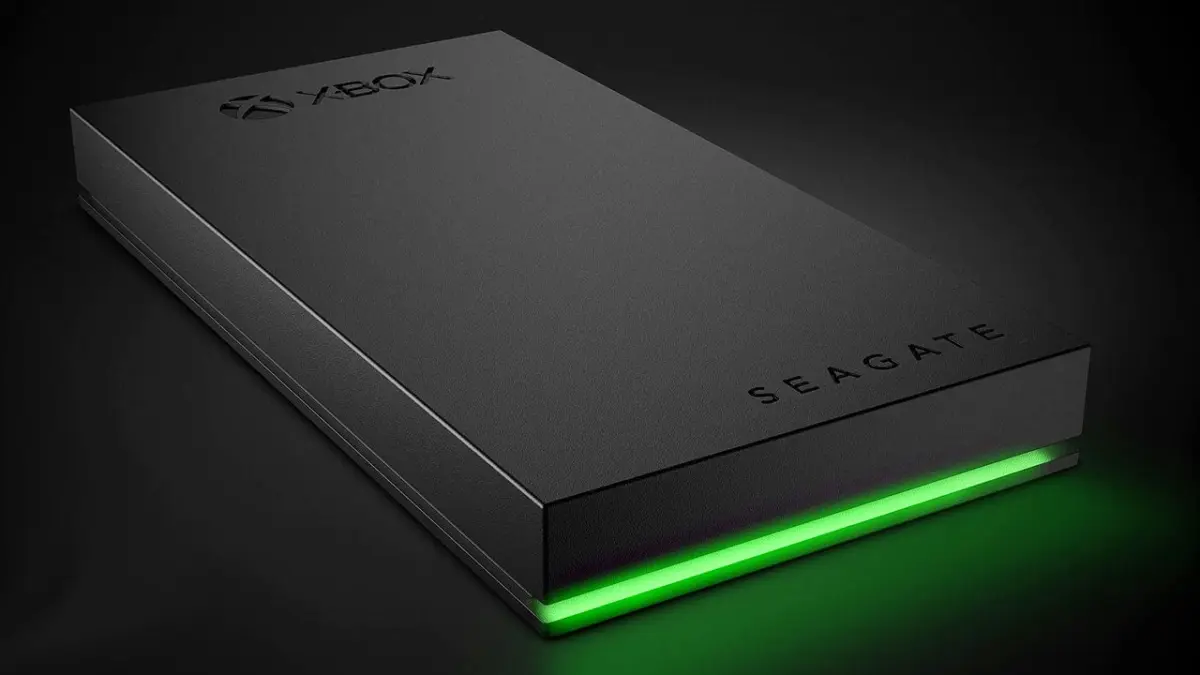
Despite its official licensing and branding, the Seagate Game Drive for Xbox is functionally identical to standard portable external hard drives in Seagate’s broader consumer lineup. It features a mechanical 2.5-inch hard disk drive (HDD) spinning at standard rotational speeds—typically 5400 RPM—housed inside an impact-resistant plastic chassis embellished with an Xbox-themed green LED accent bar.
- Capacity: 5 Terabytes (approximately 4.55 TiB of usable formatted space), capable of storing roughly 100 to 125 average-sized modern AAA titles.
- Interface: USB 3.2 Gen 1 (backward compatible with USB 2.0).
- Transfer Speeds: Real-world sustained data transfer rates typically range between 100 MB/s and 150 MB/s for large sequential file read and write operations.
- Power Source: Bus-powered via USB connection; no external AC power adapter required.
- Warranty: 1-year limited manufacturer warranty included through authorized channels.
The Connectivity Quirk: USB Micro-B
One of the most heavily scrutinized design choices of this specific drive enclosure is its reliance on a USB 3.0 Micro-B connection. While functionally adequate for maintaining USB 3.2 Gen 1 data throughput speeds, the Micro-B port has grown increasingly uncommon in modern consumer electronics as the industry standardizes around reversible USB Type-C connections.

To mitigate this inconvenience, Newegg and Seagate include a specialized USB Micro-B to USB Type-A cable in the box. However, industry analysts and consumer advocates note a critical operational vulnerability: if a user misplaces or damages this proprietary cable, finding an immediate replacement in a typical household or local storefront is unlikely. Owners must exercise caution to protect the included cable or invest in a backup tether to avoid device immobilization.
Performance Context in a Solid-State Era
It is vital for prospective buyers to contextualize the speed capabilities of mechanical hard drives relative to modern Solid-State Drives (SSDs). While internal next-generation console storage and high-end external portable SSDs regularly achieve read and write speeds exceeding 1,000 MB/s to 2,000 MB/s, a traditional 5400 RPM mechanical drive operating at 100–150 MB/s cannot load current-generation games natively designed for high-speed NVMe architecture.
Consequently, the utility of this 5TB drive lies primarily in cold storage and archival management. Users can store extensive libraries of backward-compatible titles (Xbox One, Xbox 360, and original Xbox games) and execute them directly from the drive, or quickly transfer current-generation (Xbox Series X/S) titles back and forth to the internal console SSD, bypassing the need to repeatedly download massive files over capped or sluggish internet connections.
Official Statements and Industry Perspective
Retail analysts and consumer advocates have closely monitored the trajectory of high-capacity external storage as digital file sizes continue to balloon.
According to retail commerce monitors tracking daily tech hardware fluctuations, the decision by Best Buy and Newegg to implement a $50 instant markdown reflects a calculated strategy to capture value-seeking consumers who have delayed storage upgrades due to post-pandemic price inflation. Industry observers note that while consumers frequently lament the departure from historical $100 pricing floors, comparative retail analysis confirms that $169.99 represents the absolute baseline floor for genuine 5TB portable capacity in the current economic climate.
Furthermore, representatives from authorized channel distributors emphasize that purchasing through verified partners—such as Newegg’s fulfillment network—ensures full eligibility for manufacturer support, genuine hardware integrity, and adherence to Seagate’s baseline one-year warranty coverage, mitigating the counterfeit risks associated with unverified third-party marketplace sellers.
Future Outlook
As the digital media ecosystem continues to evolve, the demand for expansive local storage solutions shows no signs of abating. Game developers push visual fidelity and asset resolution to unprecedented heights, and digital-only distribution models steadily replace physical media, rendering local hardware management an ongoing priority for digital consumers.
The Storage Horizon: HDD vs. SSD Cost Trajectories
Looking forward, the long-term outlook for external storage points toward a gradual convergence of per-gigabyte costs between high-capacity SSDs and traditional HDDs, though mechanical drives will maintain a distinct price-per-gigabyte advantage for multi-terabyte archival tiers for the foreseeable future. While portable SSDs continue to drop in price, achieving 5TB of true solid-state capacity remains an exceptionally costly endeavor, often multiples higher than the promotional $169.99 price point attached to Seagate’s mechanical offering.
Strategic Recommendations for Consumers
For gamers and digital archivists currently facing imminent storage exhaustion, promotional windows like Best Buy’s 24-hour flash sale provide a pragmatic window of opportunity. While waiting for a return to historical pricing anomalies from previous years remains an exercise in frustration given broader macroeconomic realities, securing a reliable, high-capacity 5TB drive at the current market floor allows users to future-proof their digital libraries economically.
As digital footprints expand and software updates grow increasingly frequent, having a dependable, high-capacity repository ensures that game collections remain accessible without requiring constant re-downloads over bandwidth-restricted networks. Ultimately, while hardware quirks like the Micro-B cable demand minor logistical care, the sheer volume of accessible storage space makes this limited-time offering a compelling proposition for anyone caught in the modern storage squeeze.