Executive Overview
For decades, the name Fable has conjured specific, deeply idiosyncratic images for role-playing game enthusiasts: dry British wit, moral dichotomies symbolized by glowing halos or curling devil horns, kicking chickens, and the rolling, emerald-green hills of Albion. Since Microsoft and developer Playground Games—renowned for the critically acclaimed Forza Horizon series—first announced they were breathing new life into this dormant fantasy franchise, fans have waited with bated breath to see how the legendary IP would be reinterpreted for modern hardware.
At a hands-off presentation at Gamescom, a comprehensive 15-minute live gameplay demo provided a deeper look into Playground Games’ vision of Albion. Rather than playing it safe with a mere nostalgia-bait reboot, the studio is crafting a vibrant, lived-in fantasy sandbox that embraces both the beloved quirks of the original Peter Molyneux trilogy and a contemporary, high-fidelity design philosophy.
Set within a visually striking, meticulously detailed re-imagining of the iconic capital of Bowerstone, the demo walked press through early-game narrative hooks, complex player-choice mechanics, immersive faction interactions, and fluid, multi-discipline combat systems. With veteran British comedic talent lending their voices to unforgettable characters, a tangible sense of place, and a refreshingly flexible classless approach to combat, Playground Games appears poised to deliver an RPG that honors its lineage while carving out a distinct, modern identity.
Detailed Chronology: A Journey Through Bowerstone and Beyond
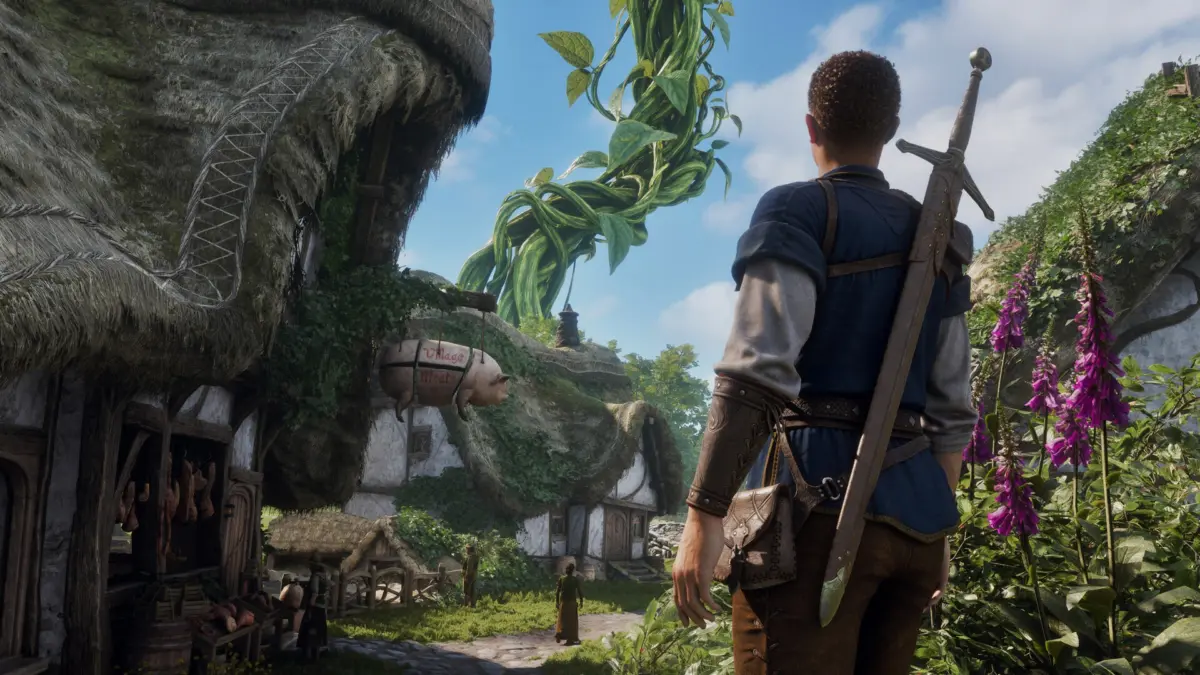
The gameplay demonstration began at the imposing portcullis of Bowerstone, the historical beating heart of Albion. For returning fans of the original trilogy, the immediate visual impression is one of staggering upgrade and loving preservation. The city has never looked more vibrant, yet it retains a distinct, purposefully off-kilter architectural charm. Towering central keeps loom over crooked, tightly packed buildings whose askew rooftops, winding cobblestone alleys, and uneven brickwork reflect a world out of balance—a place where the eternal struggle between good and evil physically shapes the environment.
Instead of an unimaginative, grid-based layout designed by a sterile city planner, Bowerstone feels entirely handcrafted by the generations of people who call it home. This is a living metropolis housing over 30 distinct commercial establishments, ranging from tattoo parlours and bespoke tailors to hair salons. Playground Games has designed the world with a clear objective: allowing players to forge a customized protagonist that feels intrinsically woven into the social fabric of Albion.
Domestic Life and the Roots of the Quest
Before diving into high fantasy heroics, the demonstration showcased the domestic side of the protagonist—a sword-wielding young woman. Her first port of call was the family homestead, a snug, beautifully lit cottage warmed by a crackling fireplace. Here, she was greeted by her spouse, Elliott, and their daughter, Daisy.
The domestic writing drips with that trademark British dry humor. As the hero turns to leave for her perilous duties, Elliott remarks with fond exasperation, "Ooph, so glad I married all of that." It is a brief, grounded moment that establishes emotional stakes before thrusting the player into the grander narrative arc.
That grand narrative centers on Briar Hill, the hero’s hometown. A mysterious, red-cloaked figure named Isabel has unleashed a dark curse, instantly turning the town’s entire population to stone. The primary motivation of the early game is simple yet urgent: find a way to reanimate the petrified citizens. To do this, the player must travel to Bowerstone to gain authorized entry into the legendary Heroes Guild, possessing a key acquired during a preceding escapade.
Meeting Humphry the Golden
Upon breaching the guild’s grand yet deliberately weathered doors, the presentation introduced one of the most memorable characters in modern RPG writing: Humphry the Golden. Once a towering figure in Albion folklore, Humphry now cuts a tragic, bedraggled silhouette, slumped in a deep armchair within the gloom of the guildhall’s interior. Played with world-weary brilliance by Matt King (best known as Super Hans from the cult-classic sitcom Peep Show), Humphry serves as living proof of the adage "never meet your heroes."
In a drunken stupor, the legendary figure demands a large beer. This introduces the presentation’s first major showcase of Fable’s reactive choice architecture. Playground Games has promised a web of decisions—both micro and macro—that influence everything from fleeting NPC relationships to sweeping narrative trajectories.
The player is presented with a binary dilemma: hand Humphry the tankard of ale, or hurl its contents directly over his face to jolt him back to reality. The latter, more aggressive route is chosen. A dynamic interface pop-up on the left side of the screen immediately confirms the narrative consequence: Humphry now thinks you’re an arsehole.
Despite his resentment, Humphry requires assistance. Drowning in debt and facing imminent eviction from his own guildhall, the washed-up hero reveals that he gambled away the ownership rights to Slick Ronnie, a notorious local Bowerstone gang leader. Securing Humphry’s tactical guidance requires recovering the guild deeds.
Entanglements with Slick Ronnie’s Syndicate
Stepping back onto the cobblestone streets of Bowerstone immediately triggers open conflict with the criminal underworld. A trio of Slick Ronnie’s thugs are actively harassing Billie—a local resident described by the developers as a "part-time playwright, full-time orphan."
Dialogue options appear, offering a diplomatic avenue to defuse the tension. When words inevitably fail, the situation devolves into the presentation’s premier look at Fable’s real-time combat systems.
The action unfurls with remarkable visual fluidity. The protagonist transitions seamlessly between multiple combat disciplines without being restricted by rigid class archetypes:
- Melee Mastery: Swift, sweeping sword slashes deliver satisfying physical feedback.
- Archery: A bow and arrow is drawn and fired, resulting in a kinetic "ping" as it strikes an enemy’s skull.
- Arcane Might: A crackling, long-range electric whip is conjured from thin air, crashing down upon groups of enemies, followed immediately by the sculpting of a blazing fireball tossed into a crowd.
Earning a skill point from the skirmish, the UI briefly flashes a sprawling skill tree before closing. The point is promptly invested into a fan-favorite legacy spell: Magical Blades.
The Poor House Infiltration and Boss Confrontation
The trail for the stolen guild deeds leads to a more impoverished sector of Bowerstone, terminating outside a rough-and-ready drinking establishment known as The Poor House—Slick Ronnie’s primary watering hole. Conversing with local patrons reveals that access to Ronnie’s backroom office requires bypassing security. While multiple infiltration routes exist, the demonstrator opts for the pragmatic, capitalistic approach: bribing for entry to save time.
Inside, a locked inner door blocks the path to the office. Rather than relying on a tedious, rotation-based minigame akin to Bethesda’s Fallout series, lockpicking is executed through a streamlined, tactile button-hold mechanic that values pacing over friction.
Securing the deeds from the desk, the player attempts to exit, only to be intercepted by Slick Ronnie herself. A clumsy attempt to bluffing her out of a fight—claiming accidental entry after one too many drinks—fails spectacularly, triggering a high-stakes boss encounter.
This battle serves as the ultimate proving ground for the newly unlocked Magical Blades. Upon activation, three glowing, spectral blue swords materialize above the hero’s head, darting out autonomously to harass individual targets. It proves to be an indispensable crowd-control utility when surrounded.
Subsequent tactical maneuvers involve shooting a pursuing enemy in the knee to trigger a visceral stumble animation, exposing them to a devastating melee riposte. The combat complexity escalates further with the arrival of a heavy brute wielding a two-handed battleaxe. Capable of soaking up immense punishment, the brute requires the player to abandon button-mashing in favor of sustained offensive pressure to fill a dedicated stagger bar, eventually opening a crucial window for massive damage.
Supporting Context & Metrics
To fully appreciate the scope of Playground Games’ endeavor, one must evaluate the technical and developmental paradigm surrounding the project.
- The Studio Transition: Playground Games built its stellar reputation on the open-world racing genre via the Forza Horizon franchise, renowned for its technical wizardry, optimized engine performance, and breathtaking open-world vistas. Transitioning from high-speed racing simulations to a sprawling, narrative-driven fantasy action-RPG represents a massive cultural and technical shift for the studio.
- World Density & Scale: While specific map-size metrics have not been officially published, the density of Bowerstone—featuring over 30 distinct, functional businesses—signals a pivot toward quality of space over empty acreage. Every alleyway, cottage interior, and market stall appears deliberately authored rather than procedurally generated.
- Legacy and Expectations: The original Fable trilogy (released between 2004 and 2010 by Lionhead Studios) pioneered concepts of moral alignment, real-time aging, and interactive world ecosystems that felt revolutionary for the sixth and seventh console generations. Playground’s iteration aims to capture that same irreverent British spirit while modernizing responsiveness, combat fluidity, and narrative nuance for current-generation platforms.
Official Statements and Developer Vision
While the presentation relied primarily on live gameplay rather than a formal developer Q&A, key tenets of Playground Games’ design philosophy were explicitly highlighted during the showcase:
- Player Agency and Identity: Representatives emphasized that the studio’s overarching goal is to let players "create a character entirely in your own image, and make them feel as married to the world you walk them through as possible." This extends from physical customization to systemic consequences for social interactions.
- Combat Philosophy: By demonstrating seamless transitions between melee steel, archery, elemental pyromancy, conjuration whips, and spectral blades, the developers reaffirmed their commitment to a classless progression system. Players will not be locked into traditional "Warrior," "Mage," or "Rogue" silos, but are instead encouraged to blend disciplines dynamically.
- Tone: Playground is leaning heavily into what industry commentators describe as the "enjoyably British tone" of the franchise—balancing high-stakes magical heroics with mundane domestic bickering, pub culture, flawed legendary figures, and self-aware humor.
Future Outlook
As the industry looks ahead toward the game’s anticipated launch window, the excitement surrounding Playground Games’ Fable is palpable. The hands-off presentation successfully alleviated early-stage skepticism regarding whether a racing studio could capture the whimsical, narrative-heavy magic of Lionhead’s crown jewel.
Bowerstone feels magnificent—a living, breathing, beautifully askew urban ecosystem that invites exploration. The narrative hooks, anchored by stellar voice work from talent like Matt King, establish a world rich with character, moral ambiguity, and comedic timing. Furthermore, the fluidity and versatility of the combat system suggest that moment-to-moment gameplay will be every bit as thrilling as the visual presentation implies.
The true test, of course, will lie in the hands-on experience—testing how the weight of the sword, the responsiveness of the spellcasting, and the systemic consequences of player choices actually feel when the controller is passed to the press and, ultimately, the public. If the combat matches the undeniable polish and charm of the previewed vertical slice, Albion will soon become a second home for a whole new generation of heroes. Stay tuned for forthcoming hands-on impressions and deep dives into the combat mechanics very soon.