Executive Overview
Enterprise technology is standing at a volatile architectural threshold. As global organizations transition from speculative Generative AI (GenAI) experimentation to mission-critical production deployments, technology leaders—specifically Chief Information Officers (CIOs), Chief Technology Officers (CTOs), Vice Presidents of Engineering, and IT Directors—are finding that legacy infrastructure models are ill-equipped for the demands of artificial intelligence. The modern enterprise AI stack is being fundamentally rewritten in real time, exposing acute vulnerabilities in hardware utilization, data governance, multi-vendor orchestration, and security.
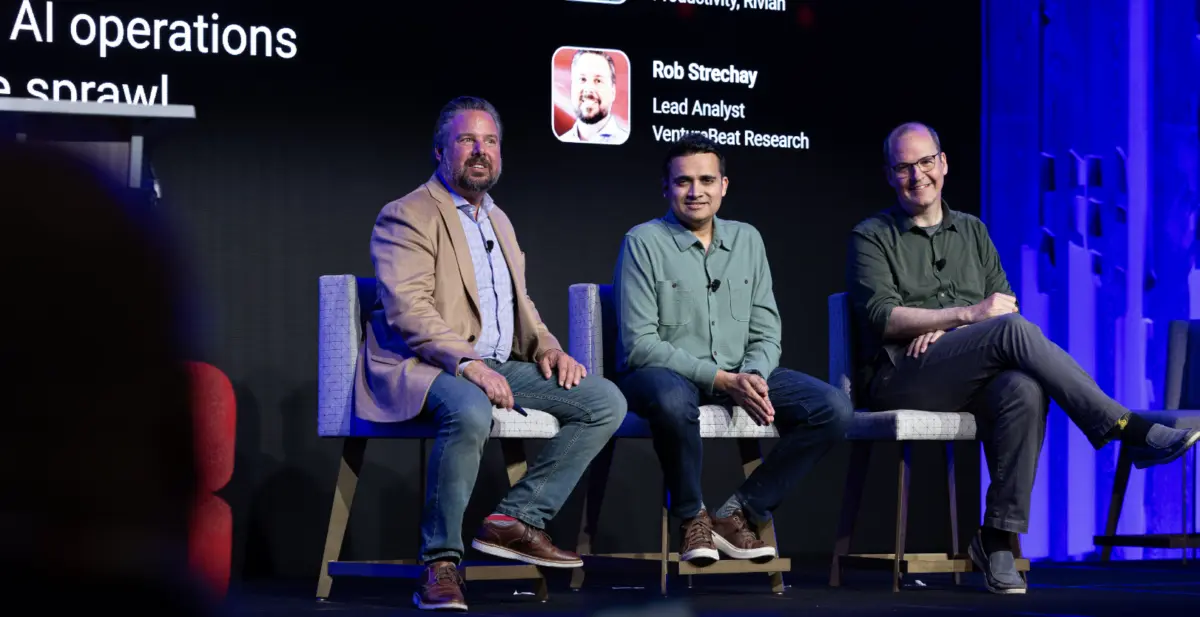
In response to a growing demand for empirical, defendable data among technical executives, tech media company VentureBeat has officially launched VentureBeat Research, naming industry analyst and former IT executive Rob Strechay as its Lead Analyst and founding team member.
Strechay, who served until recently as Managing Director and Principal Analyst at theCUBE Research and SiliconANGLE, brings nearly three decades of enterprise execution, product development, and market analysis experience to the role. His appointment signals a deliberate strategic pivot for VentureBeat: moving beyond conventional tech news reporting to establish a dedicated, technical research practice built specifically for the decision-makers building, buying, and deploying enterprise-grade AI systems.
The core mandate of this new research arm is to bridge the analytical gap between broad vendor claims and practical backend reality. As organizations move past early-stage AI pilots, technology buyers no longer require high-level industry overviews. Instead, they require hard metrics on GPU compute efficiency, architectural blueprints for multi-model interoperability, and empirical frameworks to secure autonomous agentic pipelines.
Detailed Background and Chronology: The Evolution of an Enterprise Analyst
Rob Strechay’s career arc mirrors the multi-decade transformation of modern enterprise IT, spanning the transition from physical data centers and hypervisors to cloud-native platforms and decentralized AI architectures. His background across three distinct industry vantage points—as a hands-on IT practitioner, a vendor product executive, and a senior market analyst—provides him with a operational perspective rare among technology analysts.
+-----------------------------------------------------------------------------------+
|                            ROB STRECHAY'S CAREER ARC                              |
+-----------------------------------------------------------------------------------+
|  PRACTITIONER & STARTUP EXEC   -->   HYPERSCALER BUILDER   -->   INDUSTRY ANALYST |
|  • Executive roles (Zerto)          • Product dev at AWS         • Sr. Analyst (ESG)|
|  • Infra & data management          • Scaled analytics service   • MD/Principal   |
|                                                                    (theCUBE Res.) |
+-----------------------------------------------------------------------------------+
Early Career and Startup Executive Roles
Before entering the analyst landscape, Strechay spent years in the trenches of enterprise infrastructure. He held executive roles across a variety of early-stage and high-growth technology startups, developing deep domain expertise in data management, storage architectures, and business continuity. Most notably, as a senior product executive at Zerto, he helped lead the organization during a critical period of growth in cloud data management and disaster recovery, navigating how enterprise customers managed virtualization and multi-site replication.
Hyperscaler Product Engineering at AWS
Seeking to influence infrastructure at hyperscale, Strechay joined Amazon Web Services (AWS). At AWS, he was directly involved in product management and strategy for new cloud analytics services, gaining direct visibility into how cloud providers build, scale, and monetize foundational infrastructure. This period provided Strechay with an insider’s understanding of hyperscaler telemetry, hardware provisioning, data pipeline mechanics, and enterprise billing dynamics—knowledge that continues to inform his research on public cloud economics and compute efficiency.
Sector Analysis: ESG and theCUBE Research
Transitioning into market research, Strechay served as a Senior Analyst at Enterprise Strategy Group (ESG), where he led research coverage focused on cloud-native infrastructure, hybrid data management, and platform engineering.
Most recently, he served as Managing Director and Principal Analyst at theCUBE Research and SiliconANGLE. In this capacity, Strechay anchored extensive live video broadcasts from major global tech conferences, conducting technical interviews with thousands of enterprise C-suite executives, product architects, and venture capitalists. His work centered on evaluating the evolution of cloud-native computing, modern data stacks, DevOps orchestration, and the infrastructure requirements driven by large language models (LLMs).
Supporting Context & Metrics: Dissecting the Enterprise AI Infrastructure Crisis
The launch of VentureBeat Research comes at a moment when enterprise technology buyers are facing severe economic and architectural friction. Proprietary data gathered by VentureBeat highlights a growing divergence between corporate investment in AI software and the physical realities of data center compute, platform reliability, and system control.
                  ENTERPRISE AI ADOPTION FRICTION POINTS

       +--------------------------------------------------------+
       |             GPU Utilization Bottlenecks                |
       |  • $40B+ in wasted compute hardware                    |
       |  • Memory bandwidth & data ingress bottlenecks         |
       +--------------------------------------------------------+
                                   |
                                   v
       +--------------------------------------------------------+
       |             Multi-Vendor Model Hedging                 |
       |  • 66% of enterprises avoid single-vendor lock-in      |
       |  • Mitigates risks from provider outages & API changes |
       +--------------------------------------------------------+
                                   |
                                   v
       +--------------------------------------------------------+
       |             Governance & The "Control Gap"             |
       |  • Manual policy enforcement on agentic pipelines       |
       |  • Security vulnerabilities in prompt/RAG context      |
       +--------------------------------------------------------+
The $40 Billion GPU Utilization Drain
A central driver behind VentureBeat’s expanded research footprint is the pervasive inefficiency plaguing enterprise AI infrastructure budgets. In May, Strechay published an in-depth analysis detailing enterprise GPU utilization trends, laying out what has quickly become a $40 billion infrastructure problem across global IT organizations.
While hyperscalers and enterprises have aggressively bought up graphics processing units (GPUs) to support AI workloads, actual compute utilization rates remain surprisingly low. Strechay’s research exposed how fragmented data ingestion pipelines, inadequate memory bandwidth, improper job scheduling, and poorly optimized platform orchestration cause high-cost clusters to sit idle during processing cycles. For technical decision-makers under pressure to demonstrate return on investment (ROI) on AI capital expenditures, resolving these compute bottlenecks has surpassed model selection as an immediate operational priority.
Empirical Insights: The VB Pulse Monthly Tracking Engine
Strechay’s research agenda builds directly upon VentureBeat’s existing VB Pulse survey infrastructure. Monthly, VB Pulse gathers quantitative field data from vetted enterprise decision-makers across five core operational vectors:
- Agentic Orchestration: Frameworks for coordinating multi-step, autonomous AI agent workflows.
- Agent Reliability and Evals: Quantitative benchmarks for measuring hallucinations, task completion accuracy, and deterministic performance.
- Agentic Security and Identity: Access controls, privilege management, and perimeter defense for autonomous AI systems.
- AI Infrastructure and Compute: Hardware provisioning, cluster management, GPU utilization, and cloud-to-edge deployment costs.
- Context Layers and Retrieval-Augmented Generation (RAG): Data pipelines, vector databases, and real-time knowledge insertion.
The "Control Gap" and Multi-Vendor Strategies
Data from the June VB Pulse report on agentic orchestration—derived from an empirical survey of 145 enterprise technology leaders—underscored the defensive posture modern CIOs are adopting.
Enterprise Model Adoption Strategy (Sample Size: 145 Enterprises)
-----------------------------------------------------------------
[========================================        ] 66.6% Multi-Vendor Strategy (Hedging)
[====================                            ] 33.4% Single Provider Commitment
The report revealed that two-thirds (66.6%) of surveyed enterprises have intentionally adopted a multi-vendor AI model strategy rather than committing exclusively to a single foundational LLM provider.
This multi-vendor stance reflects an enterprise dynamic: technology leaders are reluctant to lock their operational architectures into single proprietary environments. The wisdom of this approach was highlighted in June when a widespread outage affected Anthropic’s Claude models, temporarily disrupting downstream corporate applications that relied solely on its API endpoints. Organizations that had built flexible, abstracted agentic orchestration layers were able to dynamically reroute enterprise inference traffic to alternative models, minimizing business disruption.
However, this multi-vendor reality introduces complex management challenges. The June report identified a major "Control Gap" across enterprise IT departments: while organizations are rapidly integrating dynamic AI tools, the vast majority are still governing these complex, multi-model agent pipelines using manual, unscalable administrative processes.
Official Statements: Addressing the Data Deficit in C-Suite AI Decision-Making
Addressing the rationale behind establishing a dedicated research organization, VentureBeat leadership pointed to an acute information imbalance in the technology sector. While conventional reporting effectively covers vendor funding announcements, product launches, and high-level platform releases, technical buyers require granular architectural validation before deploying enterprise software.
"The enterprise AI stack is being rewritten in real time, and the decision-makers I talk with are starved for objective, defendable data," noted VentureBeat editorial leadership regarding the launch. "Rob Strechay has the mix of technical rigor and operating experience needed to dissect the architecture behind the next phase of enterprise AI deployment."
Reflecting on his new role as Lead Analyst and the underlying methodology of VentureBeat Research, Strechay emphasized the imperative of equipping technical leaders with empirical metrics to support complex infrastructure investments:
"VentureBeat has built an audience of enterprise builders and technology buyers that any analyst would want to serve," Strechay stated. "My goal is to use deep empirical metrics and VentureBeat’s proprietary tracking data to help enterprise buyers and the people building for them make sound platform and infrastructure decisions during the most disruptive transition enterprise technology has seen."
Strategic Blueprint & Future Outlook: Deepening Media and Market Research
With Strechay leading the research effort, VentureBeat is launching an integrated strategy that combines quantitative data collection, written technical analysis, and executive video broadcasting.
               VENTUREBEAT RESEARCH OPERATIONAL ARCHITECTURE

  +-----------------------+ +-----------------------+ +-----------------------+
  |    VB PULSE DATA      | |   WRITTEN ANALYSIS    | |  VB IN CONVERSATION   |
  |  Monthly surveys of   | | Deep-dive evaluations | | Broadcast interviews  |
  |  100+ enterprise IT   | |  of infra performance | |  with platform CTOs   |
  |    decision-makers    | |  and cost efficiency  | |    and architects     |
  +-----------------------+ +-----------------------+ +-----------------------+
                                   |                     /
                                   |                    /
                v                   v                   v
  +---------------------------------------------------------------------------+
  |              EMPIRICAL DECISION SUPPORT FOR CIOs & CTOs                   |
  +---------------------------------------------------------------------------+
Strategic Focus Areas
Strechay’s initial research agenda will focus on four technical intersection points currently impacting enterprise IT departments:
- Cloud and Advanced Data Infrastructure: Evaluating cost models, data storage paradigms, query engines, and database architectures optimized for real-time unstructured data ingestion.
- Platform Engineering and DevOps Orchestration: Analyzing developer platforms, automated pipeline deployment, containerization, and platform observability frameworks required to sustain complex AI applications.
- AI and Enterprise Security Integration: Mapping security gaps created by dynamic agentic pipelines, including prompt injection vulnerabilities, vector database access controls, and data leakage vectors.
- Hardware and Compute Efficiency: Benchmarking cluster management tools, dynamic GPU allocation, alternative silicon options (such as custom ASICs), and hybrid-cloud economics.
The Redesigned "VB In Conversation" Video Series
A central output vehicle for this expanded analytical presence will be a major redesign of VentureBeat’s established VB In Conversation video interview series, hosted directly by Strechay.
Moving away from broad executive talking points, the series will adopt a focused, technical approach. Strechay will conduct detailed, blueprint-level interviews with principal systems architects, VP-level engineering leads, and platform builders behind major software deployments. The programming will evaluate actual deployment barriers, unvarnished performance metrics under production stress, software stack dependencies, and infrastructure realities.
The updated video broadcast series will be published across VentureBeat’s primary digital platform and its dedicated YouTube streaming channels, appearing alongside Strechay’s ongoing written analyst reports and empirical survey analyses. Enterprise IT practitioners, system architects, and technology buyers are invited to participate in the ongoing monthly VB Pulse empirical surveys and request formal analyst briefings through VentureBeat’s intelligence research channel.