Executive Overview
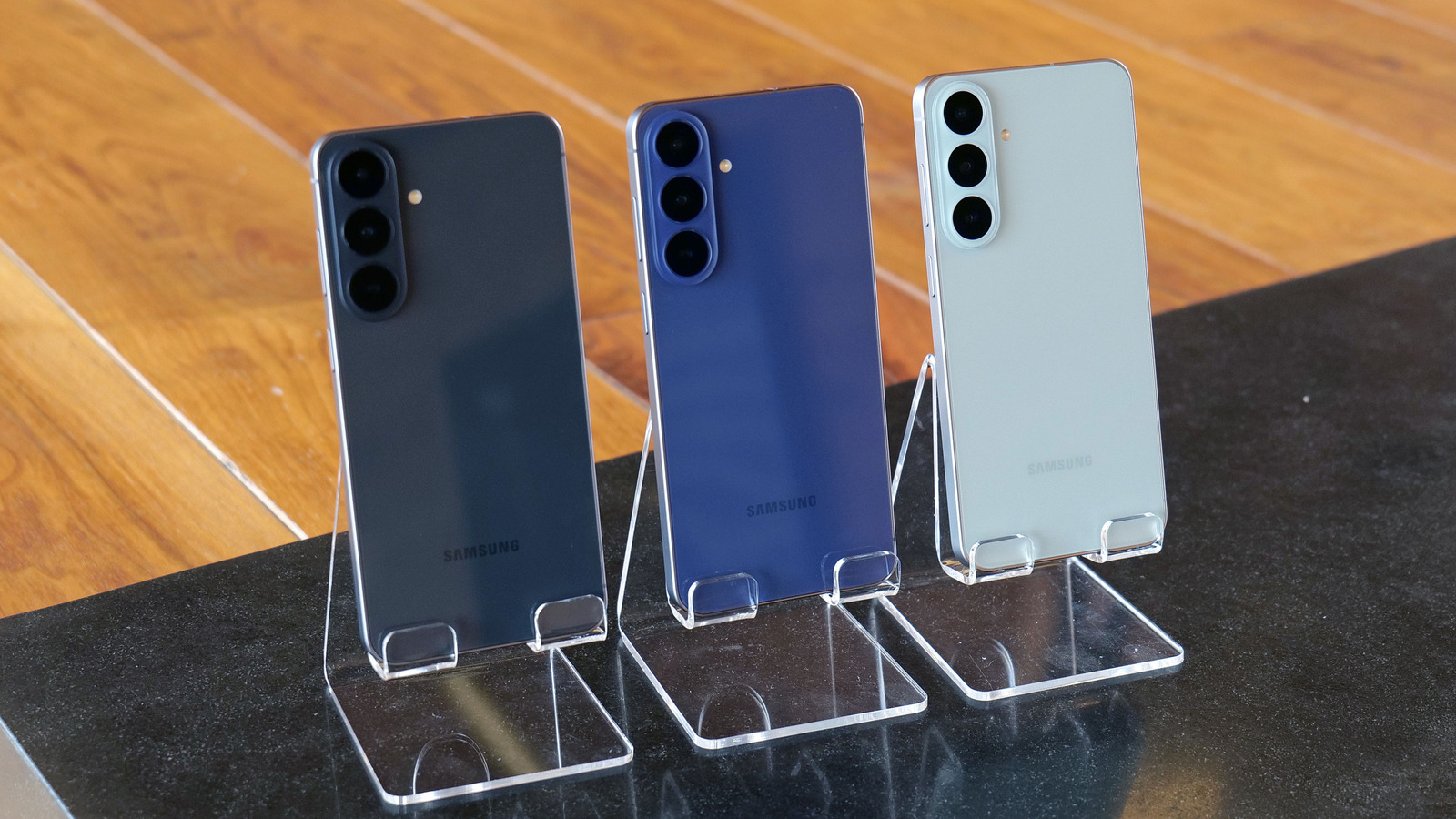
The smartphone industry has reached a distinct plateau where year-over-year device iterations are less about revolutionary leaps and more about incremental refinement. Samsung’s official unveiling of the Galaxy S26 FE during its August 2026 Unpacked event is a case study in this trend. Positioned as a budget-friendly flagship alternative, the new Fan Edition device arrives as a direct successor to the Galaxy S25 FE, which debuted in September 2025. Yet, despite offering a familiar design language, identical camera hardware, and the same memory constraints, the Galaxy S26 FE breaks from tradition by introducing a $50 price hike, pushing its starting retail price from $649 to $699.
This pricing adjustment has ignited intense debate among tech analysts and consumers alike. Is the extra $50 a reflection of genuine internal hardware upgrades, or is it a casualty of broader macroeconomic pressures, specifically the ongoing, industry-wide RAM supply crisis?
A granular comparison reveals that the Galaxy S26 FE is a textbook iterative update. While it introduces a faster 3nm Exynos processor, marginal improvements in charging efficiency, and a handful of exclusive software tricks like "My FanCam," its core specifications—including an 8GB RAM ceiling—remain unchanged from its predecessor. For prospective buyers, this dynamic creates a complex purchasing landscape. It raises the question of whether to pocket the savings by opting for the discounted Galaxy S25 FE, stretch the budget further to secure the true flagship Galaxy S26, or invest in the new Fan Edition model despite its modest generational gains.
Detailed Chronology
To fully understand the positioning of the Galaxy S26 FE, it is essential to trace the recent timeline of Samsung’s Fan Edition strategy and its flagship ecosystem releases:
- September 2025: Samsung officially launches the Galaxy S25 FE at IFA 2025, maintaining a competitive $649 starting price. It arrives as an iterative update to the S24 FE, offering balanced mid-to-high-tier performance, a 6.7-inch display, and a triple-camera system, though reviewers note its lack of bold innovation.
- July 2026: Samsung hosts a mid-summer Unpacked event, showcasing its latest foldable portfolio, including the Galaxy Z Fold 8. During this showcase, the tech giant previews several foundational software capabilities, such as advanced neural-processing frameworks and enhanced video framing tools, which hint at the capabilities of the upcoming ecosystem.
- August 2026: Samsung holds its major Galaxy Unpacked event, formally introducing the Galaxy S26 FE alongside the core Galaxy S26 lineup. The company confirms a starting price of $699—a $50 increase over the previous generation—citing a combination of updated internals and shifting component costs.
- Post-Launch Q3 2026: Industry analysts begin dissecting the bill of materials (BOM) for the S26 series, highlighting persistent supply chain bottlenecks for high-speed mobile memory (RAM) as a primary driver behind rising retail costs across the entire consumer electronics sector.
Supporting Context & Metrics
Hardware Specifications and Performance Metrics
When evaluating the physical and computational differences between the Galaxy S25 FE and the new Galaxy S26 FE, the similarities vastly outweigh the divergences. Both devices share an identical visual footprint, anchored by a 6.7-inch FHD+ Dynamic AMOLED 2x display capable of a smooth 120Hz adaptive refresh rate. They also maintain identical physical dimensions, housing a robust 4,900mAh battery cell.
| Feature / Specification | Samsung Galaxy S25 FE (2025) | Samsung Galaxy S26 FE (2026) |
|---|---|---|
| Starting Price | $649 | $699 (+$50) |
| Display | 6.7-inch FHD+ Dynamic AMOLED 2x (120Hz) | 6.7-inch FHD+ Dynamic AMOLED 2x (120Hz) |
| Processor | Exynos 2400 (4nm) | Exynos 2500 (3nm) |
| RAM Configuration | 8GB (US market) | 8GB (US market) |
| Storage Options | 128GB / 256GB | 128GB / 256GB |
| Main Camera | 50MP primary, 12MP ultrawide, 8MP telephoto (3x) | 50MP primary, 12MP ultrawide, 8MP telephoto (3x) |
| Front Camera | 12MP | 12MP |
| Battery Capacity | 4,900mAh | 4,900mAh |
| Wired Charging | 45W (Reaches ~65% in 30 mins) | 45W (Reaches ~69% in 30 mins) |
| Software Out-of-Box | Android 16 (One UI 8) | Android 17 (One UI 9) |
Under the hood, however, Samsung has swapped the silicon. The Galaxy S25 FE operates on the 4nm Exynos 2400 processor, whereas the newer S26 FE transitions to the 3nm Exynos 2500. Early benchmark indicators suggest that this transition yields notable improvements in graphic-intensive gaming workloads and overall thermal management. Battery efficiency has also seen a marginal uptick; while both phones support 45W fast wired charging, real-world testing indicates the S26 FE can reach a 69 percent charge in 30 minutes, compared to 65 percent for its predecessor. While a four percent delta may seem negligible, it can prove vital during rapid top-ups.
The RAM Constraint and Component Economics
Perhaps the most scrutinized spec-sheet detail is the memory allocation. Despite the $50 price increase, both the 128GB and 256GB variants of the US-bound Galaxy S26 FE are capped at 8GB of RAM—the exact same threshold found in the S25 FE.
This stagnation points away from internal hardware expansion as the primary driver of the price hike. Instead, market analysts point to the ongoing global RAM supply crisis. Component manufacturers have faced severe pricing pressures due to shifting production capacities toward high-bandwidth memory (HBM) for artificial intelligence servers. Consequently, consumer-grade DRAM prices have crept upward, forcing original equipment manufacturers (OEMs) to either absorb the margin compression or pass the costs onto consumers. For Samsung, preserving profit margins on a sub-flagship tier device necessitated the $50 retail adjustment.
Camera Hardware and AI Software Capabilities
In the imaging department, the hardware remains completely untouched. The S26 FE retains the reliable triple-camera array of its predecessor: a 50-megapixel main sensor, a 12-megapixel ultrawide lens, and an 8-megapixel telephoto camera with 3x optical zoom, accompanied by a 12-megapixel front-facing shooter.
Instead of hardware innovations, Samsung relies on software and advanced neural processing to differentiate the S26 FE’s camera and utility suite:
- My FanCam: Exclusive to the S26 FE and newer foldables running One UI 9, this feature allows users to select a specific subject within a video and automatically apply dynamic framing to track them. It essentially mimics the tracking behavior of an external gimbal, significantly reducing manual post-processing and editing workflows.
- Horizontal Lock: Building upon the established Super Steady video stabilization, this feature maintains a consistent horizon orientation even if the device is physically rotated during recording. While technically feasible on older hardware, its resource-intensive nature ties it natively to the newer generation.
- Refined Productivity Suites: Features like Now Brief (customizable briefing widgets for weather and wellness), Now Nudge (expanded notification tracking with third-party app support), and multi-item Circle to Search are present. However, because these tools are tied to the underlying Android 17 / One UI 9 operating system, owners of the Galaxy S25 FE will likely inherit them via software updates, softening the S26 FE’s software exclusivity argument.
Official Statements
Samsung’s product positioning messaging surrounding the Fan Edition series emphasizes accessibility to flagship-grade experiences without paying peak flagship prices. During the August 2026 Unpacked presentation, company executives underscored the brand’s commitment to delivering longevity, noting that the Galaxy S26 FE ships with Android 17 out of the box and benefits from Samsung’s comprehensive multi-year software and security support lifecycle.
Industry observers, however, have adopted a more critical stance. Independent reviews of preceding Fan Edition models have consistently categorized the line as "iterative to a fault." Analysts note that while the S26 FE provides a polished user experience, the lack of a generational leap in camera sensors, coupled with the stagnant 8GB RAM ceiling, makes it difficult to justify the higher barrier to entry for owners of recent-generation hardware.
Future Outlook
The launch of the Galaxy S26 FE illuminates a broader crossroads for the mid-to-high-tier smartphone market. As component costs rise due to external supply chain pressures, manufacturers are increasingly forced to reevaluate their pricing tiers. For consumers, this macroeconomic reality complicates upgrade cycles.
When evaluating the market options, buyers face a nuanced decision tree:
- The Budget-Conscious Choice: Buyers looking for maximum value can capitalize on price drops for the outgoing Galaxy S25 FE. Offering nearly identical display, camera, and memory specs at a lower cost, it represents a more pragmatic financial choice for those unbothered by a slightly older processor.
- The Premium Alternative: For those willing to spend slightly more, the base Samsung Galaxy S26—frequently discounted near the $799 mark—offers significantly more compelling upgrades. Stepping up to the core flagship yields double the starting storage (256GB), a superior Snapdragon 8 Elite Gen 5 processor, and a substantial bump to 12GB of RAM, housed within a more compact 6.3-inch form factor.
- The Fan Edition Dilemma: The Galaxy S26 FE ultimately occupies a narrow middle ground. It serves as a capable, reliable device for users upgrading from aging hardware (such as the S21 or S22 FE generations). Yet, for owners of the S24 FE or S25 FE, the combination of a $50 price hike and minimal generational improvements renders the S26 FE an avoidable upgrade, signaling that Samsung’s Fan Edition strategy may need a more disruptive hardware refresh in future cycles to recapture consumer enthusiasm.