Executive Overview
In the contemporary landscape of digital media, amassing a comprehensive comic book collection has never been more accessible, yet it remains fraught with structural frustrations. Modern enthusiasts frequently find themselves navigating a fragmented digital ecosystem where assets are siloed across proprietary platforms, locked behind restrictive digital rights management (DRM) walls, and governed by subscription models that never truly yield ownership. Furthermore, the traditional retail model of purchasing issues or graphic novels individually can quickly deplete a collector’s budget, disincentivizing creative exploration and risk-taking.
Enter Humble Bundle, a digital storefront traditionally celebrated for its disruptive approach to PC gaming distribution, which has quietly revolutionized the digital comic book market. By curating thematic, multi-tier collections from publishers ranging from independent houses to legendary industry staples, Humble Bundle offers an alternative paradigm: massive volume, radical price flexibility, and, crucially, a commitment to permanent ownership through DRM-free file formats.
This deep dive investigates the operational mechanics of Humble Bundle’s literary marketplace, analyzing how its value propositions, commitment to literary exploration, multi-publisher variety, archival accessibility, and foundational philanthropic ethos are reshaping how readers build, manage, and consume comic book libraries in the 21st century.
Detailed Chronology: The Rise of Humble’s Digital Book Ecosystem
To understand how Humble Bundle became a premier destination for comic book aficionados, it is necessary to examine the trajectory of digital content distribution over the past decade and a half.
- 2010: Humble Bundle is founded with a radical, disruptive premise: a "pay-what-you-want" model for indie video games, with a portion of proceeds directed toward charitable organizations. The model proves instantly successful, democratizing game distribution while supporting social causes.
- 2013–2014: Capitalizing on its logistical infrastructure for digital delivery, Humble expands beyond video games. The platform introduces "Humble Book Bundle," pioneering the curation of e-books, graphic novels, and comic book series in partnership with prominent independent and mainstream publishers.
- 2015–2018: The comic book sector within the platform experiences exponential growth. Strategic partnerships with heavyweight publishers—such as Image Comics, Dynamite Entertainment, Dark Horse, and IDW—transform the service from a niche experiment into a primary destination for digital graphic novel acquisition.
- 2019–2022: The platform refines its tiered-pricing architecture, allowing users to select precise financial entry points (e.g., $5, $15, or $25 thresholds) that scale the volume of content received. During this period, the platform surpasses monumental philanthropic milestones, crossing hundreds of millions of dollars in total cumulative donations across its entire catalog.
- 2023–Present: Humble Bundle establishes itself as a vital counterweight to monolithic subscription services (like Marvel Unlimited or DC Universe Infinite). By emphasizing permanent, DRM-free downloads (PDF, EPUB, CBZ) alongside traditional platform-redeemable keys, the service captures a dedicated segment of collectors seeking true digital asset ownership and offline reading flexibility.
Supporting Context & Metrics: The Economics of the Bundle
The core appeal of Humble Bundle lies in its sheer mathematical value proposition. Traditional comic book retail relies on single-issue purchases ($3.99 to $4.99 per issue) or collected trade paperbacks ($15.00 to $30.00 each). For a reader looking to explore a sprawling narrative arc or an extensive character run, costs accumulate rapidly.
Humble Bundle upends this economic equation by bundling dozens of titles into cohesive packages priced at a fraction of their cumulative retail value. Consider concrete data points from prominent historical and active offerings:
- The Disney Masters Bundle: This curated collection features 48 comics and graphic novels starring timeless characters such as Mickey Mouse, Donald Duck, Goofy, and Uncle Scrooge. Evaluated at a total retail value exceeding $1,000, the complete bundle is made available for a baseline price of $25. This equates to an astonishing effective cost of approximately 52 cents per comic book.
- Tiered Scaling: Recognizing that not every consumer requires an exhaustive 50-item archive, the platform utilizes flexible pricing tiers. Using the Disney Masters model, a reader can opt for a low-barrier $5 tier yielding a targeted three-book introduction, or a mid-tier $15 investment unlocking nine foundational titles before committing to the full megabundle.
- Philanthropic Impact at Scale: Beyond consumer savings, the economic engine of Humble Bundle operates as a fundraising powerhouse. Since its inception in 2010, the platform has generated more than $280 million for charitable organizations. Individual comic bundles frequently cross the $10,000 donation threshold per campaign, merging consumer entertainment with measurable global impact.
Official Statements and Industry Insights
The operational philosophy of Humble Bundle is rooted in consumer empowerment, creative discovery, and the dismantling of artificial digital barriers. Industry analysts and platform advocates frequently highlight the psychological and practical shift that occurs when readers transition from serialized, platform-locked apps to open, flexible digital libraries.
The Problem of Digital Rights Management (DRM)
In standard digital marketplaces, consumers purchase licenses rather than assets. If a proprietary app shuts down, alters its terms of service, or revokes platform support, access to purchased media can vanish overnight. This vendor lock-in has long plagued digital comic collectors.
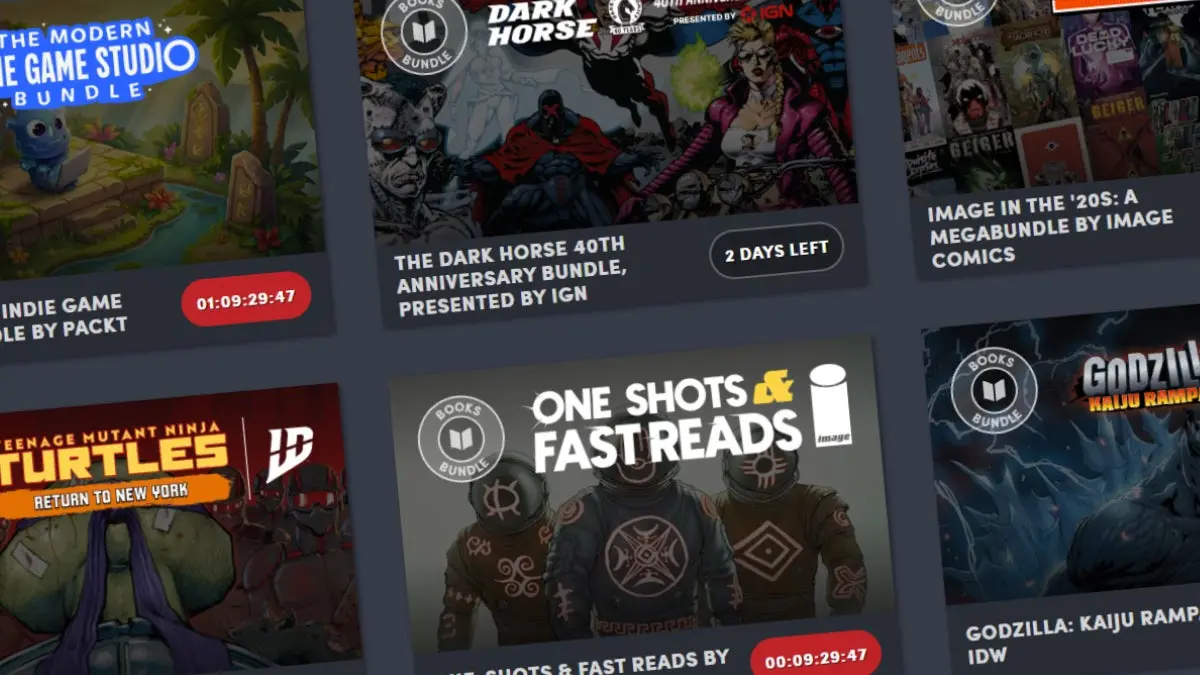
Humble Bundle addresses this structural vulnerability by prioritizing DRM-free downloads. When a bundle carries the "Use on Any Device" designation (signified by a distinct book icon in the bundle’s metadata), purchasers receive direct access to universal file formats:
- PDF: Ideal for high-resolution desktop reading and fixed-layout preservation.
- EPUB: Optimized for reflowable text and e-reader compatibility.
- CBZ (Comic Book Zip): The gold standard for digital comic enthusiasts, enabling seamless panel-by-panel navigation across dedicated comic reader applications (such as Panels, CDisplayEx, or YACReader) without internet connectivity or account authentication.
As editorial and custom content analyses note, this approach ensures that "after you buy a bundle, you get files which you can directly download. Whichever type you decide to use, the important thing is that you get to keep those comics. They’re yours forever."
Curation as a Catalyst for Discovery
When consumers are forced to purchase comic books strictly on a title-by-title basis, risk aversion sets in. Readers naturally gravitate toward marquee franchises—Batman, Spider-Man, the Avengers—while ignoring burgeoning indie creators, experimental miniseries, and genre-bending graphic novels.
Humble Bundle’s curation strategy acts as an intentional corrective to this insular purchasing habit. By grouping diverse titles under umbrella themes—such as Image Comics’ Image in the ’20s: A Megabundle, Dynamite Comics’ Miniseries, Quick Hits and Speedy Reads, or foundational sci-fi and pulp anthologies—the platform forces serendipitous discovery.
Readers who purchase a bundle primarily for a well-known headliner frequently find themselves captivated by lesser-known works included in the lower tiers, thereby broadening their literary horizons and supporting creators operating outside the traditional "Big Two" superhero duopoly.
Future Outlook: Where Digital Comics Are Headed
As the digital entertainment landscape matures, the tension between streaming subscription models and permanent ownership will continue to define consumer preferences. While services offering all-you-can-read streaming libraries provide undeniable convenience for casual consumers, dedicated collectors and preservationists increasingly push back against the ephemeral nature of cloud-dependent media.
Humble Bundle occupies a unique, highly defensible position in this future ecosystem. By serving as a bridge between major publishing houses seeking to monetize back-catalogs and readers demanding affordability, variety, and true digital possession, the platform points toward a sustainable hybrid model for digital publishing.
Furthermore, Humble’s evolving philanthropic framework—which rotates monthly charitable beneficiaries ranging from environmental conservation groups like Oceana to humanitarian initiatives like Make-A-Wish, The Trevor Project, and No Kid Hungry—demonstrates that commercial success and social responsibility are not mutually exclusive.
For newcomers looking to test the waters of graphic storytelling without incurring prohibitive financial risk, and for hardcore collectors aiming to fortify their digital archives with high-value, un-lockable assets, Humble Bundle remains an unparalleled resource. As new publisher partnerships rotate into the storefront each month, the core promise of the platform endures: exceptional value, boundless variety, and absolute ownership.