Executive Overview
In the fast-evolving landscape of enterprise cybersecurity, certificate management has long been an administrative friction point. As industry standards shift toward significantly compressed validity windows—culminating in a strict Certification Authority/Browser (CA/B) Forum mandate that will reduce maximum certificate lifespans to a mere 47 days by 2029—manual renewal workflows are rapidly becoming obsolete. Organizations can no longer rely on human intervention to track expiration dates, generate keys, and deploy replacements without risking catastrophic downtime or customer-facing trust errors.
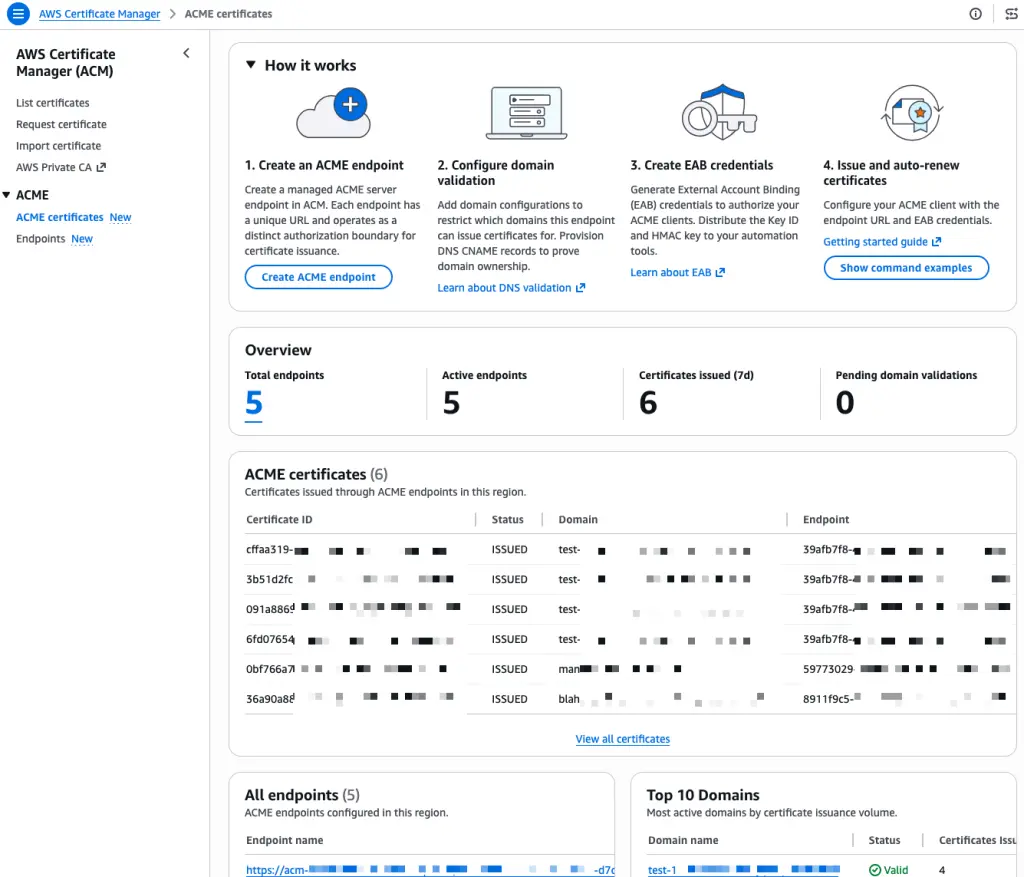
To address this existential operational bottleneck, Amazon Web Services (AWS) has announced native support for the Automatic Certificate Management Environment (ACME) protocol within AWS Certificate Manager (ACM). By providing a fully managed, high-availability ACME server endpoint, AWS enables organizations to issue public TLS certificates directly from Amazon Trust Services (ATS) using any ACMEv2-compatible client, such as Certbot, cert-manager for Kubernetes, or acme.sh.

This strategic launch bridges a long-standing divide in enterprise Public Key Infrastructure (PKI). Previously, teams utilizing ACME automation had to orchestrate external certificate authorities outside of ACM, resulting in fragmented visibility, disjointed auditing dashboards, and administrative blind spots. With native ACME endpoints integrated directly into ACM, enterprises gain a centralized governance plane. PKI administrators can now enforce strict domain scoping, bind AWS Identity and Access Management (IAM) roles for granular access control, automate DNS validation, and maintain comprehensive auditability via AWS CloudTrail and Amazon CloudWatch—all without distributing sensitive DNS management keys to application development teams.
Detailed Chronology: The Evolution of Automated Certificate Lifecycle Management
The journey toward native ACME integration in AWS Certificate Manager represents a measured, architectural response to tightening global web standards and escalating enterprise demands for zero-touch infrastructure.

The Looming Expiration Crisis
For years, digital certificates enjoyed validity periods stretching up to several years, making manual tracking or ad-hoc reminder scripts manageable, if risky. However, continuous security hardening by the CA/B Forum—the consortium governing the issuance of X.509 digital certificates for the public web—has systematically curtailed these lifespans.
- The 100-Day Mandate: Scheduled for March 2027, maximum validity periods will drop to 100 days.
- The 47-Day Threshold: By 2029, certificates will expire every 47 days.
At this velocity, manual certificate rotation is mathematically and operationally untenable. Organizations running hundreds or thousands of microservices, Kubernetes clusters, and edge applications face an imminent wave of service outages unless automated pipelines assume total control over certificate lifespans.
The Rise of ACME
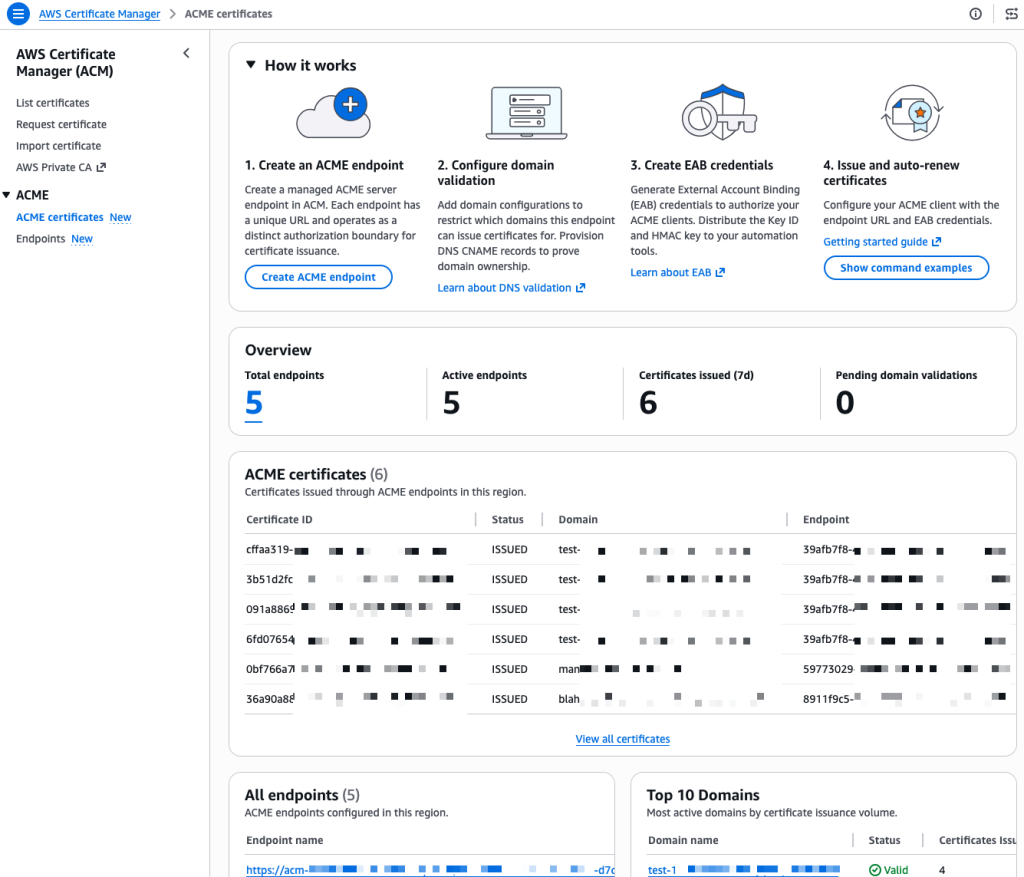
Developed originally by the Internet Security Research Group (ISRG) and standardized via RFC 8555, the Automatic Certificate Management Environment (ACME) protocol revolutionized how certificates are requested, validated, and renewed. By establishing a machine-to-machine protocol between a client and a certificate authority, ACME eliminated the human element entirely. While widely adopted by open-source initiatives like Let’s Encrypt, enterprise environments struggled to integrate external ACME workflows with centralized cloud architectures, often forcing security teams to build custom wrappers or compromise on centralized visibility.
The AWS Solution: Native ACME Endpoints
Recognizing the friction between open-source automation standards and enterprise governance requirements, AWS engineered a native ACME server endpoint within ACM. Released globally across commercial AWS regions, this capability allows enterprises to leverage the ubiquity of the ACME protocol while retaining the enterprise-grade compliance, logging, and security controls inherent to the AWS ecosystem.
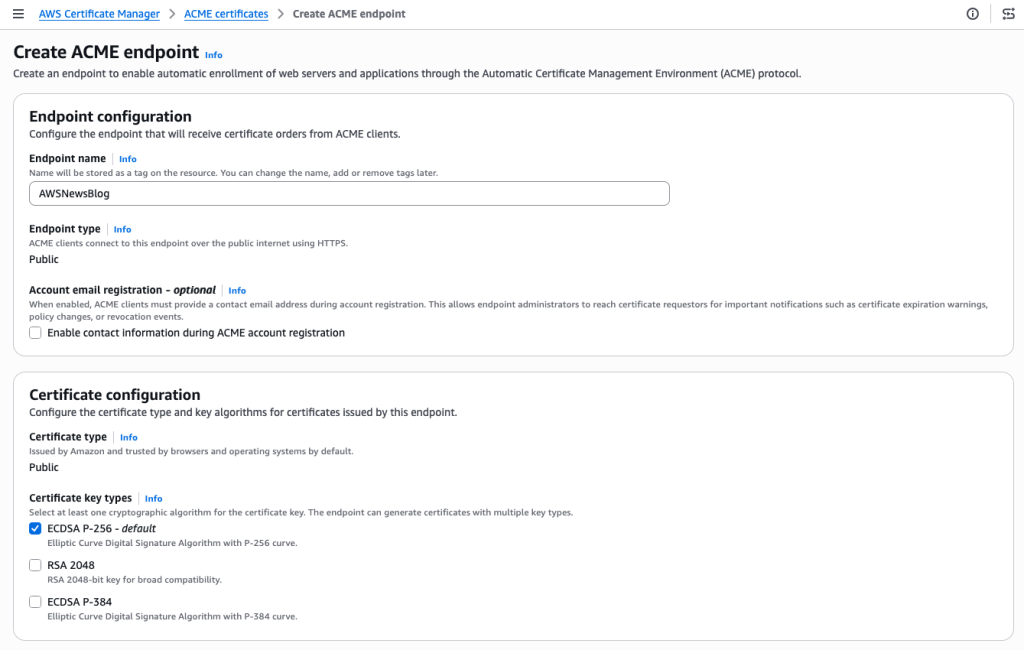
The rollout follows a streamlined architectural workflow:
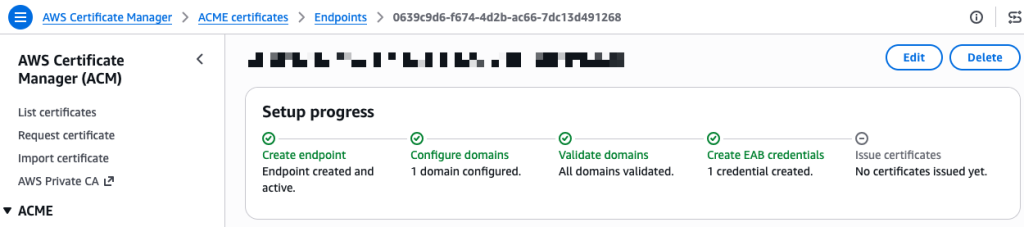
- Endpoint Provisioning: Administrators create a dedicated public ACME endpoint within the ACM console, selecting cryptographic parameters such as ECDSA P-256, ECDSA P-384, or RSA 2048.
- Domain Scope Enforcement: Administrators define precise authorization boundaries—restricting clients to exact domains, subdomains, or wildcards (*.example.com).
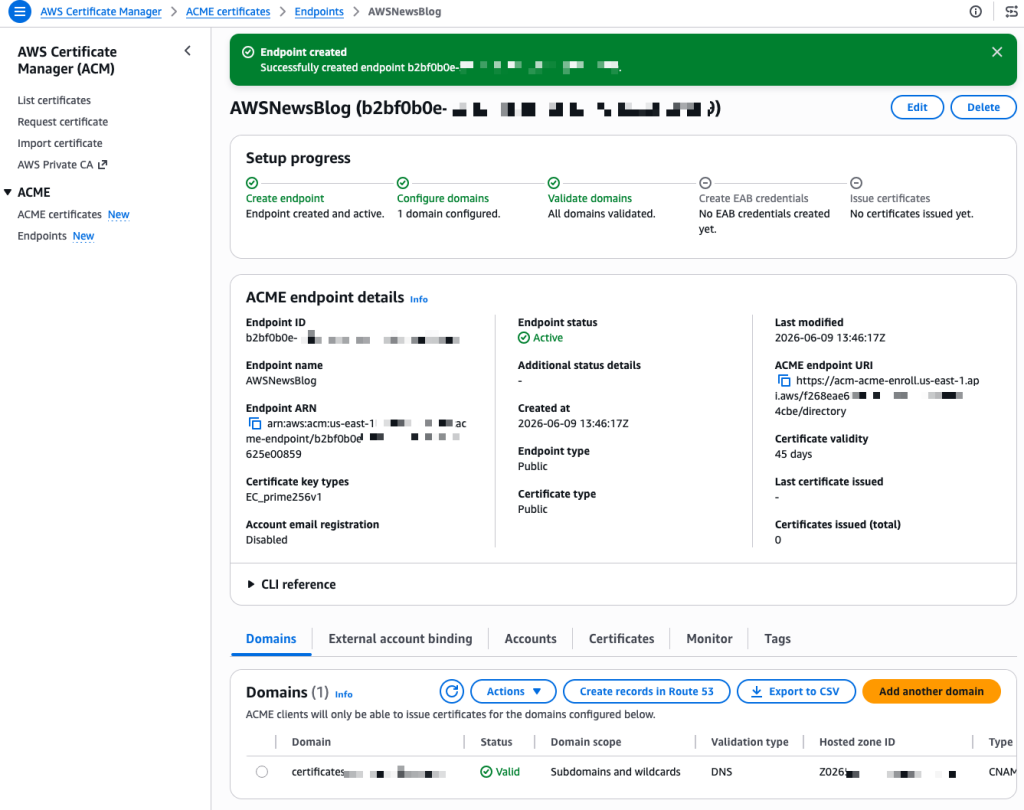
- Automated Validation: Leveraging deep integration with Amazon Route 53 (or manual CNAME handling for external DNS providers), domain validation is completed once at the endpoint level.
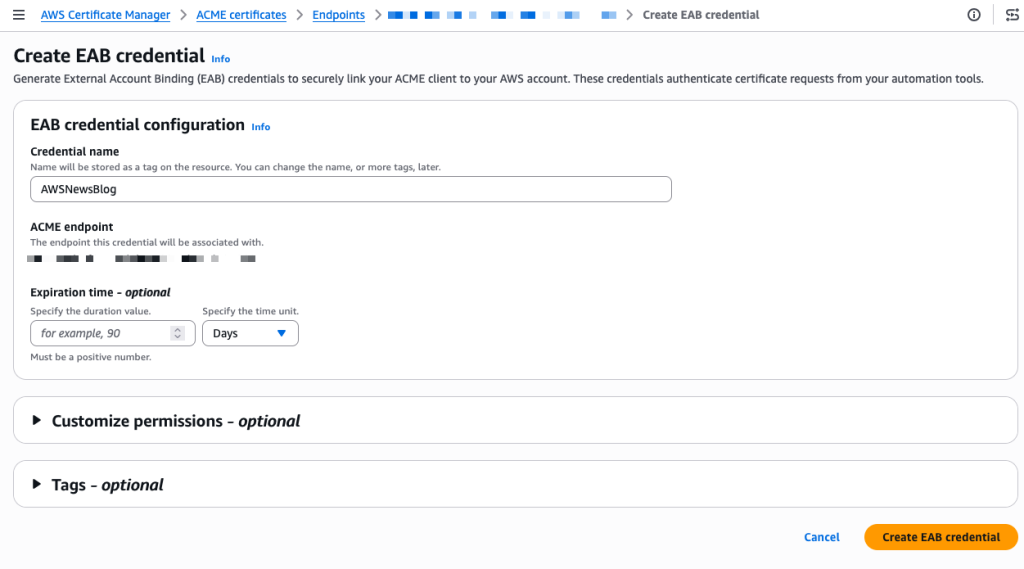
- External Account Binding (EAB): Administrators generate cryptographically secure EAB credentials (utilizing HMAC symmetric keys) to authorize authorized clients.
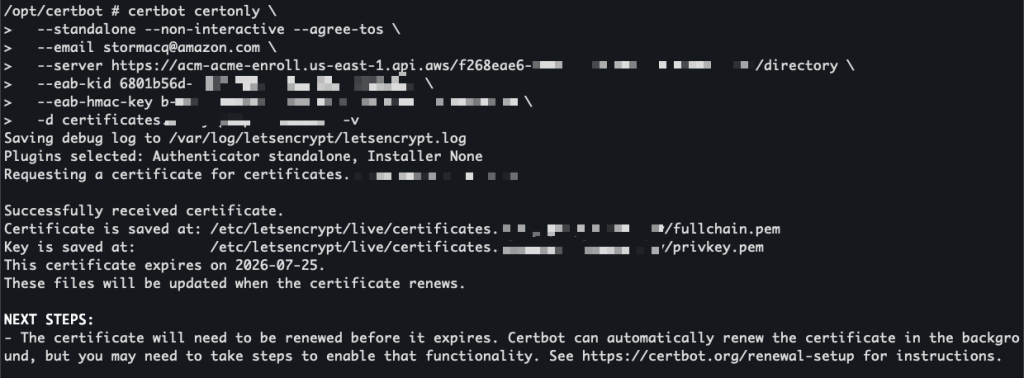
- Client Execution: Application owners point standard tools like Certbot or Kubernetes
cert-managerto the ACM ACME URL, completing automated enrollment and continuous background renewals.
Supporting Context & Metrics: Architecture and Governance Controls
The introduction of ACME support in ACM is not merely a protocol compatibility layer; it is a comprehensive governance framework designed to solve the organizational challenges of scale.
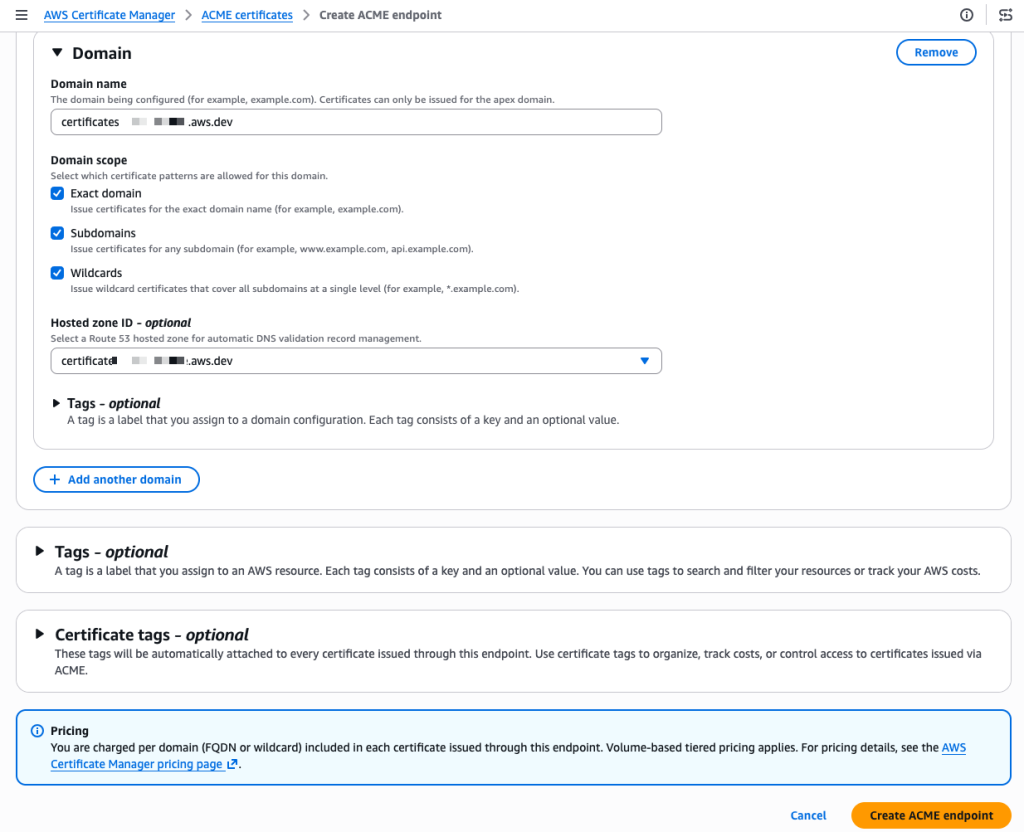
Decentralizing Issuance, Centralizing Control
In traditional decentralized architectures, engineering teams requiring automated certificates often had to manage their own domain validation credentials (such as API tokens for Route 53, Cloudflare, or Route53). This practice posed significant security risks: compromising an application container could expose powerful DNS modification keys capable of hijacking an entire domain infrastructure.
AWS solves this via a clear separation of duties:
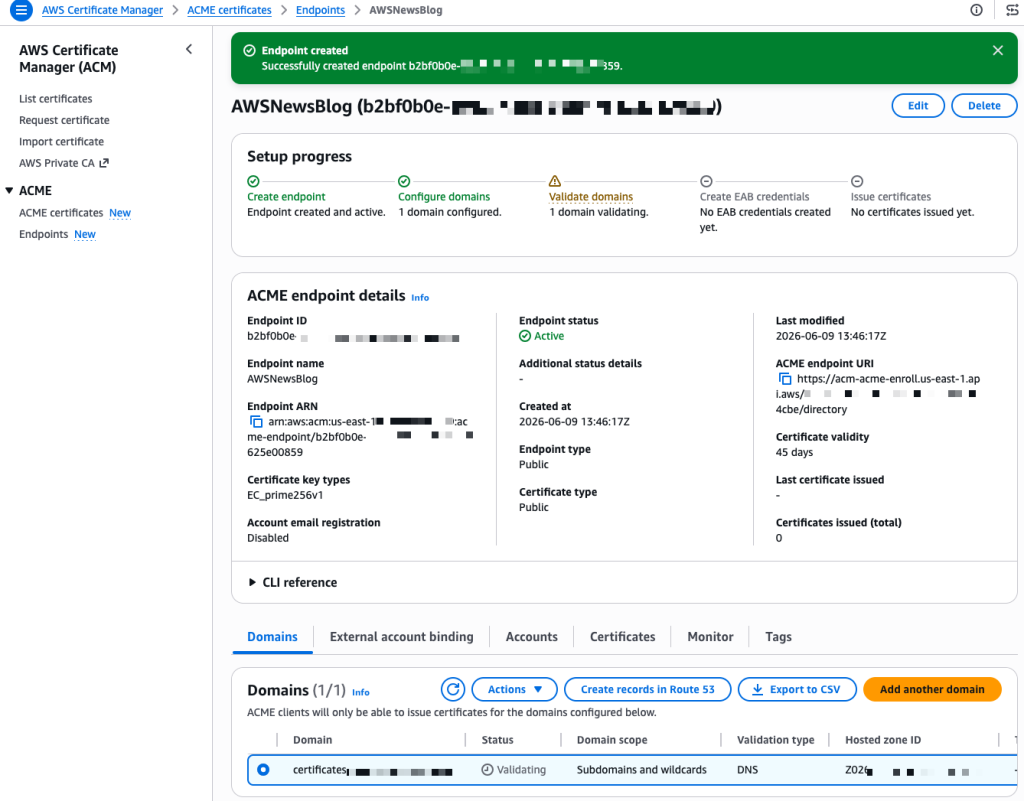
- The PKI Administrator Role: The administrator handles domain validation once at the ACM endpoint level. DNS credentials never leave the central security team’s hands.
- The Application Owner Role: Developers and system operators receive an External Account Binding (EAB) Key ID and HMAC key. They use these credentials to authenticate their ACME client against the endpoint.
Because the ACM endpoint enforces strict domain scopes (e.g., permitting an application to request certificates only for *.dev.example.com while barring root or wildcard production domains), administrators can safely distribute automation capabilities across hundreds of independent teams without expanding the blast radius of their DNS infrastructure.
Observability and Compliance Metrics
Enterprise compliance frameworks—such as SOC 2, ISO 27001, and PCI-DSS—require strict traceability for all cryptographic assets. Fragmented external ACME implementations often obscure who requested a certificate and when.
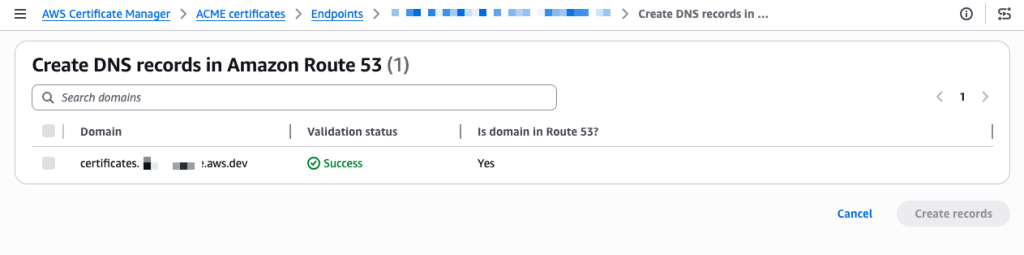
AWS integrates ACME-issued certificates seamlessly into the broader AWS management plane:
- AWS CloudTrail: Automatically logs every certificate issuance request, providing an immutable audit trail of which EAB identity requested what asset.
- Amazon CloudWatch: Tracks operational metrics and health indicators for ACME endpoints.
- ACM Expiry Notifications: Automatically triggers alerts when certificates approach their renewal window.
- Unified Console Search: PKI teams can search, audit, and inspect all active certificates from a single pane of glass, regardless of whether they were issued via the AWS Management Console, an API call, or an automated ACME client.
Pricing and Availability Architecture
ACME support in AWS Certificate Manager is available immediately across all standard commercial AWS Regions, with planned expansions into AWS GovCloud (US), China Regions, and the AWS European Sovereign Cloud.
The pricing model is structured around utility consumption:
- Charges are calculated per domain included in each certificate at the time of issuance.
- Fully qualified domain names (FQDNs) and wildcards are priced distinctly.
- Volume tiers automatically aggregate total domain occurrences across all certificates issued within an AWS account each month, ensuring cost predictability for hyper-scale environments.
Official Statements and Technical Perspectives
Industry analysts and infrastructure engineers have lauded the release as a vital stepping stone toward meeting upcoming browser-mandated certificate lifecycle reductions.
"As regulatory bodies and browser vendors aggressively compress certificate validity windows down to 47 days, manual oversight is officially a relic of the past," noted leading cloud infrastructure commentators. "By baking ACME directly into AWS Certificate Manager, Amazon has eliminated the historical compromise between open-source developer velocity and enterprise security governance."
From an engineering standpoint, the decision to support industry-standard clients without proprietary agents has received widespread praise. Developers do not need to learn a new CLI tool or modify complex application stacks; they simply point their existing infrastructure-as-code (IaC) pipelines, Kubernetes operators (cert-manager), or containerized Certbot scripts to the provided ACM directory URL.
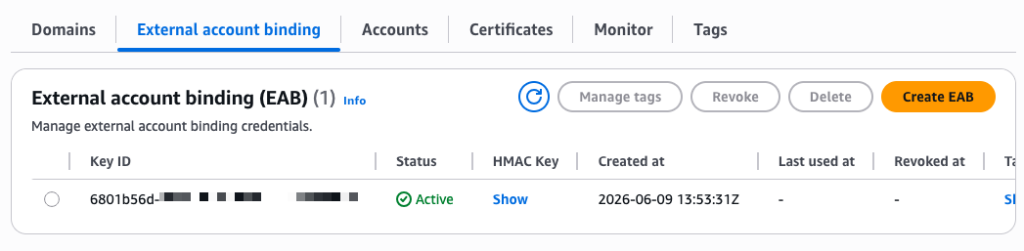
Furthermore, AWS documentation and engineering updates emphasize the robustness of the authentication layer. By utilizing External Account Binding (EAB) backed by cryptographic HMAC symmetric keys, ACM ensures that anonymous actors cannot abuse the public endpoint. Only clients possessing a valid, administrator-approved EAB credential can initiate the account registration phase, after which they transition to secure asymmetric key pairs for ongoing operational transactions.
Future Outlook: The Road Ahead for Automated PKI
The launch of ACME support in AWS Certificate Manager signals a broader, industry-wide maturation in how organizations approach digital trust. As we look toward the 2027 and 2029 CA/B Forum deadlines, several key trends are set to shape the future of enterprise security:
1. The Death of Manual Certificate Management
Within the next several corporate budgeting cycles, organizations that fail to automate their TLS lifecycles will face repeated, preventable outages. Tools like ACM’s managed ACME endpoints remove the technical debt associated with running self-hosted ACME servers (such as Boulder or Pebble) or maintaining third-party synchronization scripts. Expect native ACME integration to become the default baseline for cloud-native architectures.
2. Deepening Convergence with Kubernetes and GitOps
As container orchestration and service meshes dominate modern application delivery, automated certificate provisioning must happen inline with deployment manifests. The seamless compatibility between ACM’s ACME endpoints and Kubernetes cert-manager enables GitOps workflows where declaring an ingress resource automatically triggers secure, compliant public certificate issuance without human touchpoints.
3. Heightened Focus on Post-Quantum Cryptography (PQC)
As cryptographic standards evolve to counter quantum computing threats, certificate lifespans and algorithm requirements (such as transitioning from traditional RSA/ECDSA to post-quantum signature schemes) will introduce new rotation pressures. Platforms with centralized lifecycle management frameworks—such as ACM—will be uniquely positioned to push algorithmic transitions across entire enterprise fleets automatically via ACME and API-driven updates.
Conclusion
AWS Certificate Manager’s native ACME support represents a decisive win for both security administrators and development teams. By marrying the open-source ubiquity of the ACME protocol with the robust access controls, automated DNS validation, and comprehensive auditing of the AWS cloud ecosystem, Amazon has delivered a scalable antidote to the impending certificate expiration crisis. For enterprises operating at scale, adopting managed ACME endpoints is no longer an optional optimization—it is an essential architectural pillar for securing the modern digital perimeter.