Executive Overview
In the high-stakes ecosystem of modern video game development, timing is everything. Yet, few announcements capture the brutal economic reality of competing against cultural monoliths quite like the latest pivot from Cloud Imperium Games (CIG). Squadron 42—the long-awaited, narrative-driven, single-player campaign set within the sprawling universe of Star Citizen—has officially been delayed from its anticipated late 2026 release window to the second quarter of 2027.
The rationale provided by CIG CEO Chris Roberts is as pragmatic as it is telling: the impending launch of Rockstar Games’ Grand Theft Auto VI.
For an enterprise that has spent more than a decade pouring blood, sweat, and over a billion dollars into realizing its science-fiction epic, stepping directly into the path of what is projected to be the largest entertainment launch in human history was deemed tactical suicide. While GTA VI may not hit personal computers this November, the gravitational pull of Rockstar’s open-world crime epic is expected to consume virtually all oxygen in the media and consumer landscape.
However, this latest delay is merely the tip of the iceberg. Coming on the heels of a disastrous developer livestream that exacerbated community distrust, and arriving after more than a decade of shifting timelines, the Squadron 42 postponement highlights the perilous intersection of astronomical budgets, towering fan expectations, and the unrelenting pressures of the games industry calendar.
Detailed Chronology: A Decade-Long Odyssey to the Stars
To understand the weight of the 2027 delay, one must retrace the astonishingly protracted development cycle of Squadron 42. The origins of the project date back to 2012, when Chris Roberts launched a modest Kickstarter campaign for Star Citizen, promising a triumphant return to the glory days of the space-sim genre, specifically channeling his classic masterpiece, Wing Commander.
By 2013 and 2014, CIG was actively scaling up operations, establishing multiple international studios, hiring hundreds of developers, and pushing out early conceptual assets like the Hangar module. Originally envisioned as a distinct single-player module that would feed players into the persistent multiplayer universe of Star Citizen, Squadron 42 quickly bloated into an AAA beast in its own right.
Over the years, the goalposts shifted repeatedly:
- The Early Estimates: Initial internal and external projections pointed toward a release window in the mid-2010s. Those targets evaporated as the scope expanded.
- The Feature Creep: CIG opted to build proprietary technology from the ground up, pivoting engines, rewriting netcode, and introducing revolutionary innovations in facial performance capture and planetary tech.
- CitizenCon 2024: Hopes were reignited when Roberts took the stage at CitizenCon to boldly declare that Squadron 42 was finally slated to ship in 2026, targeting a Q4 window to coincide with the Intergalactic Aerospace Expo (IAE). Studio representatives spent late 2025 reaffirming that the game was fully playable, spanning over 40 hours of content, and firmly on track.
- The August 2026 Pivot: In a stunning reversal announced via a corporate blog post, Roberts pulled the emergency brake. Citing the "attention buzz saw" of GTA VI, the studio officially pushed the window to Q2 2027.
Between now and that projected spring 2027 launch, CIG plans to host hands-on preview sessions for select content creators and early backers in October. These sessions are intended to build critical momentum, culminating in a concrete release date announcement shortly thereafter—assuming, of course, that no further disruptions occur.
Supporting Context & Metrics: The Billion-Dollar Gamble
The calculus behind delaying Squadron 42 involves numbers that dwarf traditional Hollywood blockbusters. Earlier this year, Star Citizen and its accompanying single-player component officially crossed an astonishing financial milestone: over $1 billion raised directly from crowdfunding, package sales, and high-tier ship pledges from its intensely dedicated community.
With a war chest exceeding ten figures, CIG operates under financial parameters that very few independent developers—or even legacy publishers—can fathom. Roberts has frequently positioned Squadron 42 as one of the most expensive video games ever produced, placing its production budget in the same rarefied air as Rockstar’s Grand Theft Auto franchise.
Because of this staggering investment, expectations for commercial and critical impact are impossibly high. Roberts explicitly noted his desire for the launch of Squadron 42 to be a monumental cultural event, rivaling the sheer dominance of GTA VI. Yet, the CEO recognized a stark marketing reality:

"There is no way I want to launch my spiritual successor to Wing Commander… launching into the attention buzz saw of GTA VI. While GTA VI isn’t launching on PC this November, pretty much all outlets and most content creators will be all over it, not leaving a lot of room for other coverage."
This defensive positioning underlines how even a project backed by a billion dollars cannot easily survive being completely eclipsed in the news cycle by a generational blockbuster.
Official Statements & Community Fractures
While the commercial reasoning behind the delay makes strategic sense on paper, it has landed within a community already grappling with deep-seated fatigue and skepticism. The announcement arrived hot on the heels of what can only be described as a public relations disaster: a Star Citizen developer livestream that went catastrophically off the rails.
During the broadcast, developers attempted to demonstrate a new update intended to showcase the game’s stability and "intended" player experience following fierce complaints from early-access alpha testers regarding pervasive bugs and technical degradation. Instead of reassuring the player base, the live demonstration was plagued by the exact same systemic issues—and in some instances, worse ones.
The resulting broadcast laid bare an uncomfortable, tense dynamic among the development team, characterized by awkward exchanges and passive-aggressive commentary on air. For a project that has continually asked its backers for patience, financial contributions, and blind faith over the course of fourteen years, the disastrous stream severely dented consumer confidence.
Consequently, the subsequent delay of Squadron 42—while framed as a tactical move to avoid GTA VI—was met by pockets of the community with cynicism. Critics and weary backers voiced concerns that the delay may mask underlying development or polish issues, weaponizing the GTA VI excuse to buy more time for a team struggling to stabilize its core engine architecture.
Adding to the complexity, the persistent multiplayer component, Star Citizen, remains entirely without a defined release window, leaving its millions of active alpha participants with no clear destination on the horizon.
Future Outlook: Can CIG Stick the Landing in 2027?
As the industry looks past the horizon toward Q2 2027, the stakes for Cloud Imperium Games could not possibly be higher. Squadron 42 represents more than just a video game; it is the ultimate validation of a controversial, decade-long crowdfunding experiment.
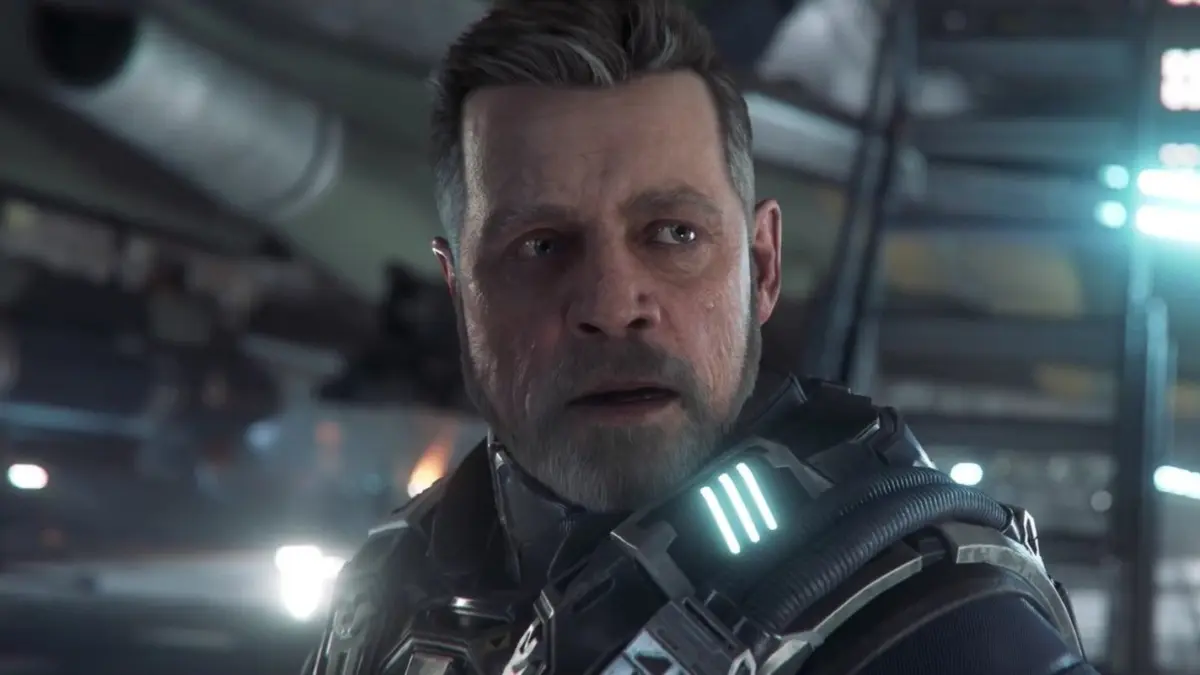
Boasting an undeniably star-studded cinematic cast—including A-list Hollywood talent such as Gary Oldman, Mark Hamill, Henry Cavill, Andy Serkis, Ben Mendelsohn, and Mark Strong—the narrative campaign aims to blend blockbuster cinematic presentation with hardcore space-sim mechanics. If the game delivers on its promised 40+ hour runtime and technical ambition, it could justify the agonizingly long wait and silence its fiercest critics.
However, the margin for error has evaporated. With a budget crossing the billion-dollar threshold, an increasingly restless community rattled by unstable development streams, and the looming shadow of AAA competitors waiting in the wings, CIG must use the extra months wisely.
The planned October preview events for creators and early backers will serve as the ultimate litmus test. If those hands-on impressions paint a picture of a polished, breathtaking sci-fi masterpiece ready for primetime, the 2027 delay may be remembered as a wise, measured retreat. If, however, the technical gremlins that plague Star Citizen bleed over into the single-player experience, the decision to dodge GTA VI may ultimately be remembered as a delay from one storm straight into another.