Executive Overview
In the lexicon of modern American politics, euphemism has become an art form. Real estate developers carve out subdivisions named "Wild Creek Place" on terrain utterly devoid of either wildlife or running water, opting for marketability over literal description. According to critics, a similar semantic camouflage has taken root within the Kansas Statehouse. Under the thumb of an emboldened ultraconservative legislative majority, committees bearing traditional designations like "Education," "Commerce, Labor and Economic Development," and "Local Government" increasingly resemble bureaucratic monuments to the very public institutions they have systematically targeted for displacement or destruction.
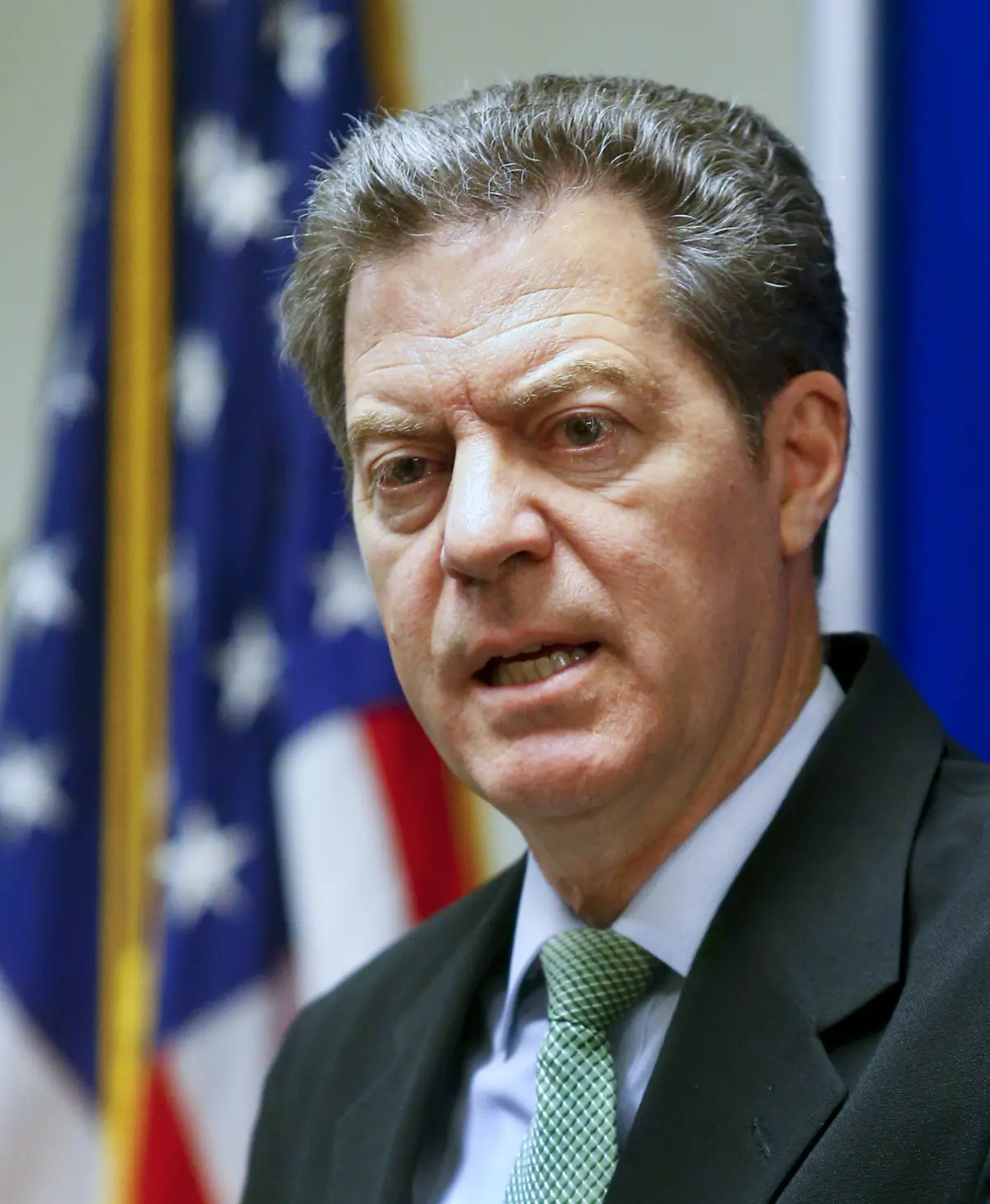
At the epicenter of this transformation is Kansas Governor Sam Brownback, whose aggressive march toward zero income tax revenue has left the state’s fiscal house in structural ruin. To offset self-inflicted budget shortfalls, the administration and its allies have pursued a legislative agenda designed to weaken public services, strip power from local municipalities, and redirect public funds toward private and religious alternatives.
This article examines the mechanisms of this systemic dismantling, focusing on House Bill 2741—a radical rewrite of the state’s public school funding formula. Filed in the spring of 2016 and heavily indebted to the model legislation of groups like the American Legislative Exchange Council (ALEC) and Americans for Prosperity (AFP), HB 2741 encapsulates a broader national strategy: the privatization of public goods under the banner of fiscal responsibility. Through an examination of its legislative history, financial architecture, and collateral damage to student health, facilities, and local equity, this report unpacks how Kansas became a testing ground for libertarian governance—and how a galvanized citizenry is fighting back.
Detailed Chronology: The Road to HB 2741 and the Kansas School Funding Crisis
The systematic fracturing of public education funding in Kansas did not occur in a vacuum; it was the logical culmination of a multi-year fiscal experiment initiated shortly after Governor Sam Brownback took office in 2010.
- 2012–2013: Governor Brownback signs sweeping income tax cuts into law, promising an "shot in the arm" for the state economy. Instead, the tax cuts drain state revenues by hundreds of millions of dollars annually, triggering a structural budget deficit.
- 2014–2015 Legislative Session: Facing mounting deficits and court-ordered mandates regarding educational equity, the legislature takes the radical step of repealing the state’s decades-old school funding formula. In its place, lawmakers implement a temporary, two-year block grant funding mechanism. While designed to buy time for the development of a permanent formula, the block grants effectively freeze and reduce operating dollars available to local school districts.
- February 2016: The state releases a $2.6 million efficiency study conducted by the consulting firm Alvarez and Marsal. Commissioned to identify government savings, the study’s findings are quickly co-opted by ultraconservative lawmakers to justify sweeping structural changes.
- Spring 2016: Shortly before a legislative recess, Republican Representative Ron Highland and Republican Senator Steve Abrams introduce House Bill 2741, formally titled the Creating the School District Finance and Student Success Act. Placed directly into the House Appropriations Committee, the bill proposes sweeping changes to public school funding, redefines "instruction," and establishes the Kansas Education Freedom Act.
- April 2016: Public backlash mounts as legal analysts, education boards, and grassroots coalitions dissect the bill’s provisions, revealing that its long-term trajectory will further reduce state investment in public education while outsourcing accountability to the state treasurer.
Supporting Context & Metrics: The ALEC Blueprint and the Privatization Playbook
The strategies deployed in Topeka are hardly unique to the Sunflower State. For years, model legislation crafted by entities such as the American Legislative Exchange Council (ALEC), Americans for Prosperity (AFP), and local think tanks like the Kansas Policy Institute (KPI) have served as the legislative template for conservative-led statehouses nationwide.
The scope of this coordinated push is staggering. According to data compiled by the Center for Media and Democracy, 2015 alone saw the introduction of 172 education-related measures across 42 states based directly on ALEC model bills. The underlying objective of these initiatives is explicitly structural: to transform public education from a universal, publicly accountable institution into a market-driven commodity serving private, for-profit interests.
In Kansas, HB 2741 mirrors ALEC’s Education Savings Account Act. A primary vector of this model is the creation of "education freedom accounts," which allow parents to siphon a significant percentage of per-pupil state aid—70 percent under the Kansas proposal—to cover private school tuition, online academies, homeschooling, or private tutors.
Crucially, these privatized accounts strip away traditional accountability mechanisms. Under HB 2741, regulatory oversight of both the academic and financial components of the savings program is handed over not to the Kansas State Department of Education, but to the Kansas State Treasurer. This exact governance structure mirrors ALEC’s blueprint, which deliberately bypasses traditional educational agencies in favor of ideologically aligned or financially oriented state offices.
Furthermore, HB 2741 relies on a sophisticated shell game regarding how "instruction" is defined. The bill restricts state general aid exclusively to core classroom functions, explicitly stripping state support from non-instructional operations such as:
- Central office administration
- Capital improvement construction and maintenance
- Facility repairs and renovations
- Food service procurement and preparation
- Extracurricular activities (including athletics, music, debate, and student government)
By shrinking the definition of instruction, proponents can claim they are increasing "classroom spending" during an election year, while simultaneously slashing overall state expenditures on public schools to feed the ongoing crusade for zero income taxes.
Official Statements and Expert Analysis: Dissecting the Financial and Social Toll
The fallout from HB 2741 and related austerity measures has drawn sharp rebukes from educational administrators, legal scholars, and infrastructure experts.
The Kansas Association of School Boards (KASB) issued detailed analyses warning that while the bill might offer an illusory 4 percent increase in state general aid initially (bolstered by temporary "Hold Harmless" provisions), it ultimately results in a net funding decrease once those transitional funds expire two years later.
Marcel Harmon, an architectural engineering expert writing on state facility needs, highlighted the devastating impact of starving capital improvement projects:
"We still have a long way to go to recover from decades of deferred maintenance that can negatively impact student and teacher productivity, performance, and health… This bill would further slow that recovery in the state of Kansas."
Independent research confirms that restricting state funding for food service and extracurricular activities inflicts collateral damage far beyond the balance sheet. Studies from organizations like Children’s HealthWatch demonstrate a direct correlation between student nutrition, academic focus, and classroom performance. By forcing districts to rely solely on local dollars for meal programs, HB 2741 jeopardizes nutritional standards and dismantles popular "Farm-to-School" initiatives that bolster both student health and rural local economies.
Moreover, the bill’s reliance on local funding streams directly defies the Kansas Supreme Court. The state’s highest court previously ruled that current funding mechanisms fail to equitably distribute resources, penalizing lower-income districts that lack the property wealth of their suburban counterparts to easily raise local taxes for non-instructional needs. HB 2741 exacerbates this constitutional violation by shifting fiscal burdens back onto local communities.
Defenders of the legislation, however, lean heavily on the state-commissioned Alvarez and Marsal efficiency study. Rep. Ron Highland defended the bill by asserting it incorporated recommendations from the $2.6 million audit. Yet, critics note a profound disconnect: while the study explored bureaucratic efficiency, the core privatization mechanisms of HB 2741—diverting public dollars to private institutions and radically narrowing the definition of education—originated entirely from libertarian think-tank playbooks rather than auditor recommendations.
Future Outlook: Grassroots Pushback and the Battle for the Ballot Box
Despite nearly a decade of fiscal strain and policy battles under the Brownback administration, a profound political awakening is underway across Kansas.
Realizing that legislative relief would not come from an entrenched ultraconservative majority, everyday citizens, educators, and community leaders have built a formidable grassroots infrastructure. Organizations such as Game On for Kansas Schools, Women for Kansas, the Moderate Party of Kansas, and the Mainstream Coalition have mobilized urban, suburban, and rural voters alike. By shifting public discourse away from partisan talking points and toward the tangible decay of local classrooms, these groups have successfully recruited a wave of moderate and progressive candidates to challenge incumbent ideologues in both primary and general elections.
The coming electoral cycles represent a critical pivot point for the state. If grassroots mobilization succeeds in shifting the balance of power in Topeka, Kansas may finally halt its race toward zero revenue and fiscal insolvency. A reformed legislature could restore equitable funding formulas, protect public education from privatization schemes, and ensure that statehouse committees once again reflect the actual needs—rather than the ideological destructions—of the Kansas citizenry.
Until then, bills like HB 2741 serve as a cautionary tale of what happens when governance is outsourced to corporate-backed model-legislation mills. As critics frequently note, calling a bill the School District Finance and Student Success Act when its true legacy is privatization and austerity may be good politics, but it remains a masterclass in legislative deception.