Executive Overview
The landscape of portable computing and digital entertainment has undergone a seismic shift over the past half-decade. What was once a niche enthusiast market dominated by heavily customized laptops and retro emulation handhelds has matured into a mainstream battleground. Today, major hardware manufacturers are locked in an intense race to deliver uncompromised PC gaming experiences in a form factor that fits inside a backpack.
At the center of this revolution is a new generation of handheld gaming PCs, devices that grant users access to nearly limitless libraries of titles from Steam, Epic Games Store, Xbox Game Pass, and GOG—anytime, anywhere. Amidst fierce competition from industry heavyweights like Valve, ASUS, and Microsoft-adjacent ecosystems, Lenovo’s Legion hardware line has consistently pushed the envelope of performance, ergonomics, and value.
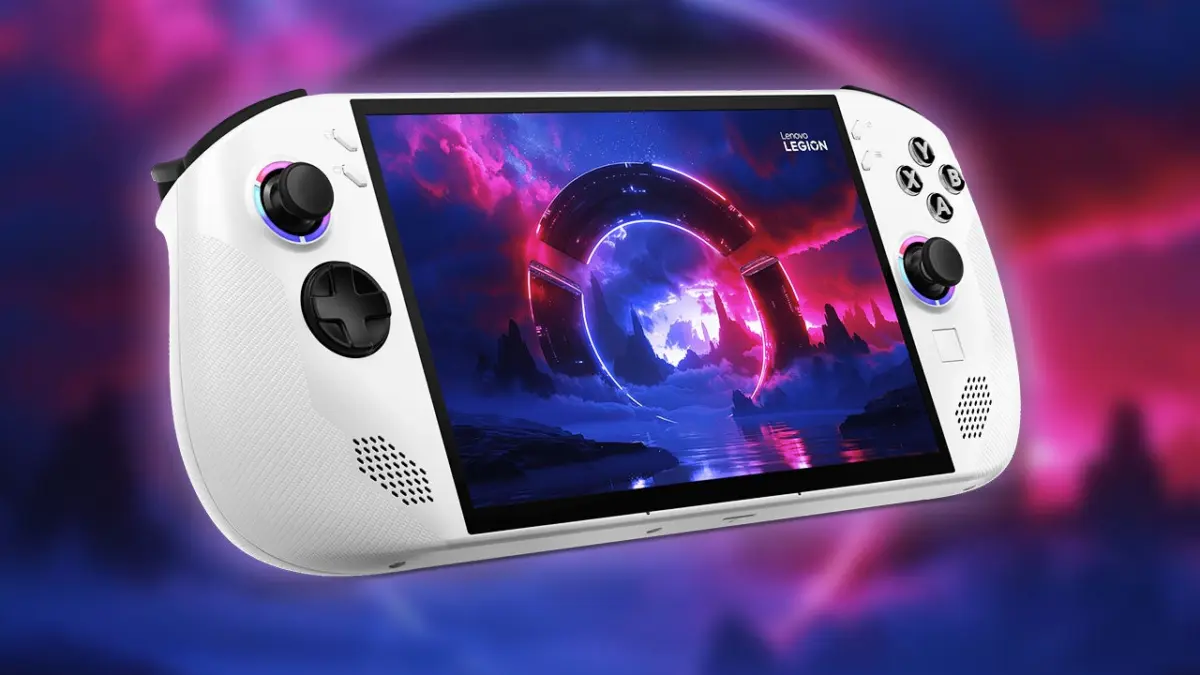
In a major retail development, Amazon-owned subsidiary Woot has launched a limited-time promotional discount on one of the market’s most compelling devices. The Lenovo Legion Go S (AMD Ryzen Z2 Go Edition) is currently available for $529.99, marking a substantial $170 savings off its standard retail pricing. Amazon Prime members benefit from complimentary standard shipping, while non-members face a nominal $5 delivery fee. According to the retailer, these units consist of brand-new, unused stock accompanied by a 90-day Woot warranty.
This deep discount arrives at a critical juncture in the handheld market. As consumer discourse increasingly questions the longevity of older platforms like the Steam Deck—and debates the pricing tiers of high-end alternatives like the Xbox Ally X and Legion Go 2—the Legion Go S occupies a sweet spot. It delivers raw computing power that outclasses entry-to-mid-tier competitors while undercutting them on price. This comprehensive report explores the technical architecture of the Legion Go S, analyzes its positioning relative to the broader competitive landscape, examines expert commentary, and evaluates what this deal means for the future of portable PC gaming.
Detailed Chronology of the Handheld PC Market & The Legion Go S Launch
The Genesis of Modern Handheld PC Gaming
To understand the significance of the Legion Go S discount, one must trace the rapid acceleration of the portable PC sector. For years, portable gaming was the exclusive domain of dedicated consoles like the Nintendo Switch or mobile smartphones. While PC enthusiasts attempted to bridge the gap using bulky, power-hungry gaming laptops or niche Windows-based handhelds from companies like GPD and AyaNeo, these devices suffered from exorbitant pricing, poor battery life, and immature software interfaces.
The paradigm shifted fundamentally in February 2022 with Valve’s release of the original Steam Deck. By pairing a custom AMD Zen 2/RDNA 2 APU with a streamlined, Linux-based operating system (SteamOS) and aggressive pricing starting at $399, Valve proved that a massive market existed for ergonomic, accessible portable PCs. However, the Steam Deck’s custom architecture and fixed Linux environment also exposed limitations, particularly regarding game compatibility with anti-cheat software and Windows-exclusive storefronts like Xbox Game Pass.
Lenovo Enters the Arena
Recognizing the commercial viability of the space, traditional Windows PC giants quickly mobilized. Lenovo entered the fray with the original Lenovo Legion Go in late 2023, attempting to outshine Valve and ASUS by offering a massive 8.8-inch display, detachable controllers reminiscent of Nintendo Joy-Cons, and the high-performance AMD Ryzen Z1 Extreme processor. While praised for its versatility and screen real estate, the original Legion Go was bulky, relatively heavy, and carried a steep $699+ price tag.
As hardware iterations progressed into late 2025, Lenovo sought to capture a broader audience by streamlining its design philosophy and balancing cost with processing power. The result was the introduction of the Lenovo Legion Go S in late 2025. Designed as a lighter, more streamlined, and aggressively priced alternative to both the original Legion Go and its successor (the Legion Go 2), the "S" variant targeted gamers who wanted modern Windows 11 performance without paying upwards of $800 to $1,000 for enthusiast-tier silicon.
The Woot Promotion: A Turning Point for Retail Pricing
The current offering via Woot represents the most aggressive pricing seen for the Legion Go S platform to date. By slashing the price to $529.99, Amazon’s discount structure brings the device down into direct price competition with baseline Steam Deck OLED models and older-generation Windows handhelds. Because these units are brand-new, unused items backed by a direct warranty, consumer hesitation regarding refurbished or open-box hardware is largely eliminated, paving the way for widespread adoption among cost-conscious gamers.
Supporting Context & Technical Metrics
To evaluate whether the Lenovo Legion Go S is worth the investment at the $529.99 price point, a rigorous examination of its internal hardware, software ecosystem, and performance metrics is required.
Processing Architecture: The AMD Ryzen Z2 Go APU
At the heart of the Legion Go S lies the AMD Ryzen Z2 Go Accelerated Processing Unit (APU). This silicon choice is critical to understanding the device’s positioning in the market.
- CPU Cores & Threads: Features a 4-core, 8-thread Zen 3+ architecture capable of boosting up to 4.3GHz.
- Graphics Engine: Equipped with a modified Radeon 680M featuring 12 compute units (CUs) utilizing the RDNA 2 architecture.
- Memory Configuration: Bundled with 16GB of high-speed LPDDR5 RAM soldered directly to the motherboard, ensuring rapid data transfer speeds for gaming workloads and multitasking.
- Storage: Standardized with a 512GB NVMe M.2 SSD, providing ample room for several modern AAA titles or dozens of indie games, with expandability via a microSD card slot.
Comparative Performance Analysis
How does the Ryzen Z2 Go stack up against its primary rivals in the current market?
| Handheld Device | Processor (APU) | CPU Architecture | Graphics Engine | Operating System | Typical Price Point |
|---|---|---|---|---|---|
| Valve Steam Deck OLED | Custom AMD "Aerith" | 4-Core Zen 2 | 8-CU RDNA 2 | SteamOS (Linux) | $549 – $649 |
| Xbox Ally / Entry Handhelds | AMD Ryzen Z2 A | Zen 2 variants | Reduced CUs | Windows 11 / Xbox UI | $499 – $599 |
| Lenovo Legion Go S | AMD Ryzen Z2 Go | 4-Core, 8-Thread Zen 3+ | Radeon 680M (12 CUs) | Windows 11 | $529.99 (Woot Deal) |
| Lenovo Legion Go 2 / Xbox Ally X | AMD Ryzen Z2 Extreme | Zen 4 / Zen 5 variants | Advanced RDNA 3 | Windows 11 | $799 – $999+ |
As detailed in the technical breakdown, the Legion Go S holds a distinct advantage over the baseline Steam Deck and lower-tier Windows handhelds. While the Steam Deck relies on older Zen 2 CPU cores, the Legion Go S utilizes the more efficient and powerful Zen 3+ architecture coupled with the formidable Radeon 680M graphics engine.
The Radeon 680M has long been celebrated in the mini-PC and handheld community for its impressive gaming capabilities at 720p and 800p resolutions, often outperforming the Steam Deck’s graphics block in titles that demand modern shader execution and upscaling technologies like AMD FidelityFX Super Resolution (FSR).
Furthermore, while ultra-enthusiast devices featuring the Ryzen Z2 Extreme offer superior frame rates in heavy ray-traced or poorly optimized current-generation titles, they also double the financial barrier to entry. For the vast majority of PC games—including massive library pillars like Cyberpunk 2077, Baldur’s Gate 3, Elden Ring, indie masterworks, and multiplayer staples—the Ryzen Z2 Go provides more than enough horsepower to maintain stable, enjoyable frame rates without taxing the user’s wallet.

Software Flexibility: Windows 11 and SteamOS Adaptability
Out of the box, the Legion Go S runs Microsoft’s Windows 11 operating system. This grants users native compatibility with every major PC storefront and subscription service on day one:
- Steam
- Epic Games Store
- Xbox App & Xbox Game Pass for PC
- GOG Galaxy
- EA App and Ubisoft Connect
This universal compatibility eliminates the workaround hurdles often faced by Linux-based operating systems when dealing with kernel-level anti-cheat software used in competitive titles like Valorant, Destiny 2, or Call of Duty.
However, for users who prefer a console-like interface, streamlined power management, and optimized background resource allocation, the Legion Go S hardware architecture is flexible. Industry enthusiasts have documented straightforward pathways to install SteamOS or third-party Linux distributions (such as Bazzite) directly onto the Legion Go S, effectively transforming the device into a customized, high-performance alternative to Valve’s hardware ecosystem.
Industry Perspectives & Expert Commentary
The release and subsequent discounting of the Legion Go S arrive amid a broader reevaluation of portable gaming hardware preferences among tech journalists and industry critics.
The Shifting Appeal of the Steam Deck
In recent commentary published across major tech and gaming publications—such as diagnostic pieces by industry analysts questioning whether the Steam Deck still warrants an automatic recommendation—critics point to the rapid evolution of competing hardware. While Valve’s device pioneered the modern form factor and boasts an unbeatable user interface, its underlying Zen 2 processor is increasingly showing its age when confronted with unoptimized modern game ports.
Hardware experts highlight that alternative devices, particularly those utilizing upgraded AMD APUs like the Ryzen Z2 series, offer superior longevity, better display performance, and wider software compatibility out of the box. With the Legion Go S dropping to $529.99 via Woot, it undercuts or matches the price of comparable Steam Deck configurations while delivering a superior generation of CPU and GPU architecture.
Balancing Cost and Performance
Industry commentators have frequently criticized the handheld market for creeping toward smartphone-level pricing, with flagship models routinely cresting the $800 to $1,000 threshold. For average consumers—students, working professionals, and casual gamers who want to unwind with their digital library on the commute or the couch—spending a month’s rent on a secondary gaming device is difficult to justify.
By offering a modern Zen 3+ / Radeon 680M system for $529.99, Lenovo and retail partners like Woot are addressing the "sweet spot" of consumer spending. Analysts note that devices in the $500–$600 range represent the historical threshold where console and handheld hardware achieves mass-market adoption.
Future Outlook: The Trajectory of Portable PC Gaming
As we look toward the remainder of the decade, the trajectory of handheld PC gaming points toward further refinement, improved energy efficiency, and software consolidation.
1. APU Efficiency and Battery Optimization
The single greatest challenge facing portable gaming PCs remains battery life. While raw performance has skyrocketed, maintaining high frame rates under heavy graphical loads still drains batteries rapidly. Future iterations of silicon—building upon the foundation laid by the Ryzen Z2 series—will focus heavily on sub-15-watt efficiency gains, allowing for longer untethered play sessions without increasing device weight.
2. Operating System Wars
The dominance of Windows 11 on handhelds is being fiercely contested by customized, lightweight Linux operating systems designed specifically for controllers. Microsoft has repeatedly hinted at developing a dedicated, streamlined "handheld mode" for Windows to combat the seamless user experience offered by SteamOS. Whether Microsoft successfully optimizes Windows for low-power, controller-first navigation will heavily influence how devices like the Legion Go S operate in the future.
3. Mainstream Normalization
Handheld PCs are no longer dismissed as expensive novelties for early adopters. Major publishers are beginning to optimize their PC releases specifically with handheld resolutions (720p/800p) and control schemes in mind from day one. As hardware prices drop and retail promotions like Woot’s $529.99 Legion Go S deal make these devices more accessible, the barrier between desktop gaming and portable gaming will continue to dissolve entirely.
Conclusion
For gamers on the fence about entering the portable PC ecosystem—or those looking to upgrade from aging first-generation hardware—the current Woot promotion on the Lenovo Legion Go S (AMD Ryzen Z2 Go Edition) represents an exceptional opportunity.
Combining a robust Zen 3+ CPU architecture, a capable Radeon 680M GPU, 16GB of LPDDR5 RAM, and universal Windows 11 compatibility at a heavily discounted price of $529.99, the Legion Go S punches well above its weight class. Backed by free shipping for Amazon Prime members and a brand-new product guarantee, it stands out as one of the most economically sound investments in modern gaming hardware.