Executive Overview
The proliferation of hyper-realistic, generative artificial intelligence has brought humanity to an epistemological precipice. No longer is seeing believing; instead, the digital public square is increasingly flooded with synthetic media capable of mimicking reality with terrifying precision. From fabricated political scandals and staged historic events to hyper-personalized scams, the democratization of powerful generative tools—such as Midjourney, Stable Diffusion, and DALL-E—has democratized deception.
As Andrey Doronichev, CEO and co-founder of the AI-detection platform Optic.xyz, succinctly warns, “It has become increasingly challenging for the average human eye to distinguish between AI-generated and real photos. This has the potential to manipulate public opinion, undermine the credibility of news sources, and ultimately threaten the democratic process by promoting disinformation.”
This alarming technological leap has exposed a systemic vulnerability across the global information ecosystem. A cottage industry of specialized detection startups has emerged, racing to build algorithmic shields against synthetic media, yet these tools remain inherently imperfect. Simultaneously, social media corporations—the primary conduits for digital communication—are fundamentally unprepared to police the tidal wave of fake imagery. Content moderation teams have been hollowed out, verification systems restructured, and platform policies enforced with erratic inconsistency.
This investigative report examines the multi-faceted crisis of AI-generated misinformation. We explore the limitations of current detection technologies, the systemic policy failures of major technology platforms, the socio-political implications of unmitigated synthetic media, and the urgent reforms required to preserve a shared baseline of truth in the digital age.
Detailed Chronology: The Evolution of Synthetic Media and Platform Vulnerabilities
To understand how the modern internet became a battleground of synthetic deception, it is necessary to trace the rapid escalation of generative AI technologies and the parallel erosion of digital guardrails over recent years.
Phase 1: The Infancy of Deepfakes and Low-Resolution Manipulation (2017–2020)
- Late 2017: The term "deepfake" enters the mainstream lexicon when a Reddit user utilizes open-source machine learning algorithms to superimpose the faces of celebrities onto adult film actors.
- 2018–2019: Early generative adversarial networks (GANs) begin producing crude, uncanny-valley synthetic faces and low-resolution imagery. Tech platforms dismiss these as isolated anomalies or treat them under legacy policies governing non-consensual sexual imagery or impersonation.
- 2020: The COVID-19 pandemic accelerates remote work and digital consumption, while generative tools quietly improve behind closed doors in academic and corporate research labs.
Phase 2: The Commercialization and Photorealistic Boom (2021–2022)
- January 2021: OpenAI unveils DALL-E, demonstrating the capability of transformer models to translate textual prompts into coherent visual concepts.
- Summer 2022: Midjourney and Stable Diffusion launch to the public, moving generative art from elite research labs into the hands of millions of everyday users. The barrier to entry for creating hyper-realistic imagery drops to zero.
- Late 2022: Major social media networks update their "manipulated media" policies, explicitly banning synthetic imagery designed to deceive users regarding high-stakes events, political elections, or public health emergencies. However, enforcement mechanisms remain largely reactive rather than proactive.
Phase 3: The Governance Collapse and the Flood of Disinformation (2023–Present)
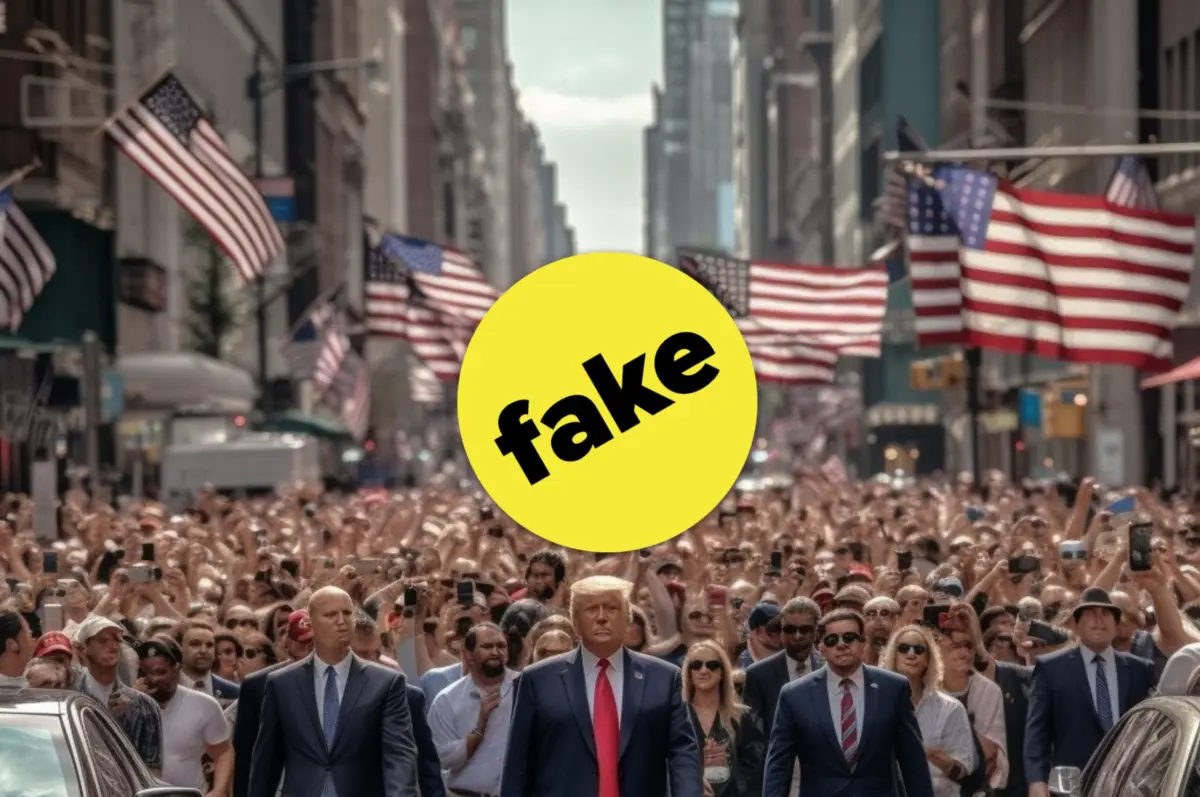
- Early 2023: Synthetic images achieve photorealistic parity. Viral hoaxes—such as a fabricated photo of Pope Francis wearing a luxury puffer jacket and staged images of Donald Trump’s dramatic arrest—sweep across major social platforms, achieving millions of views before being debunked.
- Spring 2023: Following sweeping corporate restructuring, massive layoffs hit trust and safety teams across Silicon Valley. Twitter (subsequently rebranded as X) abandons legacy verification models in favor of a paid subscription system, fundamentally obscuring account credibility and making it exceedingly difficult for users to distinguish legitimate journalistic entities from bad actors.
- Current Day: A perpetual cat-and-mouse game ensues. Startups launch detection APIs, bad actors continuously refine their prompting techniques to bypass those filters, and the average internet user is left adrift in a sea of unverified, emotionally manipulative synthetic media.
Supporting Context & Metrics: The Scale of the Synthetic Threat
The challenge of generative AI is not merely technical; it is an existential stress test for human cognition and institutional trust. Quantitative data and qualitative observations paint a stark picture of a digital environment under siege.
The Democratization of Deceit
The speed at which generative models have evolved surpasses almost all regulatory and technical foresight:
- In 2018, generating a recognizable, semi-coherent face required specialized hardware, programming knowledge, and hours of rendering time.
- By 2024, a user can generate a photorealistic image of a geopolitical crisis, a financial market crash, or a public health catastrophe in under four seconds via a smartphone app.
The Limits of Detection Technologies
In response to this crisis, a new ecosystem of detection tools has materialized. Platforms like Optic.xyz allow users to upload files to scan for artifacts, cryptographic watermarks, or algorithmic signatures left behind by diffusion models. Yet, experts emphasize that none of these tools are foolproof.
Generative models adapt faster than detectors can be updated. When a detection algorithm learns to flag specific pixel anomalies or lighting inconsistencies, bad actors utilize newer open-source models or adversarial training loops to eliminate those exact tells.
Consequently, internet users are forced to rely on visual heuristics:
- Anatomical Aberrations: Historically, AI struggled immensely with human hands, frequently rendering extra fingers, deformed knuckles, or anatomically impossible grips. While newer models have improved, complex interactions between hands, faces, and objects remain a primary giveaway.
- Architectural and Textual Inconsistencies: Background elements—such as asymmetrical glasses frames, warping text on signs, illogical architectural geometry, or inconsistent shadow directions—often betray synthetic origins.
- The "Too Good to Be True" Rule: As a general heuristic for digital media consumption, if an image immediately evokes an extreme emotional reaction (outrage, panic, awe) and aligns too perfectly with a partisan narrative, it warrants intense skepticism.
Official Statements and Expert Analysis
The failure of major platforms to stem the tide of synthetic disinformation has drawn sharp rebukes from legal scholars, cybersecurity experts, and media watchdogs.
Kayla Gogarty, deputy research director at Media Matters for America, offered a blunt assessment of the current regulatory vacuum in an interview with BuzzFeed News:
"As there has been a recent rise of AI-generated media, it has become clear that platforms are unprepared for this moment in which fake images and misinformation could lead to real-world harm. Particularly concerning is Twitter, as Elon Musk has abandoned much of the platform’s content moderation and it has become difficult to determine account credibility under the new checkmark policy."
This sentiment is echoed across the cybersecurity and intelligence communities. Intelligence agencies globally have warned that foreign state-sponsored actors and domestic extremist groups are actively weaponizing generative AI to seed discord during electoral cycles. By flooding information ecosystems with contradictory "facts" and manufactured visual evidence, bad actors seek not necessarily to convince people of a specific lie, but to induce a state of generalized cynicism where the public ceases to believe in any objective truth.
Industry insiders note that while platform policies formally prohibit deceptive synthetic media, the economic and operational incentives of social media companies actively reward engagement—regardless of whether that engagement is driven by authentic discourse or viral deception. Algorithmic feeds prioritize outrage and novelty, making AI-generated hoaxes ideal vectors for platform growth, even as they erode societal cohesion.
Future Outlook: Navigating the Post-Truth Era
As humanity looks toward the horizon of the artificial intelligence revolution, the trajectory of synthetic media presents profound questions regarding the future of democracy, journalism, and human trust.
1. Technological Countermeasures: Provenance and Watermarking
To combat the crisis, technologists and policymakers are increasingly turning toward cryptographic content provenance. Initiatives like the Coalition for Content Provenance and Authenticity (C2PA) are working to embed tamper-evident metadata into digital cameras and editing software, allowing consumers to trace an image’s chain of custody from capture to publication. While promising, open-source AI models generated locally on private computers can easily bypass these centralized watermarking protocols, necessitating robust enforcement and decentralized verification standards.
2. Regulatory Interventions and Legal Frameworks
Governments worldwide are beginning to draft legislation targeting unlabelled synthetic media, particularly in political advertising. Proposals range from mandatory watermarking laws and platform liability reforms to criminal penalties for using deepfakes to manipulate elections or commit financial fraud. However, legislative bodies often move at a glacial pace compared to the exponential curve of technological advancement, leaving a dangerous regulatory gap.
3. The Resurgence of Verified, Legacy Journalism
In an era where digital imagery can no longer be taken at face value, the value of trusted, verified journalistic institutions has never been higher. As media literacy advocates point out, outsourcing truth to social media algorithms is no longer viable.
Consumers must fundamentally alter their digital habits. Whether evaluating viral images of political figures, breaking news alerts, or sensational social media posts, audiences must default to rigorous verification: running suspicious assets through dedicated detection tools, cross-referencing claims against established newsrooms, and resisting the urge to amplify unverified media.
As Andrey Doronichev warns, the stakes could not be higher. Preserving the integrity of public discourse requires an active, coordinated defense from technologists, regulators, journalists, and everyday citizens alike. In the post-truth era, vigilance is the ultimate line of defense for democracy.