Executive Overview
It has been a tumultuous era of transition for development teams housed under the expansive Xbox corporate umbrella. Among them, Undead Labs has faced a uniquely uncertain period, navigating ownership restructuring amidst a broader corporate "Xbox reset." These sweeping structural changes naturally provoked intense community anxiety regarding the future of its flagship zombie-survival epic, State of Decay 3. Doubts loomed large over whether the ambitious sequel would ever successfully emerge from development purgatory to see the light of day.
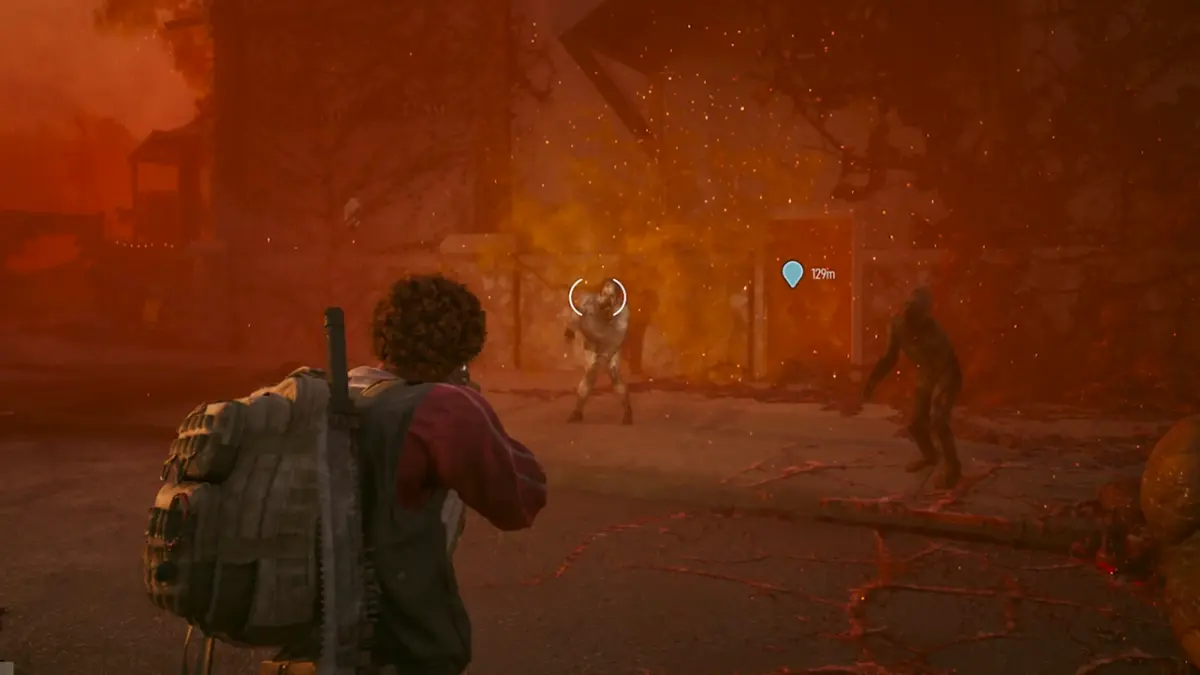
However, stepping onto the bustling show floor at Gamescom 2026 provided definitive reassurance. Having spent an exclusive 30 minutes going hands-on with an early alpha build of State of Decay 3, the immediate verdict is overwhelmingly positive. Even in its rough-around-the-edges, pre-beta state, the demo showcased remarkable promise. It offered a thrilling taste of deeply improved gunplay, modernized traversal mechanics, and a palpable atmosphere that feels entirely worthy of current-generation hardware while staying intensely faithful to the core survival-simulation fundamentals that defined the franchise.
Far from a simple graphical update, State of Decay 3 looks poised to redefine the delicate balance between high-stakes third-person action and intricate community management. With a targeted closed beta scheduled for late 2026 and a full commercial release slated for 2027 across Xbox Series X|S, PlayStation 5, and PC via Steam, Undead Labs is positioning its next major release to launch stronger, deeper, and more mechanically refined than any of its predecessors.
Detailed Chronology: Going Hands-On with the Alpha at Gamescom 2026
Evolving the Community and Base-Building Pillars
At its heart, the State of Decay franchise has never been a straightforward corridor shooter or traditional open-world action game. It is, and always has been, an unforgiving exercise in community management and base-building. In State of Decay 3, these foundational mechanics have not only returned but have been systematically expanded and woven more deeply into the moment-to-moment gameplay loop.
During the hands-on session, it immediately became clear that structural progression within your settlement is far less rigid than before. Facilities and buildings no longer adhere to predictable, linear upgrade paths. Instead, players can specialize their infrastructure through branching upgrade trees tailored to specific operational needs.
Equally vital is the human element: assigning the right survivor to the right job. For instance, placing a character equipped with medical perks or background traits into the infirmary directly accelerates the recovery rate for wounded or sick survivors. This introduces a strategic layer of management that forces players to carefully audit their roster before committing personnel to projects or dangerous field missions.
The Granular Trait System and Procedural Personalities
The depth of the settlement simulation is amplified tenfold by a dramatically more granular trait system. Every procedurally generated character in State of Decay 3 arrives with a distinct array of perks, quirks, and psychological tendencies that actively evolve over time based on their experiences.
- The High-Maintenance Brawler: One survivor encountered in the demo possessed the "takes long showers" trait. While this behavioral quirk drained the community’s water reserves at an accelerated rate, making him a high-maintenance resident, he was concurrently an absolute powerhouse in melee combat. Players must constantly weigh whether his substantial upkeep is justified by his utility during dangerous scavenging runs.
- The Fragile Sharpshooter: Another character showcased specialized sniper training, granting innate damage boosts to long-range firearms and pinpoint accuracy for headshots. However, she was inherently more injury-prone. When paired with the game’s new, highly granular injury system—which calculates kinetic damage down to specific body parts and applies localized debuffs like impaired movement speed or shaky weapon handling—managing her placement in the field becomes a tense risk-versus-reward calculation.
When commanding a burgeoning community of over 30 distinct characters, accounting for these competing traits transforms base management into a deeply compelling psychological chess match. Deciding who stays behind to secure the perimeter and who risks their life in the field carries tangible, persistent weight.
Strategic Map-Wide Territory Control and Infestation Networks
Survival in State of Decay 3 extends far beyond the walls of your home base. The expansive open world is heavily populated by towns, industrial facilities, and vital points of interest, all bound together by a living, breathing network of infestations.
Opening the tactical map reveals pulsing infestation networks spreading across the landscape, creeping outward to infect adjacent towns and settlements. To stem the tide, players must actively hunt down and eradicate these plague nests and infested hotspots.
These locations function almost like organic dungeons:
- Locating the Core: Deep within a facility—whether buried beneath a medical clinic or nested in the greasy garage of an auto-shop—lies the heart of the infestation.
- Exposing Weak Points: Players must locate and destroy four distinct weak points scattered across the perimeter of the infestation zone.
- The Final Breach: Once exposed, damaging the pulsating heart triggers an absolute tidal wave of chaos. Bloaters, juggernauts, and standard shamblers swarm the area simultaneously.
- The Purge: Pumping remaining ammunition into the core while fighting off the horde is heart-pounding. Upon destroying the heart, however, the localized zombie threat collapses, and the remaining undead instantly perish.
This dynamic creates a constant, satisfying gameplay loop of map-wide territory control. Undead Labs has engineered an ecosystem where cleared zones are never permanently safe; infestations will inevitably regenerate, and persistent sieges will test the defensive fortitude of established settlements.
Supporting Context & Metrics
To fully appreciate the trajectory of State of Decay 3, it is necessary to examine the technical and structural evolution of the franchise alongside modern survival-genre metrics.
Combat and Mechanics Breakdown
| Feature | State of Decay 2 (Legacy) | State of Decay 3 (Alpha Build) |
|---|---|---|
| Gunplay Feel | Functional, standard third-person shooting | Smoother, punchier, with tactile feedback (e.g., AK-47 drum mags, silenced headshots) |
| Traversal Options | Basic jogging, climbing, and vehicle use | Expanded with sliding maneuvers to knock down zombies and execute instant finishers |
| Infestation System | Localized zombie sources | Dynamic, branching networks that spread across adjacent towns and require strategic dismantling |
| Character Traits | Static perks affecting basic stats | Evolving traits with behavioral consequences (e.g., resource consumption, targeted injuries) |
| Multiplayer Scope | Tethered co-op sessions with distance limits | Seamless, drop-in/drop-out co-op with zero open-world exploration boundaries |
The Evolution of Third-Person Combat
Beyond the macro-level simulation of resource management and territory control, the moment-to-moment action in State of Decay 3 represents a generational leap forward. The gunplay is noticeably smoother, punchier, and far more responsive than in past entries. During the demo, wielding an AK-47 fitted with a drum magazine yielded a satisfying mechanical heft when cutting down advancing crowds, while a silenced pistol allowed for clean, high-precision one-tap headshots.
Tactical options have likewise diversified. Players can actively bait groups of undead toward environmental hazards—such as spilling and igniting pools of flammable oil—or utilize stealth mechanics to quietly thin out the herd before open combat erupts. A newly introduced running slide allows players to physically knock weaker zombies off their feet before delivering a swift execution, keeping standard melee combat dynamic and engaging. Coupled with character-specific combat proficiencies, State of Decay 3 legitimately functions as a competent third-person shooter without sacrificing the strategic depth of its survival simulation roots.
Official Statements and Industry Context
The journey of State of Decay 3 has been shaped heavily by broader corporate recalibrations within Microsoft and Xbox. Following reports regarding Undead Labs changing ownership structures amid the broader "Xbox reset," communication from the studio had understandably slowed. However, leadership has remained steadfast in ensuring the project’s long-term health over rushed deadlines.
Speaking on the developmental philosophy behind the upcoming sequel, members of the Undead Labs team highlighted the implementation of a sophisticated dynamic difficulty system. Designed to scale intelligently based on player performance, this system prevents frustration without removing tension; it dials back the pressure if a player repeatedly fails a specific encounter, while ramping up the heat when resources are abundant.
Furthermore, Undead Labs has formally confirmed plans for a closed beta playtest toward the end of 2026. This initiative will allow the developers to stress-test the game’s drop-in/drop-out co-op infrastructure—which notably features zero restrictions on how far apart players can wander across the open world—while gathering vital telemetry data to smooth out the technical rough edges observed in the current alpha build.
Future Outlook: Looking Toward 2027
As the industry looks ahead, the pressure on Undead Labs to deliver a polished, feature-complete experience is immense. State of Decay 2 famously required years of dedicated post-launch support and numerous expansions to evolve into the robust, beloved survival sandbox it is today. The ultimate promise of State of Decay 3 is that it aims to bypass that protracted maturation period, launching straight out of the gate with a level of mechanical depth, graphical fidelity, and gameplay variety that meets modern expectations from day one.
The integration of map-wide territory control, granular character traits that directly impact settlement survival, and punchy, responsive third-person combat creates a powerful synergy. If Undead Labs can successfully marry the intense micromanagement of a survival simulator with the visceral thrills of large-scale zombie eradication, State of Decay 3 will easily justify the agonizing wait.
Fans won’t have to wait indefinitely to experience it for themselves. With closed beta playtests locked in for late 2026 and a full commercial launch anticipated in 2027 for Xbox Series X|S, PlayStation 5, and PC via Steam, the apocalyptic horizon is finally clearing.
As Gamescom 2026 continues to yield exciting revelations, be sure to explore IGN’s extensive slate of hands-on previews, including our first impressions of Fable’s combat, the gripping campaign of Gears of War: E-Day, and the haunting atmospheric world of Metro 2039.