Executive Overview
The intersection of avant-garde manufacturing technology and everyday streetwear has reached a new inflection point. Earlier this year, sportswear titan adidas disrupted the footwear landscape with the introduction of Climacool—a revolutionary, fully 3D-printed silhouette engineered from the ground up for maximum breathability and constructed as a single, seamless structural piece. Now, the Three Stripes is rapidly accelerating this trajectory with the introduction of Futurecool.
Where its predecessor focused heavily on the raw mechanics of airflow and monolithic construction, Futurecool pushes the technological boundaries of additive manufacturing into a more fluid, sculptural domain. It is a silhouette purpose-built to bridge the gap between high-performance laboratory innovation and the demands of a contemporary daily wardrobe.
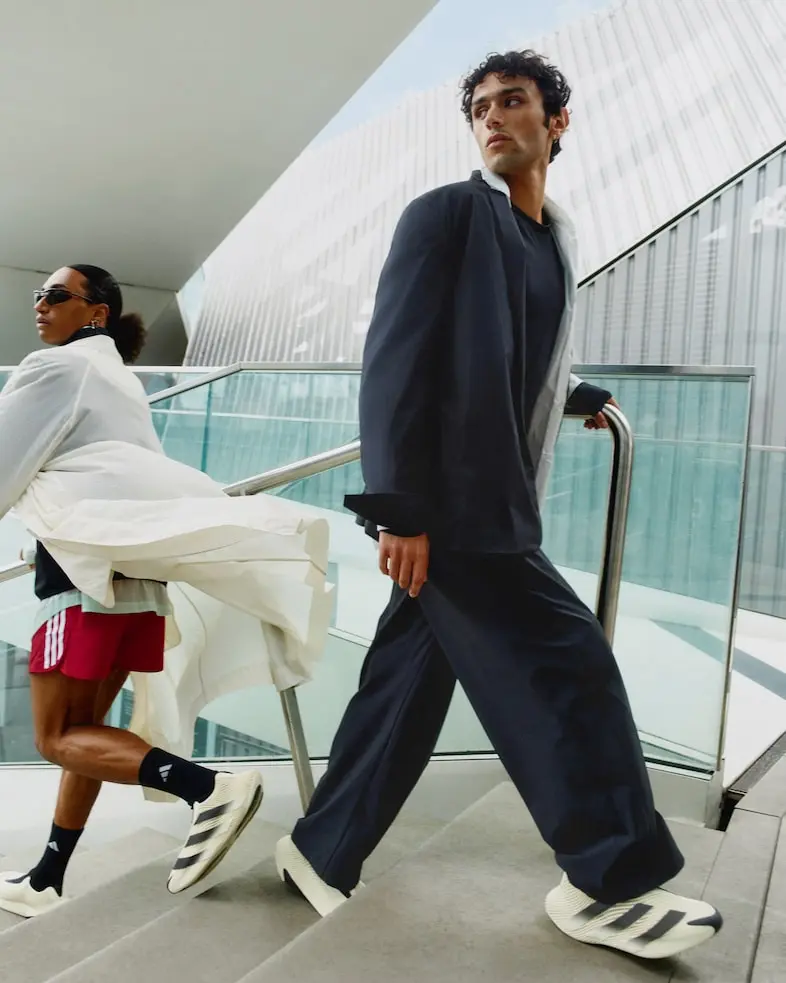
To mark the global arrival of this groundbreaking silhouette, adidas partnered with Dazed Studio to conceptualize and execute a definitive campaign. Moving the sneaker out of sterile clinical environments and into the vibrant, unpredictable ecosystem of modern fashion, the campaign—photographed by Simon Birk—explores the vast stylistic territory unlocked by a shoe that fundamentally challenges traditional footwear design.
Behind the lens, Dazed’s Senior Fashion Editor-at-Large Mirko Pedone orchestrated a styling masterclass, integrating the sculptural sneaker into diverse menswear, womenswear, and smart-casual contexts. In this comprehensive report, we examine the technological genesis of the Futurecool, dissect the creative vision behind its debut campaign, analyze Pedone’s styling breakdowns, and look ahead to the pivotal release metrics governing its impending global rollout.
Detailed Chronology
The evolution of adidas’s advanced 3D-printed footwear program represents a systematic march toward commercial scalability and aesthetic integration. Understanding the arrival of Futurecool requires mapping the precise timeline of technological milestones that brought the brand to this juncture.
Phase 1: The Incubation of Additive Manufacturing
For years, footwear manufacturing relied on decades-old paradigms: multi-piece upper construction, synthetic mesh paneling, structural glue bonding, and extensive global supply chains prone to labor bottlenecks. Adidas began disrupting this status quo years ago through exploratory programs like Futurecraft and the 4D lattice midsole. However, these early iterations largely served as hybrid models—combining futuristic midsoles with conventional textile uppers. The true holy grail of footwear engineering remained a completely unified, mono-material, 3D-printed shoe that could deliver both ergonomic comfort and high-level structural integrity.
Phase 2: The Climacool Breakthrough
The breakthrough materialized earlier this year with the debut of the adidas Climacool. Built as a fully 3D-printed shoe, the Climacool was engineered primarily around thermodynamic principles—specifically, hyper-optimized breathability. By utilizing advanced digital light synthesis and selective laser sintering techniques, adidas successfully fabricated a shoe made into one seamless, structural piece. There were no glued seams, no stitched overlays, and no traditional lasting processes. While widely praised by footwear connoisseurs and tech enthusiasts alike, the Climacool retained a distinctly technical, futuristic aesthetic that naturally aligned with athletic or hyper-futuristic styling contexts.
Phase 3: The Evolution to Futurecool
Recognizing the massive appetite for sculptural footwear that transcends running tracks and techwear conventions, adidas initiated the development of Futurecool. While retaining the structural wizardry and seamless integrity of its predecessor, Futurecool introduces a more organic, sculptural silhouette. The lines are softer, the profiles more adaptable, and the volume calibrated to harmonize with traditional tailoring, vintage technical gear, and contemporary streetwear alike. It represents the maturation of 3D printing from a novelty-driven engineering showcase into a versatile, lifestyle-compatible medium.
Phase 4: The Dazed Studio Campaign Collaboration
To translate this technical leap into a cultural narrative, adidas tapped Dazed Studio. The objective was clear: extract the Futurecool from the lab environment and place it squarely in the hands of high-fashion stylists. Shot by acclaimed photographer Simon Birk, the campaign focuses on motion, juxtaposition, and versatility. By styling the sneaker across radically different environments—from high-end tailoring to technical streetwear—the imagery demonstrates that the shoe’s unique aesthetic is not a limitation, but an invitation for creative experimentation.
Supporting Context & Metrics: The Anatomy of Modern Footwear
To fully appreciate the significance of the Futurecool, one must examine the broader socio-economic and technological shifts currently transforming the global footwear industry. Additive manufacturing is no longer a peripheral R&D experiment; it is rapidly becoming a primary pillar of sustainable, localized production.
The Rise of Mono-Material Architecture
Traditional sneakers are notorious for their environmental lifecycle challenges. A standard running shoe often comprises dozens of different materials—various synthetic rubbers, ethylene-vinyl acetate (EVA) foams, nylon meshes, polyester threads, and chemical adhesives—making mechanical recycling nearly impossible without complex chemical separation processes.
The 3D-printed architecture pioneered by adidas in the Climacool and refined in the Futurecool addresses this issue at the root. By constructing the silhouette as a single structural piece using advanced elastomeric polymers, adidas moves closer to a fully circular lifecycle. Monolithic printing reduces material waste during manufacturing to near zero, as excess powder or resin is systematically captured and reused within the closed-loop production cycle.
The Shift Toward Sculptural Minimalism in High Fashion
The consumer mindset regarding footwear has undergone a profound psychological shift over the past half-decade. Driven by fatigue with ubiquitous retro runners and oversaturated hype cycles, consumers are increasingly gravitating toward architectural, alien, and sculptural silhouettes.
Footwear has become the primary canvas for personal expression, often anchoring an entire outfit by defying conventional design expectations. The Futurecool capitalizes on this cultural appetite. Its complex, lattice-like exterior and fluid geometry give it an organic presence that feels simultaneously ancient and futuristic. It does not mimic leather or canvas; it proudly asserts its digital, additive lineage.
Official Statements & Expert Styling Breakdown
The core philosophy driving the Futurecool launch campaign is versatility. To explore this, Dazed’s Senior Fashion Editor-at-Large Mirko Pedone adopted an instinctive, organic approach to styling, deliberately steering away from predictable athletic pairings.
The Styling Philosophy of Mirko Pedone
Reflecting on the collaborative process, Pedone emphasizes the historical versatility of the adidas archive while assessing the unique challenges of the Futurecool silhouette.
"The great thing about adidas products is that, throughout history, they have been very versatile," Pedone explains. "It’s always great to see how one item can be styled in different ways and in different contexts, so it was a fun challenge to approach this."
Rather than leaning into lazy athletic tropes—such as pairing a futuristic runner exclusively with track pants or matching gym gear—Pedone sought out high-fashion counterpoints, vintage archival pieces, and conceptual tailoring by emerging London designers.
"I myself style adidas with more fashionable pieces that are not sporty, and so do my friends and all the people who have a remarkable style that I admire," Pedone notes. "It was important that the final looks had the same feeling and showed the versatility of the shoe."
Below is Pedone’s definitive breakdown of the three core looks featured in the campaign:
1. Menswear: The Technical Short Debate
"For one of the men’s looks, the red shorts were the highlight: one of the trendiest pieces of men’s clothing of the season and relevant to the whole ‘debate’ about how long (or short) men’s shorts should be—I think the adidas shorts are definitely the right benchmark. Layered lightweight technical fabrics with a pop of colour for the tops: a coat, a windbreaker and a shirt to be styled and mixed freely."
This look tackles contemporary menswear discourse head-on. By anchoring the bold, sculptural Futurecool sneaker with polarizing micro-shorts, Pedone plays with proportion. The juxtaposition of heavy, layered lightweight technical outerwear (coat, windbreaker, and shirt) against exposed legs and an alien-like 3D-printed shoe creates a high-low tension that defines modern streetwear.
2. Womenswear: Elevated Sport & Archival Heritage
"For the women’s look, I tried different options in the fitting, but in the end we decided to go with the look that felt the most effortless and relatable. It’s a sporty but more elevated look. The orange top is a vintage Stone Island technical top courtesy of the SI archive Arco Maher in London."
In developing the womenswear focal point, Pedone resisted over-styling in favor of raw, effortless wearability. By integrating a rare archival piece—a vibrant orange vintage Stone Island technical top sourced from London’s renowned Arco Maher archive—the outfit establishes a bridge between heritage technical outerwear and cutting-edge footwear innovation. The result is a refined, utilitarian elegance that feels completely natural in an urban setting.
3. Smart-Casual: Deconstructed London Tailoring
"The other approach for the men’s look was to build some sort of ‘smart’ look that did not feel too literal or too formal and forced with the shoe. Lightweight technical fabrics were again core for this, and some of the most promising young designers in London had exactly what I was looking for.
An unlined lightweight technical blazer from Keogh Dewar and a sheer technical white shirt from Luca Fabry mixed with some adidas helped me bring this look to life. The general brief was muted colours with pops of colour peppered through, so I decided to add a rubber Luca Fabry belt that gave the look a unique, playful and quirky twist."
This ensemble represents the zenith of contemporary smart-casual dressing. By deliberately avoiding a traditional, stiff suit—which would violently clash with the organic futurism of the Futurecool—Pedone turned to London’s vanguard design talent. The unlined technical blazer from Keogh Dewar offers structure without rigidity, while Luca Fabry’s sheer technical white shirt and quirky rubber belt introduce textural depth, transparency, and a touch of subversive playfulness.
Future Outlook & Release Information
As the fashion world digests the visionary styling of the Dazed Studio campaign, attention now shifts to the commercial availability of the silhouette. The adidas Futurecool is poised to become one of the most sought-after releases in the brand’s modern history, representing a critical stepping stone in the democratization of 3D-printed footwear.
The Road to the Global Launch
While the Climacool established the technical baseline for fully printed footwear, the Futurecool acts as the lifestyle ambassador for the technology. Its expanded sculptural possibilities prove that additive manufacturing is no longer confined to niche running applications; it is a viable, highly coveted aesthetic category capable of commanding space in luxury boutiques and high-fashion wardrobes alike.
How to Secure a Pair
For enthusiasts eager to experience this technological marvel firsthand, adidas has structured an exclusive early-access rollout ahead of the official worldwide debut.
- Exclusive Early Access Raffle: Collectors and early adopters will have their first opportunity to secure a pair prior to the official global rollout. The exclusive adidas raffle opens on August 28.
- Platform: Entries must be submitted digitally via the official CONFIRMED app.
- Global Release Date: The silhouette will see its full, widespread international rollout in April 2027.
As additive manufacturing continues to evolve, silhouettes like the Futurecool serve as a clear signpost for the future of apparel and footwear design. By dismantling the barriers between technical engineering, high fashion, and everyday wear, adidas—alongside creative collaborators like Dazed Studio and Mirko Pedone—is not merely releasing a new shoe; they are actively sculpting the landscape of tomorrow.
To explore the full campaign imagery and discover deeper insights into the technological architecture of the Futurecool, visit the official adidas platforms and check out the complete gallery featured above.