Executive Overview
For decades, the prevailing narrative surrounding digital content creation has painted a portrait of youth, boundless high-energy performance, and an innate, almost theatrical comfort with the camera. Midlife professionals—consultants, educators, sales veterans, and industry specialists—have frequently looked at the sprawling ecosystem of YouTube and arrived at a self-defeating conclusion: It is simply too late to start, and I am not built for this.
According to YouTube growth strategist Ty Myers, who co-created a comprehensive masterclass alongside industry veteran Michael Stelzner, that perspective is entirely backward. The core competency required to succeed on YouTube is not theatrical exuberance; it is the ability to diagnose a specific consumer pain point and articulate a clear, actionable solution. These are precisely the skills that midlife professionals have spent decades refining in boardrooms, consulting sessions, and client meetings.
Rather than chasing fleeting viral trends or trying to appeal to a universal demographic, modern channel growth relies on a calculated, business-first architecture. By shifting focus away from expensive gear and spontaneous recording, and redirecting energy toward rigorous pre-industrial research, audience profiling, and value-driven conversion mechanics, creators can transform a stagnant channel—or an unlaunched idea—into a sustainable engine for high-ticket client acquisition.
Detailed Chronology: The Four-Phase Startup Framework
Building a sustainable YouTube presence requires transitioning away from ad-hoc uploads and treating the platform as a sophisticated distribution and funnel system. Ty Myers outlines a four-step framework that separates channels that stall out in obscurity from those that build lasting market authority.
Phase 1: Establish Absolute Strategic Clarity
The starting point for any commercial channel is absolute clarity regarding its mission. Creators must define whether the ultimate objective is lead generation, high-ticket consulting acquisition, product sales, or building domain-specific thought leadership. Ambiguity is the single greatest catalyst for channel stagnation. Channels that attempt to appeal to a broad, generalized audience ultimately fail to resonate with anyone. Your mission dictates everything downstream: content strategy, keyword optimization, and how key performance indicators are evaluated.
Phase 2: Define the Ideal Viewer Avatar
Once the foundational mission is secure, creators must map out their specific "avatar"—the precise individual the channel seeks to assist. This involves detailing their deepest fears, core desires, friction points, and ultimate financial or professional outcomes.
This specificity must permeate every layer of production, from titles and thumbnails to the spoken script. The YouTube algorithm parses every word of an uploaded video’s transcript while cross-referencing the viewing habits of every active user. When a video signals precisely who it is for, the algorithm’s distribution mechanics can accurately match it with viewers most likely to convert.
Phase 3: Embrace the "Rep" Phase
Perfectionism—particularly acute among high-achieving professionals transitioning from established careers—frequently strands creators at the starting line. Myers advocates for a "quantity-first" approach to the initial catalog of videos. Creators must push past early discomfort to log raw repetitions. Typically, it is around the 15-video mark that creators begin to relax on camera, allowing their authentic personality and professional authority to emerge naturally.
Phase 4: Pivot From Volume to Distribution Leverage
Once initial workflows are stabilized and the first 15 videos are published, the operational focus must pivot. Creators stop merely logging reps and begin studying YouTube as a robust distribution network. Analyzing high-performing outliers within a specific niche allows creators to understand what structural elements, pacing, and hooks drive engagement, shifting the channel from a hobbyist project to a high-leverage business asset.
Supporting Context & Metrics: Mastering Pre-Production and the 80/20 Rule
The most common operational failure among creators at every tier of experience is allocating time incorrectly. Creators frequently spend 90% of their weekly bandwidth scripting, filming, and editing, while treating titles and thumbnails as an afterthought.

According to platform data, a video’s topic, title, and thumbnail account for roughly 80% of its ultimate performance. A brilliantly executed, professionally edited video that fails to secure a click is worthless. Conversely, a modestly produced video built around high-demand search intent, a sharp title, and a compelling thumbnail will consistently outperform polished content that lacks strategic framing.
The 10-Hour Weekly Allocation Model
For a creator operating on a disciplined 10-hour weekly schedule, Myers prescribes a heavy front-loading of labor:
- 6 Hours: Dedicated entirely to pre-production—analyzing market trends, testing title variations, sketching thumbnail concepts, and validating topic viability before investing a single minute into production.
- 4 Hours: Split between script generation, recording, and post-production.
Validating Demand via Data Tools
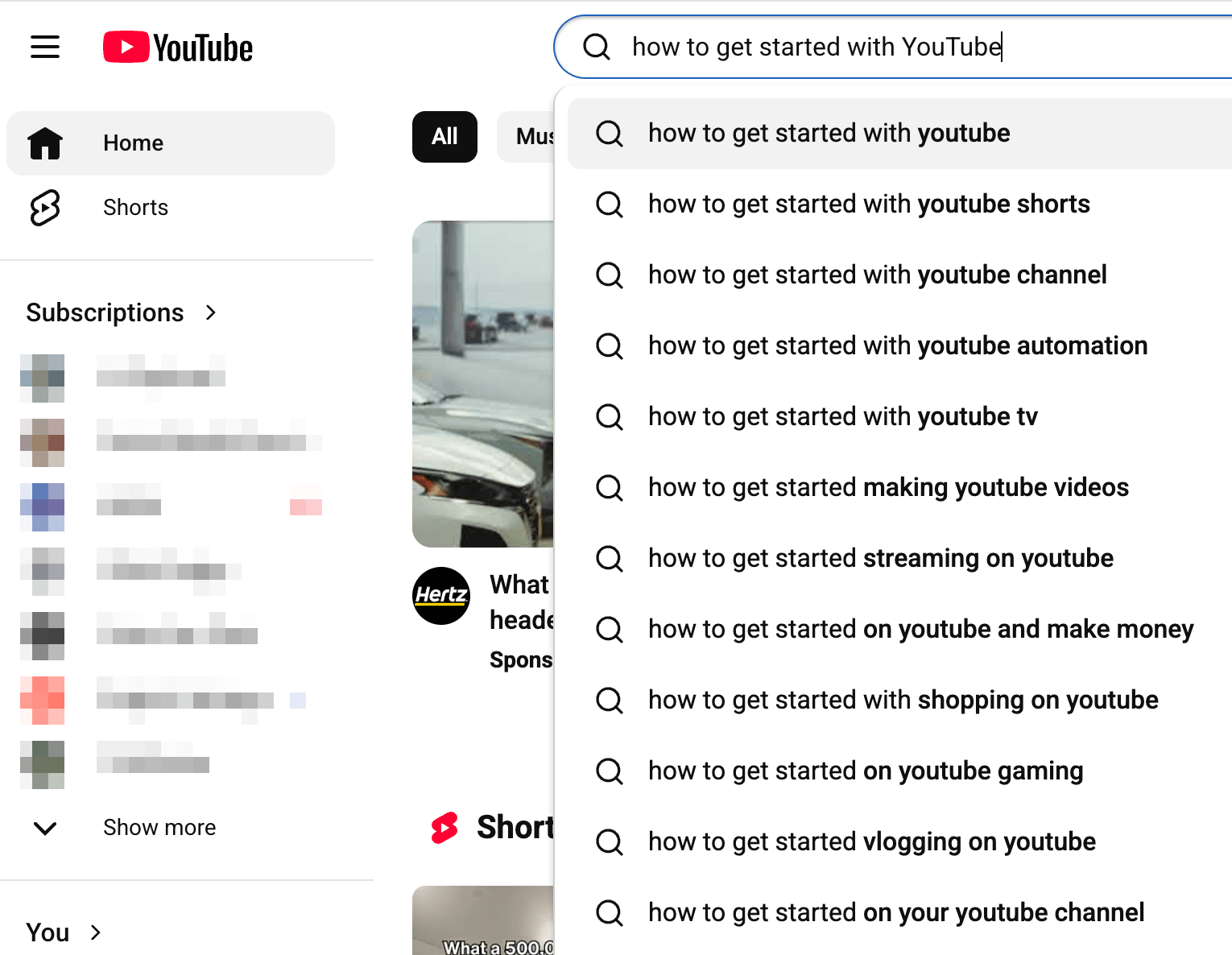
Pre-production begins by working backward from the viewer avatar. Utilizing software tools like VidIQ, creators can input broad topic ideas to extract monthly search volume metrics and evaluate competing phrasings. Long-tail keyword variations often yield insufficient data, requiring iterative adjustments until identifying terms that audiences are actively seeking out.
Furthermore, analyzing the view trajectory of competitor videos reveals critical insights. If top-performing videos on a given topic are several years old, the subject may be exhausted. However, if recent videos exhibit steady, compounding view trajectories rather than a one-time spike, it signals persistent, long-term audience demand—the precise foundation required for durable content creation.
Official Statements and Methodological Insights
To illustrate how theoretical research translates into real-world channel transformations, Myers points to the evolution of Kevin, founder of the Ask PawPaw YouTube channel.
Initially, Kevin produced conventional financial literacy content focusing on retirement budgeting, Health Savings Accounts (HSAs), and complex investment vehicles for near-retirees. Despite high production standards, the content stagnated. Audience engagement was low, and subscriber growth remained flat.
Through rigorous outlier research, Myers identified a massive surge in alternative housing content—specifically tiny home shed conversions. Creators were walking through simple displays in hardware store parking lots, detailing square footage, base pricing, and feasibility, generating hundreds of thousands of views with minimal production overhead.
"Go to a local lot, record what you are seeing, break down the square footage and pricing, and discuss whether it is a viable path for your demographic," Myers advised.
Kevin executed the pivot, shifting his entire channel architecture toward tiny home shed conversions and land acquisition strategies for retirees. The content resonated immediately, aligning real market demand with accessible, highly engaging visual narratives.
Future Outlook: Artificial Intelligence Integration and Conversion Mechanics
As digital platforms evolve, the integration of advanced artificial intelligence tools is fundamentally reshaping how creators handle research and scripting.

AI-Assisted Research and Scripting
Modern creators are leveraging systems like Google NotebookLM to ingest dense academic studies, executive interviews, and industry reports, synthesizing complex data into structured briefing documents. For scripting, tools like Claude—when paired with integrated market research extensions—allow creators to move beyond generic, templated phrasing.
Rather than commanding an AI to "write a script about marketing," top creators use conversational prompting. The AI interviews the creator one question at a time about personal anecdotes, counterintuitive professional experiences, and unique client analogies. This dialogue extracts the raw, authentic narrative material that separates expert-driven content from generic AI output.
Engineering the Conversion Funnel
For business owners utilizing YouTube as a client acquisition funnel, monetization rarely relies on AdSense revenue. Instead, conversion occurs through a dual approach:
- The Explicit Mid-Roll Call to Action (CTA): Strategically placed midway through a video, the creator directly ties the instructional content to professional coaching services, directing engaged viewers to a designated link in the description.
- The Subtle Narrative Reference: Throughout the video, the creator weaves in natural, passing references to ongoing client engagements and real-world case studies. This establishes passive market authority, ensuring that by the time an explicit offer is presented, trust has already been firmly cemented.
Maximizing Session Duration
To compound algorithmic distribution, advanced creators reject traditional sign-offs. Outro music and recap statements signal to the viewer—and to YouTube’s tracking systems—that the session is concluding.
Instead, top-tier channels transition directly from the final piece of instructional value into a compelling question answered exclusively in a subsequent video. By linking directly to an end-screen card, creators extend session duration, satisfying the platform’s distribution algorithms and creating a self-reinforcing loop of audience retention and commercial growth.