Executive Overview
When the House Committee on Energy and Commerce began preparing for a high-stakes, live-televised grilling of TikTok CEO Shou Zi Chew, lawmakers turned to an unexpected source for intelligence: the independent press. In the early morning hours of March 16, a congressional staffer emailed a prominent investigative journalist covering the platform, asking for a strictly confidential, full copy of a leaked internal document known as the "TikTok Master Messaging" PR playbook.
The request—which the journalist promptly and predictably declined in defense of source protection—highlights the frantic scramble within Capitol Hill to build a coherent case against one of the world’s most popular social media applications. It also underscores a profound disconnect between the political theater surrounding TikTok and the empirical reality uncovered by years of rigorous, shoe-leather reporting.
For years, investigative reporters have chipped away at the corporate edifice of ByteDance and its crown jewel, TikTok. They have exposed data-sharing oversights, invasive surveillance of journalists, workplace harassment, and aggressive corporate maneuvering. Yet, despite years of digging, accessing internal communications, and cultivating high-level whistleblowers, a definitive "smoking gun" connecting TikTok directly to direct espionage or operational control by the Chinese state has yet to materialize.
As lawmakers push aggressively toward a ban or forced divestment—spurred by political narratives born in the twilight of the Trump administration—the chasm between political rhetoric and verified investigative findings grows ever wider. This report explores the anatomy of the congressional inquiry, the reality behind the leaked documents, and the complex geopolitical landscape defining the fate of 150 million American users.
Detailed Chronology: The Email, the Refusal, and the Media Fallout
6:00 AM, March 16: An Unexpected Inquiry
The morning of March 16 began like any other for a veteran journalist who has made a career out of breaking stories on TikTok’s internal operations. Waking up to an inbox filled with pitches, reader feedback, and the occasional hostile message from critics convinced the platform is a Chinese puppet company, the morning routine took an abrupt turn.
The subject line of the email read: “TikTok Master Messaging Document.”
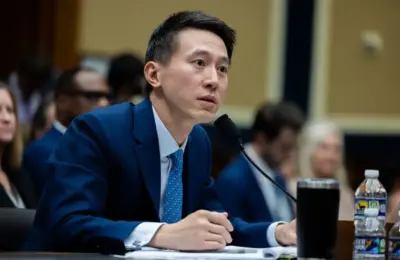
Initially expecting another grievance from a disgruntled observer, the journalist opened the message to find something entirely unprecedented. It was an outreach from an official staff member working on the House Committee on Energy and Commerce. The committee was feverishly preparing for the upcoming live grilling of TikTok CEO Shou Zi Chew.
According to the staffer, the committee had consulted various tech and geopolitical experts in the lead-up to the hearing. Several of those experts pointed directly to a previous investigative piece detailing the "TikTok Master Messaging" PR playbook—a series of internal documents outlining how the tech giant systematically sought to distance itself from its Chinese roots.
The committee’s proposition was direct: Would the journalist be willing to furnish the committee with a complete, unredacted copy of the leaked document? The staffer added the customary caveat of confidentiality, promising the transaction would remain strictly private.
The Journalistic Line in the Sand
The response from the journalist was immediate and unwavering. Not only did they refuse to hand over the document, but they also used the opportunity to request an exclusive interview with the chair of the committee ahead of the hearing—an interview request that went entirely unanswered.
The refusal was rooted in the bedrock principle of journalistic integrity: the sacred duty to protect confidential sources at all costs, regardless of who is demanding the material. Handing over internal leaks to a legislative body would poison the well for future whistleblowers, signaling that sensitive disclosures to the press could easily be funneled into government hands. Furthermore, the journalist expressed deep skepticism regarding how political actors might misinterpret or weaponize the complex nuance of internal corporate messaging playbooks.
Following the refusal, the journalist took to social media, publishing a screenshot of the email exchange while carefully redacting the staffer’s name to prevent online harassment or targeted backlash from digital mobs.
The PR Dread and Ongoing Investigations
Within the media ecosystem covering Big Tech, the journalist’s name invokes a distinct reaction from TikTok’s public relations department. According to colleagues within the tech beat, corporate representatives open emails from this specific reporter with palpable trepidation.
Unlike standard press inquiries that receive rehearsed, boilerplate corporate talking points, inquiries from this beat almost invariably concern internal policy updates, leaked memos, or unannounced product features that corporate communications teams were unaware had leaked.
Despite an active pipeline of upcoming investigative reports concerning the platform’s operations, the overarching focus remains anchored in documentation, behavioral patterns, and corporate governance—not because of a lack of trying to find deeper state-level connections, but because the evidence dictates the direction of the reporting.
Supporting Context & Metrics: What the Record Actually Shows
To understand the friction between Washington and TikTok, one must separate substantiated corporate misbehavior from unproven geopolitical anxieties. Years of independent investigative journalism—coupled with congressional disclosures—have painted a detailed portrait of a hyper-growth tech enterprise plagued by classic Silicon Valley-style overreach rather than foreign intelligence operations.
A Track Record of Hard-Hitting Revelations
The journalist in question is far from an apologist for the platform. Over the years, their reporting has systematically dismantled corporate narratives and exposed internal missteps:
- Data Transfers to China: Early reporting revealed that TikTok quietly routed personal data belonging to U.S. job applicants directly to China without adequate disclosure or informed consent.
- Commercializing the Algorithm: Investigations uncovered that ByteDance was actively packaging and selling its proprietary recommendation algorithm as a B2B product through a newly formed division called BytePlus, diffusing its core intellectual property across the global market.
- Diplomatic Overreach: Documents revealed instances where the U.K. government informed TikTok of the "strictly confidential" identity of the incoming Chinese ambassador to the United Kingdom, illustrating the unique diplomatic tightrope the company walked internationally.
- Suppressing Metrics: The journalist has repeatedly leaked internal user metrics, demographic breakdowns, and engagement numbers across the U.K., Germany, France, Italy, and Norway that corporate leadership preferred to keep out of the public eye.
- The "Heating" Feature: In a book published two years prior to broader mainstream reporting by Forbes, the author exposed the existence of TikTok’s "heating" button—a mechanism allowing administrators to artificially push specific content into the viral feeds of users outside standard algorithmic parameters.
- Data Security Flaws: The same book detailed how ByteDance left massive buckets of user data for Douyin (TikTok’s domestic Chinese sister app) completely exposed and unsecured on the open internet.
- Massive Influencer Payouts: Early transparency reports and book findings highlighted exorbitant marketing expenditures, including paying high-profile celebrities like Cardi B sums in the high six figures for a handful of promotional posts.
The Search for the "Smoking Gun"
Despite these significant revelations—alongside well-documented scandals, such as ByteDance employees improperly accessing data on American journalists and persistent reports of toxic workplace environments—the threshold for a state-sponsored security threat remains uncrossed.
The investigative reporter notes:
"Those tough stories won’t focus on the company handing over data to Chinese authorities, or security risks associated with its connection to the Chinese state. Because I haven’t found any evidence of either."
Having spoken to scores of current and former TikTok employees over the years in a relentless pursuit of a direct operational link to Beijing, the reality is sobering: no smoking gun has been found. While it is impossible to definitively prove a negative, the collective efforts of the world’s top investigative journalists have yielded plenty of corporate malfeasance, privacy oversights, and PR spin—but zero verified evidence of direct Chinese state command, control, or espionage pipelines.
Official Statements and Political Rhetoric: The Creation of a "Personal Fiction"
The current political fervor surrounding TikTok did not emerge in a vacuum. It is the direct downstream product of a concerted political narrative engineered during the Trump administration and carried forward with bipartisan fervor by lawmakers on both sides of the aisle.
The Trump Legacy and the Politics of Fear
In July 2020, the Trump presidential campaign launched targeted digital advertisements on social media platforms featuring blunt warnings: “TikTok is spying on you.”
This rhetorical framing transformed a complex software platform into a geopolitical Trojan horse. Politicians quickly realized that framing TikTok as a direct extension of President Xi Jinping’s apparatus provided an easy rallying cry. Lawmakers like Missouri Senator Josh Hawley and various House and Senate members elevated these unverified assertions into articles of faith.
Among the prevailing political fictions deeply embedded in Washington today:
- TikTok is a proven, existential security risk.
- TikTok is a direct puppet of the Chinese Communist Party.
- TikTok is a dormant Trojan horse, waiting for a signal from Beijing to disrupt Western critical infrastructure.
None of these claims have been validated by public intelligence or rigorous journalistic inquiry. Yet, when politicians on both sides of the aisle speak on the matter, they treat these assumptions as immutable, verifiable facts, utilizing them as the primary justification for legislation aimed at banning the app outright.
Irony in Policy: Adopting Authoritarian Tactics
In their zeal to punish TikTok, U.S. lawmakers have increasingly mirrored the very regulatory philosophies they routinely criticize in authoritarian regimes. Rather than fostering open enterprise and demanding transparent, market-based compliance from a company that has repeatedly bent over backward to address national security concerns—such as through Project Texas, its multi-billion-dollar U.S. data isolation initiative—lawmakers have embraced a framework of preemptive crackdowns and heavy-handed censorship disguised as national security.
Future Outlook: The Congressional Hearing and the Fate of 150 Million Americans
As the dust settles on congressional posturing and administrative maneuvers, the fundamental reality of the platform remains unchanged: TikTok is an entrenched cultural and economic force deeply woven into the daily lives of 150 million Americans.
What to Expect from Legislative Showdowns
Congressional hearings involving tech executives have a well-established pattern. They routinely generate an immense amount of political heat while shedding very little light on technical realities.
Viewers can reliably anticipate:
- Corporate Defense: Shou Zi Chew and TikTok representatives will reiterate that the company operates independently, stores U.S. user data on American soil under the watchful eye of domestic monitors (Oracle), and maintains no operational ties to the Chinese government.
- Congressional Bluster: Lawmakers will dismiss these answers as evasive, framing corporate compliance measures as sophisticated deception tactics designed to placate regulators.
- The Policy Deadlock: Despite the intense theater, the underlying constitutional, logistical, and economic hurdles of executing a total nationwide ban remain staggering.
The Stakes for the Information Ecosystem
The ongoing saga surrounding TikTok serves as a cautionary tale about the intersection of media, geopolitics, and domestic legislation. When political institutions bypass empirical evidence in favor of emotionally resonant narratives, policy decisions are driven by fear rather than fact.
For the 150 million Americans who rely on the platform for community, small business marketing, education, and entertainment, the political posturing offers little reassurance. The real tragedy would not be the regulatory oversight of a massive social media company—which is entirely warranted given its scale—but the weaponization of unverified fictions to justify sweeping government overreach. As investigative journalists continue to dig into the truth behind the tech, the ultimate hope is that reason, evidence, and constitutional protections will prevail over political theater.