Executive Overview
In an era characterized by hyper-connectivity and unprecedented social isolation, the venture-backed startup Pie has unveiled its most ambitious attempt yet to rebuild the social fabric of local communities. Founded by Andy Dunn, the co-founder and former CEO of pioneering e-commerce brand Bonobos, Pie has officially launched "Community Homes"—a dedicated, permanent digital infrastructure designed to house real-world social groups. Released on Tuesday, this feature represents a strategic pivot for the platform, positioning it not merely as an event-discovery utility, but as a direct challenger to legacy communication tools like Facebook Groups, Discord, and disjointed group messaging threads.
Originally conceived in Chicago as an event-centric application, Pie has steadily quietly captured the attention of both users and elite venture capitalists. Backed by top-tier firms including Forerunner Ventures, Lightspeed Venture Partners, and Accel, alongside high-profile angel investors such as Twitter co-founder Ev Williams, the platform has grown to approximately 300,000 active users.
With the debut of Community Homes, Pie is attempting to solve a fundamental paradox of the modern internet: while social media has made virtual communication frictionless, it has simultaneously eroded the physical "third places" where meaningful, real-life relationships are forged. By offering structured, non-toxic, and highly localized digital hubs, Pie aims to turn digital interactions into real-world encounters, transforming the app from a simple directory of plans into a vibrant ecosystem of ongoing, self-sustaining communities.
Detailed Chronology: From Event Aggregator to Social Infrastructure
The launch of Community Homes is the culmination of a multi-year product evolution that reflects a deep understanding of shifting consumer behavior. To understand the significance of this update, one must trace the platform’s structural transitions:
[Chicago Launch] ──> [December Feed Pivot] ──> [Profile Personalization] ──> [Community Homes Launch]
(Event Discovery)     (People-First UX)         ("Favorites" Badges)         (Permanent Digital Hubs)
The Genesis: Event Discovery in Chicago
Pie was initially launched in Chicago as a solution to a localized problem: how to find interesting things to do in the city. The initial product was transaction-oriented, functioning primarily as a curated calendar of events. While this model successfully attracted early adopters, the team quickly realized that event-driven platforms suffer from high churn and low daily active usage. Users would open the app to find an event, close it, and have little reason to return until they wanted to make plans again.
The December Pivot: Shifting to a People-First UX
In December, the engineering and product teams executed a fundamental redesign of the app’s central feed. Rather than displaying a generic list of upcoming events, the feed was restructured to highlight who within a user’s extended social circle was attending specific gatherings. This shift from an event-first UI to a relationship-first UI yielded immediate dividends:

- Engagement Boost: The average daily time spent on the app skyrocketed from a transactional 2 minutes to a highly engaged 10 minutes.
- Network Effects: By showing mutual connections and familiar faces, the app began to leverage the social proof necessary to reduce the anxiety of attending real-life events alone.
The Identity Layer: "Favorites" and Profile Customization
To further encourage organic connection, Pie introduced a "favorites" feature on user profiles. This allowed members to showcase their core interests, favorite local spots, and recurring hobbies directly on their public-facing accounts. This served as a digital icebreaker, transforming static profiles into dynamic representations of real-world identities.
The Tuesday Milestone: The Launch of Community Homes
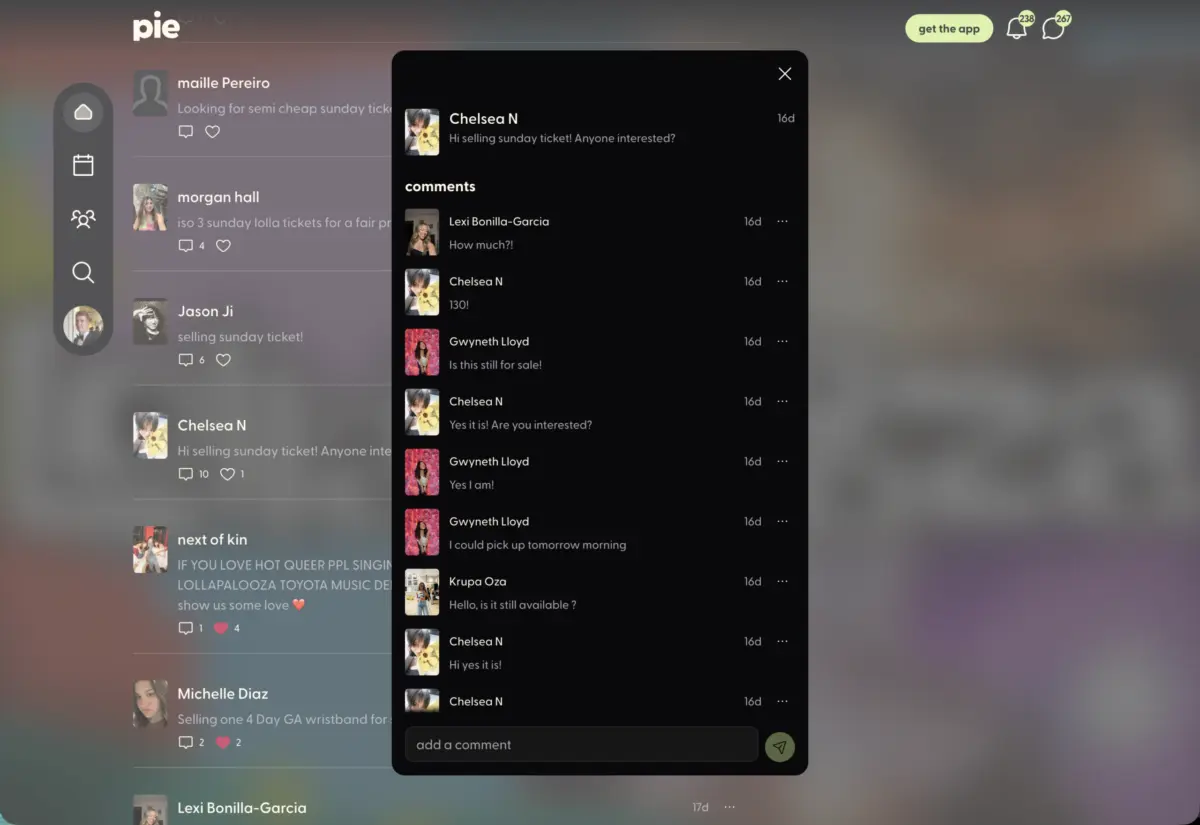
The release of Community Homes marks the third phase of Pie’s evolution. Rather than treating events as isolated, one-off occurrences, Community Homes establishes permanent digital spaces for clubs, affinity groups, and local organizations. These "homes" feature:
- Community Feeds: Dedicated spaces for ongoing discussions, announcements, and media sharing.
- Democratic Event Creation: Unlike traditional administrative structures where only group owners can host, any member of a Community Home can propose and pin an event to the group’s feed.
- Admin & Moderation Controls: Robust membership vetting and moderation tools to maintain safety and group alignment.
Looking ahead, Pie is already preparing its next major updates, which will include integrated group chats and a casual, low-stakes "bids for connection" feature. This upcoming addition will allow users to post unstructured, spontaneous prompts—such as asking if anyone wants to grab a coffee, craft together, or watch a television broadcast—without the pressure of planning a formal, structured event.
Supporting Context & Metrics: The Mechanics of IRL Socialization
Pie’s expansion arrives at a critical sociological inflection point. In 2023, the U.S. Surgeon General issued a landmark advisory declaring loneliness a public health epidemic, equating its mortality risks to smoking 15 cigarettes a day. This crisis is particularly acute among Gen Z and Millennials, who, despite being the most digitally connected generations in history, report the highest rates of social isolation.
+-------------------------------------------------------------------------+
|                        THE LONELINESS PARADOX                           |
|                                                                         |
|  Legacy Social Platforms             The Pie Model                      |
|  [Infinite Scroll]                   [Local Community Homes]            |
|         │                                    │                          |
|         ▼                                    ▼                          |
|  Passive Consumption                 Active Coordination                |
|         │                                    │                          |
|         ▼                                    ▼                          |
|  Digital Isolation                   Real-World Connections (IRL)       |
+-------------------------------------------------------------------------+
As younger demographics actively seek to reduce their screen time and limit their use of algorithmically driven, ad-supported networks, they are turning toward physical, community-centric activities. The resurgence of run clubs, book clubs, independent art markets, and neighborhood watch parties is a direct response to this desire for tangible belonging.
However, the technology currently used to organize these offline groups remains highly fragmented. Communities are often forced to patch together multiple platforms:

- Instagram for discovery and marketing.
- Linktree or Eventbrite for ticketing and RSVP management.
- WhatsApp, iMessage, or Discord for ongoing conversation.
This fragmented stack introduces significant friction. Group chats quickly devolve into chaotic, unreadable walls of text, while event details get lost in the scroll. Facebook Groups, once the dominant standard for community organizing, has largely lost its appeal among younger demographics due to an aging user base, cluttered interfaces, and algorithmic interference.
Pie’s Community Homes directly addresses this market gap. By consolidating group discovery, membership management, structured chat, and democratic event creation into a single, cohesive, and aesthetically clean mobile interface, Pie lowers the operational burden for community leaders.
The strategy has already proven highly effective in dense urban environments. While the application is architected to scale globally, its deepest traction is concentrated in three major metropolitan hubs: Chicago, New York, and Los Angeles. In these cities, localized density has enabled the rapid formation of subcultures, allowing micro-communities to scale quickly from digital threads to weekly physical gatherings.
Official Statements and Strategic Vision
The leadership team at Pie brings a unique blend of consumer brand-building expertise and grassroots community organization to the venture. Founder Andy Dunn’s motivation to build the platform was deeply personal, born out of his own experiences with relocation and mental health advocacy. After moving from New York to Chicago, Dunn experienced firsthand the difficulty of establishing a new support network and finding a sense of place in an unfamiliar city.
"Run clubs, art markets, watch parties—all these things that we’re hearing about in terms of the cultural movement towards being together again," Dunn told TechCrunch. "And I felt like if we build software for those social clubs, we can create an environment and an ecosystem where people can start to run into other people and belong to communities and start to have deeper connections." Dunn frequently describes his vision for Pie as a sort of "Reddit for IRL"—a platform that mirrors the interest-based, self-governing structures of Reddit but channels that energy directly into physical interactions.
To bridge the gap between digital product design and physical community building, Pie brought on Nadya Okamoto as co-founder and Chief Marketing Officer. Okamoto, a prominent Gen Z social entrepreneur and influencer, previously founded "Zoomies," a highly successful, community-first run club in New York City. Her experience organizing thousands of runners in Manhattan informed the core UX design of Community Homes.

Okamoto views Pie as a reclamation of the internet’s original, democratizing promise. "I would say [Pie is] more like the original promise of Facebook and Reddit—if it wasn’t anonymous and toxic," Okamoto noted. "Rather than leading with events, which is what so many other great platforms do, I think events are more a product of having a great community-building ecosystem on the app."
Future Outlook: Can Pie Solve the Consumer Social Conundrum?
The consumer social landscape is notoriously difficult for startups to navigate. For every runaway success, dozens of promising platforms falter due to high customer acquisition costs, rapid user churn, and the immense difficulty of establishing localized network effects. To survive, a social app must transition from a novel utility into an indispensable daily habit.
Pie’s strategic shift from a transactional event finder to an infrastructure provider for physical communities is a highly calculated move to address these challenges. By positioning itself as the operating system for local clubs, Pie secures a highly defensible moat. Once a community of hundreds of members establishes its "home" on Pie, the switching costs to migrate to another platform become prohibitively high.
                          GROWTH ENGINE

   ┌────────────────────────────────────────────────────────┐
   │                                                        │
   ▼                                                        │
[Community Organizers] ──> Establish "Homes" on Pie         │
   │                                                        │
   ▼                                                        │
[Organic User Acquisition] ──> Invite members to join app   │
   │                                                        │
   ▼                                                        │
[Network Density] ──> Spawns new micro-communities ─────────┘
This model also creates a highly efficient, organic growth engine. Instead of relying on expensive digital advertising campaigns to acquire individual users, Pie leverages community organizers to do the onboarding for them. When a popular run club, book club, or creative collective migrates its operations to Pie, hundreds of members naturally download the app to stay connected, creating dense local networks that can then spawn new micro-communities.
The backing of elite venture capital firms like Lightspeed, Accel, and Forerunner suggests that the smart money in technology is betting on this relationship-driven model. These investors recognize that the next generation of social media will likely not be defined by passive feed consumption, but by utility-driven tools that facilitate real-world human connection.
As Pie continues to expand its footprint in New York, Chicago, and Los Angeles, the true test of the platform will be its ability to scale this hyper-local model to mid-sized cities and suburban markets, where physical "third places" are even scarcer. If Community Homes can successfully replicate its urban magic across broader geographies, Pie may very well establish itself as the premier digital architecture for the offline world, proving that the best use of modern technology is to help us put our phones down and connect with one another in person.