Executive Overview
The traditional sales pitch is undergoing a radical, technology-driven evolution. For decades, the foundational rhythm of B2B sales—particularly in digital marketing, custom software, and specialized assets—has relied on persuasion. Sales professionals have entered initial client meetings armed with slide decks, hypothetical case studies, and promises of future deliverables, hoping to convince a skeptical prospect to take a financial leap of faith.
AI consultant and integration expert Etan Polinger argues that this dynamic is not only outdated; it is entirely unnecessary.
In a paradigm-shifting workflow highlighted on the AI Explored podcast, Polinger demonstrated how modern generative AI tools allow service providers to invert the traditional sales funnel. By investing a mere four hours in upfront, hyper-targeted preparation—researching the prospect, extracting brand design systems, and building an actual, functional prototype—a consultant can step into a first meeting not as an eager petitioner, but as a proven solution provider.
The result of this radical transparency and proactive value delivery? The old sales anxiety vanishes. Instead of the vendor sweating to close the deal, the prospective client finds themselves anxious about whether the consultant has the bandwidth to take them on. This exact workflow recently enabled Polinger to close a lucrative $12,000 deal on the very first call.
Detailed Chronology: Step-by-Step to a $12K Close
This high-conversion workflow is not built on complex custom coding or massive teams of developers. Rather, it leverages the hyper-efficient compute power of modern large language models (LLMs) and design engines. Here is the exact chronological blueprint Polinger utilized to secure a $12,000 contract with less than four hours of total preparation.
Phase 1: Identifying and Isolating the Prospect’s Core Ask
The process typically begins in the wild—often within a specialized digital community, a professional Slack group, or via a direct inquiry where a potential client voices a specific pain point. In Polinger’s case, a prospect within a digital community posted an open-ended request for a custom widget.
Rather than jumping immediately into a technical debate or a lengthy discovery questionnaire, Polinger responded with a simple, confident affirmative: "I think I can help."
From there, the immediate priority is stripping away technical jargon to understand the core business outcome. Prospects rarely care whether a solution is written in Python, JavaScript, or built on a legacy framework; they care exclusively about the end result.
- The AI Execution: Polinger takes the prospect’s original message (or a transcription of their inquiry) and feeds it into an LLM with a streamlined prompt:
“I just saw this message. What do they want? Answer in one sentence that anyone can understand.”
By focusing relentlessly on the outcome, the service provider confirms whether they have the capability to deliver. Once that alignment is established, the deeper reconnaissance begins.

Phase 2: Conducting Deep, Multi-Tiered Research
Most sales professionals perform a cursory glance at a prospect’s LinkedIn profile before a call. Polinger’s approach is far more exhaustive, dividing research into three distinct, highly focused passes to maximize the analytical depth of the AI model.
- Researching the Person: Polinger utilizes deep research tools from platforms like ChatGPT, Claude, or Gemini to build a psychological and professional profile of the individual. By feeding podcast transcripts, YouTube interviews, or scraped public profiles into the AI, he discovers how the prospect speaks, what industry stances they hold, and the friction points they publicly address. This ensures that the final presentation mimics the prospect’s preferred communication style.
- Researching the Company: The AI analyzes the corporate business model, ongoing initiatives, and operational objectives. While large enterprises leave massive digital footprints that make this straightforward, smaller local businesses require leaning on whatever public signals exist. For cold outreach, Polinger notes that analyzing a company’s open job postings is a masterstroke; open roles reveal precisely what a business is trying to accomplish even when its leadership hasn’t articulated it publicly.
- Researching the Market and Opportunity: By analyzing competing solutions and current market applications of AI within that niche, the consultant builds a strategic safety net. If the prospect ultimately decides against a custom-built solution, the provider can pivot on the spot to configuring an existing out-of-the-box platform.
Phase 3: Constructing an Instant, On-Brand Style Guide
To transition from theoretical research to a tangible "wow" moment, the proposal must reflect the prospect’s exact visual identity. While Polinger’s background is in performance marketing rather than high-end design, modern AI tooling bridges this gap effortlessly.
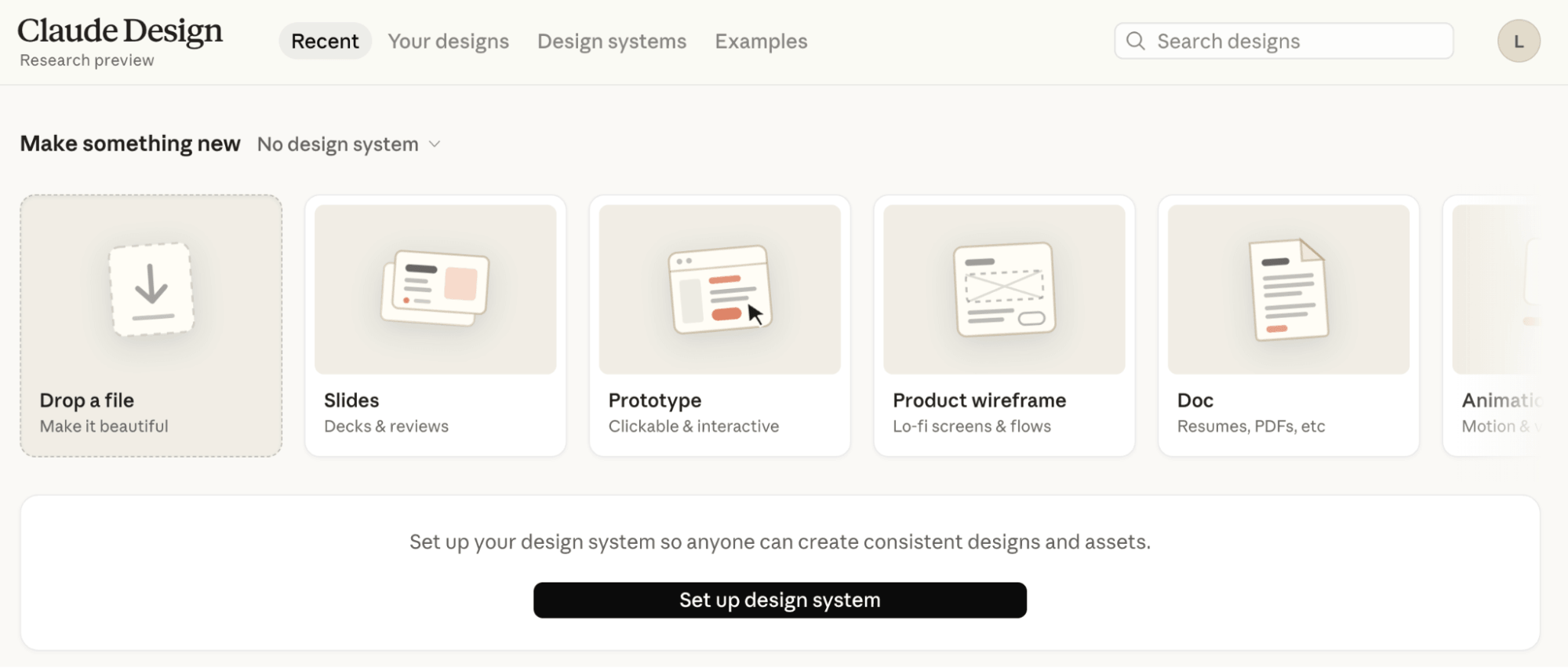
- The Design Extraction: Using browser extensions like WhatFont (to identify site typography) and ColorZilla (to extract exact brand hex codes), combined with screenshots of the prospect’s logo and website, Polinger feeds the data into Claude Design.
- The Pro-Tip Shortcut: Modern design engines like Claude Design are now advanced enough that manual extraction is often redundant; simply uploading screenshots of the prospect’s website allows the AI to autonomously discern the color palette and brand style.
Claude Design processes these inputs to generate a comprehensive digital style guide, outputting a portable folder of code snippets for UI and UX elements—headers, footers, data graphs, and button layouts—all perfectly matched to the prospect’s established branding.
Phase 4: Building the Functional Prototype and Pitch Deck
With an AI-generated style guide safely stored in a portable code folder, the preparation culminates in two concrete assets designed to eliminate sales friction entirely.
- The Functional Prototype: Polinger drops the style folder directly into an AI building environment such as Claude Code or Replit. Using natural language instructions—a methodology colloquially known as "vibe coding"—he directs the AI: "Build a chat widget that uses these exact brand buttons." Because the AI handles the syntax, a non-technical marketer can produce a working, interactive software asset in minutes.
- The Tailored Pitch Deck: Finally, ChatGPT or Gemini is leveraged to draft a custom proposal deck informed by the earlier market research. Screenshots of the newly minted, fully branded widget prototype are dropped directly into the presentation slides.
When the video call begins, the consultant does not share a theoretical concept or a mood board; they share a live, interactive, beautifully branded functional tool built specifically for the client’s business.

Supporting Context & Metrics: The State of AI in Marketing
To understand why this workflow is so wildly effective, one must examine the broader landscape of how marketing professionals are currently interacting with artificial intelligence.
According to recent data from the AI Marketing Industry Report, which surveyed 681 marketing professionals, the industry is experiencing a profound skills gap and a heavy reliance on self-directed experimentation:
- 85% of marketers learn how to utilize artificial intelligence entirely on their own through trial and error.
- Only 7% of professionals receive formal, structured AI training provided by their employers.
- More than 50% of marketers out-of-pocket fund their own AI software subscriptions and toolkits to stay competitive.
This data underscores a vital reality: while businesses desperately need technological integration, internal marketing teams are often ill-equipped to execute advanced AI workflows. When an outside consultant arrives at a first meeting having already built a working, on-brand prototype using cutting-edge development tools, they instantly demonstrate a level of technical competence that internal teams—and competing agencies—simply cannot match.
Official Insights & Industry Perspectives
The philosophy underpinning this $12,000 close challenges decades of established sales dogma. For generations, traditional sales training has warned against "working for free" or building comprehensive deliverables before a contract is signed and a deposit clears.
Etan Polinger’s experience reframes this traditional cautionary tale. Doing extensive unpaid prep work used to be economically unfeasible because of the immense labor hours required from multiple team members. Today, generative AI collapses weeks of development and design labor into a single afternoon of prompt engineering and code generation.
By flipping the script, the traditional power dynamic of the sales room evaporates. The consultant no longer occupies the vulnerable position of hoping to be selected out of a lineup of three competing agencies. Instead, the preparation communicates a standard of operational excellence that makes choosing anyone else feel like a commercial risk for the client.
As Polinger notes, the objective shifts away from "How do I convince them to buy?" to a much more selective question: "Do I actually have the bandwidth to take on this client?"
Future Outlook: The Death of the Traditional Pitch Deck
As generative development environments, multi-modal LLMs, and autonomous design systems continue to advance exponentially, the shelf life of the traditional, text-and-bullet-point sales deck is drawing to a close.
In the near future, clients will no longer tolerate vendors who show up to initial consultations asking, "Tell me about your pain points so we can draft a proposal." The expectation will shift toward proactive value creation. Vendors who fail to leverage AI for rapid prototyping and deep research will find themselves structurally uncompetitive against agile consultants who can walk into a first meeting and hand a prospect the keys to a working solution.
For digital marketers, developers, and agency owners willing to adapt their workflows, this represents an unprecedented era of high close rates, shortened sales cycles, and the ability to curate a roster of dream clients. The future of selling is no longer about talking a good game—it is about showing up already finished.