Executive Overview
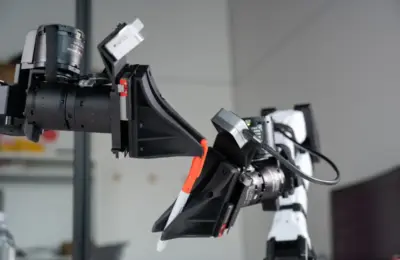
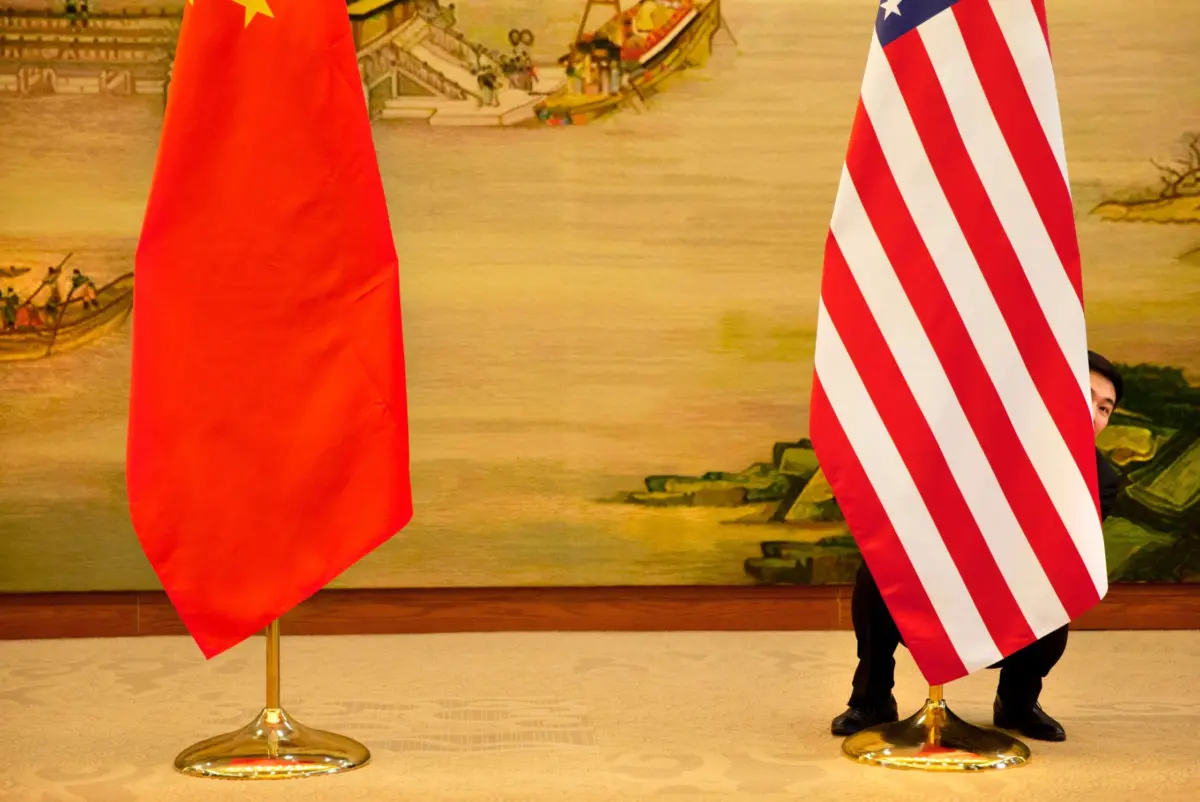
Washington has intensified its campaign to wall off the domestic technology sector from foreign rivals, extending its regulatory crosshairs from telecommunications and semiconductors deep into the physical domain of advanced robotics and unmanned aerial systems (UAS). Through a series of sweeping executive actions, Federal Communications Commission (FCC) designations, and aggressive tariff hikes, the United States is seeking to stem the influx of foreign-manufactured autonomous hardware, citing paramount national security and supply-chain vulnerabilities.
However, an uncomfortable economic reality underlies these protectionist maneuvers: China has already established a dominant lead in global robotics manufacturing. Leveraging unparalleled supply-chain integration, state-backed industrial scaling, and hyper-competitive pricing, Chinese enterprises now control the vast majority of the world’s commercial drone market and an overwhelming share of emerging humanoid robot shipments.
As Washington erects regulatory barriers to secure the home front, industry leaders and market analysts warn that trade sanctions alone cannot alter fundamental manufacturing economics. Rather than halting China’s momentum, U.S. trade restrictions are accelerating a profound realignment of global technology markets. The result is not a simple decoupling, but a fragmented, multi-polar world where Chinese roboticists expand aggressively across non-aligned nations, while U.S. and allied firms consolidate behind high-security, price-insulated domestic and Western defense markets.
Detailed Chronology: The Escalation of U.S. Tech Controls
The tightening of restrictions on foreign autonomous systems represents the latest phase in a multi-year effort by Washington to purge untrusted foreign technology from critical national infrastructure and commercial networks.
┌────────────────────────────────────────────────────────────────────────────────────────┐
│                        U.S. REGULATORY CONTROL EVOLUTION                               │
├───────────────────┬───────────────────────────────────┬────────────────────────────────┤
│   2021            │   JULY                            │   AUGUST                       │
│   FCC Covered List│   FCC Expands List to Include     │   White House Announces        │
│   Established     │   Advanced Robotic Systems        │   Steep Tariffs on Drones      │
│   (Huawei, ZTE,   │   (Data/Infrastructure Security)  │   & Components                 │
│   Hikvision)      │                                   │                                │
└───────────────────┴───────────────────────────────────┴────────────────────────────────┘
                                                                        │
                                                                        ▼
                                                         ┌───────────────────────────────┐
                                                         │ SEPTEMBER                     │
                                                         │ Initial Drone Tariffs         │
                                                         │ Take Effect                   │
                                                         └───────────────────────────────┘
                                                                        │
                                                                        ▼
                                                         ┌───────────────────────────────┐
                                                         │ 2027                          │
                                                         │ Phased Tariff Escalation on   │
                                                         │ Subcomponents                 │
                                                         └───────────────────────────────┘
The FCC Covered List Baseline (2021)
The structural framework for these interventions was established in 2021 when the FCC created its "Covered List" pursuant to the Secure and Trusted Communications Networks Act of 2019. Initially tailored to eliminate telecommunications and surveillance risks, the list famously banned equipment from Chinese tech giants including Huawei Technologies, ZTE Corporation, and Hangzhou Hikvision Digital Technology.
The Robotics and Drone Expansion (July–August)
Recognizing that modern autonomous robots and drones are essentially mobile data collection platforms equipped with advanced sensors, computer vision, and network connectivity, regulators systematically broadened the scope of the Covered List:
- July Actions: The FCC formally updated its regulatory guidance to encompass foreign-made advanced robotic systems. The decision targeted hardware capable of mapping sensitive facilities, harvesting telemetry data, or connecting to critical infrastructure networks.
- August Trade Directives: The White House issued executive directives imposing steep tariffs on imported drones, uncrewed aircraft systems (UAS), and their constituent parts. Citing the preservation of domestic industrial capacity and national security, the administration outlined an aggressive implementation timeline.
Implementation Phases (September & Beyond)
The tariff structure is designed to apply immediate pressure while providing domestic manufacturers a narrow window to scale operations:
- Phase I (September): Broad tariffs take direct effect on fully assembled imported commercial and enterprise drones.
- Phase II (Targeted 2027): Secondary, phased tariff escalations will kick in for critical subcomponents, including flight controllers, specialized sensors, and propulsion motors, aimed at forcing a total restructuring of hardware component supply chains.
Supporting Context & Metrics: The Scale Gap and Cost Flywheel
The policy push from Washington highlights a stark industrial asymmetry between the United States and China. While the U.S. maintains a structural lead in artificial intelligence research, software architecture, and specialized semiconductor design, China possesses an overwhelming advantage in physical manufacturing, component density, and cost optimization.
GLOBAL HUMANOID ROBOT SHIPMENTS (H1)
┌─────────────────────────────────────────────────────────┐
│ Top 5 Chinese OEMs (AgiBot, Unitree, Galbot,           │ 86%
│ UBTECH, Leju Robotics)                                  │
├─────────────────────────────────────────────────────────┼───────┐
│ All Other Global Manufacturers                          │ 14%   │
└─────────────────────────────────────────────────────────┴───────┘
  Total Volume: ~22,000 Units
The Humanoid Shipment Disparity
According to market intelligence data from Counterpoint Research, global shipments of humanoid robots surpassed 22,000 units in the first half of the year—a dramatic year-over-year surge. However, the distribution of those units reveals a heavily skewed marketplace.
The top five humanoid robot manufacturers globally by shipment volume—AgiBot, Unitree, Galbot, UBTECH Robotics, and Leju Robotics—are all headquartered in China. Together, these five entities commanded a staggering 86% of all global humanoid robot shipments in the first half of the year. Western competitors, operating primarily in pilot programs and low-volume testing regimes, represent a tiny fraction of total unit output.
Market Share Breakout: Top Humanoid Manufacturers
| Manufacturer | Headquarters | Key Market Strengths / Synergies |
|---|---|---|
| AgiBot | China | Rapid prototyping, modular industrial deployment |
| Unitree | China | In-house component design, ultra-low-cost actuators |
| Galbot | China | Advanced embodied AI integration, service-sector focus |
| UBTECH | China | Enterprise automation, educational scaling, government backing |
| Leju Robotics | China | High-mobility bipedal platforms, domestic logistics integration |
The Data and Cost Flywheel
This volume disparity creates an compounding advantage for Chinese manufacturers:
  ┌────────────────────────────────────────────────────────┐
  │                                                        │
  ▼                                                        │
Increased Manufacturing Scale                              │
  │                                                        │
  ▼                                                        │
Lower Unit Costs & Competitive Pricing                     │
  │                                                        │
  ▼                                                        │
Widespread Real-World Deployment                           │
  │                                                        │
  ▼                                                        │
Massive Operational Data Collection                        │
  │                                                        │
  ▼                                                        │
Accelerated Hardware/AI Refinement ────────────────────────┘- Vertical Integration: Companies such as Unitree have systematically brought key technological stacks—such as harmonic drives, high-torque brushless motors, and proprietary actuators—in-house. Simultaneously, automotive titans like XPeng are leveraging existing electric vehicle supply chains, chip procurement networks, and automated assembly infrastructure to produce humanoid robots at marginal costs.
- The Data Flywheel: Physical AI relies on real-world interaction data to train neural networks for balance, spatial awareness, and manipulation. Deploying tens of thousands of low-cost robots allows Chinese firms to harvest vast datasets, refining their algorithms far faster than software teams testing limited physical prototypes in laboratory settings.
- The Economic Reality: As Ankur Saxena, Investment Director at TDK Ventures, notes: "The United States leads in frontier AI, software and semiconductor innovation. China leads in manufacturing scale, supply-chain depth and cost." Saxena warns that trade policy alone cannot solve this fundamental structural gap: "You cannot sanction your way around a cost curve. You can only out-build it, and America has yet to begin making the decade-long investment that will require."
Official Statements & Industry Voices
The divergence in corporate strategy and regulatory outlook is starkly reflected in how executives and industry analysts view Washington’s market interventions.
Domestic Robotics Developers: Security as a Catalyst
American humanoid developer Agility Robotics publicly endorsed the FCC’s regulatory moves. The company—whose bipedal robot, Digit, is designed and assembled domestically—argues that proactive regulatory guardrails are necessary to prevent security risks from becoming entrenched in Western supply chains.
Reflecting on the commercial drone market, where Chinese manufacturer DJI achieved dominant market share before Western governments raised national security concerns, Agility Robotics emphasized that setting clear operational standards early protects critical logistics infrastructure while leaving room for responsible research collaboration.
Defense and Infrastructure Hardware: The Hardware Split
Bentzion Levinson, founder and CEO of Virginia-based drone manufacturer Heven AeroTech, observes that market fragmentation is already a reality in the drone sector. Levinson notes that the market has bifurcated into two distinct tracks:
"The industry is increasingly splitting into two ecosystems: a U.S.-led market built around American-made, NDAA-compliant systems, and a China-led market focused on low-cost, high-volume production."
— Bentzion Levinson, CEO of Heven AeroTech
Levinson believes Western hardware manufacturers cannot realistically compete with Chinese OEMs in consumer market segments where low upfront hardware costs dictate purchasing decisions. Instead, Western players must focus on high-reliability, long-range autonomous platforms suited for defense applications, power grid inspection, and critical infrastructure monitoring.
Furthermore, Levinson points out that the technological battle line is moving beyond raw physical chassis design:
"The next battleground is over who owns the next-gen energy and payload architecture."
— Bentzion Levinson, CEO of Heven AeroTech
As autonomous missions demand extended range and heavier sensor suits, breakthroughs in battery energy density, hybrid power systems, and modular payload interfaces will define competitive advantages far more than basic frame construction.
Regionalized Agricultural and Industrial Automation
Yang Fang, an executive at California-based agtech startup Beagle Technology—which develops software and robotics kits to convert conventional agricultural equipment into autonomous machinery—stresses that physical robotics is inherently bound to geography:
"Robotics is likely to become more regional as companies design machines for the labor needs, working conditions and customers in their home markets."
— Yang Fang, Beagle Technology
Fang points out that field conditions, regulatory frameworks, labor dynamics, and operational scale vary wildly between North American farmland and East Asian agricultural environments. As a result, software tailored to regional operating environments can insulate companies from broader hardware supply-chain disruptions.
Future Outlook: The Emerging Tri-Polar Robotics Market
As the U.S. market seals itself off from Chinese hardware, Chinese companies are adjusting their growth strategies rather than retreating. Industry analysts at Counterpoint Research expect Chinese humanoid robot developers to replicate the global expansion playbook written by China’s electric vehicle (EV) industry.
┌────────────────────────────────────────────────────────────────────────────────────────┐
│                        THE FRAGMENTED GLOBAL ROBOTICS LANDSCAPE                        │
├──────────────────────────┬─────────────────────────────┬───────────────────────────────┤
│ WESTERN / ALLIED REGION  │ CHINESE EXPANSION REGION    │ ALLIED REGIONAL HUBS          │
│                          │                             │                               │
│ • Focus: Security, NDAA  │ • Focus: Cost & Scale       │ • Focus: Specialized Hardware │
│   Compliance, Frontier AI│ • Target Markets:           │ • Key Players:                │
│ • Markets: U.S., NATO    │   - Europe (Labor Deficit)  │   - Japan (Precision/Industrial)│
│   Allies, Defense Sector │   - Southeast Asia          │   - South Korea (EV/Batteries)│
│                          │   - Latin America           │   - Taiwan (Semiconductors)   │
│                          │   - Middle East             │                               │
└──────────────────────────┴─────────────────────────────┴───────────────────────────────┘
Scenario 1: China’s Global Footprint Expansion
Locked out of the U.S. enterprise and public sectors, Chinese manufacturers are redirecting their low-cost automation systems toward price-sensitive regions facing demographic headwinds.
Across Western and Eastern Europe, Southeast Asia, Latin America, and the Middle East, manufacturing and logistics sectors face severe labor shortages and aging workforces. For mid-sized enterprises in these regions, lower-cost Chinese humanoids offer compelling payback periods that high-cost Western alternatives cannot match.
Following the EV playbook, Chinese robotics firms are expected to:
- Establish massive scale within their domestic market.
- Export finished systems to non-aligned international markets.
- Build local assembly and service infrastructure directly within key regional hubs to bypass secondary trade restrictions.
Scenario 2: The Allied Industrial Alternative
A purely domestic U.S. supply chain for advanced robotics remains financially unfeasible in the short term due to high labor costs and fragmented component manufacturing. TDK Ventures’ Ankur Saxena points out that the viable alternative to Chinese dominance is an allied supply ecosystem:
"The alternative to China isn’t a purely domestic U.S. supply chain; it’s a diversified allied one."
— Ankur Saxena, TDK Ventures
This dynamic creates opportunities for established industrial technology hubs across Asia and Europe:
- Japan: Brings decades of expertise in industrial robotics, high-precision gearboxes, and custom strain wave reducers. Automotive leaders like Toyota continue to expand investments in humanoid platforms.
- South Korea: Offers world-class lithium-ion battery production, electronics manufacturing, and automotive integration capabilities. Hyundai Motor Group’s ownership of Boston Dynamics positions South Korea as an allied hardware manufacturing powerhouse.
- Taiwan: Remains the indispensable semiconductor engine providing the high-efficiency edge-AI chips required for localized robot inference.
Conclusion: A Multi-Polar Landscape
The global robotics market is transitioning away from a unified supply chain toward a distinct tri-polar architecture:
- The U.S. and Allied Security Block: Characterized by strict supply-chain verification, high regulatory overhead, advanced software and frontier AI, and elevated hardware costs—serving defense, national security, and critical infrastructure sectors.
- The Chinese Scale Block: Driven by mass production, vertically integrated supply chains, low costs, and continuous data collection—serving domestic demand and capturing market share across developing economies, Latin America, Southeast Asia, and parts of Europe.
- The Allied Middle-Ground Hubs: Nations like Japan, South Korea, and Taiwan carving out specialized high-value positions, manufacturing high-precision components and balanced platforms that meet Western security standards without completely sacrificing cost competitiveness.
Ultimately, trade restrictions may succeed in securing sensitive domestic infrastructure within the United States. However, in the broader global race for autonomous automation, they have merely redrawn the battlefield. The ultimate test for Western industry will not be how effectively it can restrict foreign hardware, but how quickly it can scale its own manufacturing capacity to match the economic realities of global industrial demand.