Executive Overview
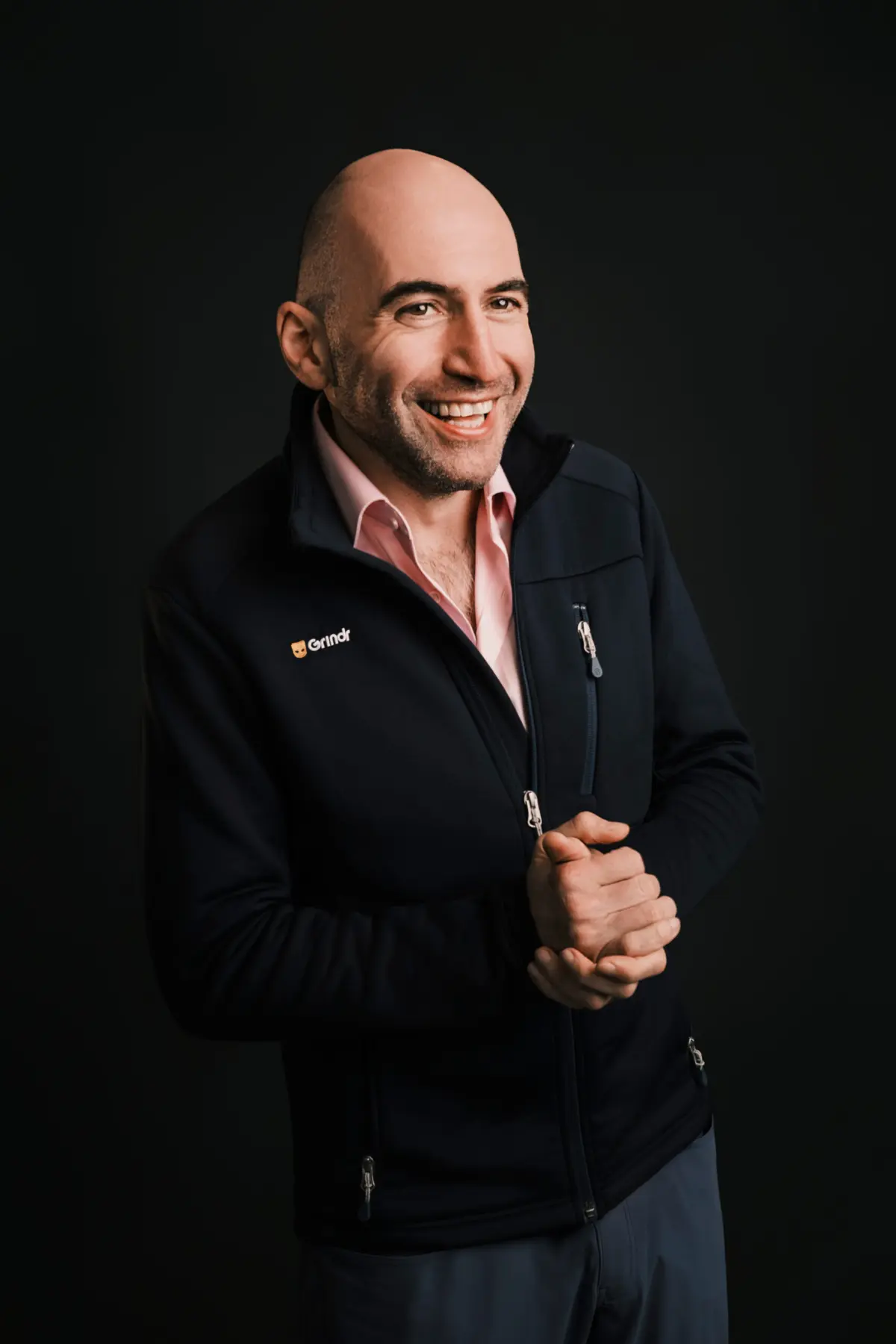
When George Arison assumed the role of Chief Executive Officer at Grindr in late 2022, he inherited a company defined by structural chaos and untapped economic potential. Over the preceding four years, the hyper-localized LGBTQ+ matchmaking platform had been bounced from Chinese ownership to a forced divestiture mandated by U.S. national security regulators, landing briefly in the hands of a private-equity consortium before executing a backdoor public listing via a Special Purpose Acquisition Company (SPAC). Despite its cultural ubiquity and robust cash generation, Grindr operated virtually without a cohesive product roadmap, long-term business strategy, or stable corporate infrastructure.
Fast forward to today, and the narrative surrounding Grindr has fundamentally shifted. The company has successfully transitioned from a volatile niche asset into a highly convincing growth story. Grindr’s annual revenue is on pace to nearly triple, skyrocketing from $195 million in 2022 to a guided forecast of over $540 million for the current fiscal year. Simultaneously, the company has maintained exceptionally high profitability, with adjusted EBITDA (earnings before interest, taxes, depreciation, and amortization) margins holding steady above 40%.
This rapid expansion has not been driven by a massive influx of new users, but rather by the aggressive monetization of its existing user base. By converting free users into paying subscribers and raising average revenue per user (ARPU), Grindr has unlocked a high-margin revenue engine. Under Arison’s leadership, the company is now executing a multi-pronged expansion strategy designed to transform Grindr from a transactional hookup app into an "everything app" for the global LGBTQ+ community—a concept Arison calls a "gayborhood in your pocket." This vision encompasses digital dating, hyper-tailored AI matchmaking, travel services, and specialized healthcare verticals.
Yet, even as premier investment banks upgrade the stock, Grindr continues to fight an uphill battle on Wall Street. Arison openly challenges what institutional investors refer to as the "Grindr discount"—a systemic valuation penalty that depresses the company’s stock price relative to its mainstream peers, a bias Arison attributes directly to institutional discomfort with a gay dating platform.
Detailed Chronology: The Rebuilding of an App in Exile
To understand Grindr’s current trajectory, one must examine the corporate turbulence that preceded its public listing. Founded in 2009, Grindr pioneered geolocation-based dating. However, its corporate governance history is one of the most fraught in the modern tech sector.
[2016-2018: Kunlun Acquisition] ──> [2020: CFIUS Forced Divestiture] ──> [2022: SPAC Listing & Arison Appointed] ──> [2023: RTO Mandate & Restructuring] ──> [2024: AI & Healthcare Expansion]The Geopolitical Tug-of-War (2016–2020)
In 2016, Beijing Kunlun Tech Co., a Chinese gaming giant, acquired a majority stake in Grindr, completing its full acquisition in 2018. This ownership immediately drew the scrutiny of the Committee on Foreign Investment in the United States (CFIUS). Regulators expressed grave national security concerns regarding the potential for the Chinese government to access sensitive personal data—including user locations, private messages, and HIV status—belonging to millions of American citizens, some of whom worked in the military or intelligence communities.
In 2020, CFIUS forced Kunlun to divest Grindr. The company was sold for approximately $620 million to San Vicente Acquisition, a private equity vehicle assembled specifically to rescue the asset. While the transaction stabilized the company’s regulatory standing, it left Grindr under-resourced, lacking a modern product architecture, and operating under a transient management structure.
The SPAC Era and Arison’s Arrival (2022)
In November 2022, Grindr went public on the New York Stock Exchange through a merger with Tiga Acquisition Corp., a blank-check company. George Arison—the seasoned entrepreneur who had previously founded and scaled the online used-car marketplace Shift Technologies—was brought in as CEO to lead the newly public entity.
Arison arrived to find a business that was highly profitable but functionally adrift. The engineering culture was sluggish, product development had stalled, and the corporate culture had grown complacent during the pandemic.
The Great Restructuring and the RTO Mandate (2023)
In the summer of 2023, Arison initiated a drastic corporate overhaul. He introduced a strict return-to-office (RTO) mandate, requiring employees to work from designated physical hubs two days a week. The mandate met with fierce internal resistance, culminating in a highly publicized labor dispute and the departure of roughly 80% of the workforce.
While critics predicted the mass exodus would cripple the platform, Arison used the disruption to aggressively rebuild the company from the ground up. Grindr’s head count plummeted to just 70 employees before rebuilding. Today, only about 25 legacy employees remain from the pre-Arison era. The company now runs an incredibly lean operation, employing roughly 175 people in the United States alongside a support team in Colombia, all while managing an enterprise on track to generate more than half a billion dollars in annual revenue.
Supporting Context & Metrics: Driving Efficiency Through AI
Grindr’s financial turnaround is a masterclass in operational efficiency, driven by a deliberate pivot toward artificial intelligence and aggressive monetization strategies.
Financial Performance Indicators
| Metric | FY 2022 | FY 2024 (Guided) | Growth / Change |
|---|---|---|---|
| Annual Revenue | $195 Million | $540 Million+ | ~177% Increase |
| Paying User Conversion | < 6.0% | 9.0% (1.4M Users) | +300 bps |
| Adjusted EBITDA Margin | > 40% | > 40% | Sustained Profitability |
| Engineering Headcount | ~300 (Equivalent Work) | ~95 (Actual Staff) | 68% Operational Lean-down |
The AI-Driven Engineering Leverage
A cornerstone of Arison’s operational strategy is the hyper-efficient use of engineering talent. While comparable tech firms employ hundreds of engineers to maintain similar traffic volumes, Grindr’s entire technical infrastructure is run by a team of just 95 people.
According to Arison, this lean footprint is made possible by the deep integration of generative AI within the development pipeline:
- Code Generation: Approximately 80% of Grindr’s codebase is now written or assisted by AI tools.
- Productivity Gains: The engineering division has realized a 2.5x year-over-year increase in development velocity.
- Cost Avoidance: The current team of under 100 engineers is successfully delivering the output historically expected of a 300-to-350-person department.
Monetization Dynamics
Grindr’s growth has not relied on expanding its total addressable market, but on optimizing its monetization funnel:
- Paying Users: In Q2 2024, Grindr reported 1.4 million paying users—representing roughly 9% of its active user base, up from less than 6% in 2022.
- ARPU Escalation: Average revenue per user has nearly doubled since 2022, driven by price optimization and the introduction of higher-value tiers.
- Subscription Reliance: Subscriptions currently account for approximately 83% of total company revenue, down slightly from 86% in 2022, reflecting the nascent growth of non-subscription revenue streams like advertising and health services.
Official Statements: Navigating the "Grindr Discount" and the EDGE Controversy
In his public engagements, George Arison has been exceptionally candid about the unique societal and institutional hurdles Grindr faces as a public company.
Confronting Wall Street Bias
Despite Grindr’s stellar financial metrics, the stock trades at approximately 11 times its projected 2027 EBITDA—representing a roughly 35% valuation discount compared to its peer group, which includes mainstream matchmaking platforms like Match Group and Bumble. Arison attributes this discrepancy to an explicit institutional bias:
"The stigma conversation is a real one. We’ve had a consulting firm decline to work with us over reputational concerns, and a bank refuse our money during the Silicon Valley Bank crisis… I think a lot of that is really about Grindr being a gay dating product rather than dating being controversial per se. Nobody says that about Tinder, which literally has a ‘free tonight’ button on its homepage."
Arison recalls an interaction with an institutional investor who presented a financial model that featured a literal, written "Grindr discount" line item, arbitrarily slashing 25% off the company’s fair-value estimate simply due to the nature of the app’s demographic.
The EDGE Subscription Tier Backlash
Grindr recently drew criticism across social media platforms—including Reddit and X (formerly Twitter)—following reports that it was testing an ultra-premium, AI-powered subscription tier named "EDGE." In some international test markets, such as Canada, the pricing for EDGE was spotted at rates equivalent to $350 to $375 USD per month, prompting users to complain that the app was becoming prohibitively expensive.
Arison clarified that these figures represent early testing phases rather than a final product launch:
"We haven’t released EDGE—we’re testing it, and some people have access as part of that test… We’re not selling AI itself; we’re selling features derived from it—using what we know about a user’s behavior and intent, with consent, to make much better matches than a sparse profile ever could."
Arison compared the pricing model to Tesla’s vehicle lineup:
"We think of it like a Tesla Model X or S: a premium flagship now, with the underlying capability rolling down to the broader product over time."
Future Outlook: The "Gayborhood in Your Pocket"
Looking toward the next decade, Grindr’s growth strategy centers on diversifying beyond matchmaking. The company plans to position itself as an indispensable utility for the global LGBTQ+ population by building out highly specialized verticals.
┌────────────────────────────────────────────────────────┐
│             THE "GAYBORHOOD IN YOUR POCKET"            │
├────────────────────────────────────────────────────────┤
│  Dating & Social   │   Travel Services  │  Healthcare  │
│  - AI Matchmaking  │   - Safe Spaces    │  - Woodwork  │
│  - EDGE Premium    │   - Local Guides   │  - Telehealth│
└────────────────────────────────────────────────────────┘
1. AI-Powered Borderless Matchmaking
Grindr aims to use AI to solve the geographic constraints inherent to minority dating pools. Even in metropolitan hubs like San Francisco, the active gay dating pool is relatively small. Grindr is developing behavioral AI engines designed to match users across cities and countries based on deep compatibility and intent, rather than basic profile criteria. This feature aligns with changing demographics: approximately 50% of gay men under the age of 35 state they are actively seeking long-term monogamous relationships, and 25% desire children—marking a significant cultural shift from older generations.
2. The Healthcare Vertical (Woodwork & Telehealth)
Grindr is aggressively scaling its presence in digital health, focusing on three core areas:
- Wellness Products: Under its "Woodwork" brand, Grindr offers direct, cash-pay access to erectile dysfunction medications, GLP-1 weight-loss peptides, and lifestyle supplements. The company recently integrated an in-app AI transaction assistant to streamline these purchases.
- Preventative Medicine (PrEP): Grindr has pledged to connect 10 million global users with direct access to HIV prevention resources and PrEP distribution channels.
- Clinical Telehealth: In the long term, Grindr plans to introduce clinical care portals, matching users directly with culturally competent LGBTQ+ doctors. Arison projects that within ten years, healthcare could eclipse matchmaking as Grindr’s primary revenue generator.
3. The Travel Ecosystem
For LGBTQ+ travelers, safety and community integration are critical. Grindr plans to expand its travel features to help users find safe accommodations, connect with local communities, and access trusted neighborhoods when traveling abroad.
Wall Street’s Shifting Stance
While institutional bias remains a challenge, the financial community is starting to take notice of Grindr’s performance. Major financial institutions, including Goldman Sachs, Raymond James, and Morgan Stanley, have repeatedly raised their price targets on the stock. In July, Morgan Stanley upgraded Grindr to "overweight," pointing directly to the monetization potential of the upcoming EDGE subscription tier and the company’s healthcare initiatives.
With 16 consecutive quarters of over 25% revenue growth under Arison’s leadership, Grindr is proving that its business model is highly resilient. If the company successfully executes its transition into a multi-vertical super-app, Wall Street may have no choice but to permanently retire the "Grindr discount."