Executive Overview
In the ever-expanding landscape of independent video games, standing out requires a hook that transcends conventional genre boundaries. Enter Ylem’s Cat, a breathtaking action-adventure title developed by a small, independent studio based in Guangzhou, China. First revealed to the public at Gamescom, the game has quickly become an internet phenomenon, sweeping across social media platforms like X (formerly Twitter), Reddit, and TikTok.
At the heart of this viral sensation is a deeply emotional and mechanically innovative premise: players are tethered to a feline companion by a shared heartbeat. This cat is not merely an aesthetic follower or a passive inventory item; it is an active participant in combat, an explorer driven by its own feline curiosity, and—most crucially—a shape-shifter capable of growing to gargantuan proportions that players can ride into battle against robotic adversaries.
As the industry reels from a wave of animal-centric indie breakouts, Ylem’s Cat has captured the collective imagination of gamers worldwide. With stunning visual design, evocative world-building, and gameplay mechanics that mimic the erratic, charming, and sometimes terrifying reality of living with a cat, the title has cemented itself as one of the most anticipated indie releases on the horizon. Despite a projected release window as far away as 2028, the gaming community is already shouting variations of a singular sentiment: "Take my money now."
Detailed Chronology: From Guangzhou Studio to Global Phenomenon
The journey of Ylem’s Cat from a localized indie project to an international talking point is a testament to the unpredictable nature of modern game marketing and the power of a striking visual concept.
The Gamescom Reveal
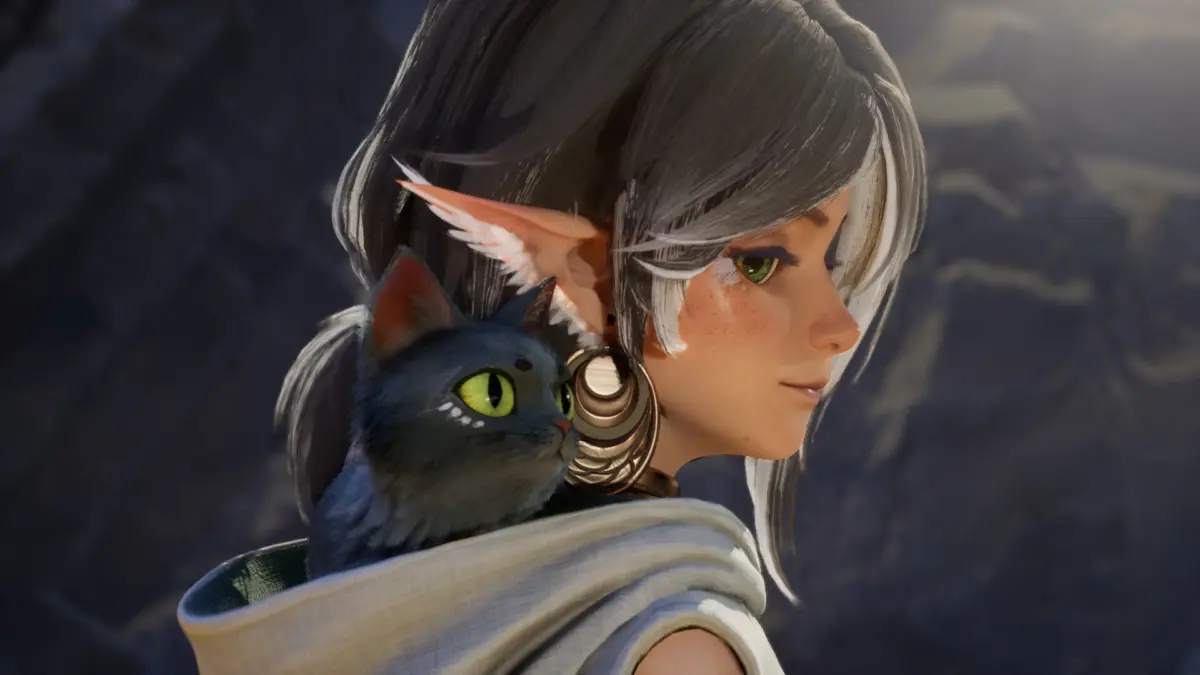
The title first broke cover during the bustling trade floors of Gamescom, where indie developers frequently compete for the attention of media outlets and content creators against multi-million-dollar AAA budgets. The Guangzhou-based studio brought a vertical slice of Ylem’s Cat that immediately turned heads. Trailers showcased a ruined, dying planet—a gorgeous yet melancholic wasteland—navigated by a young girl named Molly.
However, it was the introduction of Molly’s companion that stopped convention-goers in their tracks. Saved from a terrible disaster by a mysterious cat, Molly finds her life inextricably linked to the animal. Named "Mio" after the distinctive sound of its meow, the cat is hunted by a menacing faction of robotic beings known as the Sentinels. When the trailer showcased Mio expanding from a normal-sized house cat into a towering, mythical beast capable of crushing robotic foes underfoot while Molly rode atop its back, the room—and subsequently the internet—erupted.
The Social Media Explosion
Within hours of the Gamescom showcase, footage of Ylem’s Cat began circulating across digital ecosystems. Independent game curators and community aggregation accounts quickly seized upon the footage.
On August 29, 2026, prominent social media account Indie Game Joe shared a breakdown of the title’s core features, pointing out the shared heartbeat mechanic, the Sentinel threat, and the awe-inspiring giant riding mechanic. The post quickly garnered tens of thousands of likes and reposts, sparking a chain reaction of viral commentary.
Gamers began dissecting every frame of the trailer, noting subtle mechanical touches: the player using the reflection from a bow to play with Mio like a laser pointer, the cat boping enemies on the head with realistic feline dismissiveness, and the sheer audacity of blending a harrowing post-apocalyptic narrative with whimsical, authentic cat behavior.
Supporting Context & Metrics: The Mechanics of Feline Companionship
To understand why Ylem’s Cat has resonated so deeply, one must examine its mechanical philosophy and the specific cultural moment it occupies within the games industry.
Narrative Framework and Exploration Loop
According to the official Steam listing, Ylem’s Cat is fundamentally "driven by the bond between a girl and her cat." The narrative follows Molly on a perilous quest to find her missing mother across a dying planet. Exploration requires a symbiotic relationship between human and beast.
While Molly brings human ingenuity, puzzle-solving tools, and ranged weaponry to the table, Mio brings unique feline advantages. The developers have emphasized that Mio is not a mindless drone following waypoints; the cat possesses its own independent curiosities. Players must watch Mio closely during exploration, as the feline’s natural instincts and wandering eye may uncover secrets, hidden lore paths, or survival resources buried within ancient ruins.

Combat Integration and Tactical Synergy
Combat in Ylem’s Cat relies on mutual adaptation. The game’s design philosophy posits that "the more you learn to fight together, the easier it becomes." Players coordinate melee strikes, ranged attacks, and environmental interactions with Mio’s shifting sizes.
When operating at standard size, Mio can dart through tight spaces, distract Sentinels, and deliver sharp, agile counter-attacks. When the stakes escalate, Mio scales up to a monumental size, transforming the dynamic into an action-heavy mount system. This duality allows for varied combat pacing, shifting fluidly from tense, stealth-oriented survival sequences to high-octane, destructive battles against monolithic robotic foes.
The Animal Companion Renaissance
Ylem’s Cat arrives on the heels of a broader industry trend celebrating animal protagonists and companions. Earlier in the month of August 2026, another viral indie title—Stray Dog: Nobody Cares—captured the internet’s attention. That Soulslike title cast players as a stray dog wielding a sword in its jaws, searching for a captured master in a hostile world.
Furthermore, veteran gamers have drawn immediate mechanical and emotional parallels to iconic titles of the past. Comparisons to The Last Guardian—specifically the realistic, unpredictable artificial intelligence and emotional weight of the creature Trico—have been frequent. Players relish the idea of a companion that feels alive, complete with personality quirks, rather than a predictable video game asset.
Official Statements and Community Reception
The overwhelming response to Ylem’s Cat has transformed its Steam page into a bustling hub of anticipation. While the development studio has maintained a relatively focused profile, letting the trailers speak for themselves, the community has filled the information vacuum with unbridled enthusiasm, hyperbole, and humor.
Fan Reactions and Viral Memes
The internet’s collective reaction to Mio’s ability to grow to giant proportions quickly birthed a wave of viral commentary centered on the inherent chaos of feline behavior scaled up to apocalyptic dimensions:
- The Zoomies: "Just imagine a cat of that size getting the zoomies," remarked one user on X, capturing the terrifying mental image of a mountain-sized feline experiencing a sudden, frenzied burst of midnight energy across futuristic ruins.
- The Financial Plea: "Bro, take my money now!" echoed numerous players across social media platforms, expressing frustration that a pre-order or purchase option was not immediately available.
- Feline Mood Swings: Another user joked about the perils of domestic cats translated to giant scale: "Knowing my cat’s mood swings, I would PROBABLY be murdered if it was that size."
- Nostalgic Comparisons: Fans of Team ICO’s legacy chimed in, with one noting, "Just like Toriko… So cute!"—highlighting the deep emotional chord struck by fantasy stories centered on cross-species companionship.
The Emotional Stakes
Beyond the humor, players have expressed concern over the narrative stakes established in the promotional material. Observant fans noted that Mio appears to fall into mortal peril at least once during the trailer. Given that players share a literal heartbeat with the feline protagonist, the psychological weight of protecting Mio is expected to be a major driving force behind the game’s emotional impact. If Mio is hurt, Molly feels it—and by extension, the player does too.
Future Outlook: The Road to 2028 and Beyond
As the dust settles on the initial wave of Gamescom announcements, Ylem’s Cat faces both the blessing and the curse of early viral success.
Development Timeline and Expectations
Industry analysts note that capturing lightning in a bottle this early in a development cycle can be a double-edged sword. With developers currently pointing toward an eventual 2028 launch window, the team in Guangzhou faces a multi-year development runway under the intense spotlight of global internet scrutiny.
Maintaining momentum over a two-year period requires a delicate balance of communication: releasing periodic development updates, showcasing technical milestones, and managing fan expectations without over-promising. However, the foundational goodwill earned by the initial reveal gives the studio a massive head start in building a dedicated community.
Technical and Design Hurdles
Creating a truly believable animal companion powered by dynamic AI is one of the most notoriously difficult challenges in game development. Ensuring that Mio feels independent and lifelike without frustrating the player—avoiding pathfinding bugs, awkward collision mechanics, or annoying behavioral loops—will be the defining test for the independent studio. If they can successfully execute the promise of a responsive, emotionally resonant, shape-shifting feline companion, Ylem’s Cat could easily transition from a viral social media curiosity into a defining indie masterpiece of the late 2020s.
For now, players around the globe are left to wishlist the game on Steam, rewatch the trailer for hidden details, and wonder what kind of structural damage a giant, laser-chasing cat could really do to a dying planet.