Executive Overview
In a calculated and ambitious strategic pivot, audio giant JBL has announced the Cove series, a new line of Wi-Fi-enabled smart speakers designed explicitly for whole-home audio integration. Long recognized as the undisputed heavyweight champion of portable Bluetooth speakers and high-energy party systems, JBL’s latest hardware family marks a decisive departure from its traditional product roadmap. By entering the multi-room ecosystem arena, JBL is mounting a direct challenge to established heavyweights like Sonos, Bose, and Apple, attempting to capture a lucrative demographic that prioritizes seamless domestic acoustic environments over rugged outdoor durability.
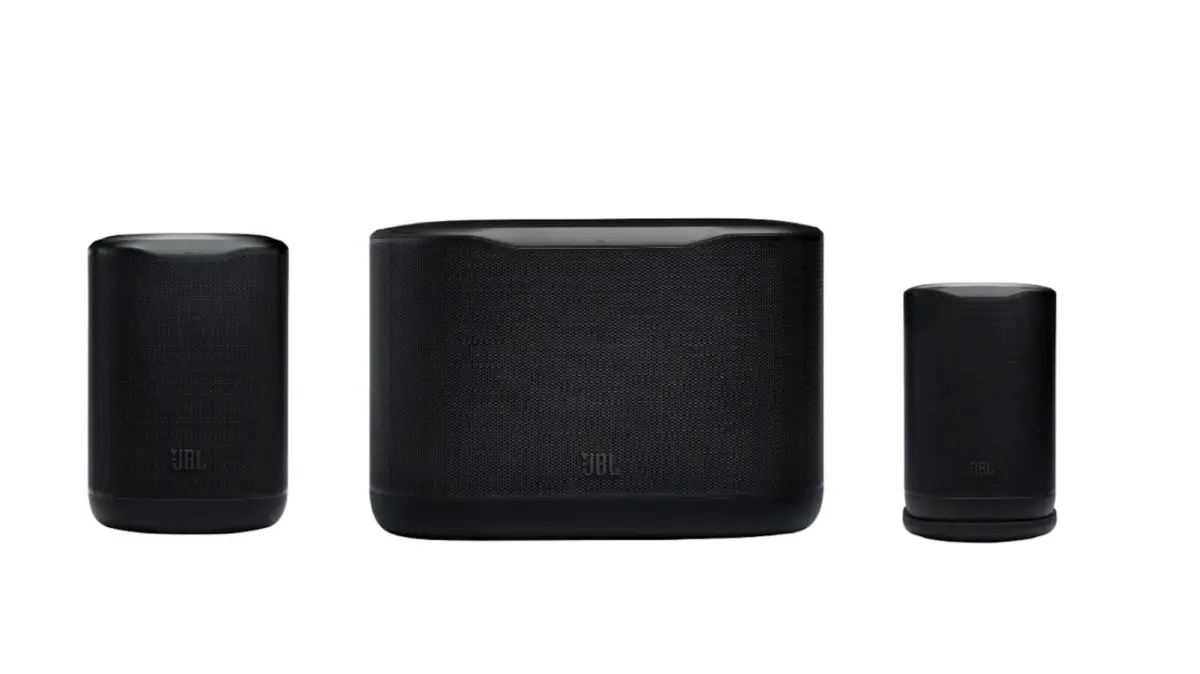
The newly unveiled Cove series comprises three distinct models—the Cove M1, the portable Cove P1, and the flagship Cove X1—each tailored to a specific use case within the modern smart home. Beyond standard multi-room music streaming, the Cove lineup introduces deep integration capabilities with JBL’s recently refreshed Bar Series MK2 soundbars, allowing users to dynamically repurpose the speakers as wireless rear channels for an immersive home theater configuration.
Available in sleek black and white colorways starting September 13, with pricing spanning from $230 to $450, the modular Cove ecosystem represents more than just a portfolio expansion. It signals a fundamental repositioning of the JBL brand. This comprehensive report examines the technical architecture of the Cove series, contextualizes its market significance, analyzes the strategic imperatives driving JBL’s pivot, and evaluates what this means for the hyper-competitive consumer audio landscape.
Detailed Chronology and Product Architecture
The development and subsequent unveiling of the Cove series represent the culmination of years of internal restructuring and technological acquisition within JBL’s parent company, Harman International. While JBL has enjoyed unprecedented dominance in the portable Bluetooth and festival speaker markets—typified by the relentless popularity of the Flip, Charge, and Pulse series—the company’s footprint in the stationary, high-fidelity home audio segment has remained relatively modest.
The conceptualization of the Cove series began in earnest following the refinement of JBL’s proprietary ecosystem software, the JBL One app. Recognizing that modern consumers demand friction-free multi-room audio without the proprietary locking mechanisms or unstable connections that historically plagued early smart-speaker iterations, engineers focused heavily on network stability and software fluidity. The goal was simple: eradicate the dropped connections, complex ungrouping procedures, and frustrating configuration loops that often frustrate users of traditional whole-home systems.
The Cove M1: The Everyday Workhorse ($230)
At the entry level of the ecosystem sits the Cove M1, retailing at $230. Built primarily for seamless everyday listening in medium-sized spaces such as kitchens, home offices, or bedrooms, the M1 features an acoustic architecture comprising three dedicated tweeters and one high-excursion woofer.
Crucially, the M1 incorporates JBL’s newly developed AI Sound Boost technology. This onboard processing algorithm analyzes incoming audio signals in real-time, dynamically adjusting the transducer response to maximize clarity and minimize distortion, even when pushed to higher volume levels. The result is a compact footprint that delivers a surprisingly expansive soundstage, engineered to handle everything from spoken-word podcasts to dynamic acoustic tracks without breaking a sweat.
The Cove P1: Battery-Powered Versatility ($400)
Addressing the modern consumer’s demand for untethered flexibility, the Cove P1 bridges the gap between stationary multi-room nodes and portable convenience. Priced at $400, the P1 integrates a high-capacity internal rechargeable battery rated for an impressive 14 hours of continuous playback per charge.
Unlike standard Bluetooth portables, the P1 maintains its Wi-Fi tethering capabilities while roaming within the home network, ensuring that music follows the user seamlessly from the living room to the patio without interruption. Furthermore, the P1 introduces Dolby Atmos integration, a rare feat for a battery-powered home speaker, allowing listeners to experience spatial audio dimensions in a completely mobile package.
The Cove X1: The High-End Flagship ($450)
At the pinnacle of the lineup is the Cove X1, carrying a price tag of $450. Engineered for primary living spaces, open-concept floor plans, and dedicated entertainment areas, the X1 is a massive acoustic powerhouse.
The hardware configuration is heavily beefed up, housing four high-frequency tweeters and dual woofers designed to move substantial air. Like its sibling the P1, the X1 features full Dolby Atmos spatial audio processing, utilizing advanced psychoacoustic rendering to produce genuinely room-filling audio that belies its physical enclosure. It serves as the sonic anchor of the Cove family, capable of driving high-decibel gatherings or delicate classical passages with equal poise.
Supporting Context & Market Metrics
To fully appreciate the weight of JBL’s entry into the whole-home Wi-Fi speaker market, one must examine the current macroeconomic and industrial landscape of the consumer electronics sector. For over a decade, the multi-room audio category has been dominated by a handful of players, most notably Sonos, which pioneered consumer-friendly mesh-network sound. However, recent software missteps, application redesign controversies, and privacy concerns among legacy ecosystems have left a distinct vulnerability in the market. Consumers are actively seeking viable alternatives that offer robust build quality, superior acoustic tuning, and frictionless software control.
The Modular Ecosystem Advantage
JBL’s strategy with the Cove series leans heavily into modularity. Rather than forcing consumers into rigid, all-or-nothing purchase models, the Cove lineup is designed to expand organically. A user might begin their journey with a single Cove M1 in the kitchen, add a portable Cove P1 for summer evenings on the deck, and eventually anchor their living room with a Cove X1 and a JBL Bar Series MK2 soundbar.
This modularity is heavily supported by the JBL One app, which acts as the centralized nervous system for the entire hardware family. Through the app, users can effortlessly drag and drop speakers into synchronized stereo pairs or multi-room groups. JBL’s engineering teams have heavily emphasized seamless listening protocols, promising zero interruptions when moving devices across groups or reconfiguring zones—a historic pain point for competing ecosystems.
Home Theater Synergy
One of the most compelling strategic features of the Cove series is its native interoperability with the JBL Bar Series MK2 soundbars. Historically, consumers looking to build an authentic home theater setup were forced to purchase dedicated surround sound satellite speakers designed exclusively for video playback.
With the Cove series, JBL has introduced a cross-pollination of product categories. Users can integrate Cove speakers directly into their existing Bar Series MK2 soundbar ecosystems, repurposing them as wireless rear surround channels. This dual-purpose functionality dramatically enhances the value proposition of each speaker: during the week, a Cove M1 functions as a standalone kitchen smart speaker; on movie night, it transforms into an active component of a multi-channel Dolby Atmos home theater rig.
Official Statements and Industry Insights
While formal press releases have outlined the foundational specifications and pricing models, industry insiders and executive communications from Harman International shed light on the broader philosophy steering the Cove initiative.
"For decades, JBL has provided the soundtrack to people’s lives in motion and at celebrations," noted a senior product development lead during a private media briefing. "With the Cove series, we recognized that our customers love our acoustic signature, but their audio needs change throughout the day. They want the power and clarity of JBL when they are entertaining, but they also want the grace, intelligence, and seamless connectivity of a whole-home system when they are unwinding at home. We didn’t just want to build another Wi-Fi speaker; we wanted to build an ecosystem that respects the fluidity of modern living."
Industry analysts have been quick to weigh in on the strategic implications of the launch. Market research firms specializing in consumer electronics note that the global multi-room audio market continues to expand at a steady compound annual growth rate (CAGR), driven by the proliferation of smart home renovations and the rising popularity of spatial audio formats like Dolby Atmos.
According to independent audio technologists, the inclusion of AI Sound Boost on the entry-level M1 and full Dolby Atmos rendering on the P1 and X1 indicates that JBL is refusing to compromise on acoustic fidelity in pursuit of aggressive pricing. By leveraging Harman’s legendary acoustic laboratories—facilities that have shaped professional cinema and studio monitoring for generations—JBL is positioning the Cove series not merely as convenient smart gadgets, but as serious, high-fidelity instruments.
Future Outlook: The Road Ahead for JBL and the Multi-Room Market
The launch of the Cove series on September 13 marks a crucial litmus test for JBL and its parent company, Harman. As the brand transitions from being a dominant lifestyle accessory maker to a comprehensive home-audio ecosystem provider, several key factors will dictate its long-term success.
1. Software Reliability and Ecosystem Expansion
In the smart speaker sector, hardware is only as good as the software that controls it. The success of the Cove series will hinge almost entirely on the rock-solid reliability of the JBL One app and network protocols. If JBL can deliver on its promise of interruption-free multi-room audio and zero-fuss configuration, it will win over disillusioned users from competing platforms. Furthermore, future firmware updates will likely need to expand voice assistant compatibility, streaming service integrations, and protocol support (such as enhanced AirPlay 2 and Matter integration) to maintain long-term competitive viability.
2. Market Disruption and Competitive Retaliation
Incumbent players in the whole-home audio space will not cede territory lightly. Established brands are expected to aggressively market their own proprietary ecosystems, potentially sparking a feature-and-pricing war heading into the critical year-end holiday shopping season. However, JBL’s ace in the hole is its massive global brand equity and retail footprint. Millions of consumers already own and trust JBL Bluetooth speakers; converting a fraction of that colossal user base into multi-room Wi-Fi ecosystem subscribers represents a massive addressable market.
3. The Future Product Roadmap
Looking beyond the initial September rollout, industry watchers are already speculating on how the Cove family might expand. Potential future iterations could include architectural in-wall speakers, outdoor weather-resistant whole-home nodes, or dedicated voice-control hubs designed to anchor the entire smart home. By establishing the foundational M1, P1, and X1 footprints now, JBL has laid the groundwork for a scalable, modular audio empire that can adapt to evolving consumer smart-home demands for years to come.
In conclusion, the JBL Cove series is much more than a routine product refresh. It is a bold, calculated strike into new territory by a brand that understands the shifting paradigms of modern consumer audio. By blending high-performance acoustics, intelligent AI-driven sound optimization, cross-category soundbar integration, and flexible modular pricing, JBL has positioned the Cove lineup as a formidable new standard in whole-home entertainment.