Executive Overview
The intersection of cloud computing and open source collaboration reached a notable milestone last week as Amazon Web Services (AWS) contributors converged on Seoul, South Korea. Participating prominently in the Open Source Summit Korea 2026 and the adjacent MCP DevSummit Seoul 2026, AWS engineering teams joined forces with global and regional maintainers, developers, and enthusiasts. The four-day Linux Foundation events served as a dynamic crucible for knowledge sharing, collaborative problem-solving, and the advancement of foundational enterprise technologies.
At the heart of the AWS presence were two powerhouse open source projects that have steadily redefined the modern data architecture landscape: OpenSearch and Valkey. As enterprises increasingly demand scalable, high-performance, and cost-efficient alternatives for search, observability, and data caching, both communities have responded with major architectural upgrades.
This report provides an in-depth examination of the collaborative momentum witnessed in Seoul, details the latest engineering milestones embedded in OpenSearch 3.7 and Valkey 9.1, explores their seamless integration into managed AWS services, and outlines the strategic trajectory of open source governance and community engagement moving forward.
Detailed Chronology: A Week of Collaboration and Community in Seoul
The multi-day gathering in Seoul brought together thousands of technologists from across the Asia-Pacific region and beyond. The event timeline highlights a dense schedule of technical sessions, hands-on workshops, and community networking designed to foster deeper ties between corporate contributors and grassroots developers.
Days 1 and 2: Opening Keynotes and Technical Deep Dives
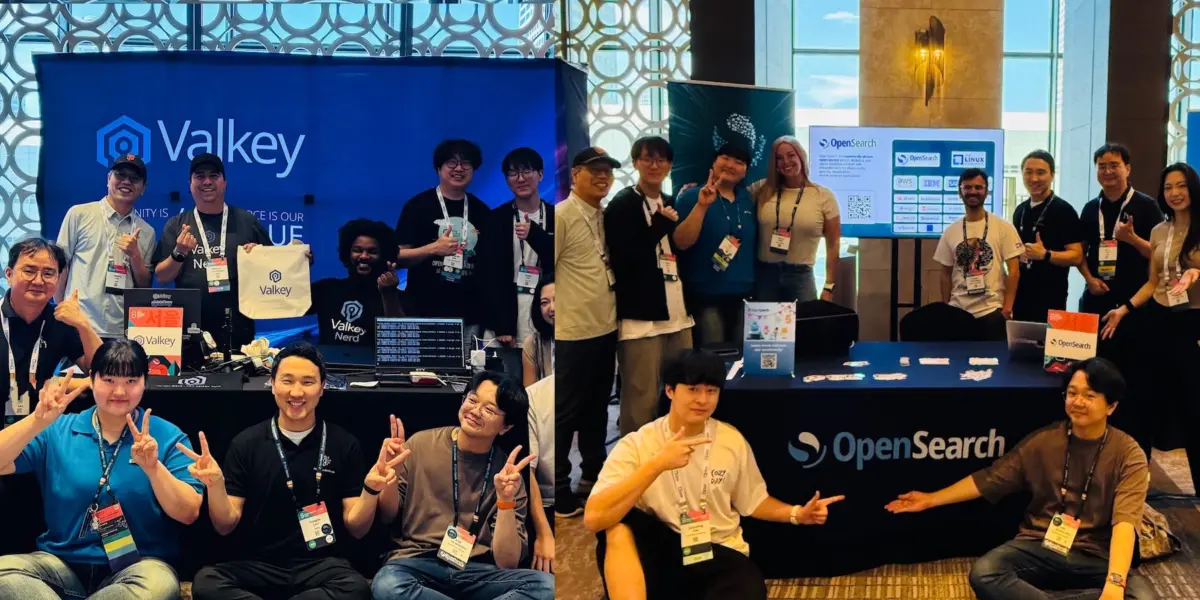
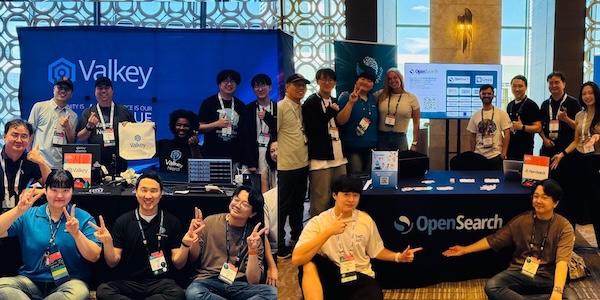
The summit kicked off with keynote presentations emphasizing the critical role of open source in driving sovereign cloud infrastructures and AI-ready architectures. AWS contributors, working alongside local community leaders, established an active presence on the exhibition floor. The OpenSearch and Valkey booths quickly became hubs of activity, drawing developers seeking insights into performance tuning, cluster scaling, and migration strategies.
Local community leaders from the Korean OpenSearch chapters played a pivotal role, volunteering their expertise to guide attendees through complex architectural scenarios. Their involvement underscored a core tenet of modern open source philosophy: decentralized ownership and regional empowerment.
Days 3 and 4: User Group Meetups and Collaborative Workshops
As the summit progressed into its latter half, the focus shifted from broad plenary sessions to targeted developer interactions. A standout highlight was the dedicated OpenSearch Project Seoul User Group Meetup, held in conjunction with the summit. This evening session allowed local engineers to share real-world case studies detailing how they handle petabyte-scale ingestion, complex log analytics, and low-latency vector searches in production environments.
Discussions during the meetup spanned several critical areas:
- Operational Resilience: Strategies for maintaining high availability during peak traffic events.
- Cost Optimization: Techniques for right-sizing instances and leveraging tiered storage within Amazon OpenSearch Service.
- Security Hardening: Implementing fine-grained access control (FGAC) across multi-tenant clusters running Valkey.
Supporting Context & Metrics: Engineering Milestones in OpenSearch and Valkey
The timing of the Seoul summit coincided with major product maturity milestones for both OpenSearch and Valkey. Over the preceding months, both projects rolled out substantial performance enhancements, directly addressing enterprise pain points around speed, memory footprint, and observability unification.
OpenSearch 3.7: Unified Observability and High-Speed Vector Retrieval
Released on June 9, 2026, OpenSearch 3.7 introduced architectural refinements designed to simplify operations while dramatically accelerating data processing pipelines.
- Unified Observability Interface: For years, engineering teams struggled with tool fragmentation, juggling separate solutions for logs, metrics, and distributed traces. OpenSearch 3.7 bridges this gap by introducing unified tools that enable operators to query, configure alerts, and track Service Level Objectives (SLOs) across all three telemetry pillars through a single, cohesive interface.
- Vector Search Acceleration: With the explosive growth of generative AI and Retrieval-Augmented Generation (RAG) pipelines, vector search performance has become paramount. OpenSearch 3.7 delivers vector retrieval speeds up to 5.5x faster than previous iterations. This leap in performance is achieved through optimized indexing algorithms and hardware-aware query execution paths.
- Managed Integration: Building on these open source advancements, AWS launched support for OpenSearch version 3.7 on Amazon OpenSearch Service on July 30, 2026. This managed offering brings immediate access to enhanced vector search performance, superior search relevance tuning, and advanced Query Insights capabilities, allowing organizations to run mission-critical semantic search workloads with minimal administrative overhead.
Valkey 9.1: Redefined I/O Threading and Memory Efficiency
As a high-performance, open source key/value datastore utilized for caching, message brokering, and primary data storage, Valkey continues to win over developers seeking a permissive open source license combined with extreme throughput. Released on May 19, 2026, Valkey 9.1 brought transformative performance metrics to the table.
- Redesigned I/O Threading Model: Valkey 9.1 overhauled its internal networking and I/O pipeline architecture. This redesign yields a throughput increase of up to 17%, significantly reducing thread contention on multi-core hardware configurations.
- Optimized Memory Footprint: Memory efficiency remains a critical metric for cache-heavy workloads. Valkey 9.1 introduced memory layout optimizations that reduce string storage overhead for keys and values under 128 bytes by up to 20%. For large-scale caching deployments holding billions of small objects, this translates into substantial hardware cost reductions.
- Managed Integration: On June 23, 2026, AWS rolled out Valkey 9.1 support in Amazon ElastiCache for node-based clusters. This managed implementation equips enterprise multi-tenant workloads with higher transaction throughput, maximized memory efficiency, and robust access control mechanisms.
Official Statements and Industry Perspectives
The collaborative ethos displayed at Open Source Summit Korea 2026 reflects a broader industry shift toward sustainable, community-driven software development.
Industry analysts tracking the event noted that the active participation of major cloud providers like AWS in foundational Linux Foundation projects helps bridge the gap between upstream innovation and enterprise-grade reliability. By contributing engineering resources back into projects like OpenSearch and Valkey—while simultaneously offering fully managed, hardened versions on their cloud infrastructure—AWS helps legitimize and accelerate the adoption of these tools globally.
Local community organizers in Seoul echoed these sentiments, emphasizing that face-to-face interactions remain irreplaceable. One prominent OpenSearch community leader noted:
"Conferences like Open Source Summit Korea provide a vital physical anchor for our digital communities. Being able to sit down with AWS core engineers, discuss real-world architectural bottlenecks, and see our feedback directly influence upstream roadmaps validates the power of open collaboration."
Future Outlook: The Road Ahead for OpenSearch and Valkey
As the technology sector looks toward the remainder of 2026 and beyond, the trajectory for both OpenSearch and Valkey points toward deeper integration with artificial intelligence, enhanced cloud-native portability, and even tighter security controls.

1. AI-Driven Observability and Semantic Workloads
The boundary between traditional search engines and AI databases continues to blur. Future iterations of OpenSearch are expected to lean further into native machine learning integrations, allowing enterprises to execute complex neural search queries alongside traditional full-text search without requiring external middleware. Similarly, Valkey’s speed makes it an ideal candidate for real-time vector caching and session management in LLM-powered applications.
2. Expanding Global Community Touchpoints
Following the success of the events in Seoul, AWS contributors have confirmed plans to maintain an active presence across upcoming global developer gatherings. Upcoming community events hosted by the OpenSearch Events Calendar and the Valkey Events Portal will offer further opportunities for developers to engage directly with maintainers, propose feature enhancements, and contribute code.
3. Continuous Engagement via the AWS Builder Center
For developers unable to attend regional summits in person, AWS continues to expand its digital ecosystems. Platforms like the AWS Builder Center, alongside local AWS Summits and AWS Community Days, provide continuous avenues for technical exchange. Builders are encouraged to leverage these platforms to share architectural blueprints, access whitepapers, and participate in ongoing open source discussions.
Conclusion
Open Source Summit Korea 2026 served as a powerful reminder that behind every enterprise-grade software suite lies a vibrant, human community of builders, maintainers, and contributors. Through continuous innovation in releases like OpenSearch 3.7 and Valkey 9.1—and their seamless delivery via Amazon OpenSearch Service and Amazon ElastiCache—AWS continues to demonstrate its deep commitment to open source principles.
As organizations navigate increasingly complex data landscapes, the synergy between upstream community governance and managed cloud infrastructure will remain a cornerstone of modern software engineering.
Check back next Monday for another comprehensive Weekly Roundup highlighting the latest announcements from the AWS ecosystem.