Executive Overview
As the autumn air chills and the pads begin to pop across stadiums nationwide, the kickoff of another football season arrives accompanied by a heavier, more troubling shadow than ever before. While fans and sports commentators fixate on division races, marquee quarterback matchups, and fantasy football drafts, a silent, progressive crisis looms over the sport. A groundbreaking, comprehensive scientific study published in the British Medical Journal (BMJ) has shattered lingering denials and obfuscations about the true toll of professional football, revealing that at least one in four former NFL players—and likely a significantly higher proportion—die with chronic traumatic encephalopathy (CTE).
The BMJ paper examined the post-mortem brain tissue of 235 former National Football League players out of a cohort of 878 who died between 2016 and 2021. The results are startling, establishing that brain trauma is not merely an unfortunate string of freak accidents, but a widespread, systemic occupational disease. Comparing the prevalence of CTE in football to black lung disease in coal miners, public health experts and occupational safety advocates are pointing to an uncomfortable reality: America’s most popular spectator sport operates on a foundation of severe, irreversible physical sacrifice.
Yet, unlike traditional industries where federal regulators step in to enforce safety protocols and mitigate workplace hazards, professional sports have largely remained on the outside looking in. Proposals by federal agencies to formally exempt hazards "inherent and inseparable from the core nature" of sports have further spotlighted the moral paradox of football consumption.
This deep-dive investigation explores the methodologies and implications of the BMJ study, traces the history of CTE research, examines the regulatory vacuum surrounding athlete safety, captures the cultural and moral dilemma facing millions of fans, and outlines actionable pathways for safeguarding the future of the game from youth leagues to the professional level.
Detailed Chronology: From Ignored Symptoms to Scientific Proof
To understand the weight of the new BMJ findings, it is necessary to trace the grueling timeline of how sports-related neurotrauma shifted from an invisible punchline to a heavily documented medical reality.
The Early Decades: "Getting Your Bell Rung"
For the better part of the 20th century, the cultural attitude toward head injuries in football was defined by stoicism. Concussions were colloquially dismissed as "getting your bell rung" or "seeing stars." Players were expected to shake off the dizziness, swallow the pain, and return to the huddle. Medical science largely focused on immediate, acute concussions—loss of consciousness or short-term confusion—while entirely ignoring the cumulative, long-term degradation of neural tissue caused by hundreds of sub-concussive impacts sustained during every practice and game.
The Turn of the Century: Dr. Bennet Omalu and the Discovery of CTE
The modern era of neurotrauma research began in 2002, when forensic pathologist Dr. Bennet Omalu examined the brain of legendary Pittsburgh Steelers center Mike Webster. Webster, who suffered a tragic and erratic post-football decline marked by severe cognitive impairment, depression, and self-harm, was found by Omalu to have a strange accumulation of tau protein—a pathology previously associated primarily with Alzheimer’s disease and punch-drunk syndrome in boxers.
Dr. Omalu coined the term chronic traumatic encephalopathy (CTE) as it related to American football players, publishing his findings in 2005. The NFL’s initial reaction was swift denial, attempting to discredit the research and minimize the connection between repeated helmet-to-helmet collisions and long-term neurodegenerative disease.
The Institutional Reckoning (2010–2020)
As subsequent studies by Boston University’s CTE Center—led by researchers like Dr. Ann McKee—began finding CTE in dozens of deceased former players, the wall of denial began to crack. High-profile suicides of former players, such as Junior Seau and Dave Duerson, who explicitly requested that their brains be studied for CTE, brought the national conversation to a boiling point.
- 2016: The NFL publicly acknowledged for the first time a link between football and CTE, a monumental shift from years of stonewalling.
- 2017: A landmark Boston University study revealed that of 111 former NFL players’ brains tested, 110 tested positive for CTE. While that specific cohort was self-selected (meaning families suspected brain disease and submitted the brains for analysis, skewing the percentage upward), it irrevocably shifted public perception.
- 2019–2021: Lawsuits, settlement payouts to former players, and overhauled league protocols—such as mandatory concussion spotters and stricter return-to-play rules—altered how the game was played on the surface, though deep-seated systemic concerns remained.
The 2026 BMJ Milestone
Published this morning, the new study in the BMJ represents the most statistically robust population-based examination of CTE to date. By looking at a broader cross-section of 235 brains out of 878 deceased former players across a defined five-year window (2016–2021), the researchers bypassed some of the selection bias of earlier studies, delivering a conservative baseline estimate of 25% prevalence—with researchers emphasizing that the true figure is almost certainly much higher due to the limitations of post-mortem detection methods.
Supporting Context & Metrics: The Anatomy of a Degenerative Disease
What makes CTE uniquely terrifying is its insidious nature. Unlike a torn ACL or a broken bone, which heals over time, CTE is progressive and degenerative. It cannot be diagnosed definitively in living patients, though advanced neuroimaging and biomarker research are rapidly closing that gap. A definitive diagnosis requires microscopic examination of brain tissue after death.
The Biological Mechanism
Repeated blows to the head cause microscopic tearing of nerve fibers (axons) and blood vessels in the brain. This trauma triggers an abnormal inflammatory response, leading to the misfolding and accumulation of a protein called tau. As tau builds up, it forms clumps that slowly strangle and kill surrounding neurons, particularly in the frontal and temporal lobes—areas responsible for mood regulation, executive function, impulse control, and memory.
Clinical Stages and Symptoms
Clinically, CTE manifests in two distinct presentations:
- Behavioral and Mood Variant (Early Onset): Typically manifesting in patients in their 20s or 30s, symptoms include explosive irritability, depression, anxiety, impulsivity, substance abuse, and suicidal ideation.
- Cognitive Variant (Late Onset): Typically manifesting in patients in their 40s and beyond, symptoms mirror progressive dementias, featuring severe short-term memory loss, confusion, word-finding difficulties, and eventual full-blown dementia.
Comparative Occupational Hazard
Public health experts have increasingly drawn parallels between CTE in football and classic industrial diseases, such as black lung disease (pneumoconiosis) in coal miners or mesothelioma in asbestos workers.
- The Coal Miner Analogy: Just as inhaling coal dust over years inevitably scars the pulmonary tissue of miners regardless of personal protective equipment, absorbing thousands of sub-concussive hits to the head over a football career scars neural pathways.
- The Structural Failure: In industrial settings, OSHA (the Occupational Safety and Health Administration) enforces engineering controls, ventilation standards, and exposure limits to protect workers. Yet, when applied to sports, the concept of "exposure limits" breaks down because contact and collision are foundational to the entertainment product itself.
Official Statements and Regulatory Standstills
The release of the BMJ study has reignited debates regarding federal oversight, corporate responsibility, and the boundaries of labor protection.
The OSHA Regulatory Vacuum
While federal regulators intervene aggressively when workers are exposed to toxic substances or dangerous machinery in factories and mines, they have historically maintained a hands-off approach to athletics.
In a controversial move last year, the Trump administration’s OSHA advanced a proposed rule change explicitly designed to formally exclude from standards enforcement those workplace hazards that are considered "inherent and inseparable from the core nature of a professional activity." While this proposal awaits finalization, legal scholars note it codifies an existing de facto exemption for sports leagues.
"If a hazard is defined as intrinsic to the job," noted one labor law expert, "then the employer’s obligation to provide a safe workplace effectively vanishes. But that puts football in a solitary category: an industry where the primary product delivered by the laborer is bodily trauma."
The Leagues’ Response
The NFL has continually pointed to its evolution of safety rules—outlawing helmet-to-helmet hits, limiting full-contact practices during the preseason and regular season, and implementing independent neurological consultations—as proof of its commitment to player welfare.
However, critics and player advocacy groups argue that cosmetic rule changes cannot overcome the fundamental geometry of a sport where linemen collide on every single snap with the force of minor car crashes.
The Moral Dilemma of the Fan: Culture, Community, and Conscience
For millions of Americans, football is more than a game; it is a secular religion, a cornerstone of civic life, and an engine of social connection. It creates shared rituals across generations, bridges cultural divides, and offers millions an accessible sense of belonging in an increasingly atomized world.
The Chuck Klosterman Paradigm
Cultural critic Chuck Klosterman, who recently authored a comprehensive book exploring the societal footprint of football (Football, Penguin Random House), addressed this exact tension in an interview with Vox earlier this year.
"Part of what makes football interesting is that it refuses to resolve itself morally," Klosterman observed. "It doesn’t let you land comfortably on one side or the other."
Klosterman argues that danger is fundamentally tethered to the "core nature" of the sport. If you completely strip away the violence, the collisions, and the high-stakes physical vulnerability, the game’s dramatic tension diminishes. The stakes get lowered, and the cultural resonance of the spectacle begins to erode.
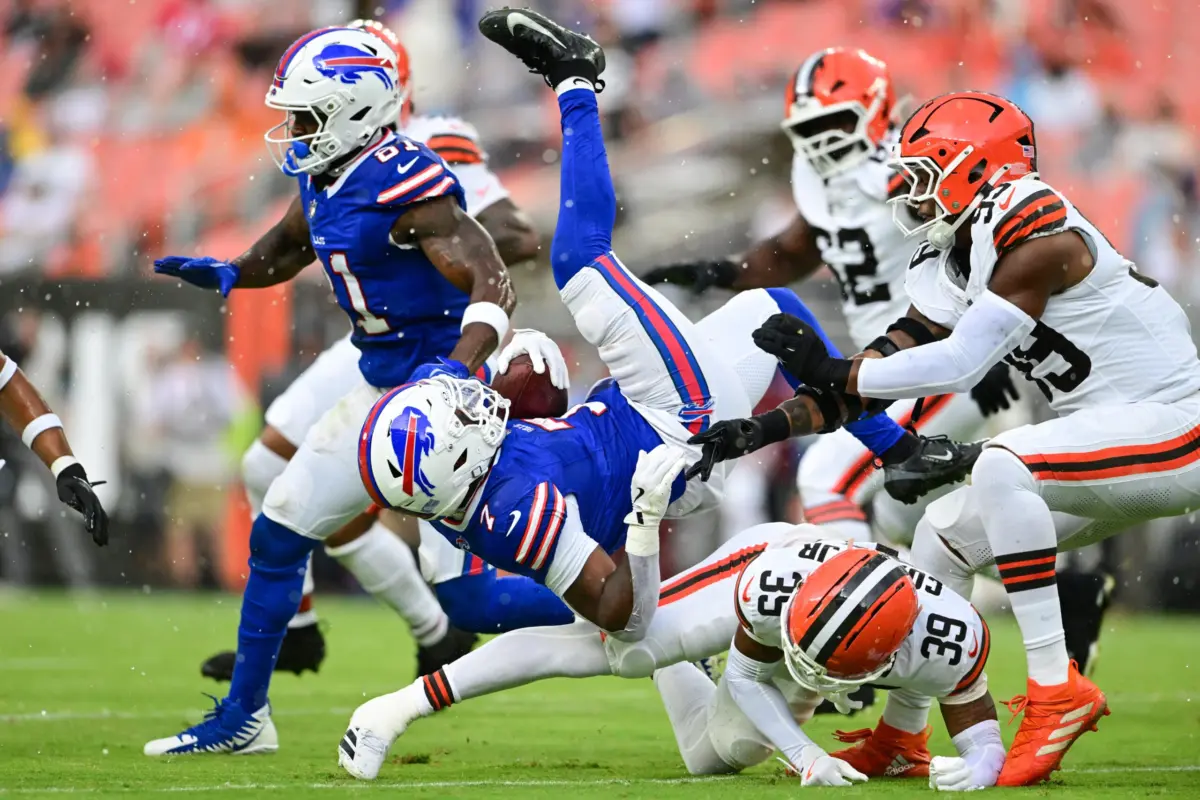
Yet, acknowledging that danger makes the game compelling does nothing to absolve the spectator of moral complicity. Fans cheer wildly for bone-crushing blocks and breathtaking open-field tackles, fully aware that those very plays are contributing to the cumulative neurological decay of the athletes performing them.
Future Outlook: A Pragmatic Roadmap for Survival
The newly published BMJ study is not necessarily a death warrant for football, but it serves as an undeniable demand for structural adaptation. If the sport is to survive morally and physically into the latter half of the 21st century, a radical reimagining must take place across all levels of play.
1. Reforming Youth Sports
The most straightforward and impactful conclusion drawn by medical professionals is simple: Children should not play tackle football.
Developing brains are exponentially more vulnerable to shear forces and neurotrauma. Transitioning youth leagues toward flag football preserves the strategic complexity, agility training, and athletic camaraderie of the sport while virtually eliminating the catastrophic sub-concussive loads associated with early-age tackle football.
2. Technological and Operational Evolution at the Professional Level
For college and professional leagues, mitigation must become more aggressive:
- Advanced Helmet Technology: Continued investment in shock-absorbing materials, custom-molded interior padding, and position-specific helmet designs can help reduce rotational acceleration during impacts.
- Radical Practice Reductions: The majority of cumulative head trauma occurs during mid-week practices, long before the television cameras turn on. Eliminating or severely restricting full-contact drills during practice weeks will drastically lower players’ total career exposure.
- Expanded Roster Sizes and Substitution Rules: Modifying roster limits to allow for more frequent rotation of players can reduce fatigue-related sloppy mechanics and limit total snap counts per individual athlete.
Conclusion
As the new football season roars to life with cheering crowds, booming marching bands, and multi-billion-dollar broadcast deals, the BMJ study sits heavily on the conscience of the sport. Football’s moral ambiguity cannot be legislated away, nor can its inherent risks be entirely sterilized.
For fans, players, and administrators alike, the path forward requires clear-eyed honesty. We must stop pretending that brain disease in football is a rare anomaly. It is an epidemic born of entertainment—and confronting it honestly is the only way to ensure the game has a sustainable future.