Executive Overview
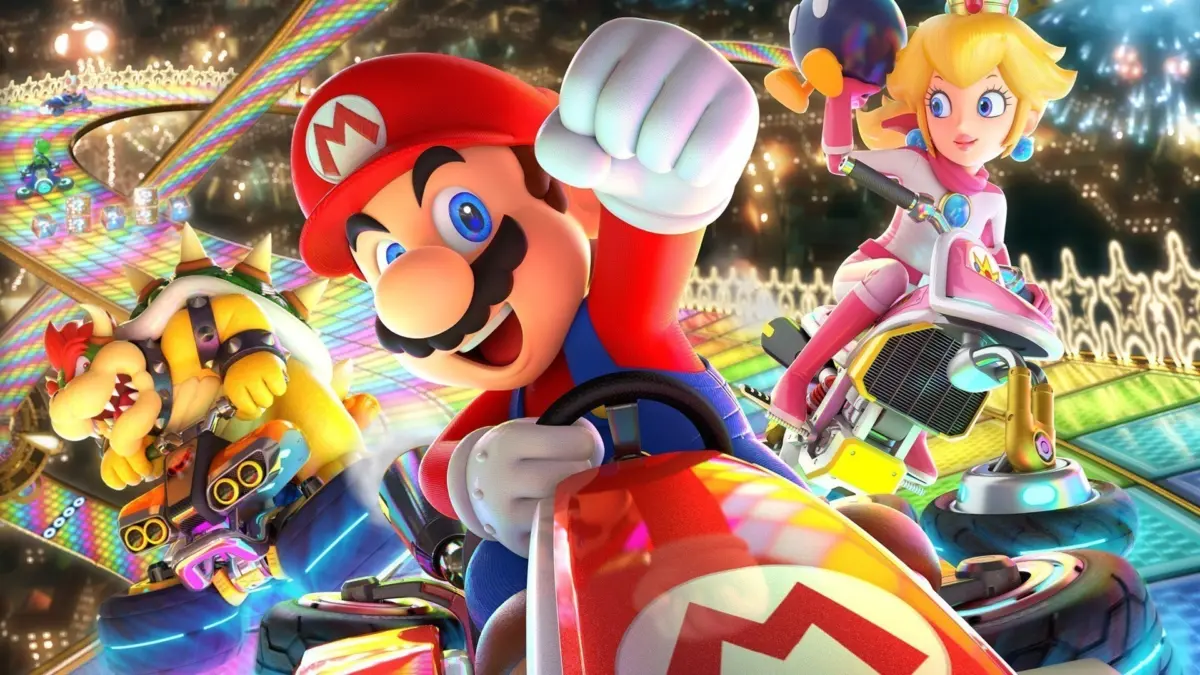
The couch co-op multiplayer landscape has undergone a monumental shift. For decades, local multiplayer video games operated under an unwritten law: four players was the absolute ceiling. Whether navigating the chaotic battle arenas of GoldenEye 007, splitting screens in Halo: Combat Evolved, or trading blue shells in earlier iterations of Nintendo’s flagship kart racer, four controllers represented the physical and technical threshold of shared-screen entertainment.
That threshold has now been decisively shattered. In a surprise announcement that has sent shockwaves through the global gaming community, Nintendo has released a major, completely free update for Mario Kart 8 Deluxe specifically tailored for its next-generation hardware ecosystem, the Nintendo Switch 2. The centerpiece of this update is a staggering, highly anticipated eight-player local splitscreen mode, a technical and design feat that redefines what local multiplayer gatherings look like in the modern era.
Long gone are the days when hosting a massive Mario Kart tournament required hauling multiple consoles, linking local wireless networks, or resorting to cumbersome LAN setups. Now, up to eight players can crowd around a single display unit, sharing the exact same hardware, the exact same screen real estate, and the exact same room.
Alongside this unprecedented eight-player local mode, Nintendo’s software engineering team has packed the update with a suite of quality-of-life enhancements exclusive to the Switch 2. These include CameraPlay—a feature that integrates real-time video feeds of your opponents’ faces directly into the race UI—as well as heavily optimized load times and vastly superior visual fidelity.
Cementing its status as an enduring titan of the industry, Mario Kart 8 Deluxe recently earned a prestigious, well-deserved spot in IGN’s 30th-anniversary round-up of racing game masterpieces. With this new update, Nintendo is proving that its multi-million-selling blockbuster is not merely resting on its laurels, but actively evolving to harness the power of next-gen hardware. This comprehensive report explores the mechanics of the new update, the technological milestones that made it possible, the integration of CameraPlay, and what this means for the future of local multiplayer gaming.
Detailed Chronology: From Four-Player Norms to Eight-Player Chaos
The Historical Context of Splitscreen Limitations
To understand the engineering marvel of an eight-player splitscreen mode, one must first examine the historical limitations of local multiplayer. When Mario Kart 8 originally launched on the Wii U in 2014, and subsequently as Mario Kart 8 Deluxe on the original Nintendo Switch in 2017, the game supported a maximum of four local players.
Dividing a single display into four distinct windows was already a heavy computational burden. Each quadrant required the game engine to render independent viewpoints, calculate physics for up to 12 simultaneous racers, and maintain a stable frame rate—traditionally targeting 60 frames per second. As hardware capabilities stagnated on the original Switch, pushing beyond four local screens was widely considered a technical impossibility without severe compromises to resolution, graphical fidelity, and frame stability.
The Switch 2 Hardware Leap
The narrative shifted radically with the development and subsequent rollout of Nintendo’s successor console, tentatively and commonly referred to in the industry as the Switch 2. Armed with significantly enhanced processing architecture, advanced GPU capabilities, and faster memory bandwidth, the new console provided the computational headroom developers needed to push boundaries.
Rumors of performance patches and next-gen upgrades for Mario Kart 8 Deluxe had circulated within developer circles for months. However, Nintendo’s decision to bypass a traditional "Deluxe 2" standalone sequel in favor of a robust, deeply integrated free update for the existing Switch 2 installation base caught many by surprise.
Upon downloading the update, players booting up Mario Kart 8 Deluxe on Switch 2 are greeted with a restructured multiplayer menu. Selecting local play now presents the earth-shattering option: 8-Player Splitscreen.
The Layout: Navigating Eight Portrait Windows
Dividing a standard television or monitor into eight distinct playing fields is no small design hurdle. Rather than relying on traditional grid formats that would render individual screens microscopic and virtually unplayable, the development team opted for a dynamic, portrait-style window layout.
The screen is carved into eight slender, vertical strips. While individual field-of-view angles are naturally compressed horizontally, the portrait configuration cleverly preserves vertical height, allowing players to see upcoming turns, item boxes, and vertical elevation changes with remarkable clarity.
Of course, executing an eight-player local session requires logistical preparation. Hosts will need to round up eight distinct controllers—whether that means a combination of Joy-Con pairs, Nintendo Switch Pro Controllers, or legacy input devices compatible with the system—alongside enough physical seating to comfortably accommodate eight competitive racers. As community jokes have already begun pointing out, winning your way onto the couch is now higher stakes than ever, with last-place finishers finding themselves relegated to the living room floor.
Supporting Context & Metrics: Performance, Visuals, and CameraPlay
Enhanced Visuals and Blazing-Fast Load Times
Beyond the sheer logistical spectacle of eight-player couch co-op, the Switch 2 update introduces critical technical enhancements that elevate the baseline experience for all Mario Kart 8 Deluxe players on the new hardware.
- Resolution and Fidelity: On the original Switch, Mario Kart 8 Deluxe ran at a dynamic 1080p resolution at 60 FPS when docked, dropping to 720p in handheld mode. On the Switch 2, the game harnesses advanced upscaling techniques and native processing power to maintain a rock-solid, crisp 4K presentation (where supported by the display) in docked mode, all while keeping the critical 60 FPS standard intact—even under the immense stress of rendering eight simultaneous viewports.
- Load Time Optimization: One of the most common friction points in large-scale local multiplayer sessions is downtime between races. The Switch 2 update leverages high-speed internal flash storage and optimized asset-streaming protocols to slash load times dramatically. Transitioning from the character selection screen to the starting grid is now almost instantaneous, keeping party momentum high and downtime to an absolute minimum.
Introducing CameraPlay: Bringing Faces to the Race
Perhaps the most innovative software addition included in the free update is CameraPlay. Designed to bridge the gap between online party chat and the traditional intimacy of couch co-op, CameraPlay utilizes the Switch 2’s supplementary hardware capabilities to overlay live video feeds of your friends’ faces directly onto the screen as you race.
The feature captures real-time emotional reactions—the sheer panic of a incoming red shell, the smug satisfaction of landing a well-timed green shell sniper shot, or the agony of being hit by a blue shell right before the finish line.
- Player Limitations: It is important to note that CameraPlay is optimized for intimate gatherings, functioning exclusively in sessions featuring two to four players. While it cannot be active during the chaotic eight-player splitscreen mode (due to screen real estate constraints), it serves as the ultimate feature for mid-sized competitive couch sessions, injecting a layer of personal interaction reminiscent of classic arcade cabinets with built-in cameras.
Official Statements and Industry Impact
While Nintendo has traditionally preferred letting its software speak for itself through direct consumer releases, accompanying press briefs and developer notes shed light on the philosophy driving the Switch 2 update.
Industry analysts have praised the move as a masterclass in platform longevity and consumer goodwill. By offering such a massive, highly requested feature as a free update rather than locking it behind a new retail purchase, Nintendo continues to cement the value proposition of its software ecosystem.
"Mario Kart 8 Deluxe has continually defied conventional industry lifecycle expectations," notes an independent gaming market analyst. "By leveraging the Switch 2 hardware to deliver an engineering feat like eight-player splitscreen—something previously thought impossible on a single console—Nintendo is reminding players why local multiplayer remains the beating heart of their brand identity."
Furthermore, the game’s recent inclusion in IGN’s 30th-anniversary round-up of racing game masterpieces underscores its historical weight. Standing shoulder-to-shoulder with arcade legends, simulation heavyweights, and seminal kart-racing pioneers, Mario Kart 8 Deluxe has proven itself to be an immortal entry in the genre. This latest update ensures that its cultural relevance will extend deep into the lifespan of the Switch 2 generation.
Future Outlook: What This Means for Local Multiplayer
The deployment of eight-player splitscreen in Mario Kart 8 Deluxe is more than just a headline-grabbing novelty; it serves as a watershed moment for the video game industry at large.
For the past decade, the industry’s economic and technological trajectory has heavily favored online multiplayer. Developers frequently abandoned split-screen modes entirely, citing performance costs, optimization hurdles, and a desire to drive individual hardware sales (the "one player per console" business model).
Nintendo’s successful execution of eight-player splitscreen on Switch 2 sends a powerful counter-signal. It demonstrates that consumer demand for shared-room, face-to-face gaming experiences remains extraordinarily high, and that modern hardware is fully capable of supporting these experiences if developers are willing to innovate.
Looking Ahead
As the Switch 2 hardware rollout continues to gather momentum, industry watchers are already speculating on the ripple effects of this update:
- Precedent for Future First-Party Titles: Will upcoming multiplayer titles like Super Smash Bros. successors or cooperative platformers adopt expanded local player caps? The technical framework established by Nintendo here suggests it is entirely possible.
- Third-Party Adoption: Developers specializing in party games and couch co-op titles will undoubtedly look at Nintendo’s portrait-splitscreen implementation as a blueprint for maximizing local player counts without sacrificing playability.
- Community Tournaments: Local gaming cafes, esports bars, and collegiate gaming clubs now have a streamlined, highly accessible platform to run massive, single-console tournaments without the friction of complex network routing.
Final Thoughts
For millions of fans who grew up squeezing four friends onto a single couch, the idea of doubling that capacity on one machine felt like an unattainable pipe dream. Today, thanks to the technical leap of the Switch 2 and Nintendo’s ongoing commitment to Mario Kart 8 Deluxe, that dream is a reality.
Grab your controllers, secure your seating arrangements (or prepare for the floor), and update your system. The ultimate test of friendship, agility, and kart-racing supremacy has just expanded to a whole new dimension.