Executive Overview
The intersection of classic video game history and the world’s most popular construction toy has once again yielded a major collectible. Following months of speculation, fervent internet sleuthing, and unconfirmed product database leaks, the long-rumored LEGO PlayStation set has finally broken cover. Leaked photographs originating from a retail environment—subsequently amplified by reliable hobbyist outlet Brick Tap—have provided enthusiasts with their first definitive look at the brick-built iteration of Sony’s groundbreaking 1994 home console.
Set for a heavily rumored October release, this upcoming collector-grade build follows in the footsteps of previous retro gaming collaborations from the Danish toy manufacturer, most notably the LEGO Nintendo Entertainment System (NES) and the Atari 2600. Featuring a reported 1,911 pieces, a competitive price point of $160, and a suite of clever, nostalgic Easter eggs tucked away within its chassis, the PlayStation build is positioned to be one of the holiday season’s most sought-after collector items.
Beyond the technical specifications and leaked box art, this impending release highlights a broader strategic convergence between interactive entertainment and physical merchandising. As hardware manufacturers look for novel ways to monetize their historical intellectual property, partnering with the LEGO Group has proven to be a lucrative avenue for engaging adult collectors—often referred within the industry as "AFOLs" (Adult Fans of LEGO). This article examines the chronology of the leak, the intricate design details revealed thus far, the broader context of retro-gaming merchandise, and what this release signals for the future of interactive display pieces.
Detailed Chronology: From Whispers to Retail Leaks
The journey toward the physical manifestation of a LEGO PlayStation began long before the first grain of high-resolution photographic evidence surfaced online. Understanding how this project came to light requires examining a timeline defined by trademark hints, supply-chain whispers, and retail missteps.
Early 2024: The Rumor Mill Awakens
Speculation surrounding a potential partnership between Sony Interactive Entertainment and the LEGO Group first gained serious traction earlier this year. Anonymous retail inventory leaks—frequently the primary vectors for unannounced consumer product launches—began populating internal databases of European and North American toy distributors. These listings hinted at a mysterious, high-end adult-targeted set under a classified serial number, strongly associated with Sony branding.
For months, the gaming and brick-building communities debated the authenticity of these placeholder entries. Sony has historically been protective of its hardware designs, though the company’s recent aggressive push into lifestyle merchandise, PC ports, and cinematic adaptations suggested a growing appetite for brand expansion.
September 2024: The Brick Tap Breakthrough
As the calendar turned toward the final quarter of the year—traditionally the peak retail window for major toy releases—the dam broke. Reliable LEGO community tracker Brick Tap published images purportedly snapped inside a physical LEGO brand retail store, showcasing the set’s official retail box.
The appearance of packaging confirmed that the manufacturing process was complete, warehousing distribution was underway, and an official announcement was imminent. The timing of the leak coincided neatly with industry whispers regarding Sony’s promotional calendar, specifically pointing toward upcoming digital showcase events where cross-promotional reveals frequently occur.
Design Breakdown: Engineering a Micro-Scale Icon
For a construction set aimed at adult collectors, aesthetic accuracy and tactile engagement are paramount. Based on the initial photographic evidence provided by the retail leaks, the LEGO PlayStation set appears to have captured the distinct industrial design of the original gray console while incorporating clever mechanical features and hidden narrative details.
The Exterior: Recreating the Gray Box
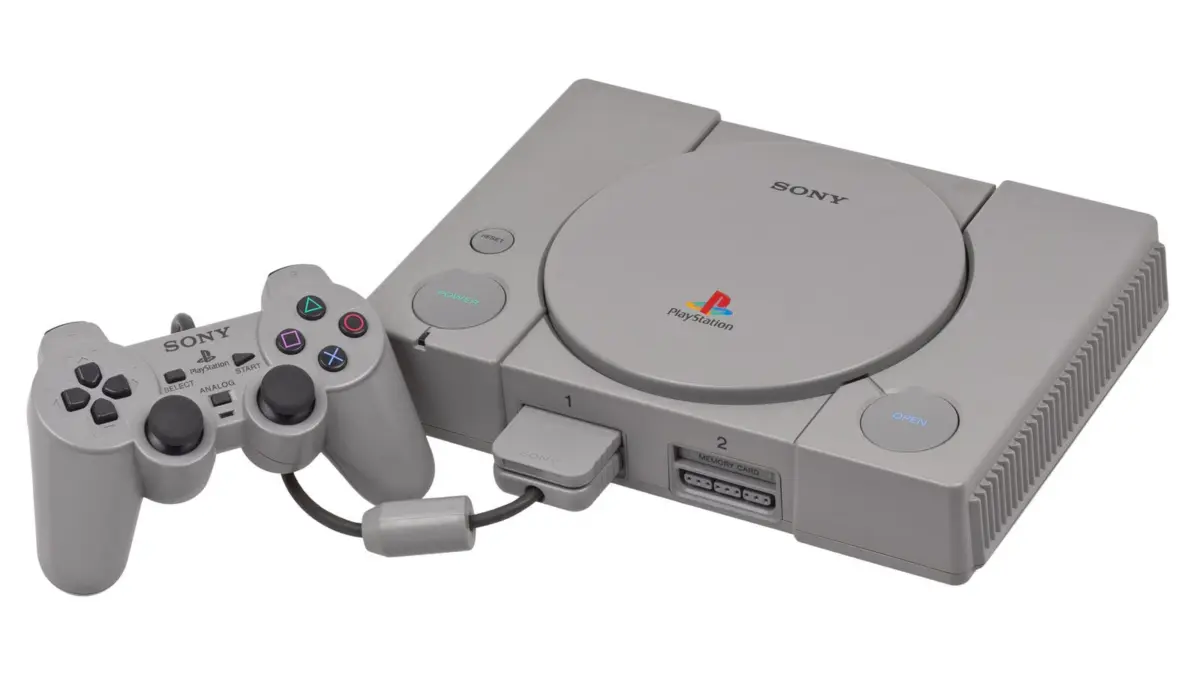
The original PlayStation (SCPH-1000 series) was defined by its minimalist, utilitarian aesthetic—a stark departure from the rounded, colorful toy-like designs of its competitors in the mid-1990s. The LEGO adaptation mirrors this boxy silhouette, utilizing specialized gray tiles and curved elements to mimic the sloping front panel, the power and open buttons, and the rear input/output arrays.
Most impressive is the inclusion of a functional, flip-up disc tray. While it won’t actually read optical media, the mechanical action of pressing the button to pop the lid open provides a tangible dose of tactile nostalgia for players who grew up in the CD-ROM era of the mid-to-late ’90s.
The DualShock Controller and Printed Elements
No PlayStation display would be complete without its input device. The leaked box art prominently features a brick-built replica of the iconic original PlayStation controller (and later, the DualShock). Crucially, the leaks indicate that the set relies on printed brick elements rather than stickers to replicate the legendary PlayStation button symbols: the Green Triangle, Red Circle, Blue Cross (often misattributed as an "X"), and Pink Square.
The controller is designed with an attached cord that can physically plug into the front of the console model, completing the authentic setup. Furthermore, the scale allows it to sit neatly alongside the console, mimicking how it would rest on a living room floor or entertainment center three decades ago.
Hidden Easter Eggs and Diorama Scenes
Perhaps the most celebrated aspect of LEGO’s recent retro console line is the inclusion of "internal secrets"—miniature dioramas hidden away within the larger chassis that reward builders for exploring the construction.
According to the leaked details, pulling away the side panels of the LEGO PlayStation reveals miniature brick-built scenes paying homage to foundational titles in the console’s library. Specifically, references to DMA Design’s classic puzzle-platformer Ape Escape and Polyphony Digital’s genre-defining racing simulator Gran Turismo are hidden within the build.
This design philosophy directly mirrors the approach taken with the LEGO Nintendo Entertainment System released in 2020, which housed a scrolling 8-bit level of Super Mario Bros. inside the television build, and the hidden diorama elements within the 1-UP Block set. By embedding these micro-worlds inside the hardware, LEGO transforms a static display piece into an interactive monument to gaming history.
Supporting Context, Pricing, and Metrics
To properly evaluate the significance of the LEGO PlayStation, it is necessary to examine the economic and structural metrics surrounding its release, as well as its place within the broader collector ecosystem.
Valuation and Piece Count Metrics
- Piece Count: 1,911 elements (a subtle nod to the year 1991, though the PlayStation officially launched in Japan in December 1994, the historical significance of 1991 marks the year Sony originally unveiled its planned CD-ROM add-on for the Super Nintendo, which ultimately morphed into the standalone PlayStation).
- Retail Price: $160 USD.
- Target Demographic: LEGO Icons / 18+ collector segment.
- Promotional Incentive: A rumored "Gift with Purchase" (GWP) featuring Astro Bot, available exclusively while promotional stock lasts at participating retail locations and online shops.
The Evolution of LEGO’s Retro Gaming Portfolio
The introduction of a PlayStation set represents the maturation of LEGO’s strategic partnership with major interactive entertainment companies. For decades, LEGO’s gaming output was largely restricted to its own internal intellectual properties (such as BIONICLE or Nexo Knights) or licensed film properties (Star Wars, Harry Potter).
However, the massive cultural shift toward adult-oriented nostalgic collecting forced a pivot:
| Set Name | Original Hardware Era | Release Year | Piece Count | Retail Price (At Launch) |
|---|---|---|---|---|
| LEGO Nintendo Entertainment System | 1985 (NES) | 2020 | 2,646 pieces | $229.99 |
| LEGO Atari 2600 | 1977 (Atari) | 2022 | 2,532 pieces | $239.99 |
| LEGO PAC-MAN Arcade | 1980 (Arcade) | 2023 | 2,651 pieces | $269.99 |
| LEGO PlayStation Console | 1994 (PlayStation) | 2024 (Expected) | 1,911 pieces | $159.99 |
At $160 for 1,911 pieces, the LEGO PlayStation sits at a remarkably competitive price-per-piece ratio of roughly 8.3 cents per brick. This makes it significantly more accessible than its predecessors like the NES or the Atari 2600, which both pushed past the $200 threshold. This adjusted pricing strategy may reflect a deliberate effort to capture a slightly younger demographic of adult collectors—specifically millennials who grew up in the 32-bit era rather than the generation of the 8-bit and 16-bit console wars.
Official Statements and Industry Context
While neither the LEGO Group nor Sony Interactive Entertainment has formally updated their investor relations or public relations portals with a comprehensive press release at the exact moment of these leaked photos, the timing of the leak has placed intense focus on upcoming industry broadcasts.
Industry observers have pointed directly to Sony’s scheduled digital presentations as the logical venue for an official, polished reveal. Live-streamed developer showcases have increasingly doubled as lifestyle marketing platforms, where hardware collaborations, merchandise partnerships, and software roadmaps are intertwined to maximize consumer excitement.
The inclusion of an Astro Bot promotional gift item is particularly noteworthy. Team Asobi’s Astro Bot has quickly become the unofficial mascot and preservationist cheerleader for the entire PlayStation ecosystem, frequently referencing classic hardware eras, historical peripherals, and forgotten franchises through its charming, self-referential gameplay. Tying an Astro Bot minifigure or small brick build as a gift-with-purchase bridges the gap between Sony’s modern platform mascot and its historical roots.
Future Outlook: What the LEGO PlayStation Means for the Industry
The leaking and impending release of the LEGO PlayStation set is far more than a minor news item for toy collectors; it is a clear indicator of how intellectual property holders view the intersection of nostalgia, interior design, and fandom.
The Rise of "Shelf-Art" Gaming Collectibles
As gaming demographics have aged, consumer preferences have shifted away from traditional plastic action figures or fragile statues toward display pieces that blend seamlessly into modern home and office decor. A replica of a gray 1990s video game console constructed out of LEGO bricks does not merely look like a child’s toy—it functions as a conversation piece, a sophisticated nod to adult hobbyists who wish to display their passion for interactive media with a degree of architectural elegance.
Expanding Beyond Nintendo
For years, LEGO’s relationship with the video game industry was dominated almost exclusively by an extensive, highly lucrative partnership with Nintendo, spanning LEGO Star Wars, LEGO Super Mario, and physical hardware replicas. The diversification into Atari, PAC-MAN, and now Sony’s PlayStation demonstrates that the LEGO Group is actively building a comprehensive "museum of gaming history" in brick form.
This opens up fascinating speculative avenues for the future. If the PlayStation format proves commercially successful—as preliminary retail enthusiasm suggests it will—industry analysts are already asking what might be next. Could a brick-built original Xbox complete with a "fat" "Duke" controller be far behind? Might SEGA fans eventually see a LEGO Sega Genesis / Mega Drive resting on store shelves?
Conclusion
For now, all eyes remain fixed on the official confirmation from the LEGO Group and Sony. With the leaked packaging pointing toward an October launch window, collectors do not have long to wait before they can clear space on their shelves. Whether purchasing the set for the intricate mechanical disc tray, the hidden Ape Escape and Gran Turismo dioramas, or simply to own a physical monument to 32-bit gaming history, the LEGO PlayStation stands ready to prove that some childhood memories truly never leave us—they just get rebuilt, one brick at a time.