For nearly a decade, the eternal debate surrounding The Witcher 3: Wild Hunt has fundamentally boiled down to a single binary choice for its taciturn protagonist, Geralt of Rivia: Team Yennefer or Team Triss. Players have poured countless hours into forum threads, analytical essays, and playthrough streams attempting to decipher whether the sorceress of Vengerberg or the fiery redhead from Maribor holds the true keys to the witcher’s cynical yet fiercely loyal heart.
However, according to the ultimate authority on the character—Geralt’s iconic English-language voice actor, Doug Cockle—the entire fandom may have been looking in the wrong direction. Speaking at Gamescom alongside fellow cast members, Cockle dropped a fascinating, tongue-in-cheek bombshell regarding the white-wolf’s true emotional anchor. Forget the high-stakes, magical romances of the Continent’s most powerful spellcasters; the true object of Geralt’s unwavering devotion, frantic intervention, and perpetual bailouts is, in fact, his loquacious, flamboyant bard companion, Dandelion.
While Cockle quickly clarifies that this profound bond is strictly platonic, the underlying dynamics of their decades-long friendship reveal a behavioral pattern that consistently supersedes Geralt’s romantic entanglements. Whenever the bard manages to embroil himself in life-threatening catastrophes—a frequent occurrence across both Andrzej Sapkowski’s literary universe and CD Projekt Red’s masterclass role-playing games—Geralt drops everything, regardless of the personal cost or ongoing quests involving sorceresses, to rescue him.
This deep dive examines the anatomy of gaming’s most enduring bromance, analyzing behind-the-scenes insights from Gamescom, the structural design of The Witcher 3‘s narrative, and the complex psychological mechanics that make Geralt and Dandelion’s platonic partnership the true emotional core of the franchise.
Detailed Chronology: From Tavern Tales to Wild Hunts
To understand why Doug Cockle views Dandelion as Geralt’s ultimate ride-or-die companion, one must trace the historical trajectory of their relationship. Spanning novels, short stories, and three massive video game adaptations, the bond between the mutant monster slayer and the self-aggrandizing troubadour has evolved from a transactional association of convenience into an unbreakable familial tie.
The Literary Roots of an Unlikely Duo
In the source material by Polish author Andrzej Sapkowski, Geralt and Dandelion (known originally in Polish as Jaskrier, meaning Buttercup) initially cross paths in the towns and back alleys of the Northern Kingdoms. At first glance, they appear to be a study in absolute contrasts:
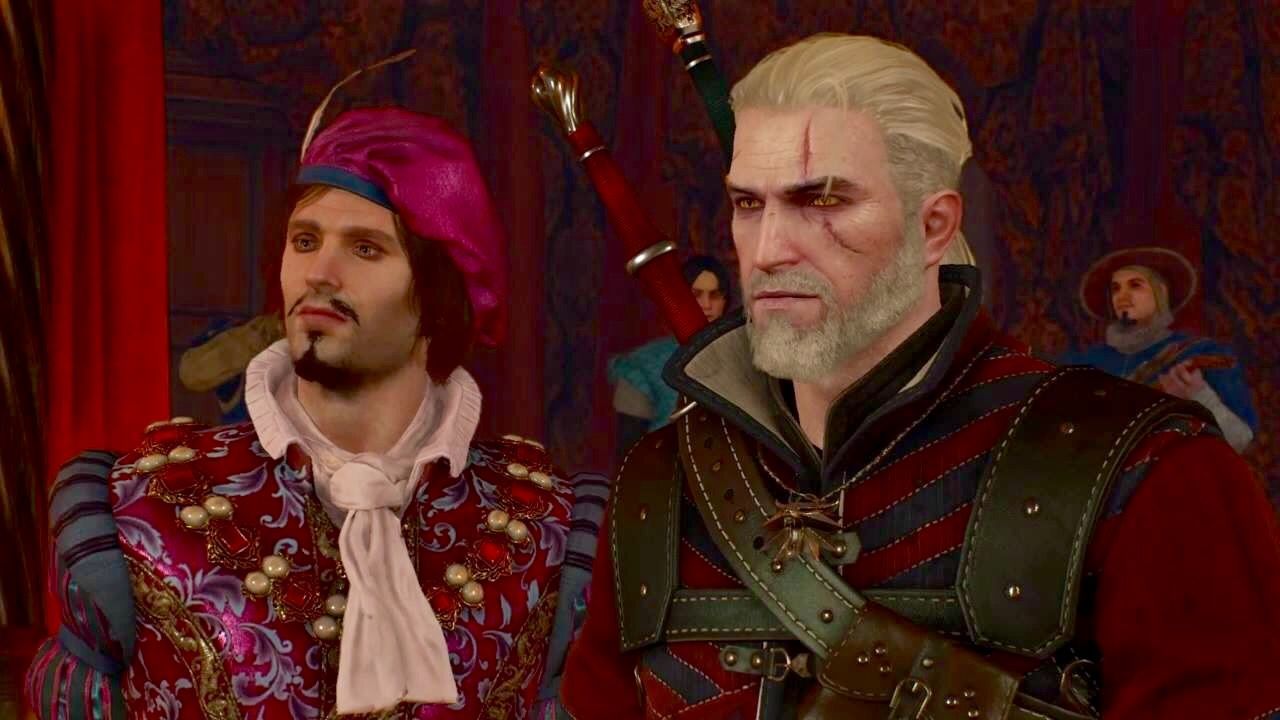
- Geralt of Rivia: Stoic, pragmatic, emotionally restrained, and professionally isolated by prejudice and mutation.
- Dandelion: Vain, overly dramatic, perpetually penniless, womanizing, and constitutionally incapable of keeping quiet.
Yet, despite Dandelion’s uncanny ability to attract trouble—whether through poorly timed romantic affairs with noblewomen, unpaid bar tabs, or accidental involvement in political conspiracies—Geralt never truly abandons him. The witcher acts as an exasperated bodyguard, a blunt-spoken critic of the bard’s poetry, and, ultimately, a protective older brother figure.
The Digital Adaptation and The Witcher 3
When CD Projekt Red brought the Continent to life in The Witcher 3: Wild Hunt, this dynamic was translated into core game mechanics and narrative urgency. The relationship faces its ultimate test in Act 1 of the game during the sprawling, multi-stage narrative arc centered around the quest "Poet Under Pressure."
Following Dandelion’s disappearance amidst the chaotic political purges of Novigrad, Geralt’s mission to find his adopted daughter, Ciri, takes an abrupt emotional detour. The witcher must systematically dismantle criminal syndicates, infiltrate high-security zones, and battle zealous Witch Hunters. Upon finally locating the bard, players find Dandelion tied securely to a chair in a damp halflings’ hut, having narrowly escaped horrific torture or execution.
The urgency with which Geralt approaches this rescue mission redefines his priorities. As Cockle pointed out during his Gamescom discussion, the witcher’s internal monologue and narrative momentum pivot entirely toward saving his friend, occasionally testing the patience of players who are eager to advance romances with Yennefer or Triss.
Supporting Context & Metrics: The Mechanics of Loyalty
To fully appreciate Cockle’s commentary, one must examine how The Witcher 3 structures its narrative choices and how players interact with its sprawling romance systems.
The Romance vs. Rescue Paradox
In The Witcher 3, players are frequently forced to make difficult narrative compromises. A prime example occurs during the investigation into "Count Reuven’s Treasure," where Geralt seeks information regarding Dandelion’s whereabouts from the criminal mastermind Dijkstra and the sorceress Triss Merigold. During a high-stakes interrogation scene, Triss is subjected to magical torture to extract information.
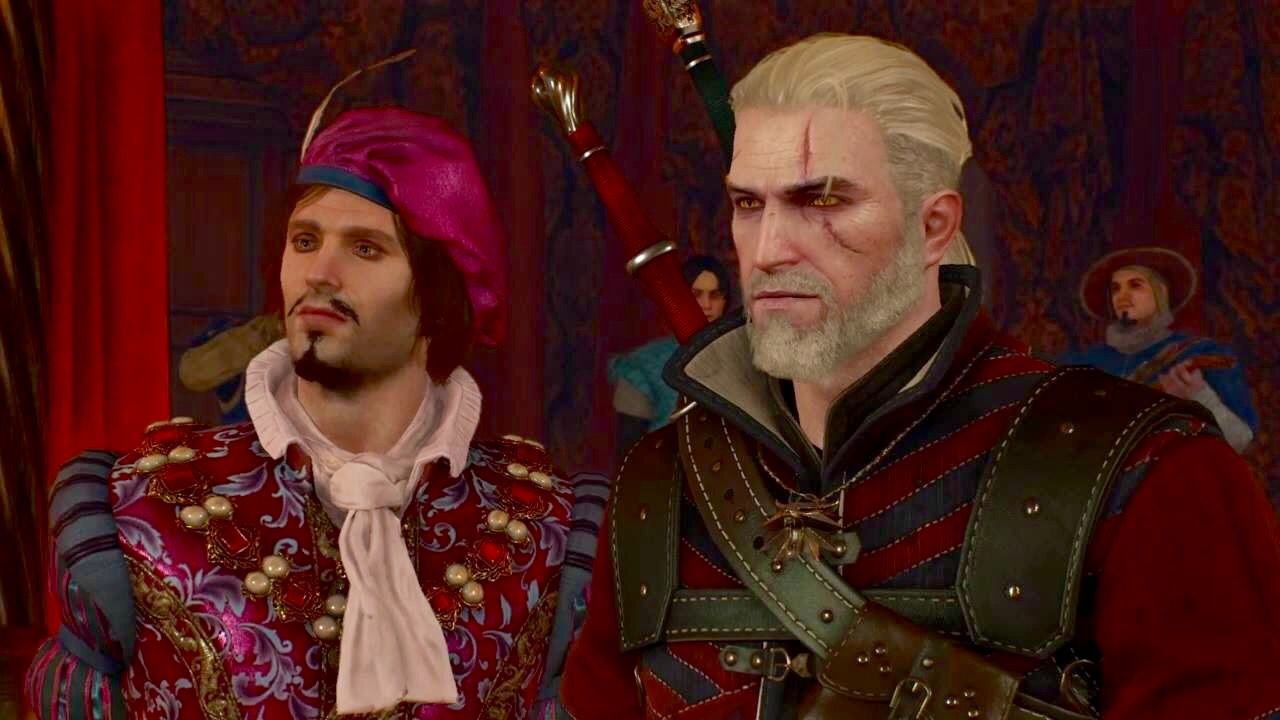
While players possess agency during this sequence, the overarching narrative gravity continually pulls Geralt back toward his primary objective: locating Dandelion. The game routinely places the player in scenarios where romantic affections must take a backseat to the sheer logistical emergency of saving the bard from his latest self-inflicted catastrophe.
Voice Actor Chemistry and Fan Culture
The playful debate over Geralt’s true "better half" highlights the remarkable chemistry between the English voice cast, specifically Doug Cockle (Geralt) and John Schwab (Dandelion). While Cockle jokingly champions the platonic devotion between the two characters, Schwab has frequently leaned into the comedic friction of their dynamic.
As Schwab notes, the fact that Geralt is always there to save Dandelion does not mean the witcher approaches the task with enthusiasm. Instead, it is characterized by a heavy sigh, an exasperated eye-roll, and the resigned acceptance that, once again, the bard has managed to dismantle his own life and requires a professional mutant to sweep up the pieces.
Official Statements & Industry Insights
The discussions at Gamescom shed light on how the actors perceive their characters after spending more than a decade breathing life into them. Doug Cockle’s reflections offer a unique perspective on the intersection of narrative design and character psychology.
"I would say yes [Dandelion is his better half], but in a very platonic way. I don’t want to use the phrase ‘bros over hoes’ because it’s a horrible phrase, but there is a bit of that in Geralt’s and Dandelion’s relationship. Whenever Dandelion is in trouble, Geralt drops everything, and he’s off to save him. Depending on your choices in The Witcher 3, I think he does drop Yen or Triss or somebody… just goes, ‘I gotta go and save Dandelion.’"
— Doug Cockle, Voice of Geralt of Rivia
John Schwab, speaking on the reciprocal nature of their friendship, added color to the ongoing comedic partnership:
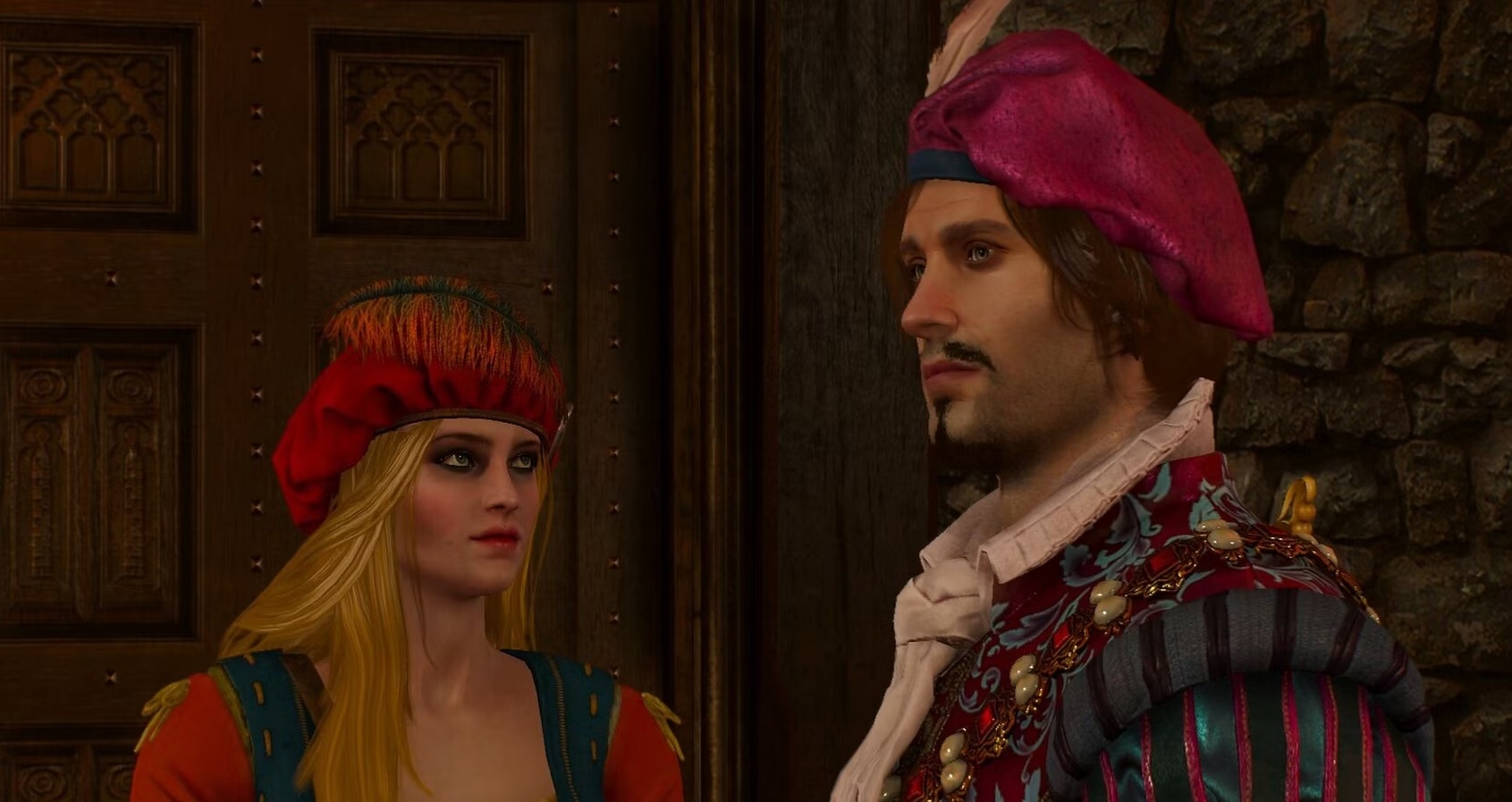
"That doesn’t mean that Geralt is like, ‘Yay! It’s saving Dandelion time again!’ It’s more like, ‘Aw, he’s in trouble again,’ you know?"
— John Schwab, Voice of Dandelion
These remarks emphasize that while CD Projekt Red invested heavily in building complex, emotionally weighty romantic branches with Yennefer and Triss, the foundational emotional bedrock of the series remains the unyielding, platonic loyalty between a grumpy monster hunter and his favorite bard.
Future Outlook: What Lies Ahead for the Franchise
As CD Projekt Red continues to expand The Witcher franchise with upcoming projects—including the heavily anticipated The Witcher 4 (codenamed Project Polaris) and various remakes and spin-offs, such as the Songs of the Past project showcased at Gamescom—fans are left wondering how future titles will handle companion dynamics.
While Project Polaris is widely expected to shift focus away from Geralt of Rivia as the primary protagonist, the narrative template established by the original trilogy sets a high standard for how companions are written. The industry has increasingly moved away from one-dimensional sidekicks toward complex, co-dependent character pairings that mirror the depth of Geralt and Dandelion.
Whether future protagonists will find a bond as enduring and humorously exasperating as the one shared by the white wolf and the Novigrad troubadour remains to be seen. However, one thing is certain: as long as video game romance wars rage across internet forums, Doug Cockle’s playful reminder that "bros come first" will remain an iconic counter-narrative to the standard RPG love story.