Cities, when lived in long enough, cease to be measured in sequential years or fleeting calendar months. Instead, they expand into self-contained volumes—distinct literary epochs complete with their own protagonists, atmospheric shifts, architectural backdrops, and emotional crescendos. For photographer Vincent Wechselberger, this ontological shift materialized between his 27th birthday and August of this year, marking a full decade since he relocated to the German capital.
Arriving in Berlin in 2016 at the tender age of 18, fresh from the quiet hum of a small Austrian town, Wechselberger entered a sprawling urban ecosystem that would act as both his crucible and his canvas. Over the next ten years, he bore witness to the city’s radical transformations—navigating the unbridled hedonism of the late 2010s, the suffocating yet introspective silence of pandemic-era lockdowns, the frantic resurgence of early 2020s nightlife, and the simmering socio-political turbulence of the years that followed.
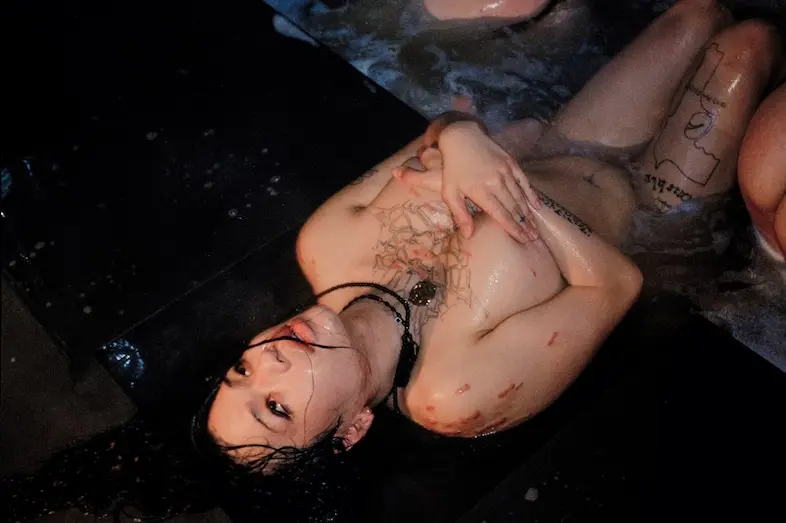
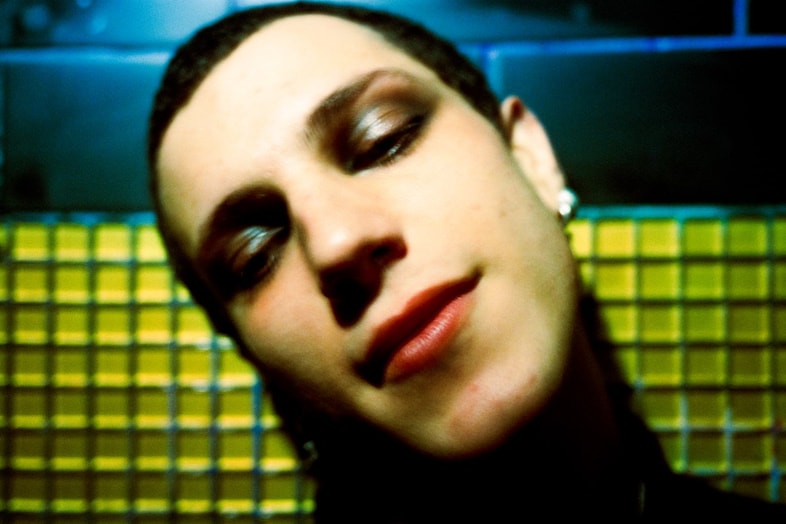
The culmination of this formative decade is preserved in his debut photobook, Dreams and How to Keep Them, published by SMUT Press. Spanning images captured from his arrival in 2016 through his life in 2026, the book acts as an evocative visual archive. It is a deeply personal diaristic excavation that weaves together intimate portraits of friends and family, the fleeting encounters of strangers met on dancefloors or in hotel rooms across international hubs like Paris, Bangkok, and Mexico, and quiet, tactile still-lifes of everyday objects.
Part memoir, part sociological study, Wechselberger’s work captures the delicate paradox of Berlin: a city that offers boundless creative freedom while simultaneously threatening to consume those who surrender completely to its relentless, nocturnal rhythm. As he prepares for the book’s launch at BAM Practice in Berlin on September 10, 2026, and his inaugural solo exhibition at London’s 1014 Gallery (running from September 17 to October 16, 2026), Wechselberger reflects on the end of an era, the tactile nature of his darkroom process, and what it means to finally say goodbye to the place that made him.
Detailed Chronology: A Decade Through the Lens
To understand Dreams and How to Keep Them is to trace a decade-long trajectory of personal evolution mirrored by the shifting topography of Berlin itself. Wechselberger’s photographic journey is inherently chronological, mapping the emotional milestones of his late adolescence and early adulthood against the broader canvas of a mutating metropolis.
Phase I: Arrival and Unfettered Hedonism (2016–2019)
When an 18-year-old Wechselberger stepped off the train from small-town Austria in 2016, Berlin was in the throes of a very specific kind of golden age. It was an era defined by a sprawling, permissive club culture, cheap rents, and an intoxicating sense of anonymous liberation. The early chapters of the book capture this initial wave of wonder—the wide-eyed exploration of underground spaces, the raw energy of youth culture, and the formation of a chosen family.
In these pages, the photography is frantic, visceral, and saturated with the sweat of crowded dancefloors. Wechselberger was not merely an observer; he was an active participant in the city’s nocturnal rituals. This immersion earned him the trust of his subjects, resulting in candid, unvarnished portraits that bypassed the performative nature of social media to reveal raw human vulnerability.
Phase II: The Interiority of Lockdown (2020–2021)
The onset of the COVID-19 global health crisis brought an abrupt halt to Berlin’s legendary nightlife, forcing the city’s pulsating energy inward. As clubs shuttered and public gatherings were outlawed, the scene fractured into clandestine apartment parties, quiet parks, and isolated domestic spaces.
For Wechselberger, this period marked a profound shift in his visual lexicon. The vast, thumping expanses of techno cathedrals were replaced by the intimate confines of bedrooms, kitchens, and bathrooms. The resulting images are characterized by a heavy, psychological interiority—a visual documentation of collective cabin fever, heightened emotional states, and the quiet resilience of a creative community adapting to enforced stillness.
Phase III: The Intoxicating, Uncertain Resurgence (2022–2024)
As restrictions lifted and Berlin limped back to life, the early 2020s were marked by a desperate, sometimes chaotic rush to reclaim lost time. The city attempted to pick up where it left off, but the socio-economic landscape had irrevocably shifted. Inflation, housing crises, and rising political polarization began to cast long shadows over the capital’s bohemian promise.
Wechselberger’s lens during these years captures a city struggling to find its footing. The parties were louder and more urgent, yet underlying them was a pervasive sense of transience. It was during this period that his photographic scope expanded globally. Through his work in sex work, his travels took him to hotel rooms in Paris, Bangkok, and Mexico City, injecting his archive with a diasporic tension that contrasted sharply with his grounded life in Berlin.
Phase IV: Closing the Chapter (2025–2026)
Marking his 27th birthday last year and culminating this August with his ten-year anniversary in the city, Wechselberger recognized a definitive pivot in his internal energy. The relentless pursuit of the nocturnal lifestyle began to give way to a desire for structural and professional stability.
Dreams and How to Keep Them serves as the physical manifestation of this realization. By gathering a decade of negatives, hand-printing them in the darkroom, and binding them into a cohesive narrative, Wechselberger has built a bridge between his past self and his future trajectory. As he notes in the book’s afterword, this project is "the first true goodbye as I grow into myself."
Supporting Context & Metrics: The Anatomy of a Photobook
Dreams and How to Keep Them is much more than a collection of nostalgic snapshots; it is a meticulously crafted physical artifact that reflects the tactile nature of Wechselberger’s artistic philosophy. Published by SMUT Press—an independent imprint known for championing raw, queer, and boundary-pushing visual art—the book balances grand socio-cultural themes with intimate, domestic realism.
The Duality of Scale: From Global Sex Work to Breakfast Still-Lifes
One of the most striking structural elements of the photobook is its rhythm of expansion and contraction. Wechselberger seamlessly transitions from sweeping international vignettes to microscopic domestic details.
The Global Scale: Through his involvement in sex work, Wechselberger gained access to transient spaces across the globe. The book features poignant, often clinical yet tender glimpses inside hotel rooms in international capitals—Parisian alcoves, Bangkok high-rises, and sun-drenched Mexican boltholes. These images highlight the globalized nature of modern youth mobility, where alienation and intimacy exist in a constant state of negotiation.
The Domestic Scale: Conversely, the book frequently contracts into still-life shots of mundane objects and everyday rituals. Bananas resting on counters, discarded plastic baggies, ash-filled ashtrays, loose cash, and the cold, blue light of phone screens glowing in the dark form the texture of this era. As Wechselberger observes with a smile, "It’s a book about love as much as it’s a book about breakfast."
The Darkroom as a Tactile Sanctuary
In an age dominated by frictionless digital photography and cloud storage, Wechselberger’s production process is deliberately analog and tactile. Working alongside his friend and fellow artist Cy Klock, Wechselberger hand-printed every image featured in the book within the darkroom.
This hands-on approach is an extension of the photographer’s own personality. Describing himself as an inherently affectionate person who thrives on physical contact, holding, and being held, Wechselberger views the darkroom process as a physical manifestation of his emotional needs. Printing the images by hand allowed him to physically grapple with his memories—gathering them close before orchestrating the final, necessary act of letting them go.
Official Statements & Cultural Commentary
In interviews leading up to the release of Dreams and How to Keep Them, Wechselberger has been candid about the complex, often contradictory relationship he maintains with Berlin.
Navigating the Berlin Paradox
While the German capital is internationally mythologized as a haven for artists, dropouts, and visionaries, Wechselberger offers a nuanced critique of the city’s systemic underbelly.
"Many people say that Berlin is a city for lost souls, which I don’t think is true," Wechselberger contends in conversation with Dazed. "I think there are so many beautiful, creative people here who just get lost in the rhythm of the city and also the German system. I spiral sometimes, I run in circles. But lately, my friends and I want to break free from that rhythm and put our energies into other things. For me, it’s my creative career."
This tension between total immersion and critical detachment defines his photographic methodology. To capture the raw, unguarded moments of Berlin’s underground, Wechselberger had to be willing to lose himself within it.
"Sometimes I wish I never got caught up in the substances and the scene," he admits. "लेकिन then it’s because I’m dancing half-naked at the party with everyone else that they trust me and open up in front of our camera. I think I often want it all: to be completely inside the situation, experiencing it, but also stepping outside of it to capture the moment."
Unpacking the Title
The book’s title, Dreams and How to Keep Them, carries a deliberate double meaning that anchors its thematic core. In one sense, "dreams" refers to future aspirations—the idealized goals, ambitions, and desires that propel a young artist to migrate to a major metropolis. In another sense, it invokes the realm of memory—the spectral, dream-like quality of the past, populated by ghosts of former lovers, fleeting acquaintances, and versions of the self that no longer exist.
The photobook attempts to hold both definitions in tension simultaneously, serving as a monument to a decade spent chasing light and shadow in Europe’s techno capital.
Future Outlook: Exhibitions and Beyond
As Vincent Wechselberger closes the book on his first decade in Berlin, his career as a multidisciplinary visual artist is entering an exciting new chapter. Dreams and How to Keep Them marks not an end to his creative output, but a foundational milestone that establishes him as a vital voice in contemporary documentary and queer photography.
Upcoming Launch Events & Exhibitions
The project will be formally introduced to the public through a series of high-profile international events this autumn:
Berlin Book Launch: The local launch for Dreams and How to Keep Them will take place on September 10, 2026, at BAM Practice in Berlin, offering local peers, subjects, and collaborators a first look at the published archive.
London Solo Exhibition: Wechselberger will cross the Channel for his first-ever solo exhibition, hosted at London’s 1014 Gallery. Running from September 17 to October 16, 2026, the exhibition will translate the intimate pages of the photobook into a physical gallery space, showcasing hand-printed works that interrogate modern intimacy, hedonism, and urban dislocation.
Escaping the Algorithm
In an era where visual culture is increasingly flattened by algorithmic feeds and rapid consumption, Wechselberger’s work offers a deliberate antidote. By anchoring his memories in heavy darkroom prints, physical photobooks, and tactile gallery spaces, he invites audiences to slow down, to feel the grain of the paper, and to reckon with their own passages of time.
For Wechselberger, the journey from small-town Austria to the beating heart of Berlin—and now onto the international gallery circuit—proves that while cities may transform and eras must eventually come to an end, the art of keeping our dreams alive is an act of fierce, enduring preservation.