Executive Overview
The announcement of Guild Wars 3 has sent ripples of excitement—and a degree of measured apprehension—through the global MMORPG community. Following an exclusive, hands-off preview at Gamescom, developer ArenaNet has begun peeling back the curtain on what fans can expect when the anticipated online role-playing game enters its beta phase next year. Far from being a safe, iterative sequel, Guild Wars 3 represents a fundamental philosophical shift for the franchise, redefining how players interact with the game world, each other, and the foes they face.
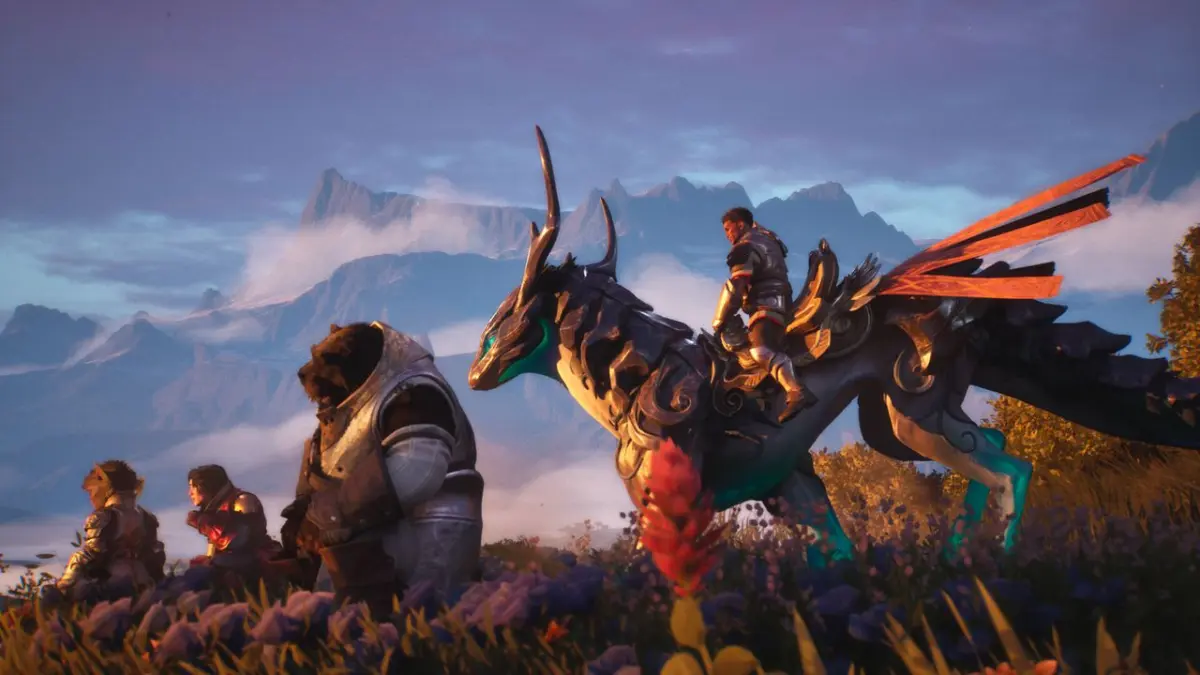
At the core of this transformation is a radical departure from the chaotic, high-population "zerg" combat popularized by Guild Wars 2. While Guild Wars 2 famously permitted massive armies of up to a hundred players to pile onto dynamic world bosses, Guild Wars 3 is deliberately scaling down. By capping open-world combat encounters to roughly 20 players, ArenaNet is trading the screen-shaking, visual cacophony of massive spectacles for high-fidelity combat readability, tighter tactical coordination, and a renewed emphasis on individual player impact.
Combined with revolutionary movement mechanics, a seamless world architecture, and an innovative approach to server instances, Guild Wars 3 aims to carve out a unique identity that sits comfortably between the intimate scale of the original 2005 Guild Wars and the sprawling, mass-multiplayer expanses of its successor. This comprehensive report examines the technical reasoning, structural changes, community impact, and future outlook surrounding ArenaNet’s next major venture.
Detailed Chronology and Development Evolution
To understand the magnitude of Guild Wars 3, one must look at the evolutionary lineage of the franchise, which has never been afraid to reinvent itself between major installments.
The Original Guild Wars (2005): The Instance-Based Pioneer
Released nearly two decades ago, the original Guild Wars defied conventional MMORPG paradigms. Rather than utilizing a traditional open-world architecture, the game relied heavily on instanced exploration zones. Towns and outposts served as communal social hubs, but the moment players stepped outside the city gates, they entered private, instanced environments reserved solely for their party and invited allies. This allowed for hyper-focused, tactical combat where party composition, skill builds, and micro-management were paramount. However, it lacked the spontaneous, emergent community interactions found in traditional open-world games.
Guild Wars 2 (2012): Embracing the Open-World Zerg
When ArenaNet launched Guild Wars 2, the studio pivoted dramatically toward open-world immersion. The game did away with traditional quest hubs in favor of dynamic events, encouraging massive gatherings of players to unite organically to defeat world bosses like Tequation the Sunless or the Shatterer. While these sprawling, chaotic encounters created unforgettable moments of community spectacles, they introduced severe mechanical hurdles. Visual clarity often evaporated entirely beneath a blizzard of spell effects, particle explosions, and UI clutter, while client performance routinely cratered under the weight of rendering dozens of simultaneous character models and combat calculations.
Guild Wars 3: Striking the Golden Mean
Speaking with developers at Gamescom, it became clear that Guild Wars 3 is designed to bridge the structural gap between its two predecessors. It retains the open-world philosophy and organic player encounters of Guild Wars 2, but injects the tactical discipline and spatial clarity reminiscent of the original game. By establishing a firm cap on active combat participants, ArenaNet is steering the franchise away from anonymous, screen-filling chaos and returning to deliberate, meaningful cooperative play.
Supporting Context & Metrics: The Mechanics of Scale
The decision to limit open-world combat encounters to approximately 20 players is not merely an artistic whim; it is rooted in hard-learned lessons about game performance, user interface readability, and psychological engagement in multiplayer spaces.
Combat Readability and Visual Fidelity
In modern MMORPGs, high-end encounters frequently devolve into a sensory overload of flashing lights, floating combat text, and overlapping hitboxes. Game Director Colin Johanson addressed this directly, noting that when player counts climb past a certain threshold, the gameplay experience fundamentally alters its nature.
"At most, out in the open world, you would probably see about 20 players in a large combat scenario," Johanson explained during the Gamescom briefing. "Our movement systems and our combat systems, in particular, are really high fidelity. They’re designed to lend themselves to being able to see everything that’s going on, and we felt like that number is where it starts to cap out. You start losing some of the visceral sense of what the gameplay is like."
When dozens of players cluster around a single target, individual actions lose their weight. Healing a specific ally, dodging a telegraph animation, or executing a precise crowd-control combo becomes nearly impossible when the screen is saturated with visual noise. By restricting combat instances to a tighter cadre of combatants, ArenaNet ensures that players can read enemy tells, appreciate the animations of their peers, and feel directly responsible for the outcome of a skirmish.
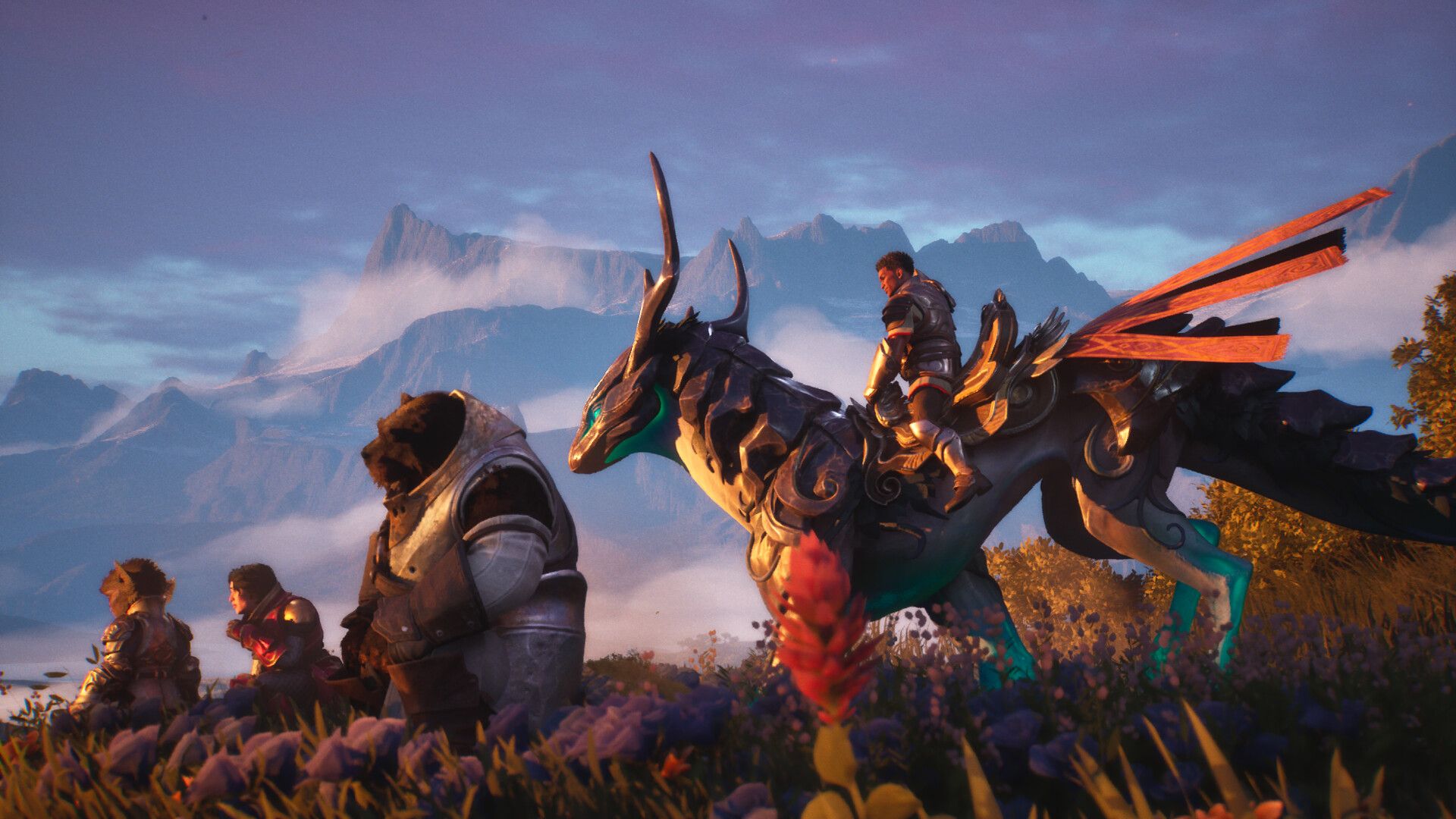
Architectural Seamlessness and World Fluidity
Beyond combat, Guild Wars 3 is engineered to offer a far more cohesive geographical experience than Guild Wars 2. The transition between regions, wilderness, and points of interest features significantly fewer loading screens, creating a continuous, breathing ecosystem.
Even with the combat cap, the open world will feel lively. Players will continually cross paths with strangers as they traverse the landscape, mirroring the organic drop-in, drop-out cooperation that made Guild Wars 2 famous. Crucially, ArenaNet has confirmed that safe zones—such as towns, cities, and major social hubs—will not enforce these strict player caps. Because combat is disabled in these locations, social spaces will bustle with high population densities, functioning as vibrant trade and community centers without sacrificing performance.
Server Infrastructure: Eliminating the Walls
One of the most praised technical features of Guild Wars 2 was its flexible server architecture, which avoided rigid segregation by allowing players to seamlessly transition between shards to play with friends. Guild Wars 3 builds upon this foundation. ArenaNet is eschewing traditional hard server barriers in favor of advanced instance management. Players will navigate a fluid network of dynamic instances—described by developers as porous "fences" rather than insurmountable walls—making it effortless to hop across boundaries and quest alongside friends without bureaucratic server queues or transfer fees.
Official Statements and Developer Insights
The transparency coming out of ArenaNet during the Gamescom presentations highlights a studio confident in its creative vision, even when that vision challenges established genre conventions.
Johanson emphasized that the guiding philosophy behind Guild Wars 3 is intentional cooperation. "This is a game that is about players working together in meaningful ways out in the open world in combat, and we want to make sure that is able to be experienced the way that we intend it to," he stated.
This ethos extends to how the studio views its legacy titles. ArenaNet has explicitly stated that Guild Wars 2 is not being phased out. Much like the original Guild Wars, which continues to maintain a dedicated player base and occasional maintenance updates to this day, Guild Wars 2 will remain fully operational. For veterans who deeply cherish the massive, sprawling PvE zerg battles and continent-spanning meta-events, Guild Wars 2 will endure as a permanent fixture. This multi-generational approach relieves pressure on the developers, granting them the creative freedom to push Guild Wars 3 into uncharted, mechanically distinct territory without alienating fans of the previous game.
Future Outlook: Challenges and Opportunities
As the industry looks ahead to the Guild Wars 3 beta slated for next year, several key questions remain regarding how these design choices will resonate with the broader gaming public.
The Party Size Dilemma
While the 20-player open-world combat cap strikes a healthy balance for public events, the reported four-player limit for standard adventuring parties presents a distinct hurdle for established gaming communities. Many long-standing guilds and friend groups have spent over a decade operating in five-person dungeon groups (in GW2 context, though raids scaled to 10) or flexible squads. A strict four-player cap forces difficult choices. As noted by early reviewers whose regular gaming circles consist of five people, someone invariably faces exclusion, potentially fracturing tight-knit social groups who expected seamless migration to the new title.
Revitalizing the MMO Landscape
It is rare in the modern gaming ecosystem to witness genuine innovation within the traditional MMORPG space, which has largely spent the last decade iterating safely on established theme-park formulas. By rethinking movement fluidity, combat readability, and population scale, ArenaNet is taking a calculated risk. If the studio successfully marries the visceral action-combat precision of modern single-player action RPGs with cooperative online multiplayer structures, Guild Wars 3 could establish a new benchmark for the genre.
Ultimately, Guild Wars 3 is shaping up to be an intriguing, highly focused evolution. By trimming away the chaotic bloat of massive zerg encounters in favor of readable, high-fidelity tactical gameplay, ArenaNet is betting that quality of interaction matters far more than sheer quantity. As the beta draws closer, the MMO community will soon find out whether this refined vision heralds a brilliant new golden age for Tyria.